Deep, tomato-rich Lebanese beef stew lands with tender chunks of beef, green beans that still have a little bite, and a broth scented with warm spice instead of heavy heat. The beef cooks until it’s spoon-tender, but the sauce stays bright and savory, which keeps every bowl from feeling flat or muddy. Served over vermicelli rice, it turns into the kind of meal that feels steady and complete without needing much beside it.
What makes this version work is the layering. The beef gets seasoned before it ever hits the pot, so the spice has a chance to cling to the meat and season the stew from the inside out. Tomato paste cooks with the onions long enough to darken a shade and lose its raw edge, which gives the broth a deeper base. The green beans go in later on purpose; if they simmer for the full cook time, they turn dull and tired instead of staying distinct in the finished stew.
Below, you’ll find the small details that matter most: how to brown the beef without crowding the pan, when to add the beans so they stay pleasantly tender, and what to change if you need a different vegetable or a brothier result.
The beef got melt-in-your-mouth tender and the green beans stayed bright instead of turning mushy. I also loved how the seven spice and cinnamon made the tomato sauce taste warm and layered without being overpowering.
Save this Lebanese Beef Stew for the nights when you want tender beef, fragrant tomato sauce, and vermicelli rice in one bowl.
The Reason the Beef Stays Tender Instead of Stringy
The long simmer matters, but so does what happens before the lid goes on. Beef chuck has enough connective tissue to turn silky over time, but only if it gets enough heat at the start to brown and enough gentle moisture afterward to relax. If the pot boils hard, the meat tightens and the sauce clouds up; a quiet simmer keeps the stew clear, glossy, and deeply flavored.
The other common miss is adding the green beans too early. They need enough time to lose their raw edge, but not enough to collapse into the tomato sauce. That late addition keeps the finished stew looking lively and gives you a better contrast in every spoonful.
What Each Ingredient Is Actually Doing in This Pot

- Beef chuck — This cut has the fat and connective tissue that make a long simmer worth it. Leaner beef turns dry before the sauce has time to develop.
- Seven spice and cinnamon — These give the stew its warm, unmistakably Lebanese backbone. If you don’t have Lebanese seven spice, a mix of allspice, black pepper, cumin, coriander, and a pinch of clove gets you close enough, but the flavor won’t be quite as rounded.
- Tomato paste and crushed tomatoes — The paste brings depth; the crushed tomatoes build body. Cooking the paste with the onion is one of the easiest ways to keep the sauce from tasting sharp or tinny.
- Green beans — They add texture and a fresh note that cuts through the richness. Fresh is best here because frozen beans soften faster and can release extra water into the stew.
- Cilantro and pine nuts — The cilantro wakes up the finished dish, and the toasted pine nuts add a little buttery crunch. Don’t skip the toast on the nuts; raw pine nuts taste flat compared with the warm, nutty finish you want here.
Building the Stew in the Right Order
Browning the Beef First
Season the beef before it goes into the pan, then brown it in batches in the olive oil. If you crowd the pot, the meat steams and you lose that darker flavor that gives the stew its backbone. You’re looking for a deep brown crust on the edges, not a gray surface, and a little sticking on the bottom is normal and useful.
Softening the Onion and Cooking Out the Tomato Paste
Once the beef comes out, cook the onion until it turns translucent and starts to sweeten. Add the garlic for just long enough to smell it, then stir in the tomato paste and let it darken slightly. That step takes away the raw, acidic edge and gives the finished broth a thicker, rounder taste.
Letting the Simmer Do the Work
Add the tomatoes and water or broth, scrape up the browned bits, then return the beef. Cover and keep the heat low enough that only small bubbles break the surface. If the simmer is aggressive, the meat tightens before it softens; a slow bubble is what turns chuck into tender stew meat.
Finishing with the Green Beans and Herbs
Stir in the green beans once the beef is already tender, then simmer just until they’re cooked through and still green. They should give a little when pressed but not fall apart. Add the cilantro at the end so it stays fresh, then top with toasted pine nuts right before serving for contrast and crunch.
How to Change This Stew Without Losing What Makes It Work
Make it dairy-free and gluten-free
The stew already fits both of those needs as written. Just serve it with plain rice or another gluten-free grain instead of a bread-based side, and check your broth if you’re using boxed stock.
Swap the green beans for okra or zucchini
Okra gives you a more traditional stew-like body and a softer texture, while zucchini cooks faster and makes the pot lighter. Add zucchini in the last 10 to 12 minutes so it doesn’t disappear into the sauce.
Use lamb instead of beef
Lamb brings a deeper, richer flavor that works beautifully with the seven spice and tomato base. Use the same method, but expect a slightly fuller broth and skim any excess fat from the top before adding the beans.
Storage and Reheating
- Refrigerator: Keep for up to 4 days. The flavors deepen overnight, and the sauce thickens as it chills.
- Freezer: It freezes well for up to 3 months. Cool it completely first, then freeze without the rice for the best texture.
- Reheating: Reheat gently on the stove over low heat with a splash of water or broth if needed. High heat can overcook the beef and make the beans soft and dull.
Answers to the Questions Worth Asking
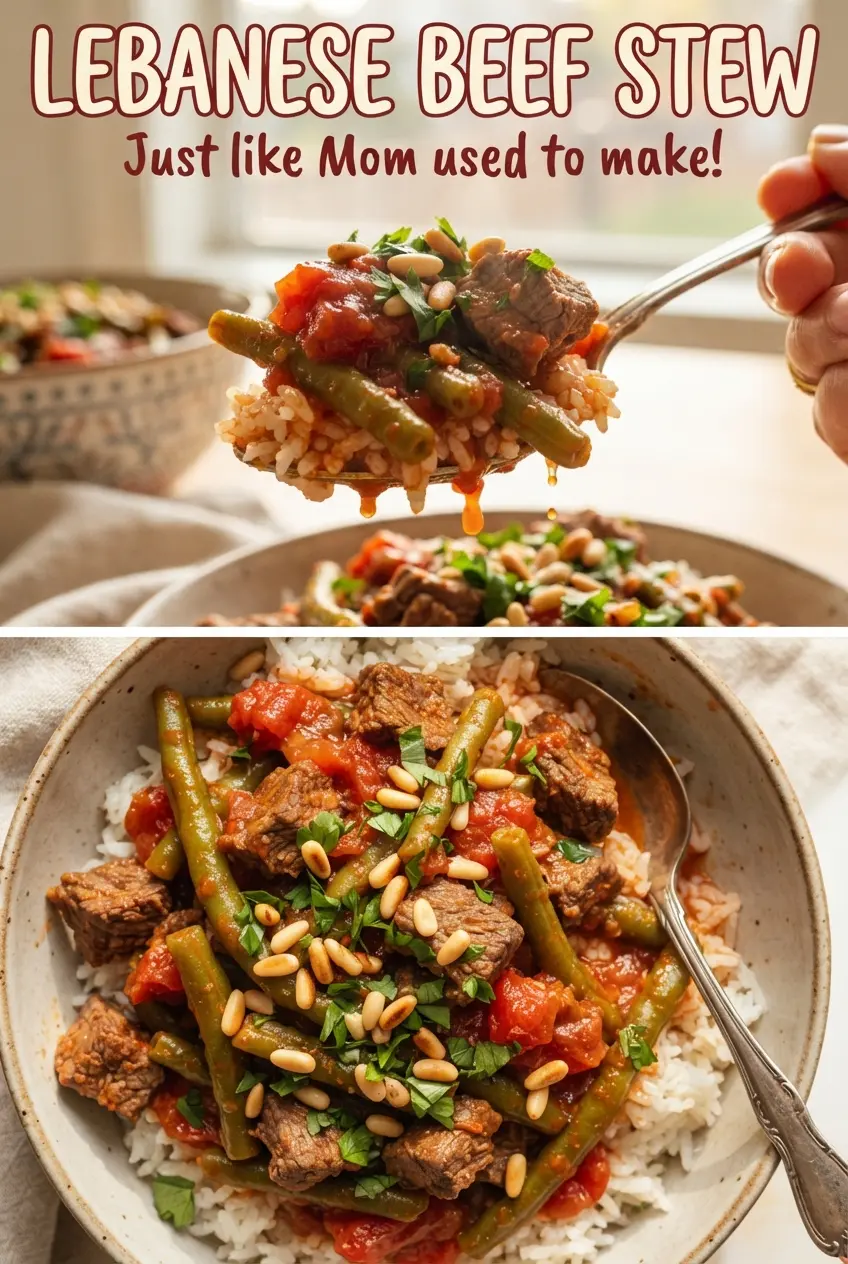
Lebanese Beef Stew
Ingredients
Equipment
Method
- Season the beef chuck cubes with salt, Lebanese seven spice, and ground cinnamon, then brown them in olive oil in a Dutch oven over medium-high heat until nicely browned on the outside (about 5–8 minutes), stirring so the cubes sear evenly.
- Keep the browned beef in the pot while you build the sauce; scrape up any browned bits from the bottom for extra flavor.
- Cook the diced onion in the pot for 5 minutes until softened, then add the minced garlic and tomato paste and cook for 1 minute to bloom the aromatics.
- Add the crushed tomatoes and water or beef broth, bring to a simmer, then return the browned beef to the pot.
- Cover and simmer for 1 1/2 hours, maintaining a steady gentle simmer so the beef becomes very tender.
- Stir in the green beans and simmer for 25–30 minutes, until tender but still bright.
- Turn off the heat, stir in the chopped cilantro, top with toasted pine nuts, and serve the stew over vermicelli rice.