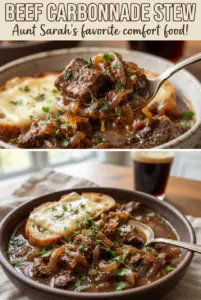
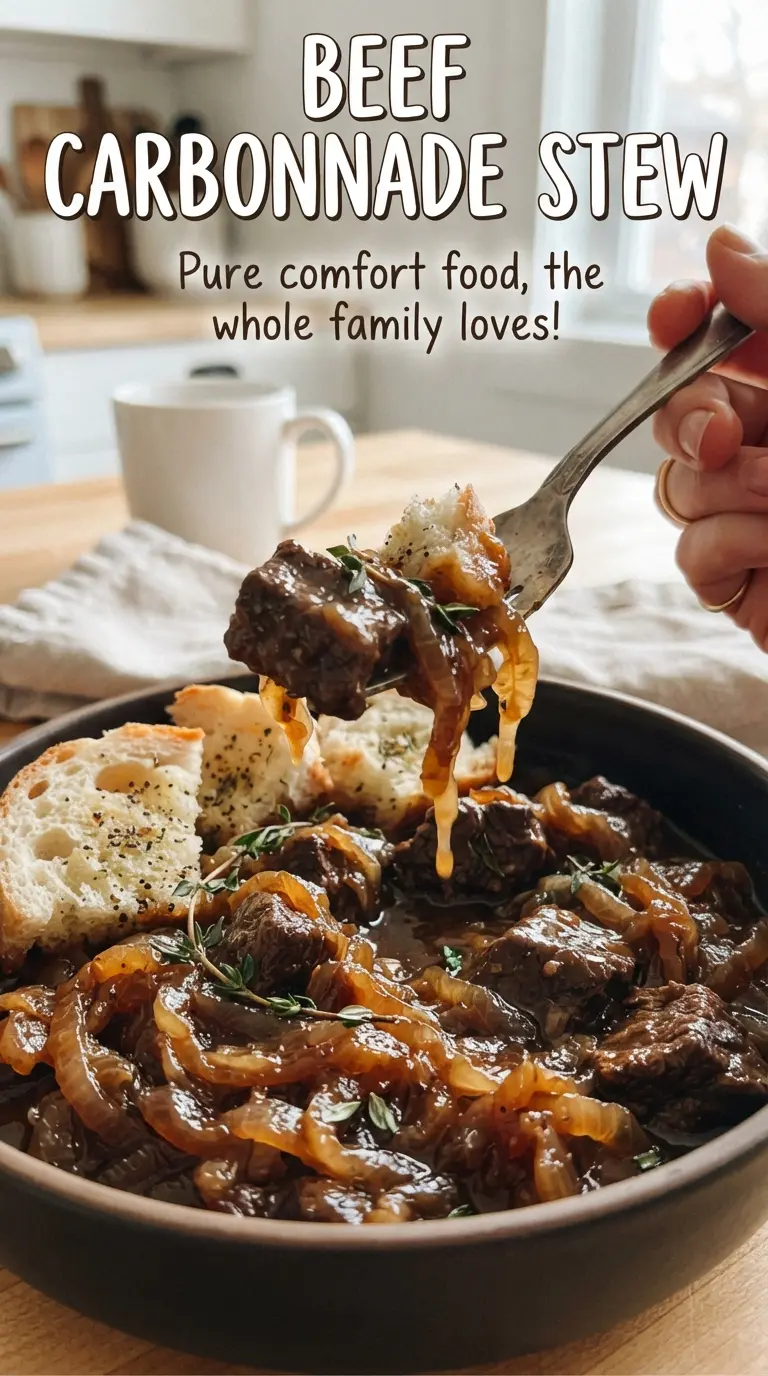
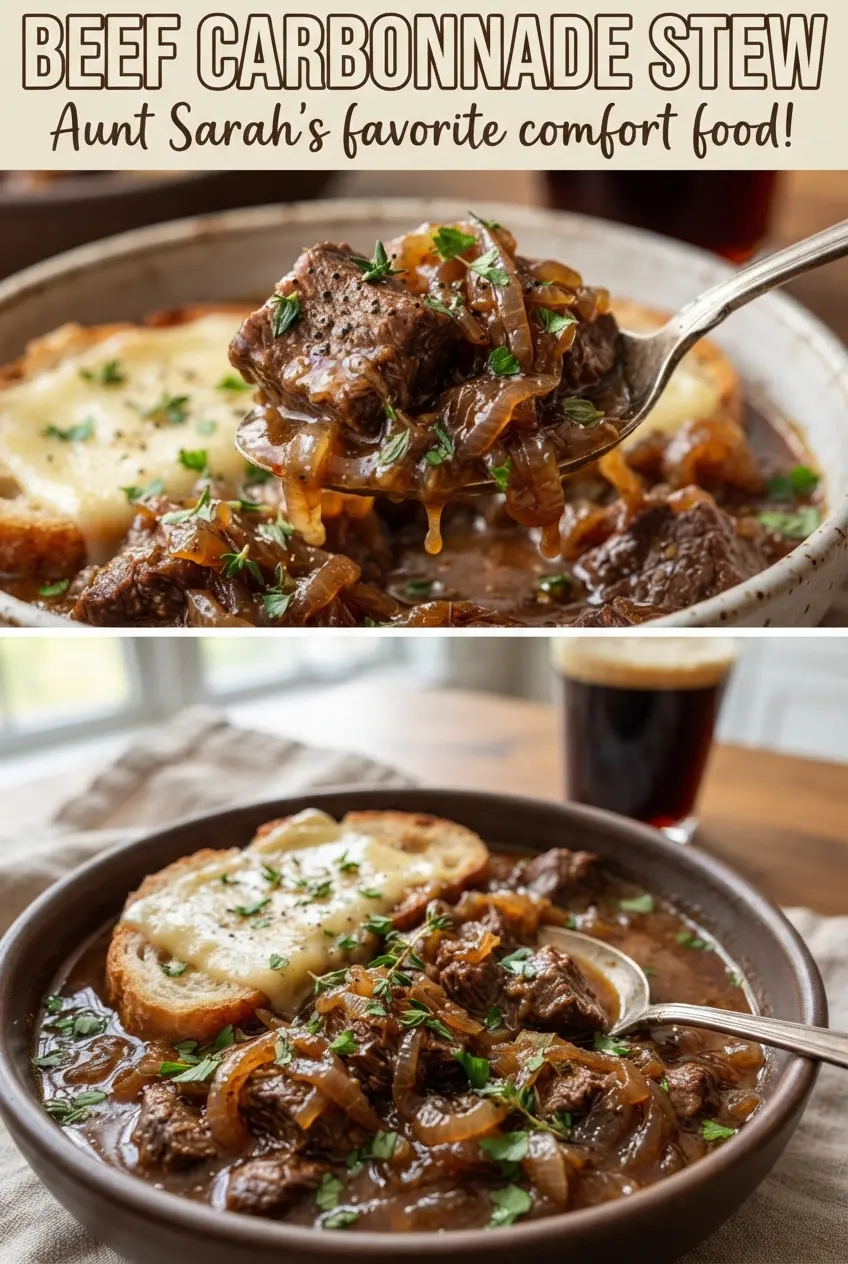
Beef carbonnade stew turns humble chuck into something dark, glossy, and deeply savory, with onions that melt into the broth and give it a gentle sweetness. The beer cooks down into a sauce that clings to every piece of beef, and the mustard-spread bread on top quietly does the work of thickening and seasoning the whole pot. By the time it comes out of the oven, the beef should be spoon-tender and the sauce should taste layered, not heavy.
What makes this version work is the order of the browning and the long, slow oven time. The onions need patience until they’re truly golden, because that color is the base of the stew’s flavor. The Belgian brown ale brings malty depth without turning the pot bitter, while the vinegar keeps the sweetness in check. The mustard bread sounds unusual until you see what it does: it dissolves into the braise and gives the sauce body without any extra fuss.
You’ll find the timing that keeps the beef tender instead of dry, plus the small detail that keeps the sauce from tasting flat. If you’ve ever had a beer stew that felt too sweet or too thin, this method fixes both.
The onions went almost jammy and the sauce thickened up beautifully after the bread dissolved. I served it with fries like suggested and my husband kept saying the beef tasted even better the next day.
Save this Belgian beer-braised Beef Carbonnade Stew for the night you want deep onion flavor, tender beef, and a sauce that thickens itself.
The Trick to Carbonnade Is Letting the Onions Become Part of the Sauce
Carbonnade looks simple, but the onions are carrying more of the dish than the beef does. If they stay pale, the stew tastes sharp and flat; if they’re cooked slowly until deep golden, they dissolve into the braising liquid and give the broth its body. That browning also keeps the final sauce from tasting like beer alone. You want sweetness, but not candy-sweet, and the brown ale plus vinegar gives you that balance.
The other thing people miss is the bread. It’s not garnish and it’s not a sandwich trick. The mustard-spread slices break down during the long bake and act like a built-in thickener, which is why this stew has that glossy, velvety finish without needing cornstarch at the end.
- Beef chuck — This cut has enough fat and connective tissue to get tender over a long braise. Leaner beef will dry out before the sauce has time to develop.
- Belgian brown ale — Choose a malty beer with a little backbone. A bitter IPA will throw the balance off, while a mild lager won’t leave enough depth behind.
- Onions — Slice them thin so they cook down evenly. This is where the sweetness and color come from, so don’t rush this part.
- Dijon mustard — Spread it on the bread before it goes in. The mustard sharpens the stew and keeps the richness from feeling heavy.
What Each Ingredient Is Actually Doing in This Recipe
- Primary ingredient (the star) — Quality matters most. Choose the best you can find.
- Cooking medium (oil, butter, or broth) — This carries flavors and prevents dryness.
- Seasonings (salt, pepper, spices, herbs) — Layer flavors so nothing overpowers. Build depth gradually.
- Aromatics (garlic, onion, herbs) — Cook with fat to bloom flavors. Become the foundation.
- Supporting ingredients — Complement the main ingredient without overpowering it.
- Sauce or liquid (if applicable) — Brings flavors together. Balance richness with acid.
- Acid (lemon, vinegar, wine, or other) — Brightens and prevents flat-tasting results.
- Final finish (garnish, glaze, or sauce) — Prevents one-dimensional taste and adds visual appeal.
Building the Braise So the Beef Stays Tender
Searing the Beef in Batches
Brown the beef in a single layer and don’t crowd the pot. If the pieces sit too close together, they steam and turn gray instead of picking up the dark crust that gives the stew its backbone. You’re looking for deep browned edges, not full cooking. Take the time here, because those browned bits on the bottom are what make the sauce taste like it cooked all day.
Cooking the Onions Until They Collapse
Once the beef comes out, add the onions and let them work slowly in the butter until they soften, then turn golden and a little sticky. This takes longer than people expect, and that’s the point. Stir in the brown sugar and flour only after the onions have real color, or you’ll end up with a sweet, pasty base instead of a rich one.
Letting the Oven Do the Hard Part
After the ale, broth, vinegar, herbs, beef, and mustard bread go in, cover the pot and bake it low and slow. The stew should bubble gently, not boil hard. If it boils, the beef tightens before it has a chance to relax into tenderness. Stir once when the bread has mostly disappeared, then leave it alone until the beef pulls apart easily with a fork.
How to Adapt Carbonnade When You Need a Different Finish
Gluten-Free Version
Use a gluten-free brown ale or a gluten-free dark beer, and swap the bread for two slices of gluten-free rustic bread. The stew will still thicken, but the bread may break down a little less completely, so simmer it uncovered for a few extra minutes after baking if the sauce needs more body.
No Beer on Hand
Replace the ale with more beef broth and add another teaspoon of apple cider vinegar plus 1 teaspoon Worcestershire sauce. You’ll lose the malty edge that beer brings, but the stew will still taste deep and savory if you lean on the onions and browning.
Make-Ahead and Leftovers
Carbonnade gets better after a night in the fridge because the sauce settles and the beef reabsorbs flavor. Store it in an airtight container for up to 4 days, freeze it for up to 3 months, and reheat it gently on the stove over low heat with a splash of broth if the sauce has tightened up. High heat can make the beef stringy, so warm it slowly until it’s hot through.
Questions I Get Asked About This Recipe
Beef Carbonnade Stew
Ingredients
Equipment
Method
- Preheat the oven to 325F. Season the beef chuck with salt and black pepper, then brown in batches in 2 tablespoons butter in a Dutch oven.
- Brown until the beef is well-seared on multiple sides, adjusting heat as needed to keep browning consistent, 5 to 8 minutes total per batch. Transfer browned beef to a plate while you brown the rest.
- Add the remaining butter and the thinly sliced onions to the Dutch oven. Cook for 20 minutes, stirring occasionally, until the onions are deep golden.
- Stir in the brown sugar and all-purpose flour, coating the onions evenly. Cook 1 to 2 minutes to remove the raw flour taste, keeping the mixture bubbling but not burning.
- Pour in the Belgian brown ale, beef broth, and apple cider vinegar, scraping the bottom of the Dutch oven to loosen any browned bits. Bring to a simmer, then add fresh thyme, bay leaves, and the browned beef.
- Lay the mustard-spread rustic bread on top of the stew, mustard side down. Cover with the lid and bake at 325F for 2 1/2 hours.
- Stir once the bread begins to dissolve (about halfway through), 1 to 2 times during baking depending on how quickly it breaks down. Continue baking until the beef is very tender, with a glossy, thickened beer-braised sauce.
- Remove fresh thyme sprigs and bay leaves from the stew. Taste and adjust seasoning as needed, then serve hot with fries or mashed potatoes.