Deep, spoon-coating beef stew is at its best when the broth turns into a rich gravy without flour, dairy, or a pile of extra steps. This Whole30 version brings that kind of comfort: browned beef, tender sweet potatoes, carrots that hold their shape, and mushrooms that give the broth a deeper, meatier finish. It eats like the stew you want after a long day, but it stays fully compliant and still tastes like real food cooked with care.
The trick is building flavor in layers. Browning the beef in batches gives you the base, and the tomato paste cooks long enough to lose its raw edge before the broth goes in. Coconut aminos and a little compliant Worcestershire add the savory backbone that stew usually gets from wine or flour-thickened stock, while arrowroot finishes the pot with a glossy body at the very end instead of muddying the simmer.
Below, I’ve included the timing that keeps the vegetables intact, plus the one adjustment that matters most if you want the broth to thicken without turning slippery.
The beef got tender, the sweet potatoes held their shape, and the gravy thickened up beautifully at the end. I loved that the mushrooms made it taste even richer without any flour.
Like this Whole30 Beef Stew? Save it for a thick, hearty dinner with tender chuck, sweet potatoes, and a naturally rich gravy.
The Reason This Stew Stays Rich Without Flour
The biggest mistake in beef stew is treating the broth like it will thicken on its own. It won’t, not in a satisfying way, unless you build enough body from the start. Browning the beef in batches leaves the pan with dark, sticky bits that dissolve into the broth later, and the tomato paste needs that quick minute of heat to deepen instead of tasting sharp. That combination is what gives the stew the kind of depth people usually expect from long-simmered flour-based gravy.
The other thing that matters is restraint. Once the beef goes back in, the stew should simmer gently, not boil hard. A hard boil tightens chuck instead of softening it, and it can also push the vegetables toward mush later on. Keep the bubbles lazy and the lid slightly askew so the liquid reduces a little while the meat turns tender.
What Each Ingredient Is Actually Doing Here
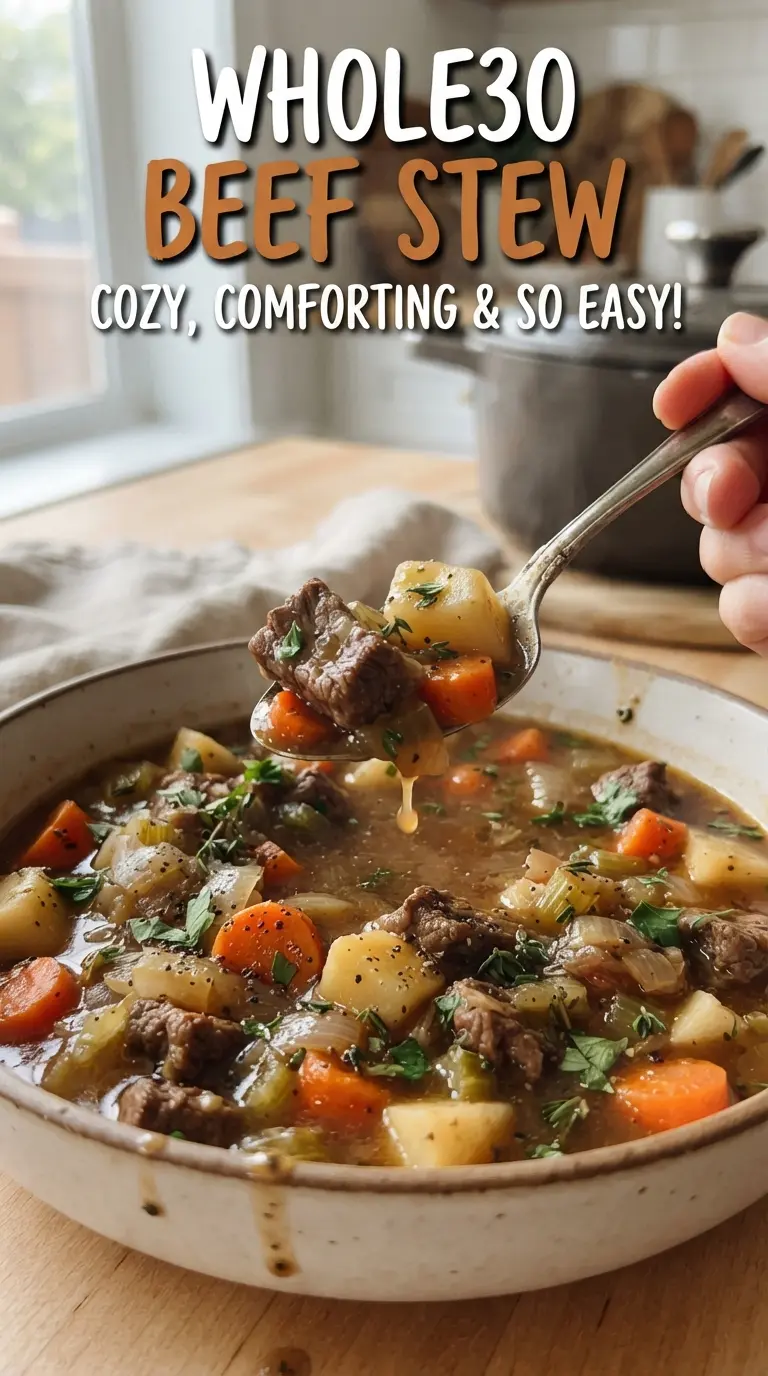
- Beef chuck — This cut earns its place because it has enough connective tissue to turn silky during a long simmer. Leaner beef will dry out before the broth gets the same depth. Cut it into even pieces so it cooks at the same pace.
- Tomato paste — This is not here for tomato flavor. It adds color, sweetness, and a little concentrated savoriness, especially after it cooks for a minute with the onions and garlic.
- Coconut aminos and compliant Worcestershire — These replace the usual soy sauce and wine-heavy depth without breaking Whole30 rules. If you only have one, use the Worcestershire and add an extra splash of broth; the aminos bring more gentle sweetness, while the Worcestershire brings a darker, more savory edge.
- Sweet potato — It thickens the stew slightly as it cooks and gives the finished bowl a soft sweetness that works with the beef. Add it when the meat is already close to tender so it doesn’t collapse into the broth.
- Arrowroot slurry — This is what turns the pot from thin soup into actual stew. Stir it in at the end and let it simmer briefly; if you add it too early or boil it hard, it can lose its thickening power.
Building the Pot in the Right Order
Browning the Beef in Batches
Season the beef before it hits the pan, then brown it in hot oil without crowding. If you pile it all in at once, the meat steams and loses the deep crust that gives the stew its backbone. You want a dark brown surface, not gray edges. Pull the beef out as each batch finishes so you can keep the heat high enough to sear.
Cooking Down the Onion and Tomato Paste
Once the onion softens and turns translucent, add the garlic and tomato paste and stir until the paste darkens slightly. That minute matters. Raw tomato paste tastes flat and tinny; cooked tomato paste tastes round and concentrated. If the pan looks dry, the paste may stick a little, so stir constantly and keep it moving.
Gentle Simmer for Tender Beef
Add the broth, coconut aminos, Worcestershire, thyme, bay leaf, and beef, then cover and simmer low and slow. The liquid should barely bubble. If it boils, the meat tightens before the collagen breaks down, and you’ll end up waiting longer for tougher results. After about an hour and a half, the beef should be close to fork-tender.
Adding the Vegetables at the End
Stir in the sweet potato, carrots, and mushrooms once the beef has softened. This keeps the vegetables from overcooking while still giving them time to absorb the broth. The mushrooms will shrink and deepen the savory flavor, the carrots should become tender but not floppy, and the sweet potato should hold its cubes instead of dissolving.
Finishing with Arrowroot
Mix the arrowroot with water first, then stir it into the simmering stew for the last few minutes. The broth should thicken quickly and look glossy. If it still seems thin, give it another minute; arrowroot thickens fast, and too much cooking can make it loosen again. Remove the bay leaf before serving.
How to Adapt This Stew Without Losing the Good Part
Make It Strictly Whole30
Use a compliant Worcestershire or swap in balsamic vinegar if that’s what you have on hand. The balsamic is a little brighter and less savory, so the stew leans slightly sweeter, but the long simmer brings it back into balance.
Swap the Sweet Potato
Butternut squash works well if you want a softer, silkier vegetable in the bowl. It breaks down a bit more than sweet potato, so add it in the same window but expect a slightly thicker, sweeter broth.
Use a Different Thickeners Strategy
If you don’t have arrowroot, tapioca starch can stand in with a similar glossy finish. Use the same slurry method and add it at the end; if you dump starch straight into the pot, you’ll get little clumps instead of a smooth gravy.
Make It Dairy-Free and Gluten-Free Without Compromise
This version already does both, as long as your broth and Worcestershire are compliant. That’s the advantage here: the stew gets body from reduction and arrowroot instead of flour or cream, so you don’t lose richness when you keep it allergen-friendly.
Storage and Reheating
- Refrigerator: Store for up to 4 days. The stew thickens as it chills, and the vegetables soften a little more by day two.
- Freezer: It freezes well for up to 3 months, though the sweet potatoes will soften slightly after thawing. Cool it completely first and freeze in airtight containers with a little room at the top.
- Reheating: Warm it gently on the stove over medium-low heat, stirring often. Don’t boil it hard or the beef can tighten and the arrowroot-thickened gravy may loosen unevenly. Add a splash of broth if it needs loosening.
Answers to the Questions Worth Asking
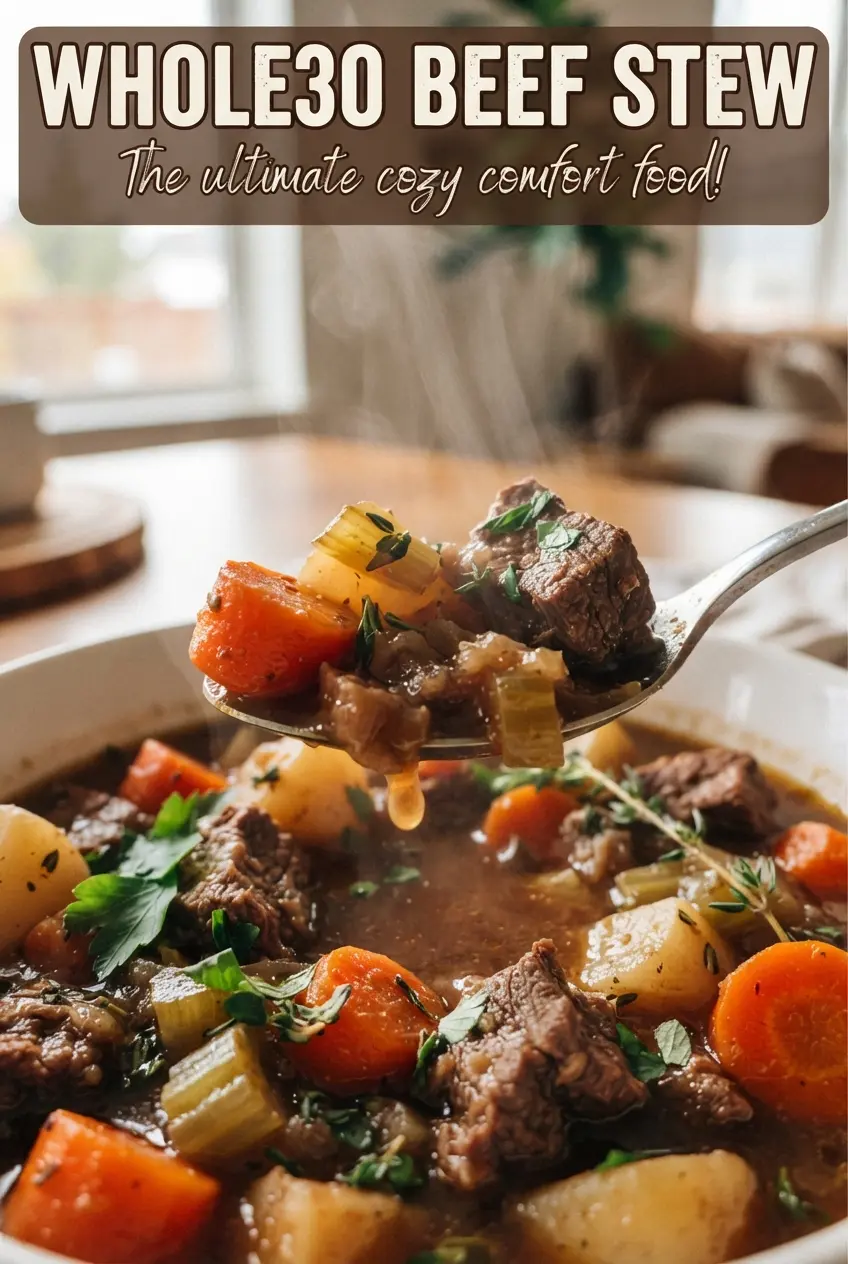
Whole30 Beef Stew
Ingredients
Equipment
Method
- Season the beef cubes with salt and black pepper, then brown in batches in hot avocado oil or ghee until well browned, with any fond left in the pot after each batch.
- Add the diced onion and cook for 4 minutes, then stir in the minced garlic and tomato paste and cook for 1 minute until fragrant, scraping up browned bits.
- Pour in the beef bone broth, coconut aminos, compliant Worcestershire sauce or balsamic vinegar, dried thyme, and bay leaf, then add the browned beef, cover, and simmer for 1 1/2 hours.
- Add the cubed sweet potato, sliced carrots, and quartered cremini mushrooms, cover, and simmer for 40-45 minutes until the vegetables are tender and the beef is fork-tender.
- Stir the arrowroot slurry (arrowroot powder mixed with water) into the stew and simmer for 2 minutes, until the gravy thickens and coats the back of a spoon.
- Remove the bay leaf and serve hot.