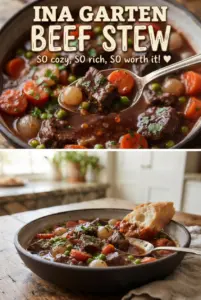
Deep-braised beef stew earns its place when the meat turns spoon-tender and the sauce tastes like it spent the whole afternoon concentrating itself. The onions melt into the wine, the carrots keep their shape without going limp, and the final broth turns glossy instead of thin and brothy. It’s the kind of stew that settles into the pot with a dark, savory richness and gets better as it sits for a day.
This version leans on a hard sear, a proper onion base, and enough red Burgundy to give the sauce backbone without making it sharp. The flour goes in after the beef has browned so it can toast in the fat and help the braise thicken naturally. The liquid is kept just high enough to cover the meat, which keeps the flavor deep instead of diluted.
Below you’ll find the key places where stew usually goes flat and how to avoid them, plus the ingredient choices that matter most if you want that classic French-style finish.
The beef came out fall-apart tender and the sauce thickened beautifully once I let it simmer uncovered for the last 20 minutes. The wine, onions, and carrots all tasted like they belonged together.
Save this Burgundy-braised beef stew for the night you want a dark, glossy sauce and truly tender chuck.
The Seared Crust and Slow Braise That Give This Stew Its Depth
The biggest mistake with beef stew is rushing past the browning. If the meat goes into the pot pale, the whole dish tastes flat no matter how long it simmers. You want a dark crust on the beef and a deep golden color on the onions before anything else goes back in. That’s where the stew gets its backbone.
The other piece that matters is restraint with the liquid. The beef should be just covered, not swimming. Too much stock turns the pot into beef soup and weakens the sauce, while a tighter braise concentrates the wine, carrot sweetness, and beef drippings into something that clings to the spoon.
What the Wine, Flour, and Bouquet Garni Are Doing Here
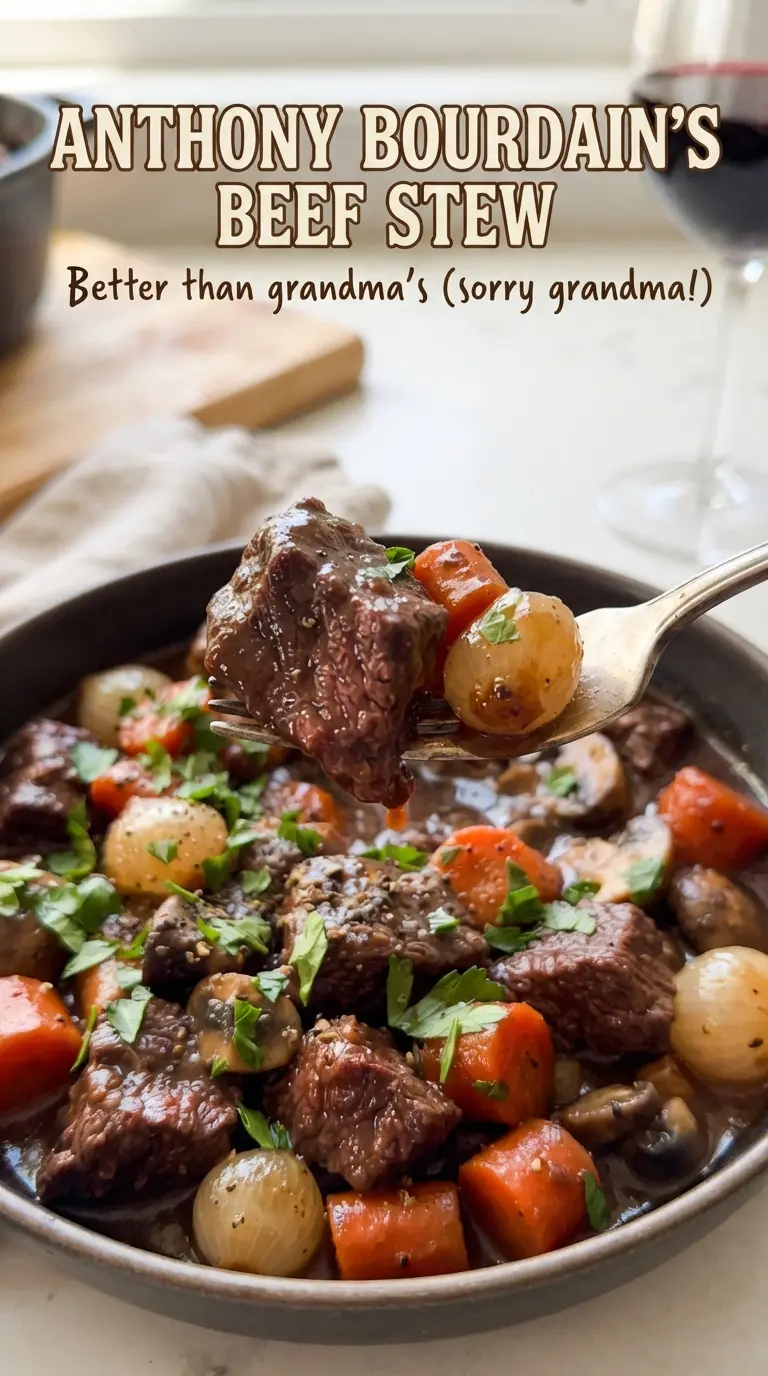
- Beef chuck — This cut is the right one because its connective tissue melts slowly and turns silky after a long braise. Leaner stew beef can work in a pinch, but it won’t give you the same plush texture.
- Red Burgundy wine — The wine isn’t just for liquid; it gives the sauce its deep, savory edge. Use a dry red you’d actually drink, since harsh wine will stay harsh after cooking.
- Flour — Sprinkling it over the browned beef lets it cook in the fat and thicken the braising liquid without tasting pasty. If you skip the step, the stew will still work, but the sauce will be looser.
- Bouquet garni — Thyme, parsley stems, and bay leaf add an herb background that stays clean and subtle. Tie it well so you can pull it out in one piece at the end.
- Onions and carrots — The onions dissolve into the sauce and the carrots give sweetness and shape. Slice the onions thin so they soften fully before the long simmer begins.
Building the Stew in Layers Instead of Dumping Everything In
Getting a Hard Sear on the Beef
Work in batches and give the beef room in the pot. If the pieces crowd together, they steam instead of browning, and steaming is the quickest way to lose the deep flavor this stew depends on. The pan should be hot enough that the meat sizzles on contact, and the finished pieces should have a dark, even crust before they come out.
Cooking the Onions in the Fond
Use the same pot after the beef comes out. The brown bits stuck to the bottom are the best part, and the onions will loosen them as they soften. Cook them slowly until they turn golden and sweet; if they start to brown too aggressively, lower the heat so they don’t take on a burnt edge that will darken the whole sauce.
Thickening Before the Braise
When the beef goes back in, sprinkle the flour over everything and stir it around for a few minutes before adding liquid. That short cooking time knocks out the raw flour taste and helps the sauce thicken later. Once the wine goes in, scrape the bottom of the pot until it’s clean, because that’s where the flavor is hiding.
The Gentle Simmer That Finishes It
Add the carrots, garlic, bouquet garni, and just enough stock or water to cover the beef. Bring it to a simmer, then keep it there gently with the lid partly on. If the boil gets too lively, the beef tightens up and the sauce can break at the edges; low heat keeps everything tender and lets the liquid reduce in a controlled way.
How to Adapt This Stew Without Losing the Soul of It
Make It Gluten-Free
Swap the all-purpose flour for a gluten-free blend or skip it and reduce the sauce a little longer at the end. The flour helps the body of the stew, but the long simmer still gives you a good result as long as you let the pot reduce enough to coat a spoon.
Use Beef Stock Instead of Water
Beef stock gives the stew a darker, rounder finish than water does, especially if your wine is very dry. If the stock is salty, back off slightly on the seasoning at the start and adjust at the end after the sauce has reduced.
Make It Ahead for Better Flavor
This stew tastes even deeper the next day because the beef, wine, and onions settle into each other overnight. Cool it completely before refrigerating, then reheat gently so the meat stays tender instead of tightening up.
Leave Out the Wine in a Pinch
If you need to skip the wine, use extra beef stock plus a small splash of red wine vinegar at the end for brightness. You’ll lose some of the signature depth, but the stew will still have a rich, savory base if the onions are browned well.
Storage and Reheating
- Refrigerator: Keeps for 4 days in a covered container. The sauce will thicken as it chills.
- Freezer: Freezes well for up to 3 months. Cool it fully first, then portion it into airtight containers.
- Reheating: Reheat slowly over low heat on the stove with a splash of stock or water. A fast boil can make the beef tough and can separate the sauce.
Answers to the Questions Worth Asking
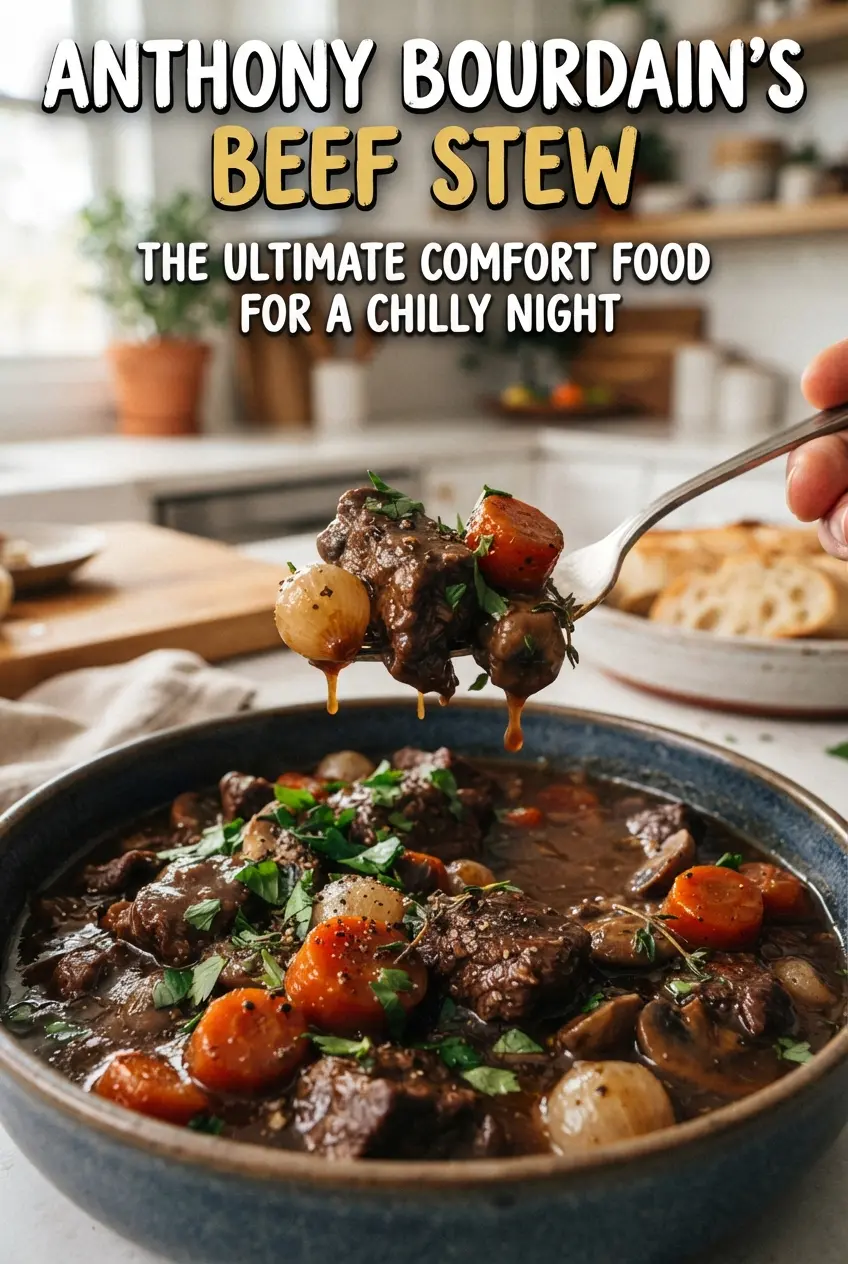
Anthony Bourdain’s Beef Stew
Ingredients
Equipment
Method
- Season the beef chuck cubes with salt and black pepper, then sear in very hot olive oil in batches until deeply browned, 3-5 minutes per batch. Transfer the browned beef to a plate as you work.
- In the same Dutch oven, cook the thinly sliced onions until soft and golden, 10 minutes over medium heat, scraping up any browned bits. Stir occasionally so the onions color evenly.
- Return the beef to the pot, sprinkle with all-purpose flour, and stir 3-4 minutes until browned and lightly coated. Cook long enough for the flour taste to mellow.
- Pour in the red Burgundy wine and scrape the bottom to release any stuck fond. Cook until the wine reduces slightly, about 2-3 minutes.
- Add the carrots, garlic clove, and bouquet garni, then pour in water or beef stock just to cover the beef. Bring to a gentle simmer over medium-low heat, then partly cover.
- Simmer gently, 2 hours, until the beef is very tender and the sauce is thick. Skim foam if needed and stir occasionally to prevent sticking.
- Remove the bouquet garni and finish the stew with chopped fresh parsley. Taste and adjust seasoning before serving.