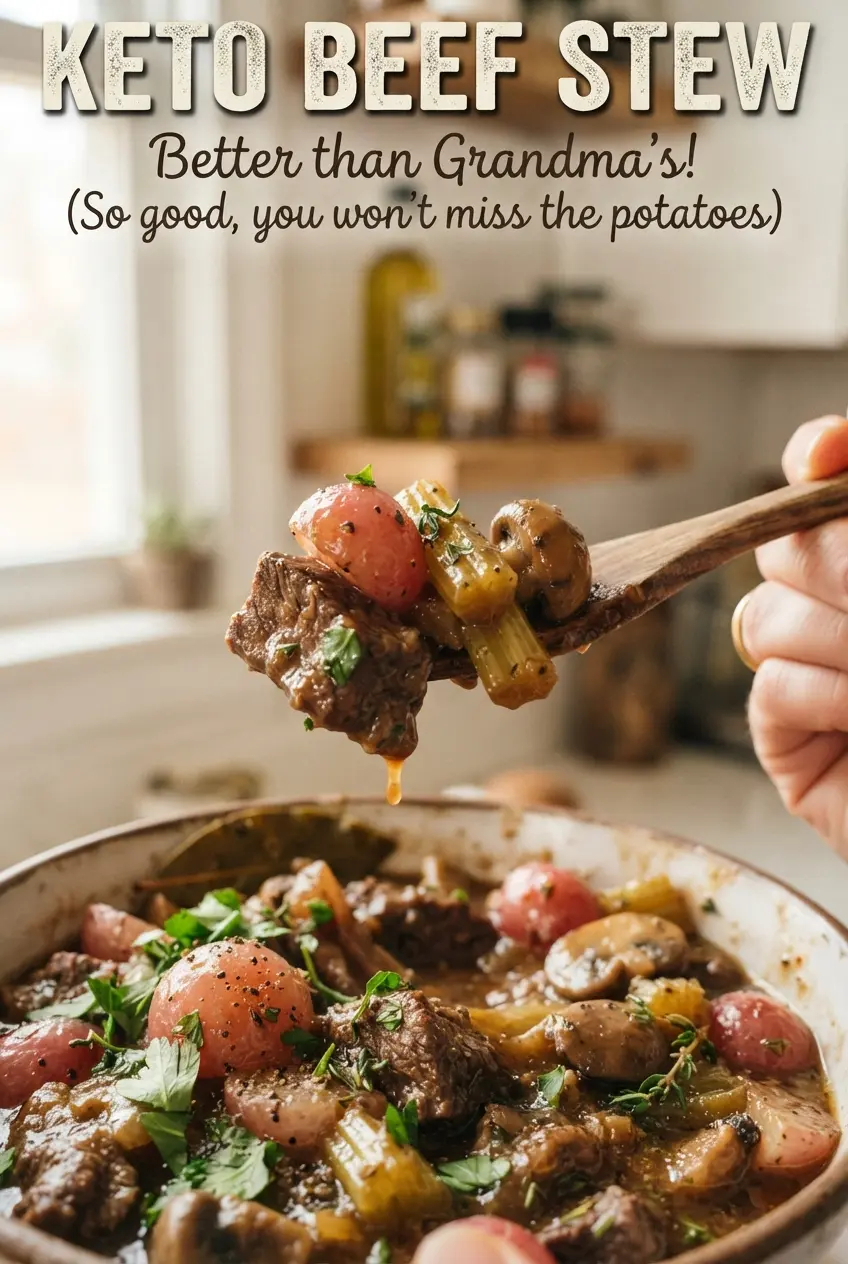
Deep, spoon-coating keto beef stew is one of those bowls that tastes like it simmered all day because it basically did. The beef turns tender enough to cut with a spoon, the gravy lands rich and dark, and the radishes quietly do the job potatoes usually handle without dragging the carb count up. This version keeps the comfort of a classic stew while staying firmly in weeknight-friendly territory once the pot is on the stove.
The key is building flavor in layers instead of relying on one big seasoning dump at the end. Browning the beef creates the base, tomato paste gives the broth depth, and a small amount of xanthan gum thickens the stew without needing flour. Radishes need enough time to soften and lose their sharp edge, while mushrooms and celery add body and keep every bite feeling hearty.
Below, I’ve broken down the parts that matter most so you know what to watch for as the stew simmers. A couple of small technique choices make the difference between a thin beef soup and a proper stew with real substance.
The gravy thickened up beautifully and the radishes turned mellow and tender instead of staying crunchy. I served it to my husband with no mention of the potatoes, and he asked for the recipe after the first bowl.
Save this keto beef stew for a low-carb dinner with tender beef, mushroom-rich gravy, and radishes that stand in for potatoes.
The Step That Keeps Keto Beef Stew Rich Instead of Watery
The biggest mistake with low-carb stew is treating it like a soup and hoping the thickness will sort itself out later. It won’t. The beef needs a deep brown crust first, and the pan needs to keep those browned bits when you add the onion and broth. That’s where the gravy gets its backbone.
Xanthan gum also needs respect. Add it in a light rain while whisking, not in one clump, or you’ll get slimy little pockets that never smooth out. It thickens fast and keeps tightening as the stew sits, which is why a modest amount works better than trying to chase body with more and more reduction.
- Beef chuck — This is the cut that turns silky after a long simmer. Leaner beef dries out before the stew gets tender.
- Radishes — They’re the stand-in for potatoes here, but they need the full simmer to lose their bite and become mellow and soft. Halve them so they cook through without disappearing.
- Tomato paste — A tablespoon is enough to deepen the broth without making the stew taste tomato-heavy. Let it cook for a minute so it darkens and loses the raw edge.
- Xanthan gum — This is what gives the broth that stew-like thickness without flour. Sprinkle it slowly into the simmering liquid while whisking, then give it a couple of minutes to bloom.
What Each Ingredient Is Actually Doing in the Pot

- Avocado oil — This handles the high heat for browning better than butter, which can scorch before the beef gets color.
- Onion and garlic — They build the aromatic base. Cook the onion until it turns translucent and sweet; garlic only needs a minute so it doesn’t burn.
- Beef broth and Worcestershire sauce — These create the savory, beefy depth in the stew. Use a broth you’d drink on its own, because it becomes the sauce.
- Thyme and bay leaf — They give the stew its classic steady background flavor. Dried thyme works fine here because it has plenty of time to hydrate and mellow.
- Mushrooms and celery — They add volume, texture, and an earthy note that helps the stew feel full and hearty without extra starch.
Building the Stew in the Right Order
Getting a real sear on the beef
Season the beef before it hits the pot, then brown it in batches in hot oil. Crowding the pan steams the meat and leaves you with gray cubes instead of the dark crust that gives the stew depth. Don’t chase every side at once; let each piece sit until it releases cleanly, then turn it. The bottom of the pot should collect browned bits, not black specks.
Softening the aromatics and tomato paste
Cook the onion in the same pot until it softens and starts to look glossy, then add the garlic and tomato paste for a short cook. The tomato paste should darken slightly and smell sweeter, not raw. This is the point where the stew starts tasting like it has been simmering for much longer than it has. If the pan looks dry, lower the heat instead of adding more oil.
Letting the long simmer do its job
Add the broth, Worcestershire, thyme, bay leaf, and browned beef, then cover and simmer gently. You want a lazy bubble, not a rolling boil, or the beef tightens up before it has time to relax. After about an hour and a half, the meat should be close to tender, but not falling apart yet. That slow middle stage is where the flavor deepens and the broth starts to look darker and fuller.
Finishing with the low-carb vegetables and thickness
Stir in the radishes, mushrooms, and celery and simmer until the radishes are tender and the beef gives easily when pressed. They need this second stage so they soften without turning bland or mushy. Whisk in the xanthan gum slowly, then simmer a couple of minutes until the broth turns glossy and coats the back of a spoon. Remove the bay leaf and finish with parsley for a fresh edge.
How to Make This Stew Fit What’s in Your Kitchen
Swap the radishes for turnips
Turnips work if you want a slightly more potato-like bite and don’t mind a stronger earthy note. Cut them into similar-sized pieces and give them the same simmer time, but expect them to stay a little firmer than radishes.
Make it dairy-free and gluten-free without changing a thing
This stew already fits both by design as long as your Worcestershire sauce is gluten-free. The xanthan gum does the thickening that flour would normally handle, so you don’t lose body by skipping wheat.
Use a pressure cooker for a faster dinner
Brown the beef and cook the aromatics on sauté first, then pressure cook the broth and beef until tender before adding the radishes, mushrooms, and celery. The tradeoff is a little less of that long-simmered depth, but it still lands hearty and satisfying when time is tight.
Storage and Reheating
- Refrigerator: Store for up to 4 days. The stew thickens as it sits, and the radishes soften a bit more by day two.
- Freezer: It freezes well for up to 3 months. Cool it completely first, then freeze in airtight containers with a little room for expansion.
- Reheating: Warm it gently on the stove over low to medium-low heat. A hard boil can make the beef tighten and can push the texture of the radishes past tender into mushy.
Answers to the Questions Worth Asking
Keto Beef Stew
Ingredients
Equipment
Method
- Season the beef chuck cubes with salt and black pepper. Heat the avocado oil in a hot Dutch oven and brown the beef in batches until well-browned on all sides, about 5–7 minutes per batch, stirring only as needed for color.
- Cook the diced onion in the Dutch oven for 3 minutes, stirring, until softened. Add the minced garlic and tomato paste and cook for 1 minute to deepen the flavor.
- Add the beef broth, Worcestershire sauce, dried thyme, bay leaf, and the browned beef to the pot. Bring to a simmer, then cover and simmer for 1 1/2 hours, stirring once midway for even cooking and a steady bubble.
- Add the halved radishes, quartered cremini mushrooms, and sliced celery to the stew. Simmer covered for 30–40 minutes until the beef is very tender and the radishes are tender, with the gravy staying thick and actively bubbling.
- Whisk the xanthan gum into the stew while simmering, then continue to simmer for 2 minutes to thicken. Stir to eliminate any clumps and watch for the gravy to coat the back of a spoon.
- Remove the bay leaf and top the stew with chopped fresh parsley. Serve hot, using the rich dark gravy as a coating over the vegetables.