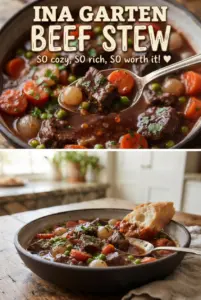
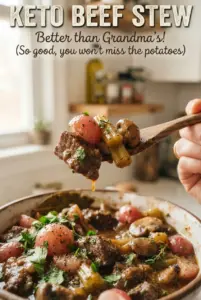
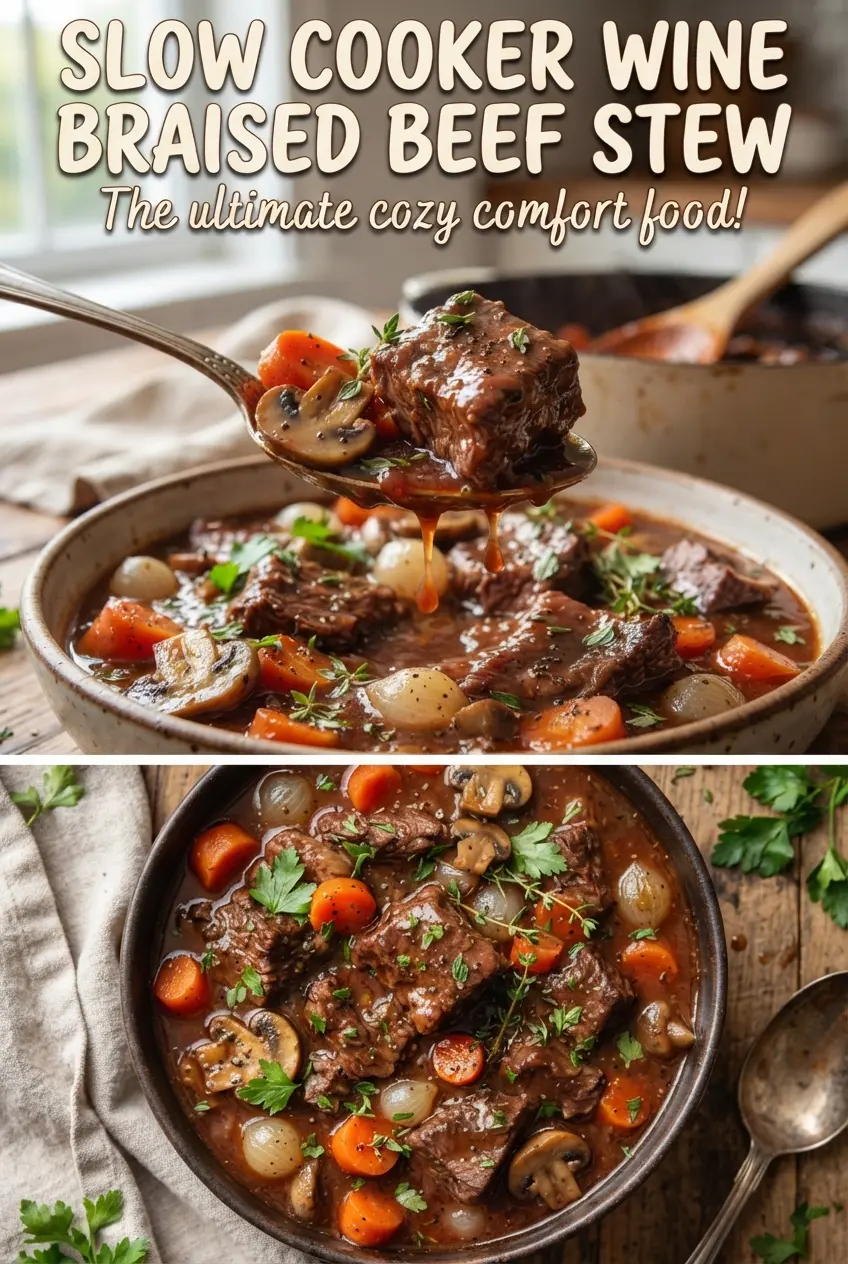
Deep, wine-braised beef stew is the kind of slow cooker dinner that tastes like it took far more effort than it did. The beef turns spoon-tender, the broth turns glossy and rich, and the carrots and pearl onions soak up just enough of the sauce to taste like they belong there, not like they were tossed in at the end. It’s the sort of pot that makes the whole kitchen smell like you’ve been cooking all day, because, in the best way, you have.
The key here is building flavor before the slow cooker ever comes into play. Browning the beef first gives the stew its backbone, and cooking the tomato paste in the same pan takes away that raw edge while deepening the color. The red wine gets a quick simmer after the pan is scraped clean, so those browned bits end up in the stew instead of stuck to the skillet.
Below, I’ll walk through the part that matters most: how to keep the sauce balanced and the beef tender without ending up with a thin, flat broth. I’ve also included the swaps that work when you need them and the ones that don’t quite deliver the same result.
The beef was fall-apart tender after 8 hours and the sauce thickened into this rich, glossy gravy that was perfect over mashed potatoes. Even my husband went back for seconds.
Save this slow cooker wine braised beef stew for the nights when you want deep red wine flavor and fork-tender beef over creamy polenta.
The Browning Step That Gives This Stew Its Depth
If the stew tastes flat, it usually means the beef went straight into the slow cooker without first getting a proper sear. The flour-coating helps the meat brown and also gives the finished broth a little body, but the real flavor comes from those dark browned bits left in the pan. Don’t crowd the meat or rush this part; pale beef means pale broth later.
The tomato paste belongs in the skillet too. Cooking it for a few minutes takes away the tinny edge and pushes it toward a richer, sweeter note that works with the wine. Then the wine goes in to loosen everything stuck to the pan, which is where a lot of the best flavor is hiding. That quick simmer matters because it cooks off the sharp alcohol bite before the liquid hits the slow cooker.
What Each Ingredient Is Actually Doing In This Stew
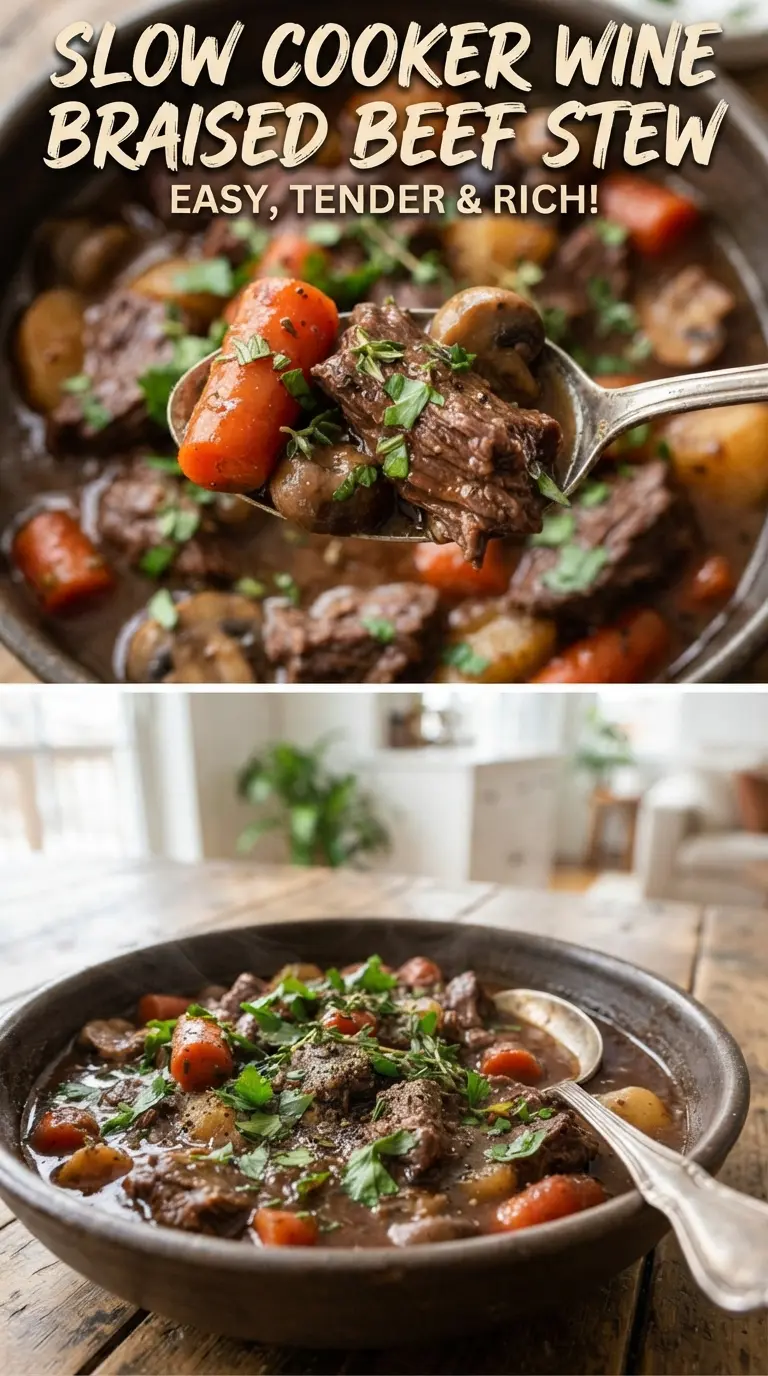
- Beef chuck — This is the cut you want because it has enough connective tissue to turn silky over a long cook. Leaner stew meat will dry out before it gets that same fall-apart texture.
- Dry red wine — Use a wine you’d actually drink. It doesn’t need to be expensive, but it should taste clean and dry, not sweet, or the stew can end up heavy instead of balanced.
- Tomato paste — A small amount goes a long way here. It deepens the color and gives the sauce a savory backbone without making the stew taste like tomato.
- Fresh rosemary and thyme — Fresh herbs hold up better during a long slow cook and give the stew a more layered, woodsy finish. Dried herbs work in a pinch, but use less and expect a softer aroma.
- Frozen pearl onions — They save time and keep their shape better than chopped onion pieces would at the end of a long cook. If you only have fresh pearl onions, peel them first and use them the same way.
- Carrots — Cut them into chunky pieces so they stay intact after eight hours. Small pieces will turn mushy before the beef is done.
Building the Pot So the Beef Stays Tender
Searing the Beef First
Toss the beef with flour, salt, and pepper, then brown it in batches until the surfaces are deeply colored. The flour helps with both browning and thickening, but too much flour clumped in the pan can scorch, so shake off any loose excess before the meat hits the oil. If the pan looks crowded, stop and work in more batches. Steam is the enemy of a good stew.
Cooking the Base in the Same Pan
After the beef comes out, cook the onion, garlic, and tomato paste in the same skillet. The onion should soften and smell sweet, not brown hard, and the garlic only needs a short minute or two before it starts to smell fragrant. Stir constantly once the paste goes in, because tomato paste can stick and darken fast. That little bit of attention pays off in a much fuller-tasting stew.
Deglazing With Wine
Pour in the wine and scrape the pan bottom with a wooden spoon until every brown spot loosens. Let it simmer for about three minutes so the raw edge softens and the liquid reduces slightly. If you skip this step, the stew can taste thin and the wine can feel sharp instead of rounded. Once it’s scraped clean and lightly reduced, it’s ready for the slow cooker.
The Long Slow Cook
Add the broth, balsamic vinegar, rosemary, thyme, carrots, and pearl onions, then cover and cook on low for about 8 hours. By the end, the beef should collapse when you press it with a spoon, and the carrots should be tender without falling apart. If the meat is still chewy, it needs more time, not more heat. High heat tightens braised beef instead of fixing it.
Three Ways to Adjust the Stew Without Losing the Point
Dairy-Free Serving Choice
The stew itself is already dairy-free, so the main adjustment is in the base you serve it over. Creamy polenta works beautifully, and mashed potatoes do too if you keep the butter or cream out. The stew stays rich on its own, so you won’t miss the dairy in the pot.
Make It Gluten-Free
Skip the all-purpose flour and use a gluten-free flour blend, or brown the beef without dredging it and thicken the finished stew with a slurry at the end. You’ll lose a little of the early pan coating, but the braise will still taste rich and finish with good body.
Use a Different Wine
Cabernet, merlot, or pinot noir all work as long as they’re dry and not overly sweet. A fuller-bodied wine gives the stew a deeper, darker edge, while a lighter one keeps it a little brighter. Don’t use cooking wine; it brings a harsh, salty finish that never cooks out.
Storage and Reheating
- Refrigerator: Store in an airtight container for up to 4 days. The flavor deepens overnight, and the sauce usually thickens as it chills.
- Freezer: This freezes well for up to 3 months. Cool it completely first, then freeze in portioned containers so the beef and sauce reheat evenly.
- Reheating: Warm gently on the stovetop over low heat or in the microwave at medium power. Don’t boil it hard or the beef can tighten and the sauce can separate.
Answers to the Questions Worth Asking
Slow Cooker Wine Braised Beef Stew
Ingredients
Equipment
Method
- Toss the beef with the flour, salt, and black pepper, then brown it in batches in the Dutch oven with the olive oil before transferring to the slow cooker.
- Cook the diced onion, minced garlic, and tomato paste in the same pan for 3 minutes.
- Pour in the red wine and scrape the browned bits from the pan, then simmer for 3 minutes before pouring into the slow cooker.
- Add the beef broth, balsamic vinegar, rosemary, thyme, carrots, and frozen pearl onions to the slow cooker and stir to combine.
- Cover and cook on LOW for 8 hours, until the beef is fall-apart tender.
- Remove the herb stems and serve the stew over creamy polenta or mashed potatoes.