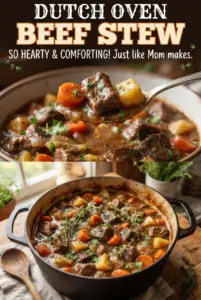
Thick, glossy Dutch oven beef stew has a way of settling into the table like it belongs there. The beef turns spoon-tender, the potatoes soak up the broth without falling apart, and the carrots soften just enough to keep their shape. What you end up with is the kind of stew that tastes deeper on the second bowl than the first.
The key is building flavor in stages instead of dumping everything in and hoping the oven does the rest. Browning the beef in batches gives you a dark, savory base, and the tomato paste needs that short minute in the pan to lose its raw edge. The wine doesn’t just add richness; it also loosens the browned bits from the bottom so they end up in the stew instead of stuck to the pot.
Below, you’ll find the exact cues I use to know when the beef is ready to go back into the oven, when to add the vegetables, and how to keep the broth full-bodied instead of thin or greasy.
The broth thickened up beautifully and the beef was fork-tender after the full bake time. I added the potatoes at the end like you said and they held their shape perfectly instead of turning mushy.
Save this Dutch oven beef stew for the nights when you want fork-tender beef, rich broth, and one pot doing all the work.
The Browning Stage Is What Gives This Stew Its Backbone
Most beef stew problems start before the pot ever goes into the oven. If the beef goes in pale, the broth has to carry all the flavor on its own, and it never tastes as deep or savory. Browning the chuck in batches creates a dark crust and leaves behind fond on the bottom of the pot, which is the start of the stew’s flavor, not a mess to clean away.
The flour on the beef does two jobs here. It helps the meat brown a little more evenly, and it gives the stew a subtle body as it simmers. If you dump all the beef in at once, it steams instead of sears. Give it space, let each side sit until it releases cleanly, and build the flavor in layers.
What Each Ingredient Is Actually Doing In This Pot
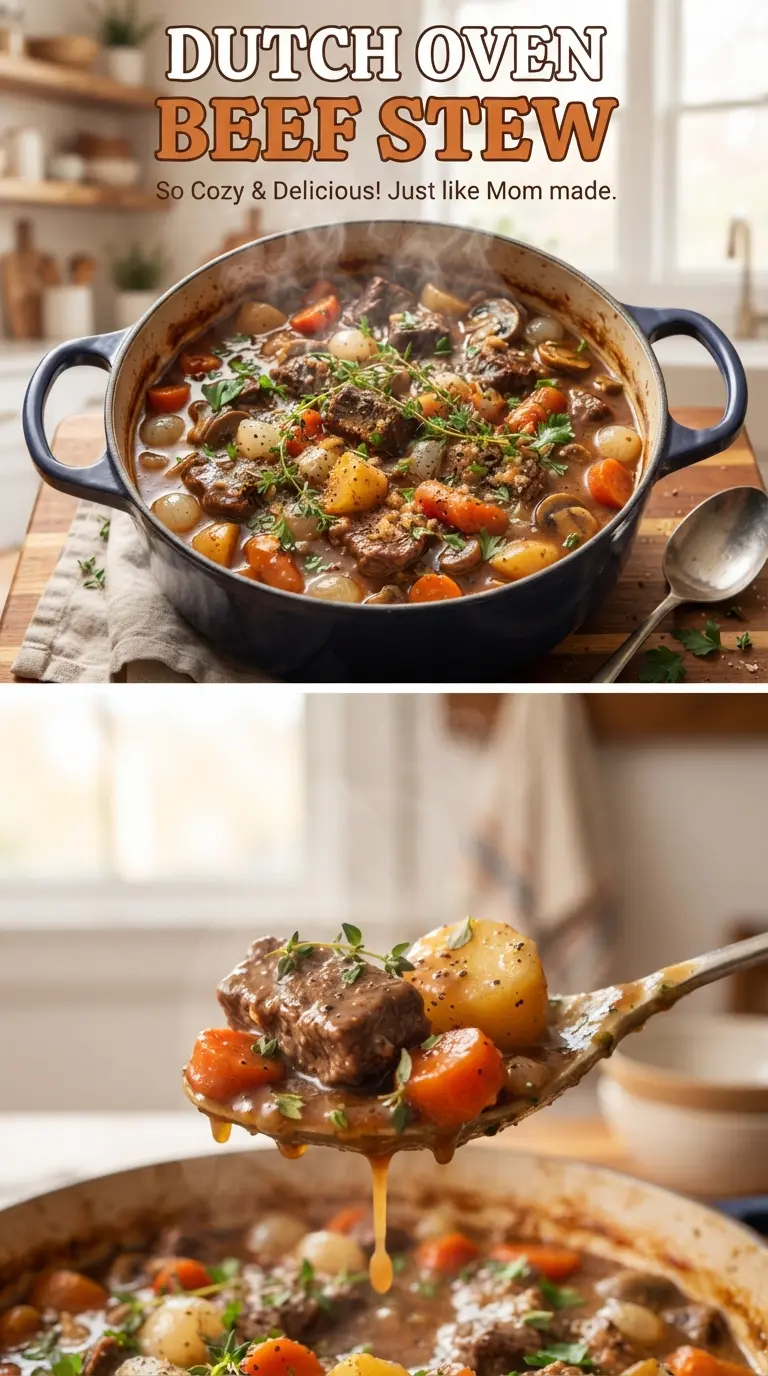
- Beef chuck — This is the cut that turns rich and silky after a long bake. Leaner beef gets dry before the vegetables are tender, but chuck has the connective tissue this dish needs. Cut it into even pieces so it cooks at the same pace.
- Dry red wine — This is what loosens the browned bits from the pot and adds depth that broth alone can’t give you. Use a wine you’d actually drink; a harsh bottle stays harsh in the stew. If you want to skip it, use more beef broth plus a teaspoon of red wine vinegar at the end for brightness.
- Tomato paste — Just a couple tablespoons give the broth a deeper color and a slow-cooked taste. Let it cook for a full minute with the onions and garlic so it loses the raw tinny edge. That little step matters.
- Baby potatoes and carrots — Adding them near the end keeps them intact instead of turning to mush. Yukon Golds can work in place of baby potatoes, but cut them into larger chunks so they don’t collapse. Carrots should be in thick pieces, not thin coins, or they’ll disappear into the broth.
- Fresh rosemary, thyme, and bay leaves — Dried herbs can work in a pinch, but fresh sprigs give the stew a cleaner, woodsy finish. Pull the stems before serving or the flavor gets muddy. Bay leaves won’t make the stew taste like bay; they round out everything else.
Building the Pot From Sear to Slow Bake
Getting a deep brown crust on the beef
Set the Dutch oven over medium-high heat and brown the beef in batches until each piece has a dark crust on at least two sides. If the pot looks crowded, stop and remove some pieces; steam is the enemy here. The fond on the bottom should be deep brown, not black, and the pan should smell savory, not burnt.
Cooking down the onion and tomato paste
Once the beef is out, cook the onion in the same pot until it softens and picks up a little color from the drippings. Add the garlic and tomato paste and stir for a minute until the paste darkens slightly and no longer smells sharp. If the garlic starts to brown hard, lower the heat right away, because burnt garlic carries straight through the whole stew.
Using the wine to lift the flavor off the bottom
Pour in the wine and scrape the bottom with a wooden spoon so every browned bit dissolves into the liquid. Let it simmer for a couple of minutes so the harsh alcohol smell cooks off and the wine tastes round instead of sharp. This is the point where the stew gets its depth, so don’t rush it.
Slow baking until the beef gives in
Add the broth, Worcestershire, herbs, bay leaves, and beef, then cover the pot and bake until the meat is close to tender. The stew should bubble gently, not boil hard. Once the beef is nearly there, stir in the potatoes and carrots and bake again until a fork slides into both the meat and the vegetables without resistance.
Make It Gluten-Free Without Losing Body
Swap the all-purpose flour for a gluten-free flour blend or skip it entirely and dust the finished stew with a cornstarch slurry at the end. The stew will still be rich, but the thickening comes a little later, so simmer it long enough for the broth to lose its raw starch taste.
Skip the Wine and Keep the Depth
Use an extra cup of beef broth in place of the wine, then add 1 teaspoon of red wine vinegar or balsamic at the end. You lose a little of the roundness that wine brings, but you keep the stew from tasting flat.
Turn It Into a Bigger-Batch Sunday Stew
Double everything except the herbs and use a wider Dutch oven if you have one, since overcrowding makes the meat braise unevenly. The cook time usually stays close to the same, but the pot may need an extra 15 to 20 minutes for the beef to turn fully tender.
Storage and Reheating
- Refrigerator: Store in an airtight container for up to 4 days. The broth thickens as it chills, which is normal.
- Freezer: This freezes well for up to 3 months. Cool it completely first, then freeze in portioned containers so the potatoes don’t get crushed during thawing.
- Reheating: Warm it gently on the stove over medium-low heat with a splash of broth or water if needed. Don’t boil it hard, or the beef can tighten up and the vegetables can break apart.
Answers to the Questions Worth Asking
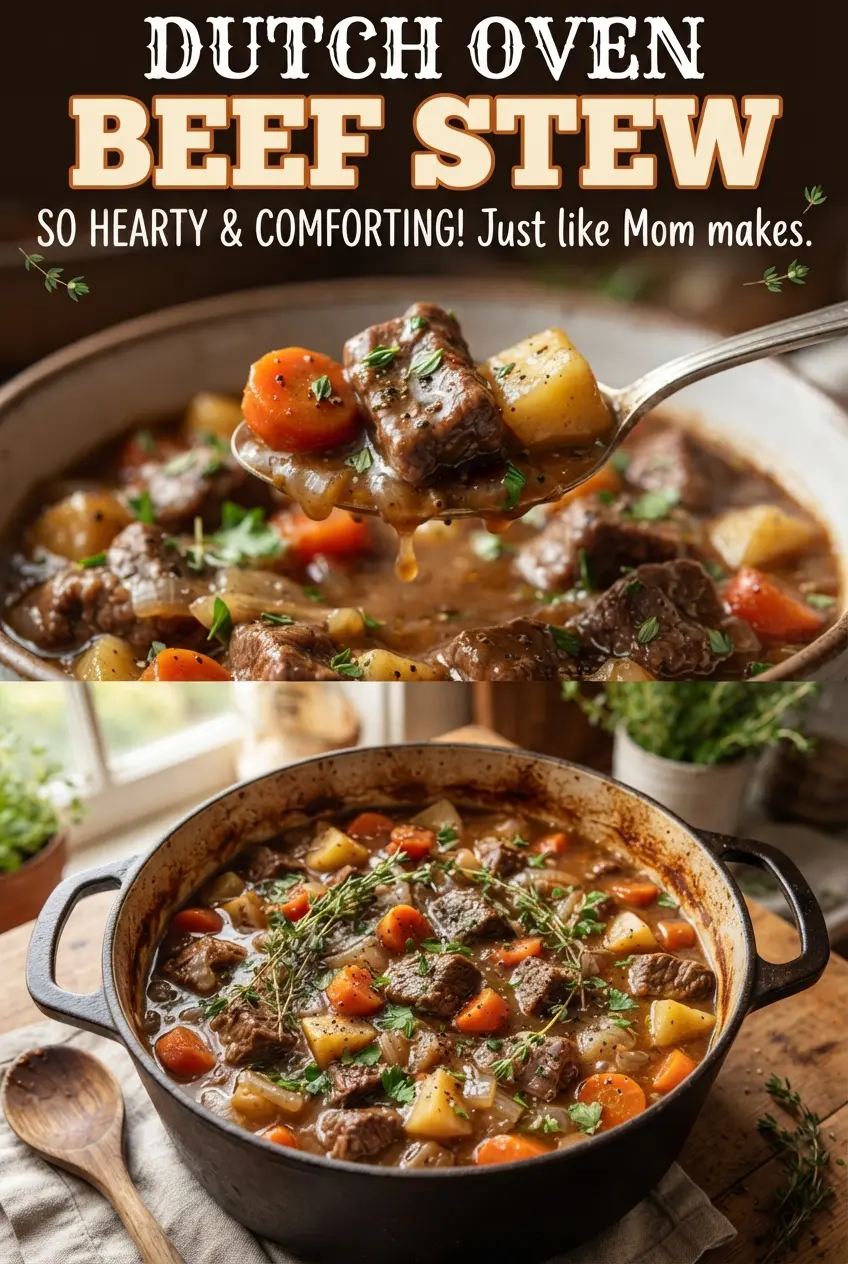
Dutch Oven Beef Stew
Ingredients
Equipment
Method
- Preheat oven to 325°F. Season the beef cubes with salt and black pepper, toss with all-purpose flour, and brown in batches in the Dutch oven until deeply colored with visible crust.
- Cook the diced onion in the Dutch oven for 5 minutes. Add the minced garlic and tomato paste and cook for 1 minute, scraping any browned bits off the bottom so the paste turns fragrant and darkens slightly.
- Pour in the dry red wine and scrape the bottom of the Dutch oven. Simmer for 2 minutes until the wine is reduced and the sauce looks glossy.
- Add the beef broth, Worcestershire sauce, rosemary sprigs, thyme sprigs, bay leaves, and the browned beef. Cover and bake for 2 hours so the beef becomes fork-tender and the liquid thickens.
- Stir in the halved baby potatoes and 1-inch carrots. Cover and bake for 1 hour more until the potatoes are tender and the carrots are easy to pierce.
- Remove the herb stems and bay leaves before serving. Taste and adjust as needed, then ladle into bowls with visible beef, potatoes, and carrots in a thick, glossy stew.