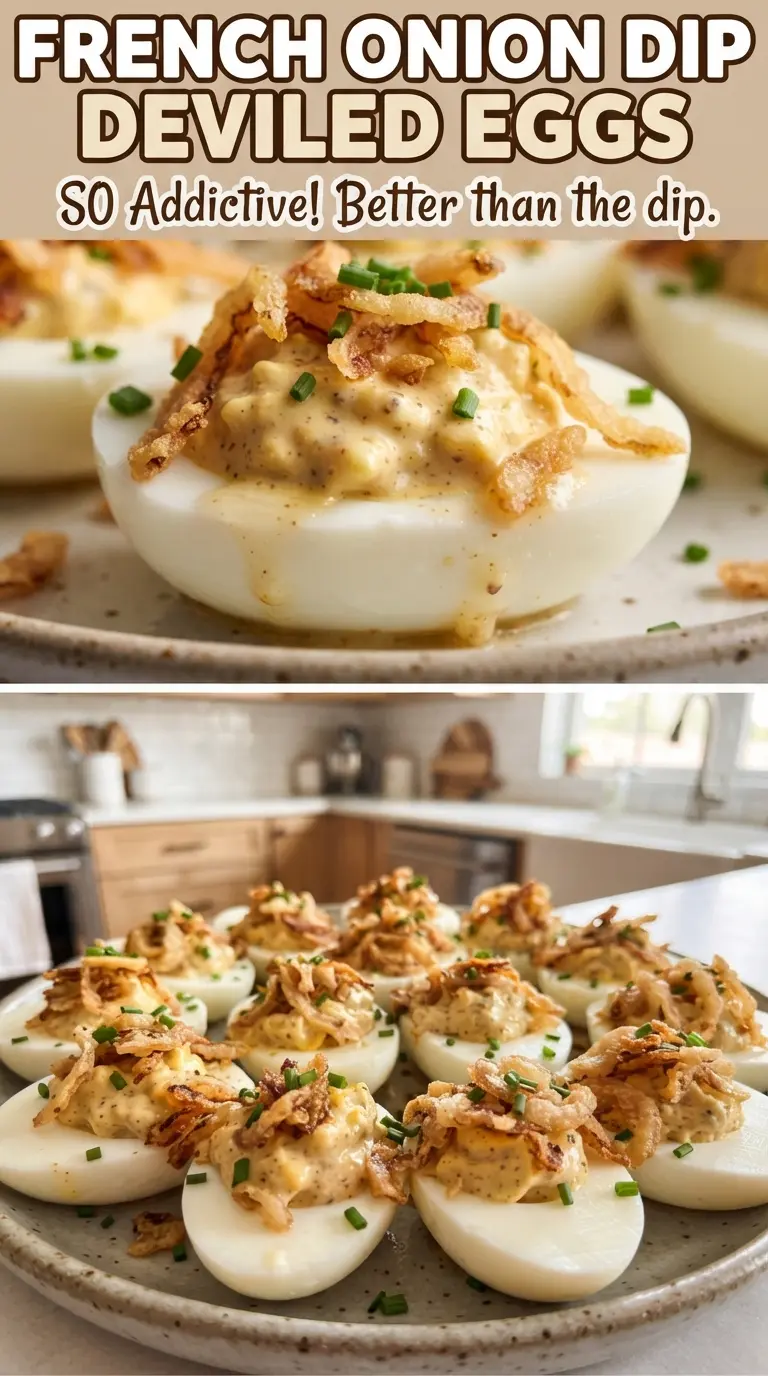
French onion dip and deviled eggs belong at the same party. The filling turns rich and tangy, the onions bring that sweet, slow-cooked depth, and the crispy topping gives each bite a little crunch before the creamy center takes over. It’s the kind of appetizer people hover over, then circle back for once the platter starts looking sparse.
The trick is treating the onions like the main event, not a garnish. They need enough time in butter to turn deep golden and jammy, because rushed onions taste sharp instead of sweet. The yolks also need a soft, smooth hand when they’re mixed with sour cream and mayonnaise; overworking them makes the filling heavy instead of light and pipeable. A little Worcestershire keeps the flavor grounded and savory, which is what makes these taste like French onion dip in deviled egg form instead of just eggs with onions on top.
Below you’ll find the timing that keeps the onions from burning while the eggs chill, plus a few useful swaps and make-ahead notes so the platter comes together without stress.
The onions turned out sweet and jammy, and the crispy fried onions on top gave these the best crunch. I made them for a game night and the tray was empty before the second half.
Save these French Onion Dip Deviled Eggs for the appetizer board that needs a creamy filling, sweet caramelized onions, and a crunchy finish.
The Reason the Onions Need to Go Deep Gold Before They Touch the Yolks
French onion flavor lives or dies with the onions. If they’re pale and soft, the eggs taste flat and a little sharp. You want the onions cooked down until they’ve lost their raw edge, picked up sweetness, and turned sticky enough to cling to the filling without watering it down. That slow browning also keeps the final bite tasting like dip, not like chopped onion mixed into egg salad.
The other part people miss is temperature. Warm onions can melt the filling and make it loose, so they need to cool before you fold them in. The filling should hold its shape when piped, but still feel smooth and spoonable. If it’s stiff, a teaspoon of sour cream will loosen it without thinning the flavor too much.
What Each Ingredient Is Actually Doing Here
- Yellow onion — This is the backbone of the recipe. It softens into sweetness during the caramelizing step and gives the filling that French onion dip character. A white onion will work in a pinch, but it tastes sharper and won’t go as mellow.
- Sour cream and mayonnaise — These create the creamy, tangy base. Sour cream brings the dip flavor; mayonnaise gives the filling body and helps it pipe neatly. Don’t swap both for one or the other unless you want a different texture.
- Worcestershire sauce — This adds the savory depth that makes the eggs taste seasoned instead of simply oniony. It’s small, but it matters. If you need a substitute, use a tiny splash of soy sauce plus a drop of vinegar, but keep it restrained.
- Crispy fried onions — These are for crunch, and they’re not optional if you want the full French onion dip effect. Add them at the end so they stay crisp. If they sit on the filling too long, they soften.
- Chives — They brighten the whole platter and keep the eggs from tasting heavy. Snipped fresh chives beat dried every time here.
Building the Filling So It Stays Smooth, Tangy, and Pipeable
Cooking the onions low and slow
Melt the butter in a skillet over medium-low heat, then add the diced onion and let it cook until it turns deep golden and jammy. Stir often, but don’t rush it with extra heat or the edges will scorch before the sugars have time to develop. You’re looking for color, softness, and a slight stickiness on the spoon. If the pan starts to dry out before the onions are ready, lower the heat and let them keep going; a splash of water is fine, but only if the onions need help loosening stuck bits.
Making the egg yolk base
Once the eggs are cooled and peeled, halve them cleanly and pop the yolks into a bowl. Mash them with the sour cream, mayonnaise, Worcestershire, onion powder, garlic powder, and salt until the mixture looks smooth and pale. A few tiny lumps won’t hurt, but grainy yolks usually mean they weren’t broken down enough before the dairy went in. The filling should look thick enough to mound on a spoon without cracking.
Folding in the onions
Add about half the cooled caramelized onions to the yolk mixture and fold them through gently. This keeps the filling from turning muddy and lets little ribbons of onion stay visible in each bite. Taste before you pipe; if it needs more salt, add it now, not after the eggs are plated. The mixture should taste a touch bold on its own, because the whites will soften it.
Finishing the platter
Spoon or pipe the filling into the egg whites, then top each one with the remaining onions, crispy fried onions, and chives. Don’t add the crunchy onions too early or they’ll lose their texture while the eggs sit. A final pinch of chives right before serving makes the platter look fresh and keeps the flavors bright.
Three Ways to Make These Eggs Fit the Crowd You’re Serving
Make Them Ahead for a Party Tray
You can boil the eggs and caramelize the onions a day ahead, then keep the whites, yolks, and onions separate until serving time. Assemble within a few hours of serving so the toppings stay crisp and the filling stays tidy. If you pipe them too early, the onions can slide and the fried topping loses its crunch.
Dairy-Free Version That Still Tastes Rich
Use a dairy-free sour cream and a mayonnaise you like on its own, then keep the onion and Worcestershire amounts the same. The texture will stay close to the original, though the filling may taste a little less round than the dairy version. Good seasoning matters more here, so taste before filling the whites.
Extra-Onion, Extra-Savory Version
If you want the onion flavor louder, save a little of the caramelized onion mixture and fold an extra spoonful into the yolks. That makes the filling looser and a bit less delicate, but it leans harder into the French onion dip idea. Add more crispy onions only at the very end so the texture still pops.
Storage and Reheating
- Refrigerator: Store assembled eggs in a single layer for up to 2 days. The topping will soften, but the flavor stays good.
- Freezer: Don’t freeze these. The egg whites turn rubbery and the filling breaks once it thaws.
- Reheating: These are best served cold or cool, not reheated. If they’ve been in the fridge, let them sit out for 10 to 15 minutes so the filling loses its chill and the onion flavor comes through.
Answers to the Questions Worth Asking
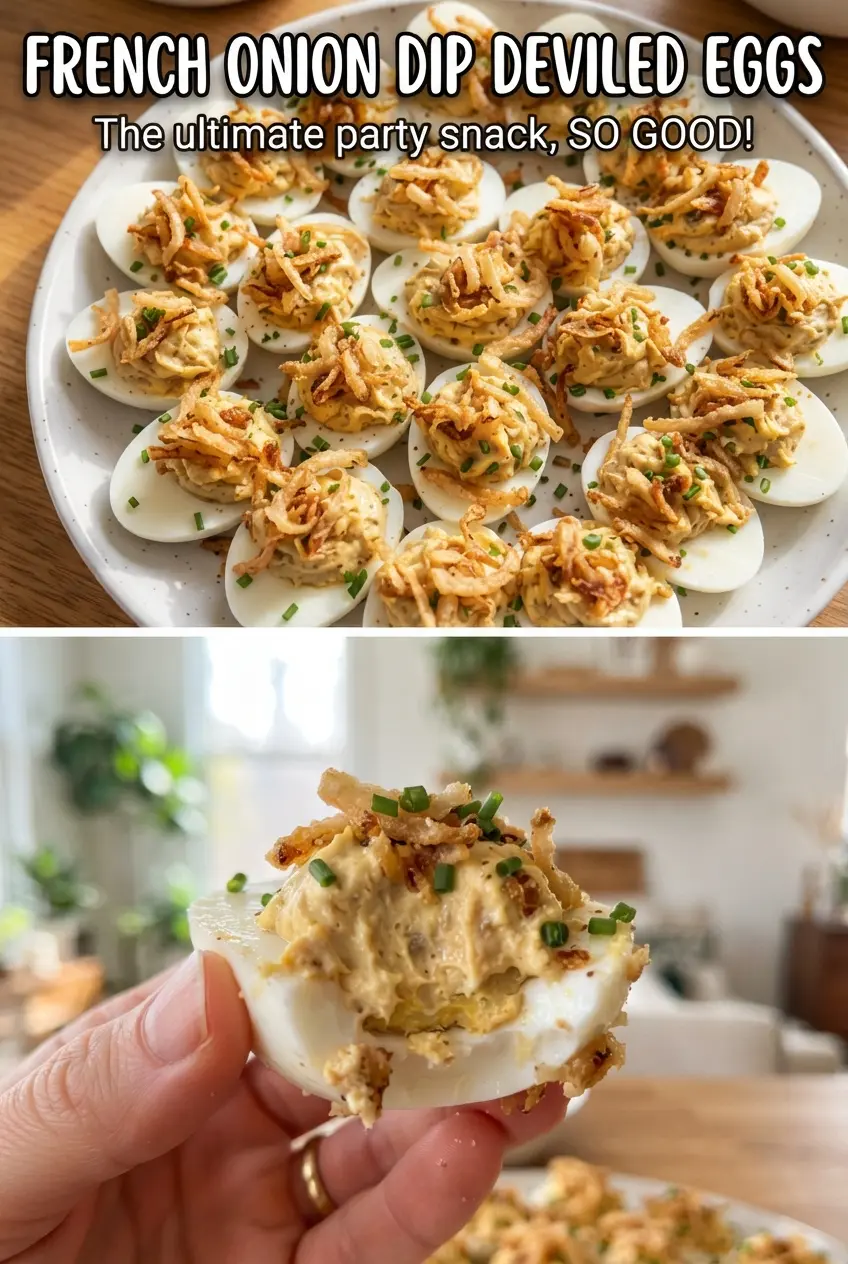
French Onion Dip Deviled Eggs
Ingredients
Equipment
Method
- Melt the butter in a cast iron skillet over medium-low heat, then add the finely diced onion. Cook for 20-25 minutes, stirring occasionally, until deep golden; visual cue: onions look jammy and smell sweet, not harsh.
- Cool the caramelized onions completely after cooking so the filling stays thick. Spread them out in the skillet or transfer to a plate to speed cooling.
- Place the large eggs in a pot and cover with cold water. Bring to a boil, then cover, remove from heat, and let stand 12 minutes.
- Chill the eggs after the stand time, then peel them. Visual cue: cooled eggs peel cleanly with fewer tears.
- Halve the eggs lengthwise and remove the yolks, keeping the whites intact. Arrange the egg whites cut-side up for piping.
- Mash the yolks with sour cream, mayonnaise, Worcestershire sauce, onion powder, garlic powder, and salt until smooth. Visual cue: mixture is creamy and cohesive with no dry yolk bits.
- Fold in half the caramelized onions. Visual cue: streaks of onion distribute through the filling.
- Pipe the filling into the egg whites. Use a steady motion so the tops are mounded and even.
- Top each egg with the remaining caramelized onions, then finish with crispy fried onions and fresh chives. Visual cue: toppings look layered—glossy onions, crunchy fried onions, and bright green chives.