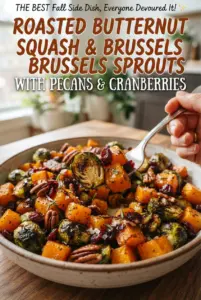
Caramelized butternut squash and deeply browned Brussels sprouts are what make this side dish worth putting on repeat. The edges get crisp in the oven, the centers stay tender, and the maple-balsamic finish pulls everything together without turning it into a heavy glaze. Add toasted pecans and dried cranberries, and you get the kind of contrast that keeps every bite interesting: sweet, tangy, nutty, and just a little crisp.
The key is giving the vegetables enough space to roast instead of steam. A hot oven and a single sheet pan do the real work here, especially if the squash cubes are cut to a similar size as the halved sprouts. The maple and balsamic go in after roasting, which keeps the vegetables from softening too early and lets the cranberries stay pleasantly chewy instead of dissolving into the pan.
Below, I’ve included the detail that matters most for getting the texture right, plus a few smart ways to adjust this dish for different diets and make-ahead meals. If you’ve ever ended up with limp Brussels sprouts or squash that never quite browned, this version fixes both problems.
The squash caramelized instead of going mushy, and the maple-balsamic coating was just enough to tie everything together. I used it with roast chicken and ended up scraping the pan clean.
Save this roasted butternut squash and Brussels sprouts recipe for a caramelized side dish with maple-balsamic glaze, pecans, and cranberries.
The Trick to Roasting Two Vegetables That Cook at the Same Pace
Brussels sprouts and butternut squash can work beautifully together, but only if the pieces are cut with the same roast time in mind. Squash that’s left in big chunks will lag behind, while sprouts that are sliced too small can scorch before the squash softens. When the pieces are close in size and spread in a single layer, both vegetables have a chance to brown instead of steam.
The other thing that matters here is heat. Four hundred twenty-five degrees gives the squash enough time to caramelize and the sprouts enough direct contact with the pan to pick up crisp, dark edges. If the pan is crowded, the vegetables release moisture and the whole tray turns soft, so use a large sheet pan and resist piling them up.
What the Maple, Balsamic, and Pecans Are Doing Here
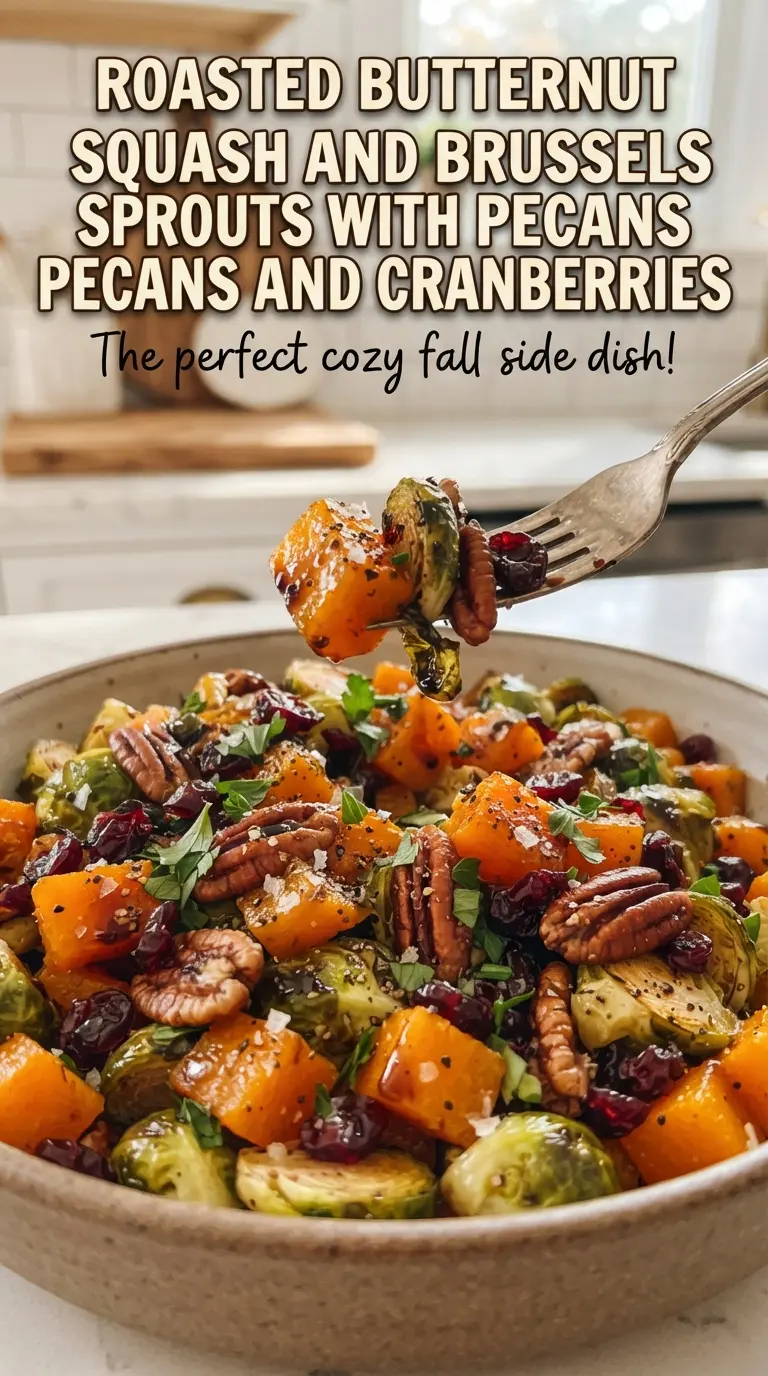
- Butternut squash — This brings sweetness and a soft, creamy center after roasting. Pre-cut squash works fine if the cubes are reasonably even, but avoid pieces that are too tiny or they’ll dry out before they caramelize.
- Brussels sprouts — These need direct contact with the hot pan to get those browned, crisped cut faces. If you’re using larger sprouts, halve them through the stem so they stay intact during roasting.
- Maple syrup and balsamic vinegar — This is the finish that keeps the dish from tasting flat. Stir them together after roasting so the glaze stays bright and glossy instead of reducing into something sticky and harsh in the oven.
- Pecans — Toasted pecans add the crunch this dish needs at the end. Raw pecans taste muted here, so if yours aren’t toasted yet, give them a few minutes in a dry skillet first.
- Dried cranberries — These add chewy sweetness and a little tart pop. They go in after roasting so they soften just enough from the warm vegetables without turning gummy.
How to Build the Roast So the Vegetables Brown, Not Sweat
Seasoning the Pan
Toss the squash and Brussels sprouts with olive oil, salt, and pepper until every cut surface looks lightly coated. That thin layer of oil helps heat move across the vegetables and encourages browning, while the salt pulls the flavor forward before the maple glaze goes on. If the vegetables look shiny but not greasy, you’re in the right range. Too much oil pools on the pan and can keep the edges from crisping.
Roasting for Color and Texture
Spread everything in a single layer on a large sheet pan and roast until the edges are deeply browned and the squash is tender when pierced with a fork, about 25 to 30 minutes. Stir or toss halfway through so the underside gets its turn against the hot pan. If you pull it too early, the sprouts taste bland and the squash will still have a raw center; if you leave it too long, the squash can collapse into a soft mash.
Finishing With the Maple-Balsamic Toss
Whisk the maple syrup and balsamic together, then toss it with the hot vegetables, cranberries, and pecans right before serving. The warmth helps the glaze cling without cooking off the vinegar’s sharp edge. Add the nuts at the end so they stay crunchy, because once they sit in the hot pan too long, they lose the texture that makes them worth including.
Three Smart Ways to Adjust This Side Dish
Make It Dairy-Free and Naturally Vegan
This recipe already fits both, so there’s nothing to replace. That’s one reason it works so well as a holiday side or a simple weeknight vegetable dish: the richness comes from caramelization, nuts, and the maple glaze, not from butter or cheese.
Swap the Pecans for Another Crunch
Walnuts, hazelnuts, or sliced almonds all work if that’s what you have. Pecans are the softest and sweetest choice, while walnuts bring a slightly bitter edge and almonds stay firmer. Whatever nut you use, toast it first so it tastes intentional instead of raw and dusty.
Cut the Sweetness a Little
If you want a less sweet finish, reduce the maple syrup by half and add an extra teaspoon of balsamic vinegar. That keeps the glaze balanced but gives the vegetables a sharper edge. The cranberries will still add sweetness, so the dish won’t taste flat even with a lighter hand on the syrup.
Make It Gluten-Free Without Changing a Thing
This side dish is already gluten-free as written, so serve it exactly the same way. It’s a good reminder that good roasting, not fillers, is what gives a dish its appeal.
Storage and Reheating
- Refrigerator: Store leftovers in an airtight container for up to 4 days. The sprouts will soften a bit, but the flavor holds up well.
- Freezer: Freezing isn’t ideal because the squash and sprouts lose their roasted texture when thawed. If you must freeze it, expect a softer result and use it in a grain bowl or hash later.
- Reheating: Warm leftovers on a sheet pan in a 400F oven until heated through. The biggest mistake is microwaving it for too long, which makes the vegetables limp and the pecans soggy.
Answers to the Questions Worth Asking
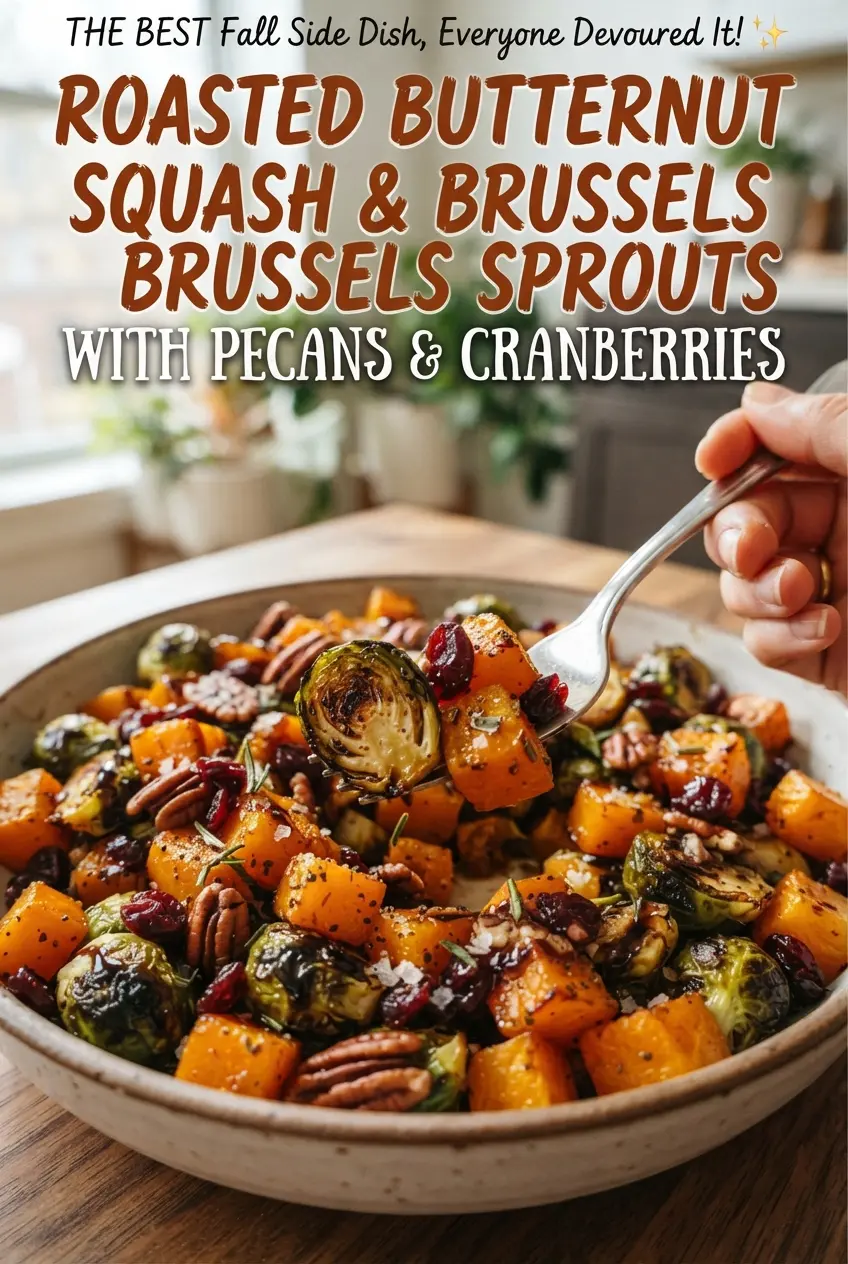
Roasted Butternut Squash and Brussels Sprouts with Pecans and Cranberries
Ingredients
Equipment
Method
- Preheat oven to 425F and line a large sheet pan for easy roasting.
- Toss butternut squash and Brussels sprouts with olive oil, salt, and black pepper on the sheet pan until evenly coated.
- Roast for 25-30 minutes, tossing halfway, until tender and caramelized with browned edges.
- Whisk maple syrup and balsamic vinegar in a bowl until combined and glossy.
- Toss the roasted vegetables with the maple balsamic, dried cranberries, and toasted pecans, then serve warm.