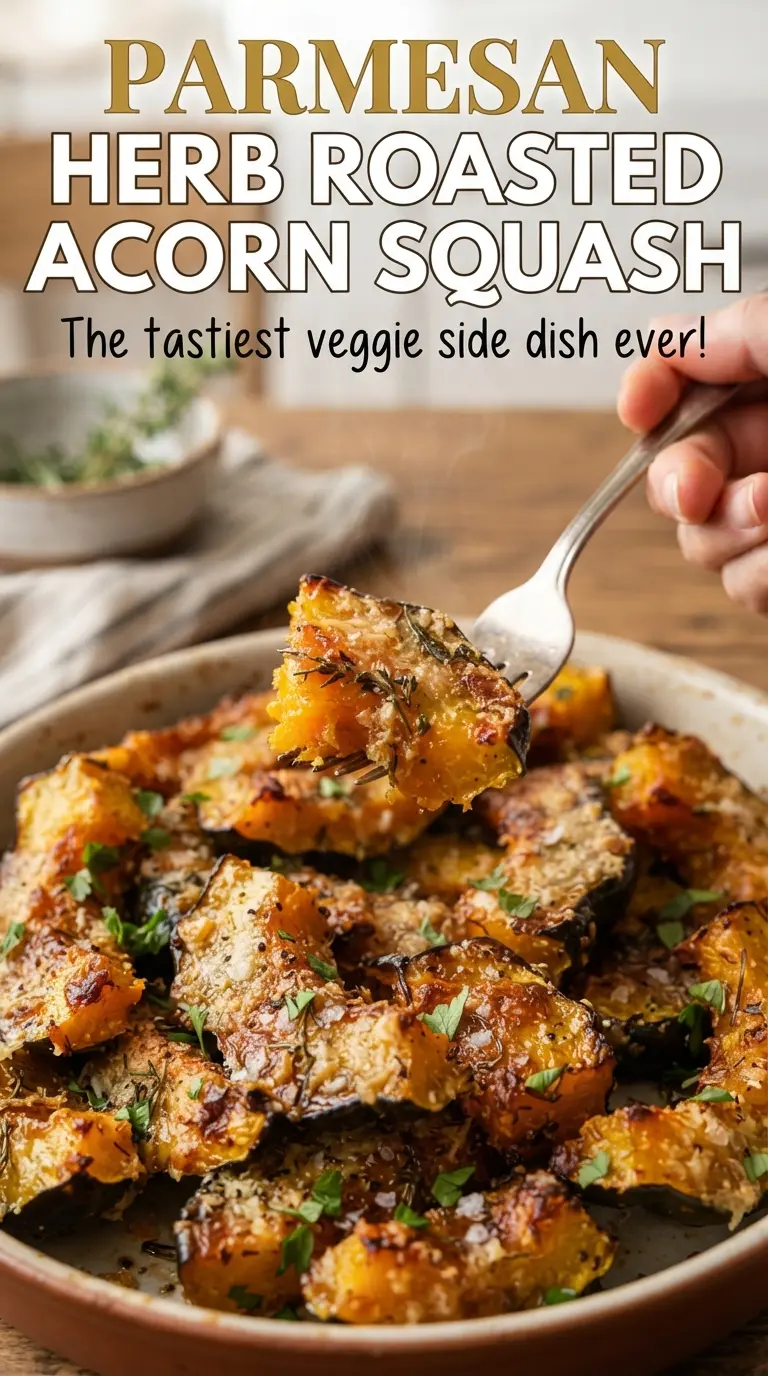
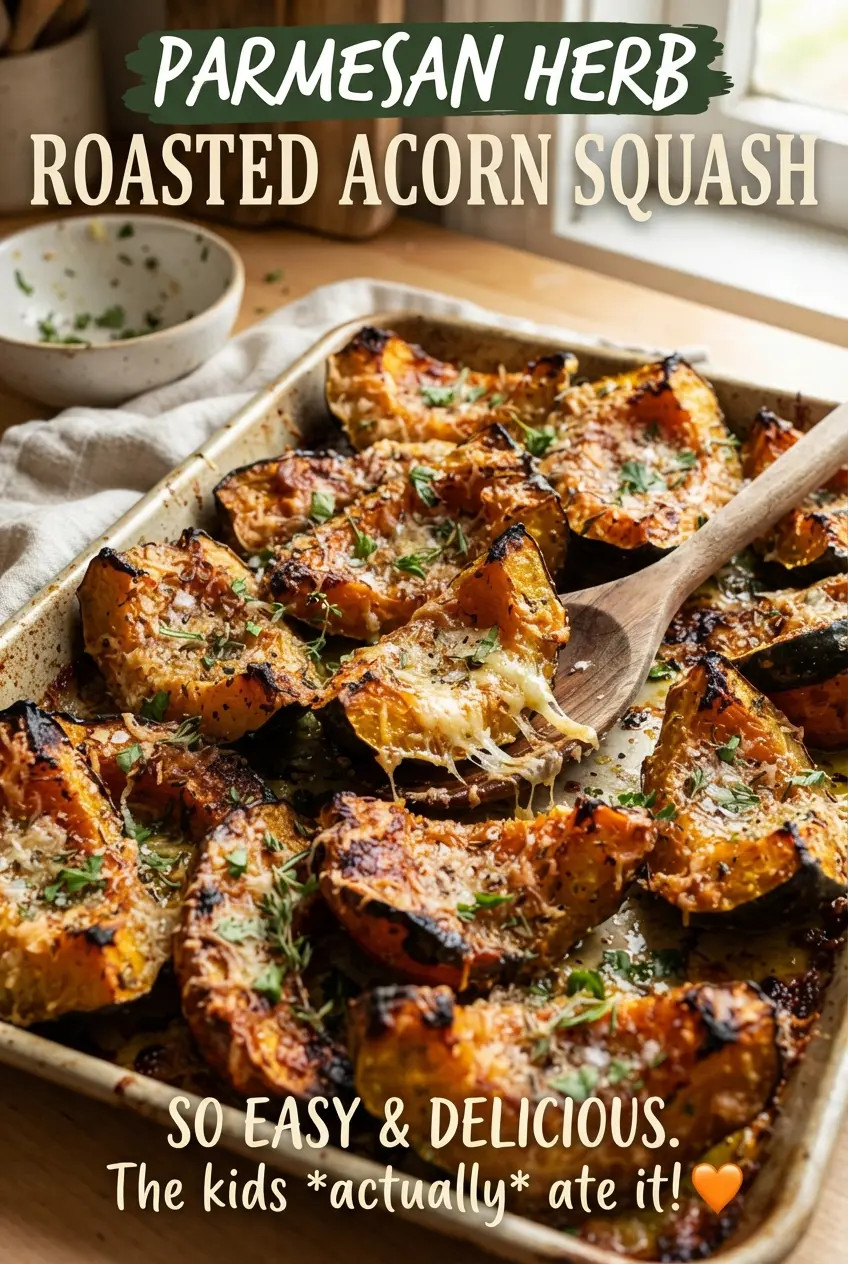
Parmesan herb roasted acorn squash comes out with the best kind of contrast: tender, sweet centers and crisp, salty edges that cling to every scalloped ring. The squash softens enough to cut easily with a fork, but it still keeps its shape, so each slice looks as good as it tastes. When the Parmesan hits the hot pan for the second roast, it turns lacy and golden instead of melting into a puddle.
The trick is slicing the squash into even rings and giving them a head start before the cheese goes on. That first roast drives off surface moisture and starts the browning, which is what keeps the Parmesan from steaming. Olive oil, garlic, thyme, and rosemary coat the squash just enough to perfume it without burying the flavor of the squash itself.
Below, I’ve included the timing cue that keeps the cheese crisp, plus a couple of easy swaps if your squash is a little bigger or your herbs are coming from the fridge in small amounts.
The squash came out tender but not mushy, and the Parmesan on the second roast turned into these crispy little frico edges. I made a double batch and there wasn’t a slice left.
Save this Parmesan herb roasted acorn squash for a side dish with crisp Parmesan edges and tender, caramelized squash.
The Reason the Parmesan Stays Crisp Instead of Melting Away
Acorn squash gives you a built-in challenge: it releases moisture as it cooks, and moisture is the enemy of a crisp cheese crust. That’s why the squash gets a head start in the oven before the Parmesan goes on. By the time you add the cheese, the surface has dried enough that the grated cheese can toast and brown instead of dissolving into the pan.
The other detail that matters is the cut. Half-inch rings hold up better than chunks, and they give you more flat surface area for browning. If the slices are too thin, they soften before the edges have a chance to caramelize. If they’re too thick, the center can lag behind while the cheese overbrowns.
What the Garlic, Herbs, and Cheese Are Actually Doing Here
- Acorn squash — This is the base of the dish, and its natural sweetness is what makes the salty Parmesan work so well. Look for squash that feels heavy for its size and has firm skin; a soft spot usually means uneven roasting.
- Olive oil — Oil helps the squash brown and keeps the herbs from drying out in the oven. A good everyday olive oil is fine here; save the fancy finishing oil for the table.
- Garlic — Minced garlic perfumes the squash as it roasts, but it can burn if it’s left exposed on the pan. Toss it thoroughly with the oil so it clings to the squash instead of sitting in little scorched piles.
- Fresh thyme and rosemary — Fresh herbs stay fragrant through the roast and give the squash a woodsy, savory edge. Dried herbs can work in a pinch, but use less because they taste stronger once heated.
- Parmesan — Grated Parmesan is what creates the crisp top layer. Finely grated cheese will melt more evenly, while a coarser grate gives you bigger crispy bits; both work, but pre-shredded cheese can be a little less reliable because of anti-caking agents.
How to Roast the Squash So the Cheese Browns, Not Burns
Coating the Rings Evenly
Toss the squash with olive oil, garlic, thyme, rosemary, salt, and pepper until every slice has a light sheen. If the seasoning pools in the bowl, it will burn on the pan before the squash is tender. The goal is a thin, even coating, not a heavy marinade.
Giving the Squash Room to Roast
Arrange the slices in a single layer with a little space between them. Crowding traps steam, and steam softens the edges before they can caramelize. Parchment keeps the Parmesan from sticking later, but it won’t fix an overcrowded pan.
Flipping at the Right Moment
After the first roast, flip the slices while the undersides are already golden and the squash has started to soften. If they still feel hard in the center, give them a few more minutes before turning them. Once the cheese is on, you’re looking for a deep golden color around the edges, not a pale topping that never crisps.
Finishing Under the Heat
After the Parmesan goes on, roast just until the cheese looks toasted and lacy and the squash yields easily at the thickest part. Pull it before the cheese turns dark brown, because it will keep crisping for a minute on the hot pan. That last stretch is where the sweet squash and salty crust meet in the best way.
Three Ways to Adjust This Dish Without Losing What Makes It Good
Dairy-Free Version
Skip the Parmesan and finish with a mix of olive oil, nutritional yeast, and a little extra salt after roasting. You won’t get the same crisp frico-style crust, but you will keep the savory finish and the squash will still caramelize beautifully.
Using Dried Herbs Instead of Fresh
Use about one-third as much dried thyme and rosemary as you would fresh. Dried herbs taste sharper and more concentrated, so too much can make the squash taste dusty instead of herbaceous.
Making It for a Bigger Crowd
Use two sheet pans instead of piling everything onto one. If you overcrowd the pan, the squash steams and the Parmesan won’t crisp, so it’s better to roast in batches and keep the texture right.
Storage and Reheating
- Refrigerator: Store leftovers in an airtight container for up to 4 days. The cheese will soften, but the squash will still taste good.
- Freezer: I don’t recommend freezing this dish. The squash turns watery and the Parmesan loses its crisp texture after thawing.
- Reheating: Reheat on a sheet pan in a 375F oven until warmed through and the edges crisp back up. The microwave will make the squash soft and the cheese rubbery.
Answers to the Questions Worth Asking
Parmesan Herb Roasted Acorn Squash
Ingredients
Equipment
Method
- Preheat oven to 400°F and line a sheet pan with parchment for easy release and browning.
- Toss acorn squash rings with olive oil, minced garlic, fresh thyme leaves, chopped rosemary, salt, and black pepper until evenly coated.
- Arrange squash in a single layer and roast for 20 minutes to start tenderizing and developing caramelized edges.
- Flip the slices and sprinkle generously with grated Parmesan so it can melt and crisp on the hot surface.
- Roast 12 to 15 minutes more at 400°F until the squash is tender and the Parmesan is golden and crisp, then serve hot.