Autumn beef stew earns its place in the rotation when the beef turns spoon-tender and the broth tastes like it simmered all afternoon, with sweet carrots, earthy parsnips, and a little pop from cranberries keeping every bite interesting. The maple and apple cider don’t make it taste sweet in a dessert-like way; they round out the browned beef and give the gravy a deeper, more layered finish.
The key is building flavor in stages. Tossing the beef with flour before browning helps the stew thicken naturally later, and the cider goes in right after the tomato paste so it can lift all those browned bits off the pot before the broth settles in. Sage and thyme keep the base savory, while the squash, carrots, and cranberries go in late enough to hold their shape and stay distinct.
Below you’ll find the timing that keeps the vegetables from turning mushy, plus a few smart swaps if you need to work with what’s in the pantry. The method is simple, but the order matters more than it looks.
The beef turned out fall-apart tender and the gravy had this perfect sweet-savory balance from the cider and maple. I loved that the squash and carrots still held their shape, and the cranberries gave it a little brightness at the end.
Save this autumn beef stew for the nights when you want a deep, cider-rich gravy and tender beef with squash, parsnips, and cranberries.
The Browning Step That Gives This Stew Its Depth
Most stew turns flat when the beef steams instead of browns. The flour coating helps with thickening, but it also encourages a better crust if the pieces go into a hot pan in a single layer. Crowding the pot is the fastest way to lose all that flavor, so brown in batches and leave the meat alone until it releases easily.
The second place people lose depth is in the deglazing step. Once the onion, garlic, and tomato paste have cooked, the cider should hit a hot bottom and sizzle as it lifts the browned bits. That layer at the base of the pot is where the stew gets its backbone, and scraping it up before the broth goes in keeps the gravy rich instead of one-note.
What Each Ingredient Is Doing in the Pot
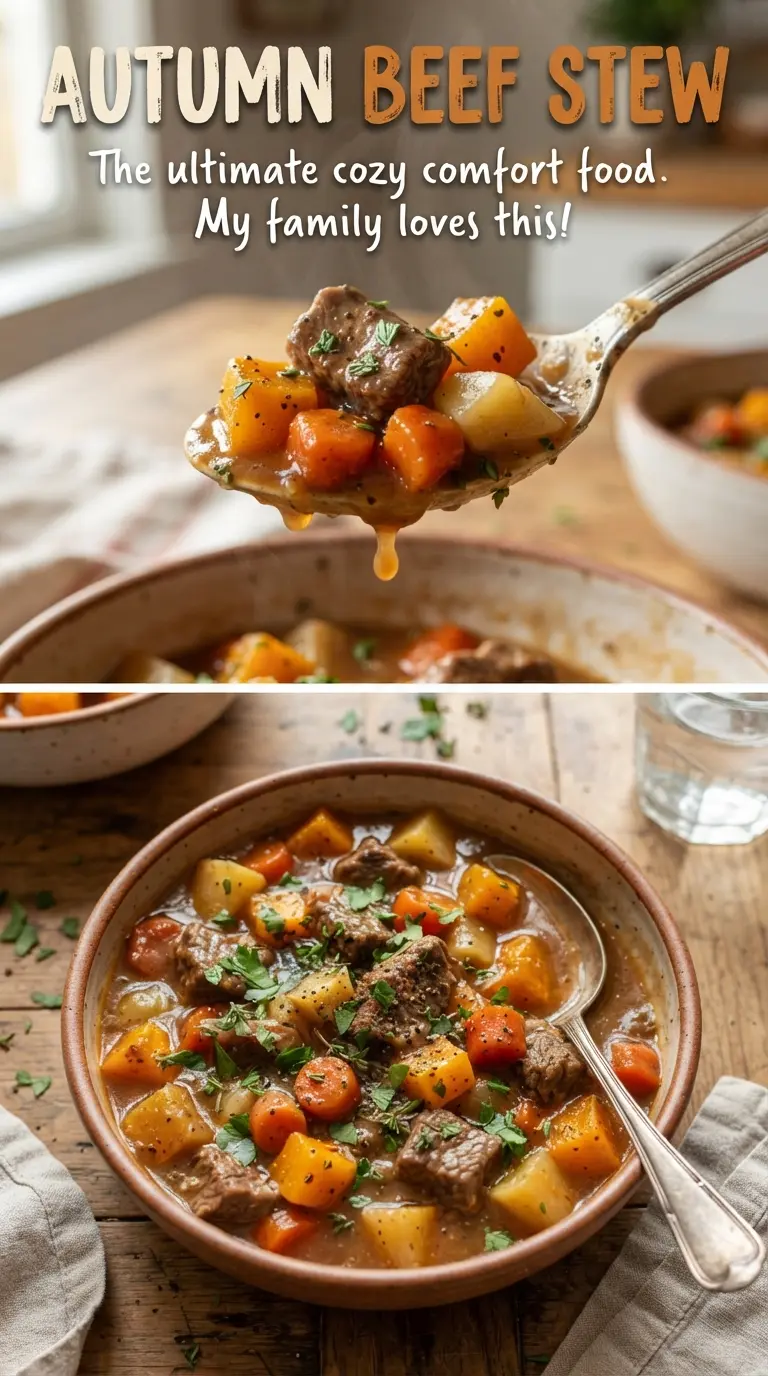
- Beef chuck — This cut has enough fat and connective tissue to turn silky during a long simmer. Leaner beef will dry out before the vegetables are done.
- Apple cider — This adds gentle acidity and sweetness that a splash of water or extra broth can’t mimic. Use actual cider, not cider vinegar; the vinegar would throw the balance off.
- Maple syrup — A tablespoon is enough to round the cider and amplify the browned beef without making the stew taste sweet. Honey works in a pinch, but it reads softer and less autumnal.
- Butternut squash, parsnips, and carrots — These go in late so they soften without collapsing. If you add them at the start, the squash breaks down and clouds the broth.
- Dried cranberries — They give the last ten minutes of simmering a bright, tart finish that keeps the stew from feeling heavy. Add them too early and they swell past the point where they stay pleasantly chewy.
Building the Stew So the Vegetables Stay Intact
Browning the Beef in Batches
Season the beef, toss it with the flour, and brown it in hot oil in small batches. The pieces need space or they’ll release moisture and gray out instead of searing. You’re looking for dark edges and a crust that lifts cleanly from the pot before you turn the pieces. Pull the meat out as each batch finishes so the fond stays in the pan, not under the next pile of beef.
Softening the Onion and Toasting the Paste
Once the meat is out, cook the onion until it turns translucent and starts to take on a little color around the edges. Add the garlic only for the last minute so it stays fragrant instead of bitter, then stir in the tomato paste and let it darken slightly. That quick toast wakes it up and keeps it from tasting raw in the finished stew.
Simmering Until the Beef Gives Way
After the cider deglazes the pot, add the broth, maple syrup, sage, thyme, and beef. Bring everything up to a steady simmer, then cover and let it go low and slow until the meat is nearly tender. If the heat is too high, the liquid boils hard and the beef tightens up before it has time to soften, so keep the simmer lazy and steady.
Adding the Vegetables at the Right Moment
Stir in the squash, parsnips, and carrots for the last 45 minutes. That window gives them enough time to soften through without losing their shape or turning starchy. The stew should look thick and glossy by then, and the vegetables should cut easily with a spoon but still hold clear edges.
Finishing with the Cranberries
Add the cranberries during the last 10 minutes so they plump without disintegrating. They should look glossy and a little swollen, not dissolved into the broth. Taste the stew right before serving; if it needs a sharper finish, a small pinch more salt wakes up the sweet and savory notes fast.
How to Adapt This Stew for Different Kitchens and Different Planners
Gluten-Free Version
Skip the flour and brown the beef directly, then whisk 1 1/2 tablespoons cornstarch with 2 tablespoons cold water and stir it in during the last 15 minutes. You’ll get the same body in the gravy without the wheat, though the coating on the beef won’t be quite as crisp at the browning stage.
No Cider on Hand
Use unsweetened apple juice plus 1 teaspoon cider vinegar if that’s what you’ve got. You’ll keep the fruit note and a bit of brightness, but the result will be a little softer and less tangy than the cider version.
Extra-Hearty, More Vegetable-Forward Stew
Add an extra cup of squash or an extra carrot and parsnip to stretch the pot a little further. The stew will feel lighter and more vegetable-driven, but you’ll want to simmer uncovered for the last 10 minutes if you want the broth to stay thick enough to coat a spoon.
Storage and Reheating
- Refrigerator: Keeps for 4 days. The flavors deepen overnight, and the broth thickens as it chills.
- Freezer: Freezes well for up to 3 months. Cool it completely first and leave a little headspace in the container so the liquid can expand.
- Reheating: Warm it gently on the stove over low heat, stirring now and then. High heat can make the beef tighten up and can turn the squash soft and grainy before the center is hot.
Answers to the Questions Worth Asking
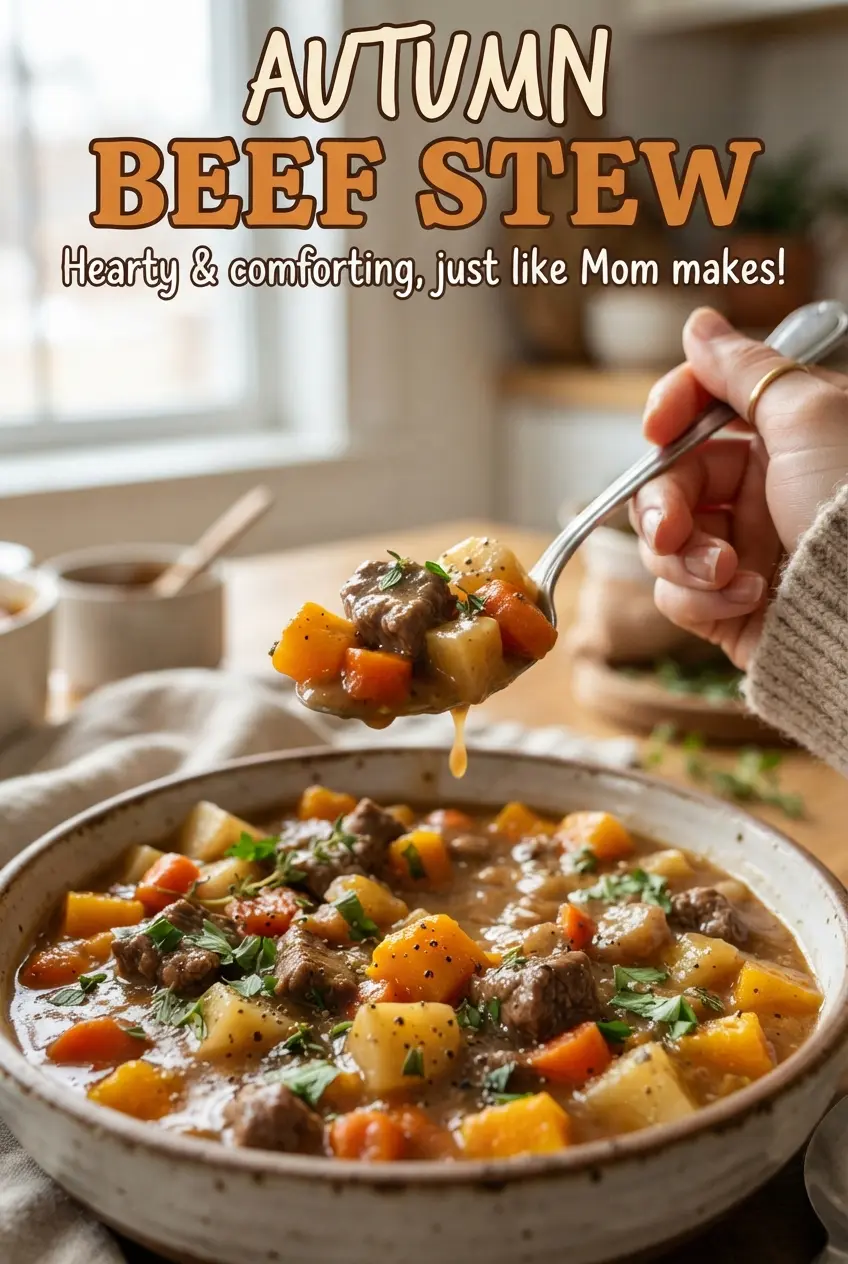
Autumn Beef Stew
Ingredients
Equipment
Method
- Season the beef with salt and black pepper, then toss it with the all-purpose flour until lightly coated. Set a Dutch oven over medium-high heat and brown the beef in batches in the olive oil, transferring browned pieces to a plate as you go.
- Continue browning until all beef is seared, then return it (and any juices) to the Dutch oven.
- Reduce heat to medium and cook the diced onion for 5 minutes, stirring, until softened. Add the minced garlic and tomato paste and cook 1 minute, stirring until fragrant.
- Pour in the apple cider and scrape the bottom of the Dutch oven to lift the browned bits. Add the beef broth, maple syrup, chopped sage, thyme leaves, and the browned beef.
- Bring the mixture to a simmer, then cover and simmer at a steady bubble for 1 3/4 hours, checking occasionally to maintain gentle simmering.
- Uncover and add the cubed butternut squash, sliced parsnips, and sliced carrots. Simmer for 45 minutes, until the vegetables are tender.
- Stir in the dried cranberries and simmer for the last 10 minutes to plump them. Serve hot.