Birria pays off in the bowl before it ever reaches a tortilla: the broth turns a deep brick red, the beef gets spoon-tender, and the chile aroma carries enough smoke and spice to make the whole pot smell like it has been working all day. The best versions don’t taste muddy or one-note. They taste layered, with sweet chile, warm spice, tang from vinegar, and a rich beefy finish that holds up whether you ladle it as stew or tuck it into tacos.
The trick is in the chile base. Toasting the dried chiles wakes up their oils, and straining the blended sauce keeps the consomé silky instead of gritty. That extra step matters here because birria should feel refined even though it’s built from humble ingredients. The cinnamon stick and tomato paste round out the broth without making it taste like mole, while the long simmer gives the chuck roast time to relax and shred cleanly.
Below, you’ll find the small choices that keep the broth red and balanced, plus the easiest way to serve birria two different ways without changing the whole recipe. If you’ve ever had birria that tasted flat or the sauce turned grainy, the notes below will help you avoid both.
The chile sauce strained out perfectly smooth, and the consomé had that deep red color I always hope for. I dipped the tortillas like you said and they crisped up without falling apart.
Save this birria recipe for deep red consomé, tender shredded beef, and taco filling that crisps beautifully in the skillet.
Why the Strained Chile Base Gives You a Cleaner Birria
Birria can get heavy fast if the chile paste is left rough or the spices are overcooked. Toasting the dried chiles for just a minute or two brings out their oil without burning them, which would make the broth bitter. Once they’re softened and blended, straining the sauce is what turns this from a rustic puree into a polished consomé.
That sieve step also keeps the tortillas from catching stray skins and bits when you dip them for tacos. If your birria has ever felt coarse on the tongue, that’s usually the reason. You want the broth to coat the spoon, not feel sandy.
- Guajillo chiles — These bring the deep red color and a mild, fruity chile backbone. If you swap them, the broth loses its signature color and gets less balanced.
- Ancho chiles — They add raisin-like sweetness and a little smoke. Mild pasilla can work in a pinch, but ancho gives the cleanest classic flavor.
- Chipotle chiles — This is where the gentle heat and smokiness come from. Use one fewer if you want a softer finish, but don’t skip them entirely unless you need a very mild pot.
- Apple cider vinegar — The vinegar sharpens the chiles and keeps the broth from tasting flat. Lime at the table finishes the dish; the vinegar builds the base.
- Beef chuck roast — Chuck is the right cut because it breaks down into shreds without drying out. Leaner beef cooks faster, but it won’t give you the same rich texture in the consomé.
Building the Consomé Without Losing the Beef
Toasting and Soaking the Chiles
Set the dried chiles in a dry skillet and move them around just until they smell fragrant and a little toasted, about 1 to 2 minutes. If they darken too much, they’ll turn bitter and you’ll taste that bitterness in the broth for the rest of the pot. Hot water softens them enough to blend smoothly, so don’t rush this part.
Blending a Smooth, Strainable Sauce
Blend the softened chiles with onion, garlic, cumin, oregano, and vinegar until the mixture looks glossy and thick. Add a splash of the soaking water only if the blender needs help moving. Strain it through a fine mesh sieve before it hits the pot; that’s what keeps the finished broth velvety instead of pulpy.
Frying the Sauce Before the Broth Goes In
Warm the olive oil over medium heat, then add the strained sauce and cook it for about 5 minutes. It should darken slightly and smell rounded, not raw. This step cooks out the sharp edge from the vinegar and deepens the chile flavor, but if the heat is too high, the paste can scorch on the bottom of the pot.
Simmering the Beef Until It Shreds Cleanly
Add the broth, tomato paste, bay leaves, and cinnamon stick, then bring everything to a boil before lowering it to a steady simmer. Once the beef goes in, keep the pot uncovered so the liquid can concentrate a little as the meat cooks. The beef is ready when it pulls apart with a fork and the broth tastes full-bodied, not thin or watery.
How to Adapt Birria for Tacos, Stew, or a Milder Pot
Birria tacos with crisped tortilla edges
Shred the beef, dip each tortilla in the top layer of consomé, then cook it in a hot skillet until the outside turns stained red and crisp. This method gives you the signature taco shell with a little chew and a lot of flavor, but it does use more consomé than serving it as stew.
Birria stew in bowls
Leave the meat in larger chunks or shred it loosely, then ladle plenty of broth over the top with onions, cilantro, and lime. You’ll get a more soup-like meal with less mess and a little more broth per serving, which is the better route if you want something to eat with a spoon.
A milder version for lower heat
Use only one chipotle chile, and remove the seeds from the guajillos before soaking them. You’ll still get the color and the warm chile depth, but the finish will be gentler and less smoky.
Storage and Reheating
- Refrigerator: Store the beef and consomé together for up to 4 days. The broth often tastes even better the next day after the spices settle in.
- Freezer: Birria freezes well for up to 3 months. Cool it completely first, then freeze in portions with plenty of broth so the meat doesn’t dry out.
- Reheating: Warm it gently on the stove over low heat until the broth is steaming and the beef is hot through. Boiling it hard can make the meat stringy and push the fat into an oily layer that feels heavier than it should.
Questions I Get Asked About This Recipe
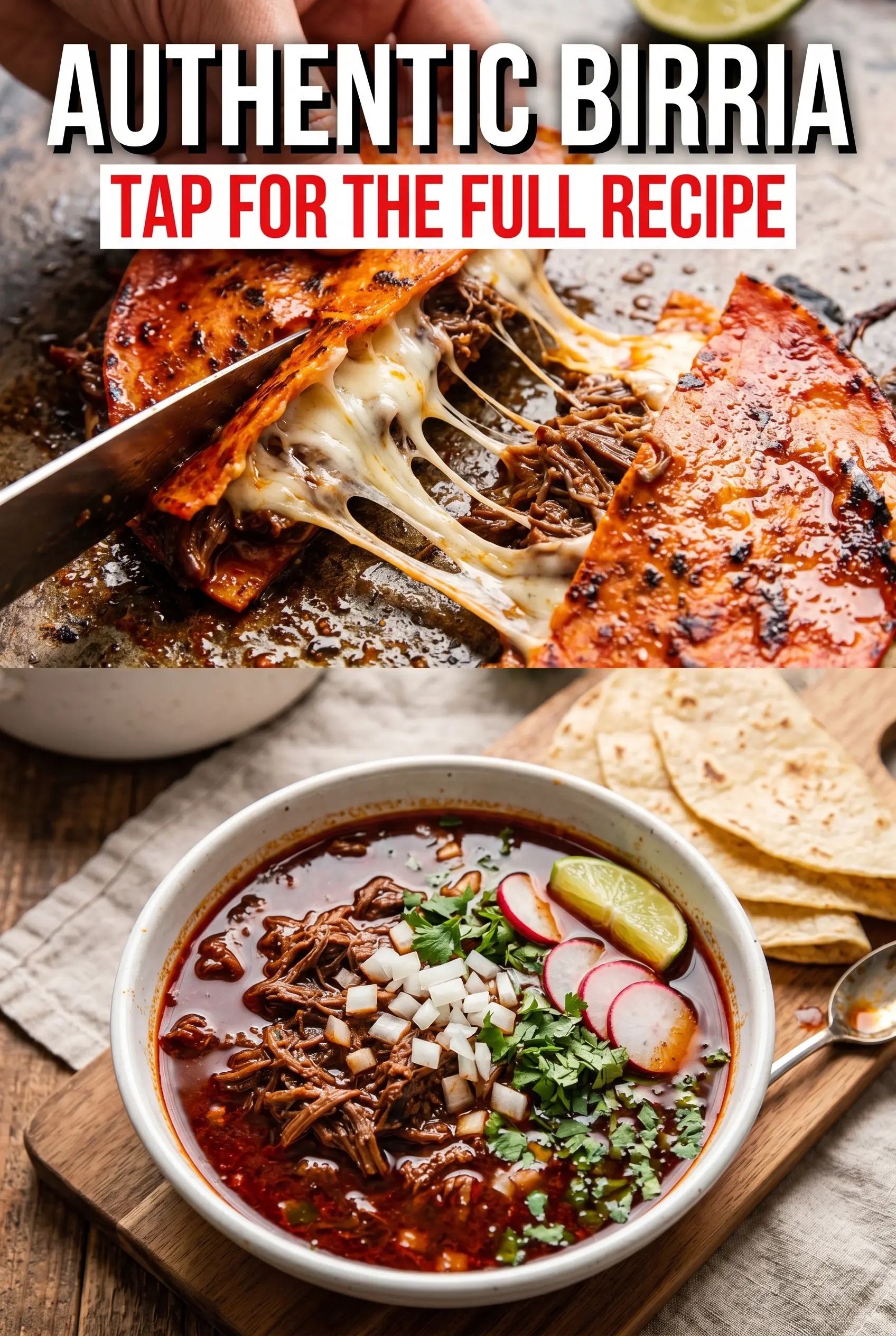
Authentic Birria Recipe for Tacos or Stew
Ingredients
Equipment
Method
- Toast the dried guajillo chiles, ancho chiles, and chipotle chiles in a dry skillet over medium heat for about 2 minutes, just until fragrant, stirring often so they don’t burn (keep them visibly pliable, not dark-black). Transfer to a bowl and soak in hot water for 10 minutes, then drain well.
- Blend the drained chiles with the halved onion, crushed garlic, cumin, oregano, and apple cider vinegar until smooth. Strain the sauce through a fine mesh sieve so you end up with a silky, deep red chile liquid.
- Heat olive oil in a large pot over medium heat. Add the strained chile sauce and cook for 5 minutes, stirring, until fragrant and slightly thickened.
- Add beef broth, tomato paste, bay leaves, and the cinnamon stick. Bring the mixture to a boil, with steam rising steadily from the edges of the pot.
- Add the beef chuck roast chunks and return to a boil. Reduce heat to low and simmer uncovered for 90-120 minutes until the beef is fall-apart tender, skimming foam if it collects on top.
- Season the consomé with salt and pepper to taste during the final simmer. Keep it at a gentle simmer so the broth stays richly red and the meat stays tender.
- For tacos, shred the tender beef with a fork or tongs. Dip corn tortillas in the hot consomé, fill with meat, and serve topped with diced onion and cilantro.
- For stew, ladle meat and consomé into bowls. Serve with lime wedges for squeezing over the steaming birria.