Caramelized pork, smoky chiles, and juicy pineapple are what make tacos al pastor worth keeping on repeat. When the marinade hits a hot skillet, it doesn’t just season the meat — it turns sticky and dark at the edges, giving you that sweet-savory bite street tacos are known for. Stack that pork on warm corn tortillas with onion, cilantro, and a squeeze of lime, and you’ve got a taco that tastes layered, bright, and deeply satisfying.
The key here is balance. Guajillo and ancho chiles bring color and mellow heat, while pineapple juice and vinegar keep the marinade lively enough to cut through the richness of the pork shoulder. Thin slicing matters because it gives you more surface area for the marinade and helps the meat brown quickly instead of steaming in the pan. Letting it sit overnight gives you the fullest flavor, but even an hour gets you closer than most quick taco recipes ever will.
Below, I’ve included the small things that make these tacos work at home: how to keep the pork from drying out, why the pineapple goes in the same skillet, and what to do if you need to make the marinade ahead.
The pork got those caramelized edges I was hoping for, and the pineapple in the same skillet picked up just enough char to taste like a real taco stand dinner.
Save these Tacos Al Pastor for the nights when you want smoky pork, charred pineapple, and a fast street-taco style dinner.
The Part That Makes Al Pastor Taste Like Al Pastor
The marinade has to do two jobs at once: season the pork and build the glossy, slightly sticky surface that browns well in the pan. That’s why the chile paste gets blended smooth and why the pork is sliced thin. If the meat is cut too thick, it won’t pick up enough color before the outside dries out. If the marinade stays chunky, those bits scorch before the pork finishes cooking.
The pineapple juice isn’t there just for sweetness. It helps soften the pork a little and gives the finished tacos that classic sweet-savory edge that makes al pastor taste complete. The vinegar keeps the flavor sharp, which matters because pork shoulder is rich. Without that acidity, the tacos can taste heavy instead of balanced.
What Each Ingredient Is Actually Doing Here

- Pork shoulder — This cut has enough fat to stay juicy while it browns. Slice it thin so the edges can caramelize fast. Pork loin will work in a pinch, but it won’t give you the same tender, rich bite.
- Guajillo and ancho chiles — These are the backbone of the marinade. Guajillo brings bright red color and a clean chile flavor, while ancho adds deeper, fruitier notes. Don’t swap them for chili powder unless you’re fine losing that layered taste.
- Pineapple juice — This adds sweetness and acidity, and it helps the marinade cling. Fresh pineapple juice is fine if that’s what you have, but don’t go heavy on extra fruit or the marinade can turn muddy.
- Achiote paste — This gives the pork that signature reddish color and an earthy, slightly peppery depth. It’s the ingredient that makes the dish read as al pastor instead of just marinated pork.
- Corn tortillas — Their flavor stands up to the pork better than flour tortillas. Warm them until they’re pliable and a little toasted at the edges so they don’t fall apart under the filling.
How to Cook the Pork So It Browns Instead of Steaming
Soaking and Blending the Chiles
Cover the dried chiles with hot water and let them soften until they bend easily, about 10 minutes. They should look plump and glossy, not leathery. Once they’re blended with the pineapple juice, vinegar, garlic, and spices, the marinade should be smooth enough to coat the pork without leaving gritty bits. If it looks too thick to spread easily, add a spoonful or two of the chile soaking liquid until it loosens.
Marinating the Pork
Coat every slice of pork well and let it sit for at least an hour. Overnight is better because the chile and achiote flavors sink in deeper and the meat takes on a more even color. If you rush this step, the pork still cooks, but the flavor stays on the surface. Keep the meat refrigerated while it marinates so the acid doesn’t start changing the texture too far out on the counter.
Cooking in Batches for Real Color
Heat the skillet until it’s properly hot before the pork goes in. The meat should sizzle immediately. Cook in batches so the pan stays hot and the pork gets those dark browned spots instead of releasing liquid and steaming. Stir occasionally, but not constantly, or you’ll stop the caramelization before it starts. If the pan starts looking wet, give it a minute to recover between additions.
Finishing with Pineapple and Toppings
Use the same skillet for the pineapple chunks. They’ll pick up the savory residue left behind from the pork, which makes the sweet fruit taste more integrated and less like a garnish. Warm the tortillas last so they’re soft and steamy when the meat is ready. Finish with onion, cilantro, and lime right before serving so the tacos stay bright and the tortillas don’t go soggy.
How to Adapt These Tacos When You Need a Different Version
Dairy-Free and Naturally Gluten-Free
These tacos already fit both of those needs as written if you use corn tortillas. The only thing worth checking is the achiote paste label, since some brands add fillers. The flavor stays exactly where it should be, and you don’t lose anything by keeping the build simple.
If You Want Less Heat
Guajillo and ancho are mild to begin with, but you can reduce the chili intensity by using fewer guajillos and keeping the ancho as the main chile. The tacos will taste softer and a little sweeter, with less bite. Don’t replace the chiles with plain paprika alone or you’ll lose the depth that makes the sauce taste cooked, not just colored.
Make-Ahead Marinade
The marinade can be blended a day ahead and kept covered in the fridge. In fact, that extra time can help the flavors settle together. Stir it before using, then coat the pork when you’re ready to cook. If it thickens in the fridge, splash in a little water or pineapple juice to loosen it back up.
Storage and Reheating
- Refrigerator: Store the cooked pork separately from the tortillas and toppings for up to 4 days. The flavor gets even better the next day, but the meat will firm up a little.
- Freezer: The cooked pork freezes well for up to 2 months. Cool it completely, then pack it airtight with a little of its juices so it reheats moist instead of dry.
- Reheating: Reheat the pork in a skillet over medium heat with a splash of water or leftover juices until hot. Don’t microwave it straight from the fridge if you want to keep the edges from turning leathery.
Questions I Get Asked About This Recipe
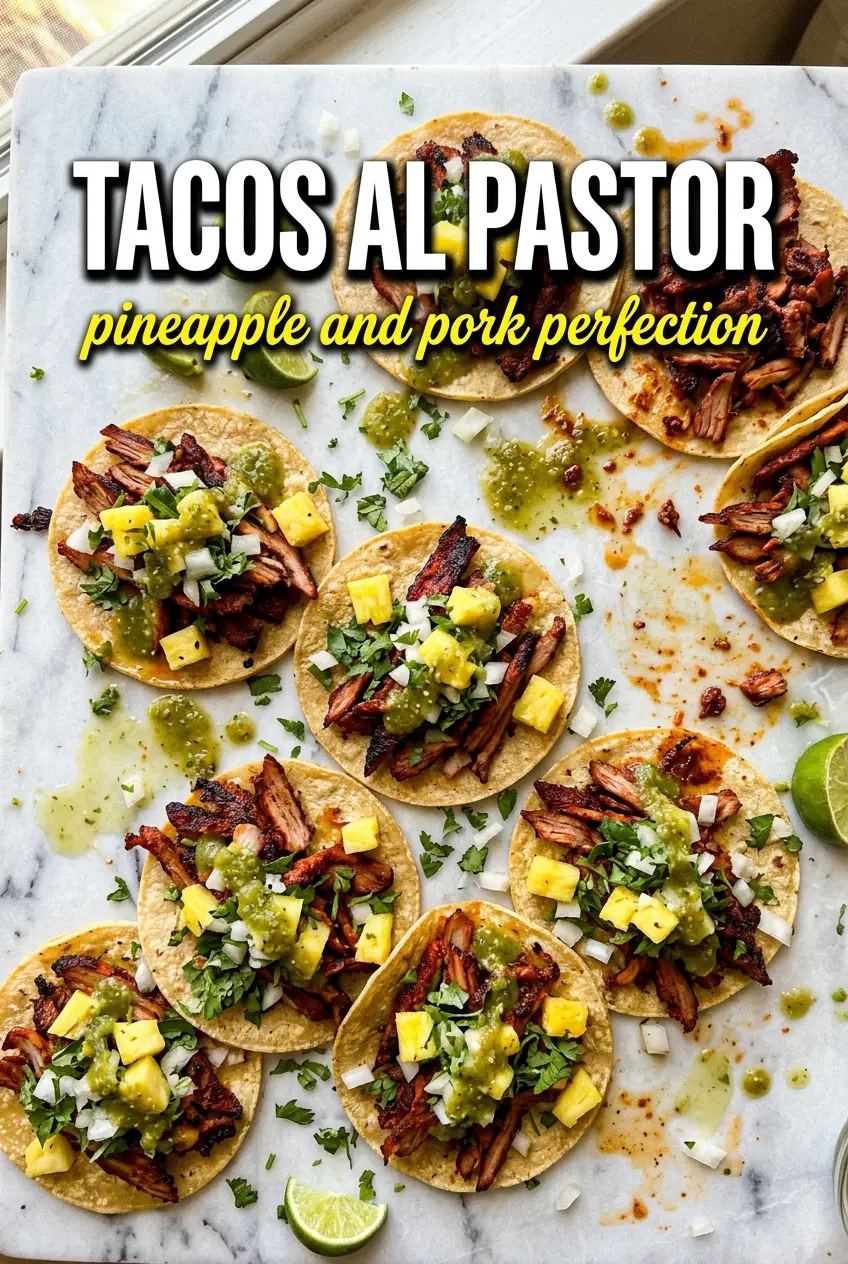
Tacos Al Pastor
Ingredients
Equipment
Method
- Soak the guajillo chiles and ancho chiles in hot water for 10 minutes until soft. Drain and keep them warm while you prep the remaining marinade ingredients.
- Blend the soaked chiles with pineapple juice, apple cider vinegar, garlic, achiote paste, cumin, and oregano until smooth. Season with salt and pepper to taste.
- Coat the thinly sliced pork shoulder with the marinade. Press to help it adhere, then let it sit for at least 1 hour (preferably overnight).
- Heat a cast iron skillet over medium-high heat. Add the marinated pork in batches and stir occasionally until caramelized and cooked through, about 15–20 minutes.
- Char the pineapple chunks in the same skillet. Cook until lightly browned with char spots, then remove.
- Warm the corn tortillas and keep them stacked. Serve the meat on the tortillas topped with charred pineapple, diced onion, and cilantro.
- Finish each taco with a squeeze of lime juice. Serve immediately while the pork is hot and caramelized.