Hobo stew lands where a good camp meal should: everything simmers together into a rich, spoonable pot with tender potatoes, sweet corn, soft carrots, and beef that tastes like it spent the afternoon getting comfortable in the broth. It’s rustic in the best way. No fussy steps, no separate pans, and no wasted effort.
What makes this version work is the order. Browning the meat first gives the broth a deeper base, and adding the vegetables with enough liquid to barely cover them keeps the pot from turning watery. The diced tomatoes bring acidity, the paprika rounds out the beef, and the canned vegetables hold their shape instead of dissolving into mush by the time the stew is done.
Below, I’ve included the one simmering detail that keeps the potatoes tender without falling apart, plus a few swaps that make this stew work just as well over a campfire, on the stove, or in a Dutch oven at home.
The potatoes stayed tender, the broth picked up all the browned bits from the beef, and the whole pot tasted even better after ten minutes off the heat.
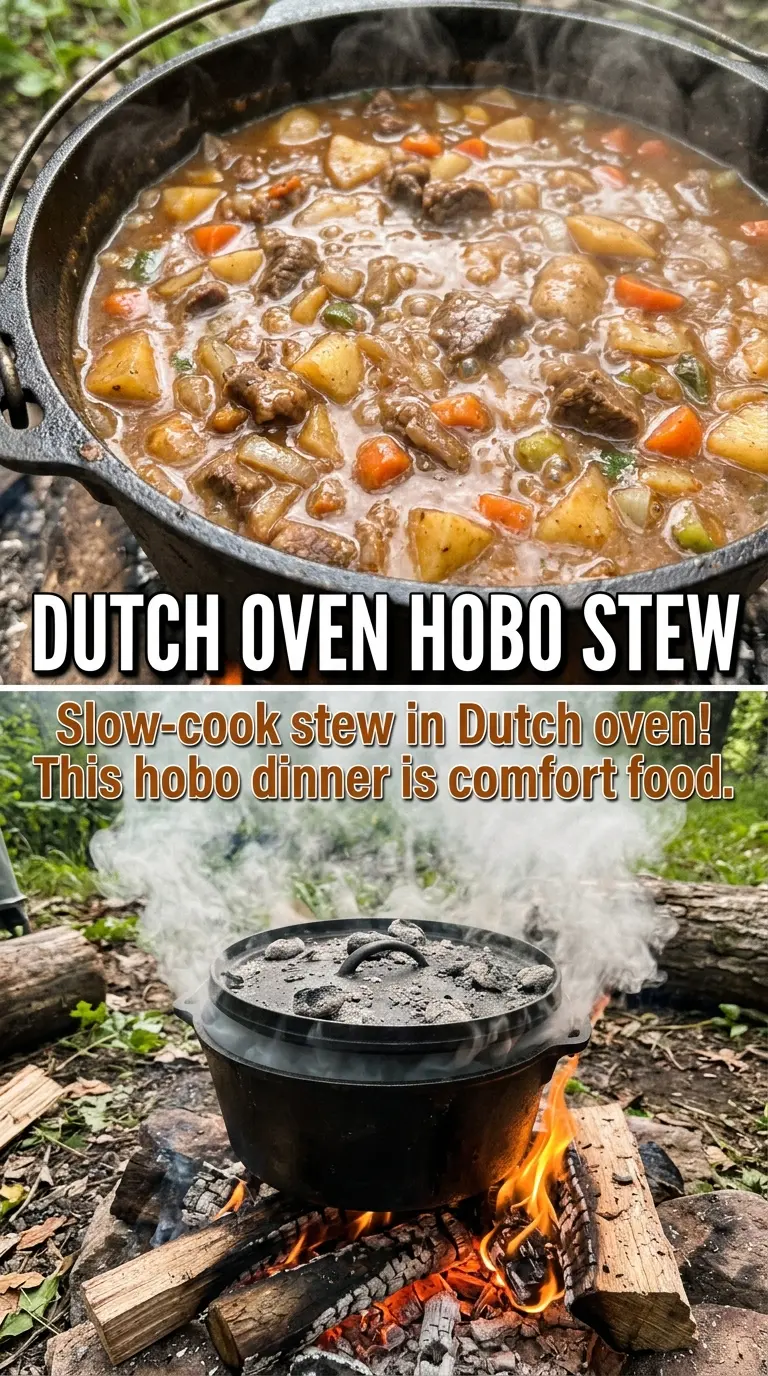
Save this bubbling Dutch oven hobo stew for a campfire dinner with tender potatoes, beefy broth, and zero extra pans.
The Part Most Camp Stews Get Wrong: Overcooking the Potatoes
Potatoes are the first thing to go from sturdy to mealy if the pot stays at a hard boil for too long. In hobo stew, the goal is a gentle simmer after the initial boil, with the lid on so the heat stays even and the vegetables cook through without breaking down. If the stew bubbles aggressively, the outside of the potatoes will soften before the center catches up, and you’ll end up with cloudy broth and crumbly pieces.
The other trap is cutting everything too small. This stew eats best when the potatoes and carrots are in chunks that can hold their shape for the full simmer. You want pieces that are fork-tender, not tiny enough to disappear into the broth.
- Keep the simmer low — once the pot boils, reduce the heat until you see only steady, lazy bubbles around the edges.
- Use medium chunks — about 1-inch potatoes and thick carrot slices hold up far better than fine dice.
- Cover the pot — that trapped steam finishes the vegetables evenly and keeps the top layer from drying out.
What Each Ingredient Is Actually Doing in the Pot
- Stew meat or ground beef — stew meat gives you a deeper, beefier result after simmering, while ground beef is faster and still makes a hearty pot. If you use stew meat, brown it well for the best flavor. If you use ground beef, drain off excess fat so the broth doesn’t turn greasy.
- Potatoes — these thicken the stew naturally as they soften. Yukon Golds stay creamy and hold their shape better than russets, which can fall apart more easily. If russets are what you have, cut them larger.
- Carrots, onion, corn, and green beans — the vegetables build sweetness, texture, and balance. Canned vegetables work here because this is a camp-style stew; they’re already cooked enough to hold through the simmer. Fresh green beans also work, but add them a little earlier so they soften.
- Diced tomatoes and beef broth — the tomatoes add acidity that keeps the stew from tasting flat, and the broth turns the pot from a pile of vegetables into actual stew. Use low-sodium broth if you want more control over the seasoning.
- Garlic powder and paprika — garlic powder seasons evenly in a one-pot stew, and paprika gives the broth a warmer color and a subtle smoky note. Smoked paprika works if you want a little campfire edge.
Building the Stew So the Broth Stays Deep and the Vegetables Stay Whole
Browning the Meat First
Start with a hot Dutch oven and let the meat take on color before anything else goes in. That browned layer is where the stew gets its backbone. If you rush this part and the meat just steams, the broth tastes thinner and flatter. Scrape up the browned bits once you add the liquid; they dissolve into the broth and carry the whole pot.
Adding the Vegetables at the Right Time
Once the meat is browned, add the potatoes, carrots, onion, corn, green beans, tomatoes, and broth together. This is not the place for a long, slow layer-by-layer build. Everything needs to go in close together so the potatoes and carrots can simmer in the seasoned liquid from the start. Stir well enough to lift anything stuck to the bottom, then bring it just to a boil before lowering the heat.
Simmering Until the Pot Turns Starchy and Tender
Cover the pot and let it simmer until the vegetables are tender, about 35 to 40 minutes. You’re looking for potatoes that slide off a fork without collapsing and carrots that still have a little bite in the center. If the broth looks too thick before the vegetables are done, add a splash of broth or water. If it seems thin at the end, uncover the pot for the last few minutes and let some steam cook off.
Serving the Stew Hot
Ladle it into bowls while it’s still steaming. Hobo stew thickens a little as it sits, which is exactly what you want, but it’s best when the broth is loose enough to spoon easily. If you’re cooking over a fire, move the pot off the hottest flame before serving so the bottom doesn’t scorch while everyone grabs bowls.
How to Adjust Hobo Stew Without Losing What Makes It Work
Make It with Ground Beef Instead of Stew Meat
Ground beef shortens the cook time and gives you a softer, more uniform texture. Brown it until no pink remains, then drain the excess fat before adding the vegetables. You’ll lose some of the long-simmered beef texture, but the stew still tastes hearty and satisfying.
Make It Gluten-Free Without Changing the Method
This recipe is naturally gluten-free as written as long as your broth is certified gluten-free. That’s the main place gluten tends to sneak in. Check the label and you’re set.
Add More Smoke for Campfire Flavor
Swap regular paprika for smoked paprika or add a pinch of chipotle powder. That gives the broth a deeper, woodsy note without turning the stew hot. Keep the amount modest so the smoke supports the beef instead of taking over.
Use Fresh Vegetables When You Have Them
Fresh corn, green beans, or even peas can replace the canned vegetables. Add fresh green beans early so they soften, and add peas near the end so they stay bright. Fresh vegetables give the stew a cleaner taste, but the canned version is still the easiest path for camp cooking.
Storage and Reheating
- Refrigerator: Store in an airtight container for up to 4 days. The broth thickens as it chills, and the potatoes soften a little more.
- Freezer: It freezes well for up to 3 months, though the potatoes will be a little softer after thawing. Cool completely before freezing in portions.
- Reheating: Reheat gently on the stove over medium-low with a splash of broth or water. Don’t boil it hard again, or the potatoes can break apart and the meat can dry out.
Answers to the Questions Worth Asking
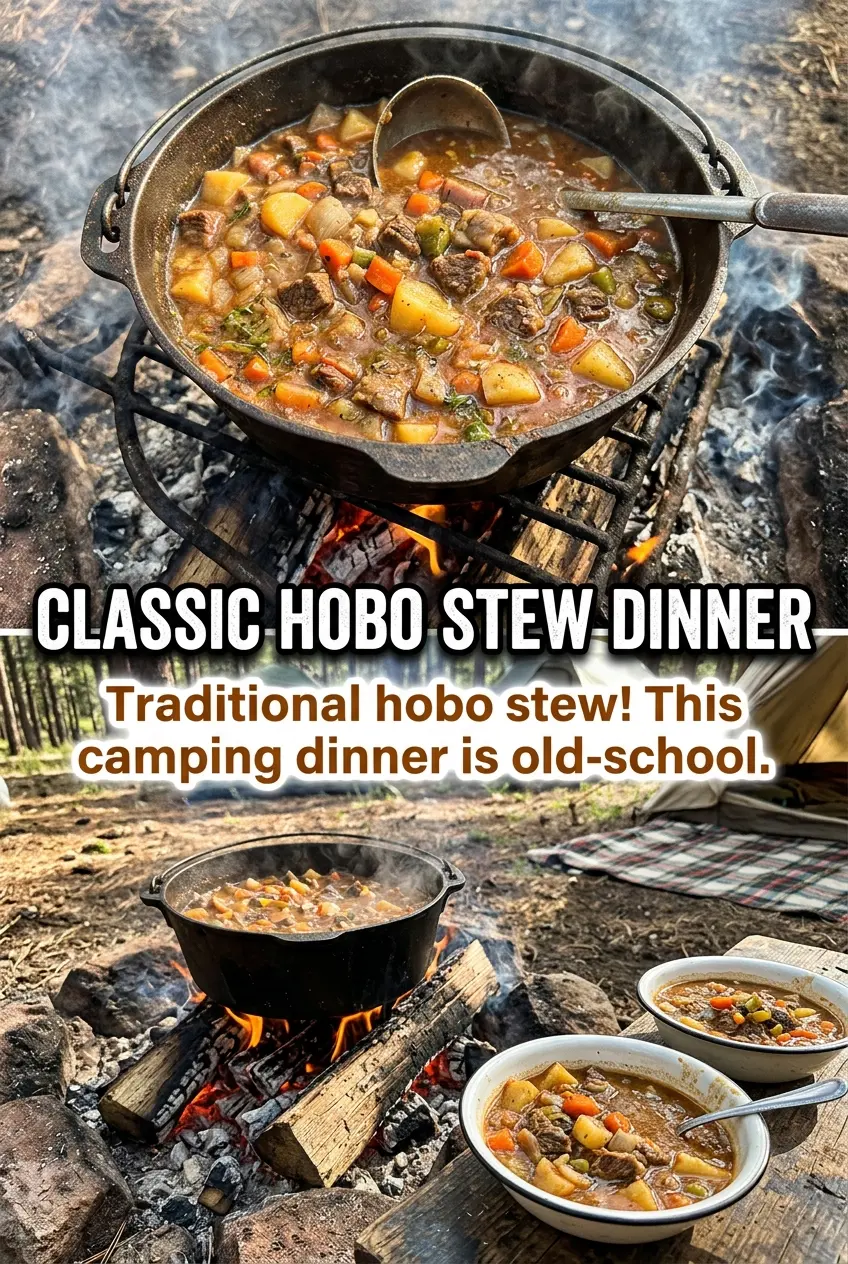
Hobo Stew
Ingredients
Equipment
Method
- Place the Dutch oven over the campfire and brown the stew meat (or ground beef). Cook until you see browned bits forming at the bottom of the pot, then continue to the next step.
- Add the cubed potatoes, sliced carrots, diced onion, drained corn, drained green beans, diced tomatoes, and beef broth to the Dutch oven. Stir to distribute everything evenly so the mixture looks uniformly combined.
- Sprinkle in the garlic powder and paprika and add salt and pepper to taste, then stir well to combine. Seasoning should be evenly speckled throughout the stew.
- Bring the stew to a boil over the campfire, then reduce the heat and cover the Dutch oven. You want steady bubbling with gentle simmering as you cook.
- Simmer covered for 35-40 minutes until the vegetables are tender. The potatoes should be easily pierced and the stew should look thick and bubbling around the edges.
- Ladle the hobo stew into bowls and serve hot. The meat and vegetables should be visible in the bowl with hot, steaming broth.