Cheesy baked spaghetti in a Dutch oven is the kind of campfire dinner that disappears fast and leaves the pot scraped clean. The noodles soak up the meat sauce, the top turns bronzed and bubbling, and every serving comes out with those stretchy mozzarella pulls that make people hover near the table a little longer than usual.
What makes this version work is balance: the pasta is already cooked before it goes into the Dutch oven, so the noodles stay tender instead of turning mushy over the coals. Half the cheese gets mixed through the pasta so the whole dish stays creamy, while the rest goes on top to build that golden lid everyone wants. The Italian seasoning and garlic powder are enough to round out the jarred sauce without turning the recipe into extra work at camp.
Below, I’ve included the one part of the process that matters most for campfire cooking, plus a few smart swaps if you want to adapt it for a bigger group or a different setup. If you’ve ever had a Dutch oven pasta dry out around the edges, the timing notes here will help you avoid that.
The cheese melted into a bubbly crust and the spaghetti stayed moist all the way through. I was worried it would dry out in the Dutch oven, but the timing was spot on and the bottom never burned.
Love this cheesy Dutch oven spaghetti? Save it for your next campfire dinner when you want a bubbling, crowd-pleasing meal with almost no fuss.
The Reason Dutch Oven Spaghetti Stays Creamy Instead of Drying Out
The biggest mistake with campfire pasta is treating it like an oven casserole and leaving it exposed too long. Direct heat from coals is stronger and less even than a home oven, so the noodles can dry at the edges while the center is still catching up. Covering the Dutch oven and keeping the heat on top and bottom gives you gentler, more balanced cooking.
The other thing that matters is starting with fully cooked spaghetti. Dry pasta needs extra liquid and more time, which is how you end up with a bottom layer that gets soft before the top layer is ready. Here, the sauce already coats the noodles, so the oven time is just for melding and melting.
- Cooked spaghetti — This is what keeps the texture right. Undercooked pasta won’t finish evenly in the Dutch oven, and overcooked pasta turns soft fast once it sits in sauce.
- Shredded mozzarella — Use low-moisture mozzarella for the best melt. Fresh mozzarella gives off too much water and can make the bake loose instead of stretchy and set.
- Grated Parmesan — Parmesan adds salt and helps the top brown. The powdery shelf-stable version works in a pinch, but freshly grated gives a cleaner finish and better melt.
- Jarred spaghetti sauce — A good jar does the heavy lifting here. If you want to upgrade a basic sauce, simmer it with the browned beef for a few minutes before combining everything so the flavor tastes fuller.
What the Cheese and Seasoning Are Really Doing Here
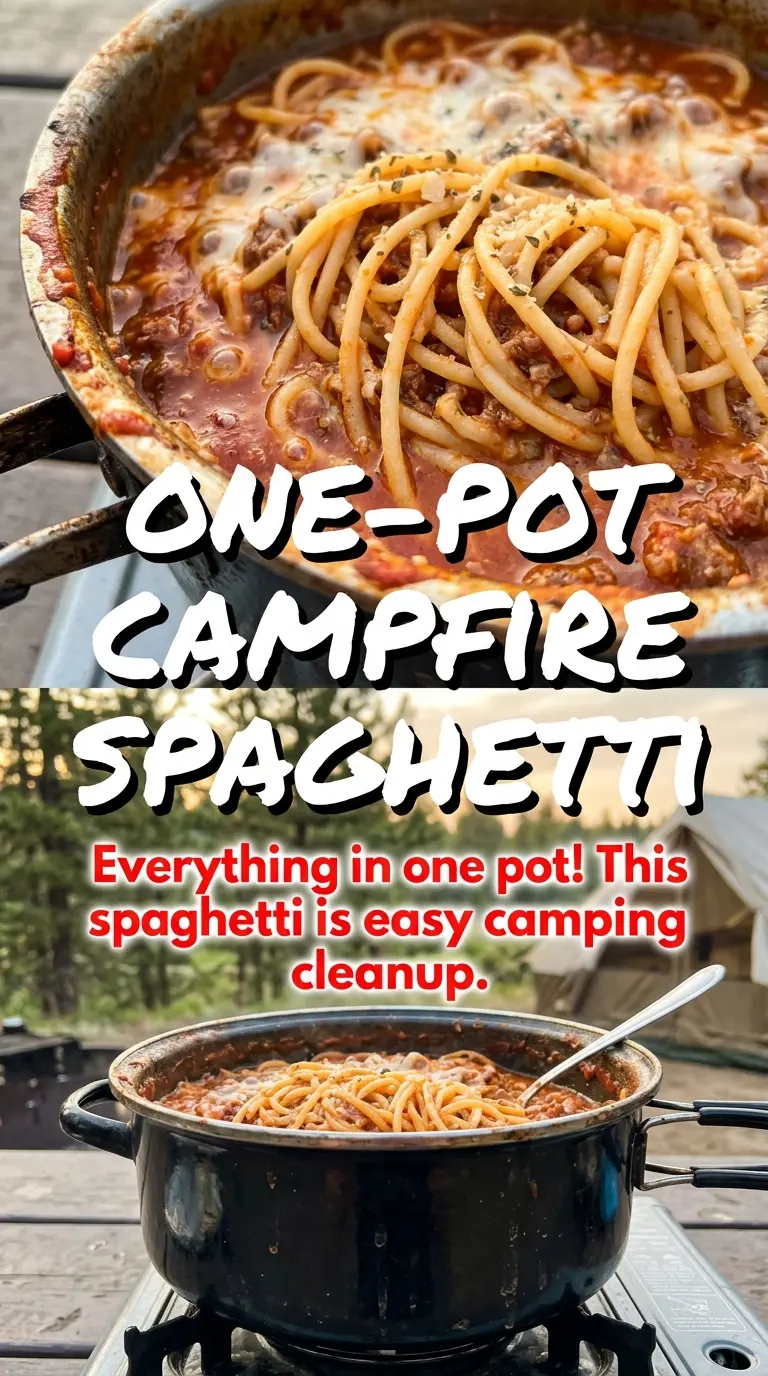
- Ground beef — Brown it well before it goes into the Dutch oven. That browning gives the dish its savory base; pale, steamed beef will taste flat no matter how much sauce you add.
- Italian seasoning and garlic powder — These fill in the gaps in jarred sauce without asking for extra ingredients. If your sauce already tastes seasoned, cut both back a little so the bake doesn’t lean too heavy on dried herbs.
- Cooking spray — It seems minor, but it matters with melted cheese around the edges. Spray the Dutch oven well so the pasta releases cleanly and the browned bits don’t weld themselves to the sides.
Building the Bake Over Coals Without Burning the Bottom
Brown the Beef First
Cook the ground beef in a skillet over the campfire until it’s no longer pink and the edges have some color. That browning gives the sauce depth, and draining the excess fat keeps the finished bake from turning greasy. If the beef stays wet and gray, the whole dish tastes softer and less defined.
Mix the Pasta While It’s Still Warm
Stir the cooked spaghetti with the beef, sauce, half the mozzarella, Italian seasoning, and garlic powder while the pasta is still warm. Warm noodles grab onto the sauce better, and the first layer of cheese starts to melt right away instead of sitting in clumps. If the pasta is cold and stuck together, toss it with a spoonful of sauce first to loosen it before combining everything.
Manage the Heat Like a Camp Cook
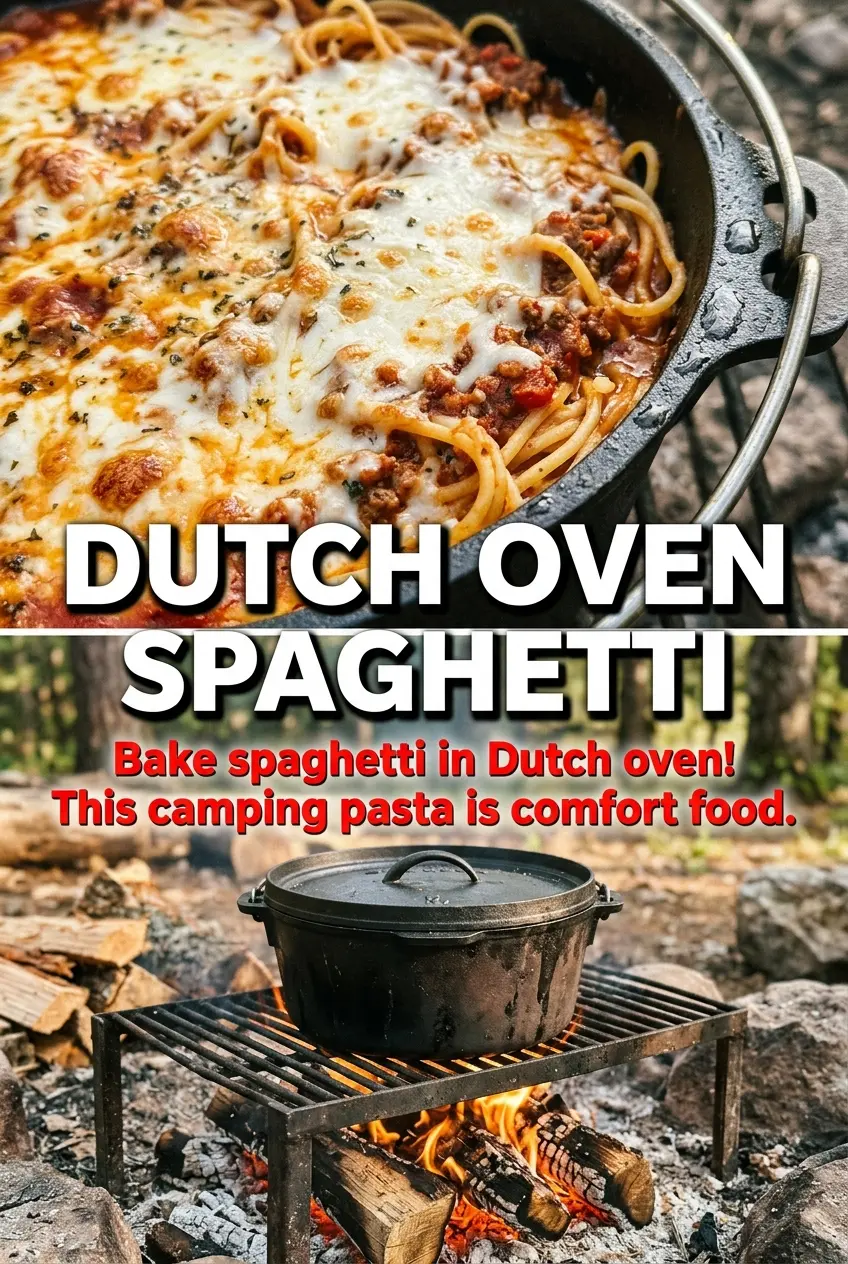
Spray the Dutch oven, add the spaghetti mixture, then top it with the remaining mozzarella and Parmesan. Cover it and place it over hot coals with coals on the lid, not just underneath, so the cheese melts evenly from both directions. After 30 to 35 minutes, the top should be bubbling and the cheese should look fully melted with a few browned spots at the edges.
Let It Rest Before Scooping
Give the bake five minutes off the heat before serving. That short rest lets the sauce settle so the first scoop holds together instead of sliding apart in the pot. If you cut in immediately, the cheese will still be loose and the portions won’t hold their shape.
How to Adapt This for Different Campsites and Diets
Make It Meatless With a Hearty Sauce
Swap the ground beef for a plant-based crumble or a thick sauté of mushrooms and bell peppers. You still want something with body so the sauce doesn’t feel thin, but this version becomes a solid vegetarian main without losing the baked pasta feel.
Use Turkey for a Lighter Finish
Ground turkey works well if you brown it thoroughly and season it generously. It won’t taste as rich as beef, so don’t skip the Parmesan or the extra seasoning blend if you want the filling to stay savory.
Gluten-Free Campfire Spaghetti Bake
Use your favorite gluten-free spaghetti and cook it just to tender before mixing. Gluten-free pasta can get soft faster than wheat pasta, so don’t overcook it on the stove or it may fall apart during the Dutch oven finish.
Make It Ahead for Faster Camp Setup
Mix the beef, sauce, seasonings, and pasta at home, then pack the cheese separately. At camp, all that’s left is transferring the mixture into the Dutch oven and topping it with cheese, which saves time when the coals are already ready.
Storage and Reheating
- Refrigerator: Store leftovers in a covered container for up to 4 days. The pasta will soak up more sauce as it sits, so it gets a little thicker by day two.
- Freezer: This freezes well for up to 2 months. Portion it into airtight containers and thaw overnight in the fridge before reheating for the best texture.
- Reheating: Warm it covered in a 350°F oven until hot, or reheat smaller portions in the microwave with a splash of water or sauce. The mistake to avoid is blasting it uncovered, which dries out the noodles and turns the cheese tough.
Answers to the Questions Worth Asking
Campfire Spaghetti Bake
Ingredients
Equipment
Method
- Brown the ground beef in a skillet over campfire until cooked through, then drain excess fat. Look for no pink and a lightly browned surface.
- Mix the cooked spaghetti, browned beef, spaghetti sauce, half the mozzarella, Italian seasoning, and garlic powder until evenly coated. The mixture should look glossy and well combined.
- Spray the Dutch oven with cooking spray, then add the spaghetti mixture. Spread it in an even layer so it bakes uniformly.
- Top with the remaining mozzarella and Parmesan. Aim for an even, full coverage layer so the top turns golden.
- Cover the Dutch oven and place it on campfire coals with coals on top of the lid. Cook for 30-35 minutes until the cheese is melted and visibly bubbly.
- Let the campfire spaghetti bake cool for 5 minutes before serving. The bubbling should calm slightly and the cheese should set just enough to scoop.