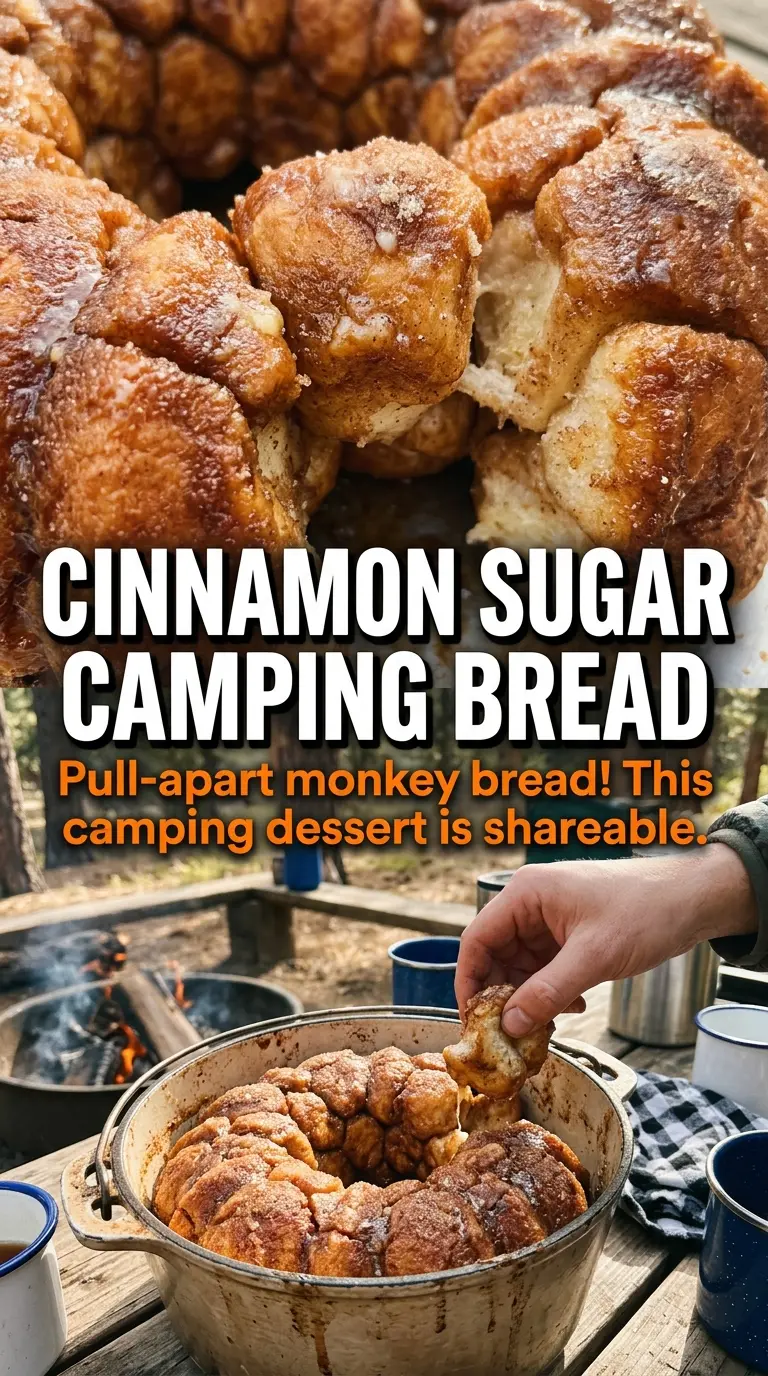
Golden, pull-apart monkey bread baked over campfire coals has a way of disappearing before it even makes it to the table. The edges turn lacquered with caramel, the center stays soft and gooey, and every piece comes apart in sticky, cinnamon-sugar-coated chunks that people reach for with their fingers. It tastes like a treat that took a lot more effort than it actually did.
The trick is keeping the biscuit pieces evenly coated and packing them into the Dutch oven without smashing them flat. That gives you distinct layers instead of a dense lump. The brown sugar and butter mixture sinks between the pieces as it bakes, turning into the caramel glaze that clings to every bite. Campfire heat can be uneven, so the lid and coals on top matter just as much as the fire underneath.
Below you’ll find the small details that keep the bread from scorching, plus a few smart swaps for different pans, sweetness levels, and make-ahead prep.
The biscuit pieces cooked through evenly and the caramel soaked into every layer without making the bottom soggy. I lifted the lid at 25 minutes and it was bubbling around the edges just like you said.
Campfire monkey bread with gooey caramel edges and soft pull-apart centers is the kind of dessert people keep asking for after the fire dies down.
The Part That Keeps the Center Soft Instead of Doughy
Campfire monkey bread fails in one of two ways: the outside burns before the center cooks, or the bottom turns gummy because the sugar and butter collect in one heavy layer. Cutting the biscuits into quarters helps the pieces bake through at the same pace, and tossing them in cinnamon sugar before adding the butter keeps the coating dry enough to cling instead of sliding off.
The other thing that matters is heat control. A Dutch oven over campfire coals needs heat from both directions, which is why coals on the lid are not optional. Without that top heat, the center stays pale and raw while the bottom overcooks. If your fire runs hot, check early; this is a dessert that can go from golden to too dark fast.
What the Butter and Brown Sugar Are Really Doing
- Refrigerated biscuit dough — This is the shortcut that makes the recipe work for campfire cooking. It puffs into tender layers and holds up better than a batter-based dough would over uneven heat. Any canned biscuit style works, but the standard flaky kind gives the best pull-apart texture.
- Cinnamon and sugar — Coating the pieces before baking gives every bite its own crust of sweetness instead of leaving the flavor only on the outside. The sugar also helps the caramel mixture grab onto the dough as it bakes.
- Brown sugar — This brings the sticky caramel note that makes monkey bread feel like monkey bread. Light brown sugar is fine here; dark brown sugar gives a deeper molasses flavor if you want it a little more old-fashioned and less candy-sweet.
- Melted butter — It carries the sugar into the gaps between the biscuit pieces and helps the top bake into a glossy, bronzed finish. Use real butter, not a spread, or the glaze can turn greasy instead of rich.
- Cooking spray — This is the difference between a clean invert and a stuck mess. Coat the Dutch oven well, especially the lower sides, because the caramel settles there as it cooks.
Building the Layers Before the Fire Does the Work
Coating the Biscuit Pieces
Quarter the biscuits so each piece has enough surface area to catch the cinnamon sugar without becoming heavy. Shake them in a zip-top bag until every side is dusted, then stop. If the bag gets crowded and the pieces clump, they won’t brown evenly, and the coating can turn patchy.
Layering the Dutch Oven
Spray the Dutch oven generously, then add the coated pieces in an even layer. Don’t pack them down hard; a little space between pieces gives the heat room to move and lets the caramel flow into the gaps. A snug layer is fine, but crushing the dough will give you a compact center instead of distinct pull-apart bites.
Pouring on the Caramel
Mix the melted butter and brown sugar until smooth, then pour it over the top so it seeps through naturally. If you stir it into the biscuit pieces, the coating slides off and you lose the layered effect. The sauce will look thin at first, but it thickens as it bakes and bubbles around the edges.
Cooking Over Coals
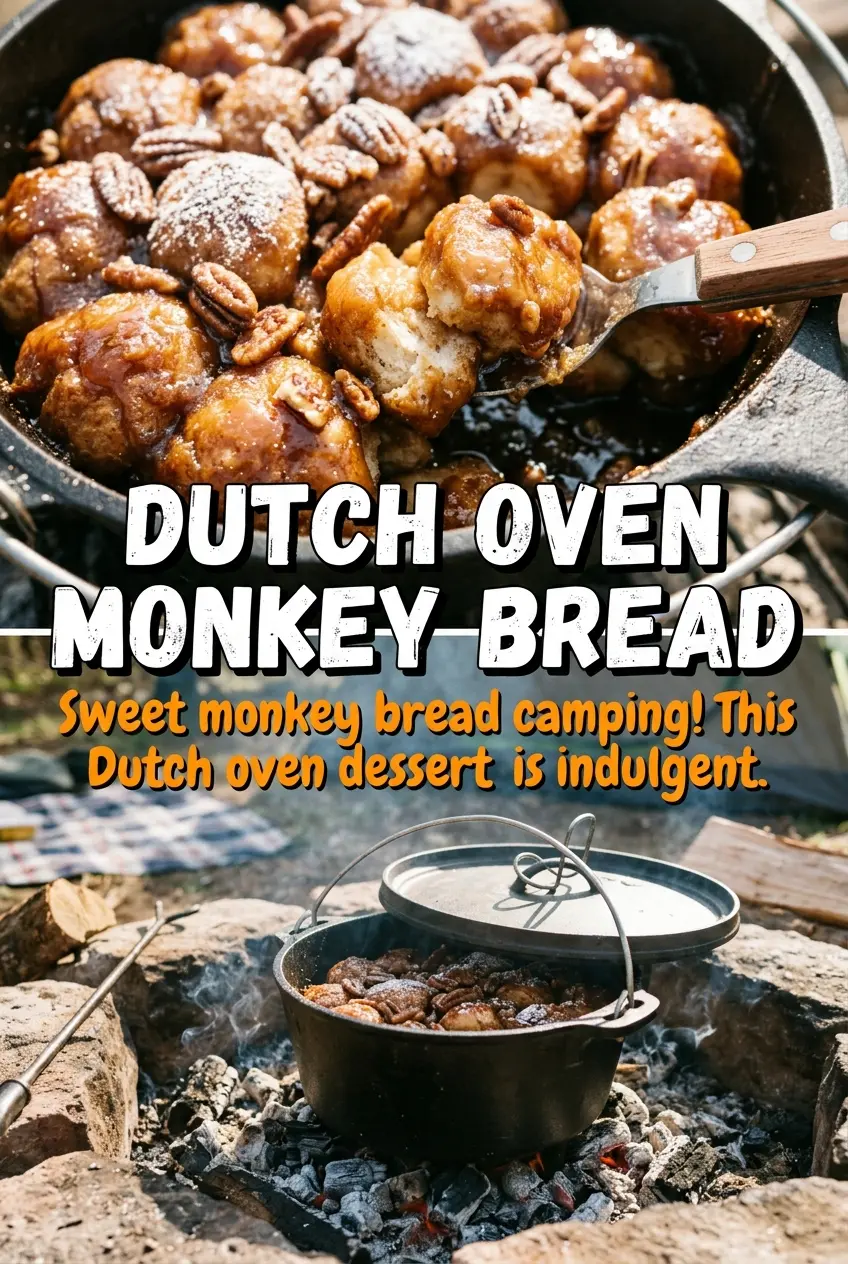
Set the Dutch oven over hot campfire coals and place coals on the lid. Rotate the oven once or twice during cooking if your fire is uneven, and start checking around the 25-minute mark. You want a deep golden top, bubbling caramel at the edges, and biscuit pieces that feel set when you poke the center gently.
Resting Before You Flip
Let the monkey bread sit for 5 minutes before inverting it onto a plate. That short rest lets the caramel settle just enough so it doesn’t pour out in a runny sheet. Flip too soon and the center can collapse; wait too long and the caramel hardens onto the pan.
How to Make Campfire Monkey Bread Fit the Fire You Have
Use a Kitchen Oven Instead of Camp Coals
Bake it in a preheated 350°F oven for about 30 to 35 minutes if you don’t have a fire going. You’ll lose the smoky edge, but the texture stays the same, and the caramel still bubbles into a sticky glaze.
Make It Dairy-Free
Swap the butter for a plant-based butter that melts cleanly and tastes neutral. The glaze won’t have quite the same richness, but the bread still pulls apart well and the cinnamon sugar carries the flavor.
Pull Back the Sweetness
Reduce the cinnamon sugar mixture slightly and use 1/3 cup brown sugar in the glaze if you want a less candy-like result. The bread still tastes indulgent, but the caramel layer comes out thinner and a little less sticky.
Storage and Reheating
- Refrigerator: Store leftovers in an airtight container for up to 3 days. The caramel firms up and the bread loses some softness, but it still reheats well.
- Freezer: Freeze portions wrapped tightly and placed in a freezer bag for up to 1 month. Thaw in the refrigerator before reheating so the center doesn’t turn wet.
- Reheating: Warm individual portions in a 300°F oven or a covered skillet over low heat until just heated through. The common mistake is blasting it in the microwave, which turns the sugar sticky and the biscuits rubbery.
Answers to the Questions Worth Asking
Campfire Monkey Bread
Ingredients
Equipment
Method
- Cut each refrigerated biscuit into quarters to create small pull-apart pieces.
- In a large zip-top bag, mix the sugar and cinnamon, add the biscuit pieces, and shake until every piece is coated in cinnamon sugar.
- Spray the Dutch oven with cooking spray to prevent sticking when you invert it.
- Layer the coated biscuit pieces in the Dutch oven in an even layer.
- Mix the melted butter with the brown sugar, then pour the mixture over the biscuit pieces so they are glossy and partially submerged.
- Cover the Dutch oven and place it on campfire coals with additional coals on top of the lid to heat the top and bottom evenly.
- Cook for 25-30 minutes, until the monkey bread is golden brown and cooked through, with the glaze bubbling at the edges for a visible cue.
- Let the monkey bread cool for 5 minutes so the caramel glaze sets slightly.
- Invert onto a plate, pull apart into chunks, and serve while warm and pull-apart tender.