Golden hash browns, smoky ham, sweet peppers, and onions turn into a skillet breakfast that eats like a full meal, not just a side dish. The best bites have crisp edges on the potatoes, a soft egg yolk running into the cheese, and just enough browning in the pan to give everything a little campfire depth.
What makes this version work is the order. The hash browns need time on the heat before anything else crowds the pan, or they steam and go limp. Once they’ve picked up color, the ham and vegetables go in long enough to warm through and lose some raw bite, then the eggs finish under a lid so the tops set without turning the bottoms rubbery.
Below, I’ve included the little details that matter most: how to keep the potatoes from sticking, when to cover the skillet, and a few smart swaps if you’re cooking this at home instead of over a fire.
The hash browns got perfectly crisp on the bottom, and the eggs set up just right under the foil without overcooking. I’ve made it twice now, and the cheese melts into everything instead of clumping on top.
Cheesy Western Skillet with Hash Browns and Ham is the kind of one-pan breakfast worth pinning for camp mornings and easy weekends.
The Part That Keeps the Hash Browns Crisp Instead of Soggy
The biggest mistake in a skillet like this is rushing the potatoes. Frozen hash browns release moisture as they heat, and if the pan is crowded or the heat is too low, they soften before they brown. Give them a real head start in the butter or oil, and let them sit long enough between stirs to form a crust on the bottom.
Cast iron helps here because it holds heat when the cold potatoes hit the pan. That steady heat is what gives you those browned bits instead of pale, steamed shreds. Once the ham, peppers, and onions go in, the skillet still needs enough heat to keep everything moving toward color, not toward a pile of soft vegetables.
What Each Ingredient Is Doing in the Skillet
- Frozen hash browns — These are the backbone of the dish. Frozen shreds cook up drier and crispier than freshly grated potatoes in this format, which is exactly what you want in a skillet meal. Thawing them first is unnecessary and usually hurts the texture.
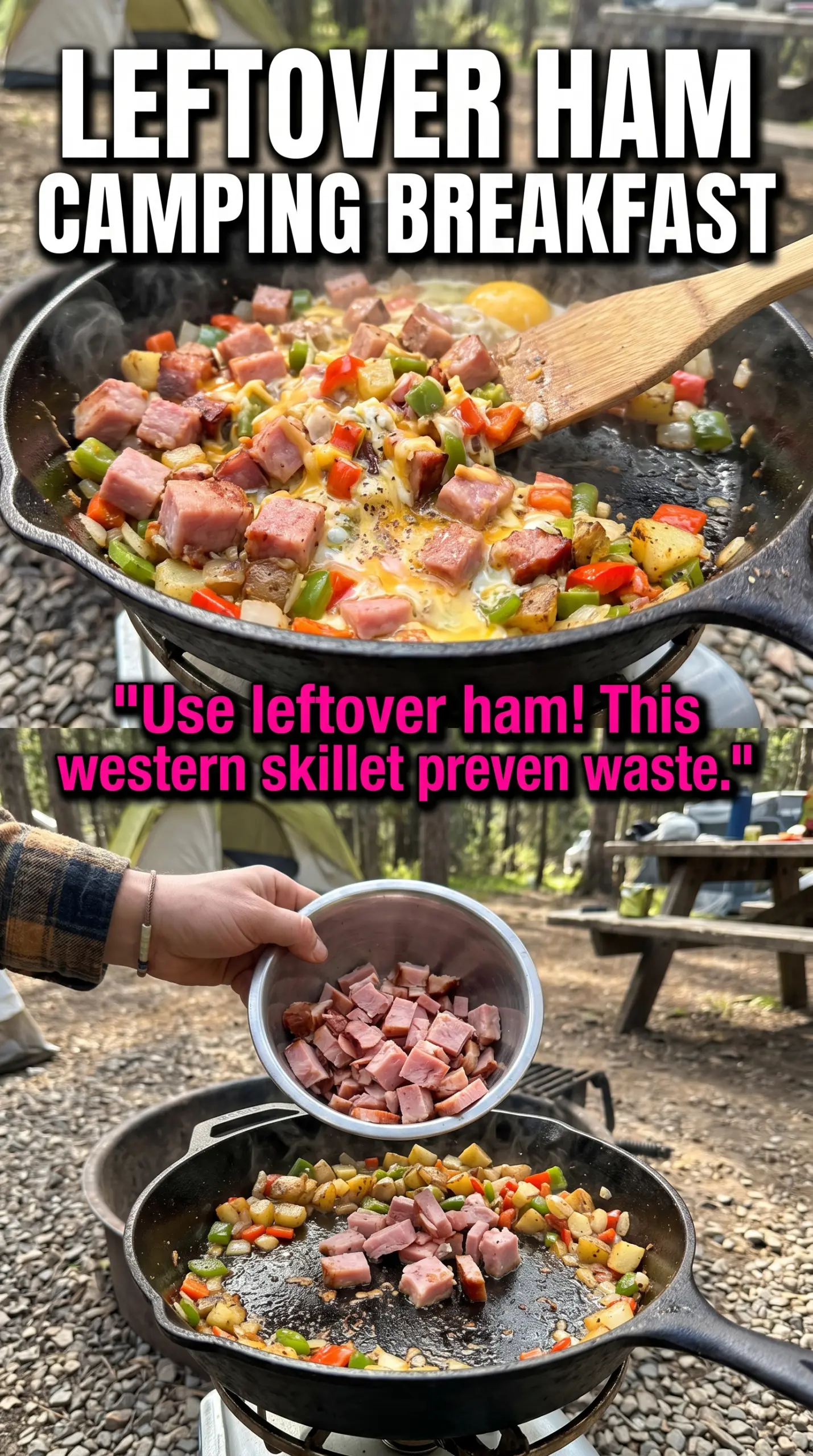
- Ham — Dice it small so it heats quickly and lands in the same bite as the potato and egg. A smoky ham works best, but leftover baked ham or deli-style ham both fit. If yours is very salty, go lighter on the seasoning at the end.
- Bell pepper and onion — These add sweetness and a little freshness that keeps the dish from feeling heavy. Dice them fine enough that they soften in the few minutes they spend in the pan. Larger chunks stay crunchy when the eggs are already done.
- Cheddar cheese — Shredded cheddar melts into the wells and across the top, binding the whole skillet together. Pre-shredded cheese works, but freshly shredded melts a little smoother because it doesn’t carry the anti-caking coating. Sharp cheddar gives the best contrast against the ham.
- Eggs — The wells matter because they keep the eggs from sliding into the potatoes and disappearing. Fresh eggs hold their shape better, especially if you want intact yolks. If you prefer firmer eggs, cover the skillet a minute or two longer until the whites are fully opaque.
Building the Skillet So the Eggs Set Without Overcooking
Brown the Potatoes First
Heat the butter or oil in a large cast iron skillet until it shimmers, then add the hash browns in an even layer. Stir only now and then so the potatoes can brown instead of breaking down into a soft mash. If the pan starts sounding dry before the potatoes have color, add a little more fat around the edges.
Cook the Ham and Vegetables Just Until Tender
Once the hash browns are golden, add the ham, bell pepper, and onion. You’re not trying to cook the vegetables into softness here; you’re taking the raw edge off and warming the ham through. If the onions are still sharp and the peppers are crunchy, keep them in the pan a minute longer before moving on.
Set the Eggs Under a Lid
Create six wells in the hash brown mixture and crack one egg into each one. Sprinkle the cheese over the top, then cover the skillet tightly with a lid or foil so the heat stays trapped. Watch for the whites to turn opaque and the yolks to jiggle only slightly; that’s the sign to pull it from the heat if you want runny yolks.
Finish in the Pan and Serve Right Away
Season with salt and pepper at the end, then bring the skillet straight to the table. The cheese will keep melting for a minute after it comes off the heat, and the eggs will continue to set a little from residual heat. If you leave it sitting too long, the bottoms keep cooking and the potatoes lose that crisp edge.
How to Adapt This Skillet for Different Pans and Diets
Make It Without Ham
Leave the ham out and add a little extra bell pepper and onion, or fold in cooked mushrooms for a deeper savory note. You’ll lose the salty, smoky bite that ham brings, so season the potatoes a little more carefully at the end and use a sharper cheese.
Dairy-Free Version
Use a neutral oil instead of butter and skip the cheese, or top with a dairy-free shredded cheese if you know it melts well. The dish will still work, but it won’t have the same rich, cohesive finish, so serve it with a little hot sauce or salsa for extra lift.
Home Kitchen Skillet Instead of Campfire
This works just as well on the stove over medium heat. A heavy skillet matters more than the heat source because it keeps the potatoes from scorching before the eggs set. If your burner runs hot, lower it once the hash browns are browned and cover the pan a little longer.
Storage and Reheating
- Refrigerator: Store leftovers in an airtight container for up to 3 days. The hash browns soften, but the flavor holds up well.
- Freezer: I don’t recommend freezing this once the eggs are cooked, since the texture turns watery and spongy when reheated. If you want to freeze ahead, cook only the potato, ham, and vegetable mixture, then add fresh eggs when you reheat it.
- Reheating: Reheat portions in a skillet over medium-low heat or in a 325°F oven until warmed through. The biggest mistake is using high heat, which dries out the eggs and makes the potatoes tough before the center is hot.
Answers to the Questions Worth Asking
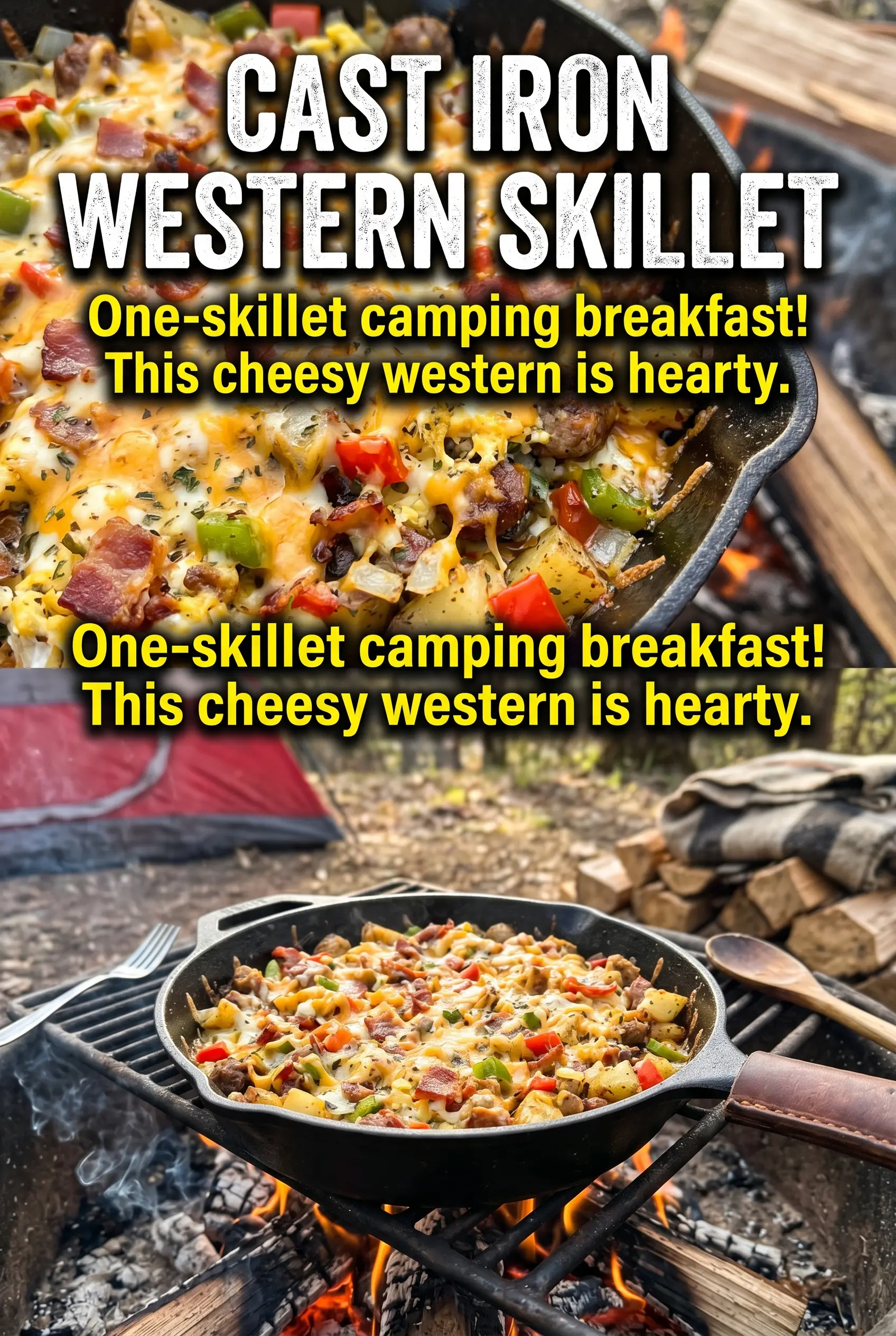
Cheesy Western Skillet with Hash Browns and Ham
Ingredients
Equipment
Method
- Heat butter or oil in a large cast iron skillet over campfire until shimmering. Add the hash browns and cook for 10 minutes, stirring occasionally, until golden.
- Add the ham, bell pepper, and onion to the skillet. Cook for 5 minutes more, stirring occasionally, until the vegetables soften and the ham warms through.
- Create 6 wells in the hash brown mixture and crack 1 egg into each well. Keep the skillet heat steady so the egg whites begin to set around the edges.
- Sprinkle the cheddar cheese over everything and cover with a lid or foil. Cook for 8-10 minutes until the eggs are set to your desired doneness and the cheese is fully melted.
- Season with salt and pepper to taste. Serve directly from the skillet while the cheese is melted and the hash browns are crisp.