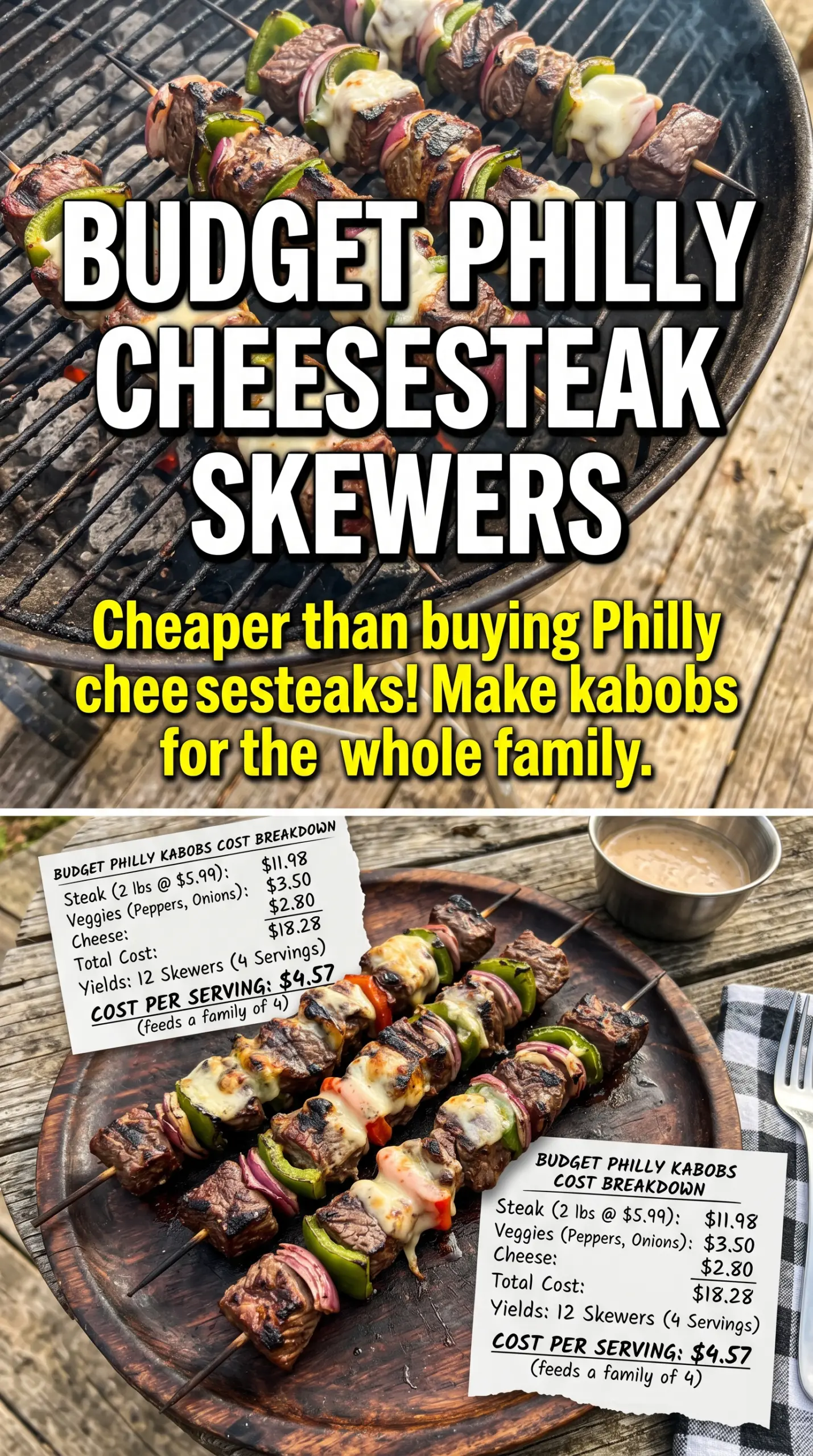
Grilled Philly cheese steak kabobs give you all the best parts of a cheesesteak in a format that cooks fast, eats clean, and picks up a little char you just can’t get from a skillet. The beef stays juicy, the peppers and onions soften at the edges, and the mushrooms soak up the Worcestershire and garlic as they roast over the fire. When the provolone melts over the top, every skewer turns into a handheld dinner that feels a little more fun than the usual sandwich.
This version works because the steak gets seasoned before it ever hits the grill, and the vegetables are cut large enough to hold their shape without going limp. Ribeye is the right cut here because it stays tender over high heat and has enough marbling to keep the kabobs from drying out. The key is to grill them hot and turn them on a schedule so the vegetables char instead of steaming.
Below you’ll find the timing that keeps the beef from overcooking, the small detail that helps the cheese melt evenly, and a few swaps that make these kabobs work whether you’re serving them on rolls or straight off the skewer.
The steak stayed juicy and the peppers picked up just enough char without turning mushy. I melted the provolone at the end like you suggested, and it clung to the kabobs instead of sliding off.
Save these grilled Philly cheese steak kabobs for the nights when you want cheesesteak flavor, melty provolone, and a grill dinner that comes together fast.
Why The Beef Goes On The Grill Before The Cheese Does
With kabobs like these, the biggest mistake is waiting until the steak is “done enough” before you think about the vegetables. Ribeye cooks fast, and once the surface starts drying out, it doesn’t get better with extra time over the fire. The trick is to build the skewers with similar-sized pieces so the beef and vegetables finish in the same window, then pull them when the steak still has a little give in the center.
The other thing that matters here is space. If the skewers are packed tight, the vegetables steam and the steak loses that grilled edge that makes the whole dish worth doing. Leave a little room between pieces so heat can move around them, and turn the kabobs every few minutes instead of leaving them parked on one side.
- Ribeye — This cut stays tender under high heat because the fat bastes the meat as it cooks. Strip steak works in a pinch, but it won’t be quite as forgiving.
- Bell peppers and onion — These need enough size to soften without collapsing. Cut them too small and they’ll overcook before the beef is ready.
- Mushrooms — They bring that savory, almost meaty depth that makes the kabobs taste like a real cheesesteak and not just beef on a stick.
- Provolone — It melts cleanly and coats the meat instead of turning oily. That’s why it belongs on at the very end, not during the main grill time.
What Each Ingredient Is Actually Doing In These Kabobs
- Olive oil — It helps the seasoning cling and keeps the meat from sticking to the grates. You don’t need an expensive bottle here.
- Worcestershire sauce — This is the backbone of the savory flavor. It brings salt, tang, and a little sweetness that plays well with the grilled beef.
- Garlic powder and onion powder — They season the meat evenly in a way fresh garlic can’t on the grill. Fresh garlic would scorch before the steak finishes.
- Provolone slices — Use slices, not shredded cheese. Slices melt in a sheet over the skewers and give you that classic cheesesteak finish.
- Hoagie rolls — Optional, but they turn the kabobs into a real sandwich dinner. Warm them briefly on the grill so they don’t compete with the hot meat.
How To Grill The Kabobs So The Steak Stays Tender
Seasoning The Beef First
Toss the steak cubes with the oil, Worcestershire, garlic powder, onion powder, salt, and pepper before you thread anything. That quick coating does more than add flavor; it keeps the exterior of the beef from drying out the second it hits the heat. Let it sit only while you prep the vegetables, since ribeye doesn’t need a long marinade and can get soft if it hangs around too long in acid-heavy seasoning.
Building The Skewers
Thread the beef, peppers, onions, and mushrooms in a mixed pattern so each bite gets a little of everything. Keep the pieces close enough to cook evenly but not jammed together, or the vegetables will trap steam and the beef won’t brown. If you’re using wooden skewers, soak them long enough that they don’t catch at the ends over the hot grill.
Grilling To The Right Doneness
Set the kabobs over medium-high heat and turn them every 3 to 4 minutes. You want clear grill marks on the outside and a center that still has some spring when you press it with tongs. If the vegetables are coloring too fast, move the skewers to a cooler spot on the grill instead of lowering the heat for everything; that’s how the steak ends up overcooked before the onions finish.
Melting The Cheese At The End
Lay a slice of provolone over each skewer during the last minute and close the grill lid. The trapped heat melts the cheese evenly without letting it run off the kabobs and burn below the grates. Pull them the second the cheese turns glossy and soft, because provolone can go from perfectly melted to oily if it sits too long.
How To Adjust These Kabobs For Different Tables And Diets
Dairy-Free Without Losing The Grill Flavor
Skip the provolone and finish the kabobs with a little extra Worcestershire and a pinch of salt after grilling. You lose the melted cheesesteak top layer, but the beef, peppers, and onions still carry enough flavor to stand on their own.
Gluten-Free On The Grill
The kabobs themselves are naturally gluten-free if you choose a gluten-free Worcestershire sauce and serve them without hoagie rolls. The flavor stays the same, and nobody misses the bread when the cheese is melted right over the steak.
Extra Veggie-Heavy Kabobs
Add more peppers, onions, and mushrooms if you’re feeding a crowd and want the skewers to stretch farther. Just keep the steak cubes large enough that they don’t get lost, since the beef is what keeps these tasting like cheesesteaks.
Storage and Reheating
- Refrigerator: Store leftovers in an airtight container for up to 3 days. The vegetables will soften a bit, but the flavor holds up well.
- Freezer: The cooked kabobs freeze, but the peppers and onions turn softer after thawing. Freeze only if you need to, and wrap the meat tightly with the vegetables removed if texture matters.
- Reheating: Reheat in a skillet over medium-low heat or in a 325°F oven until warmed through. High heat dries the steak out fast and makes the cheese greasy instead of melty.
The Things That Trip People Up With This Dish

Grilled Philly Cheese Steak Kabobs
Ingredients
Equipment
Method
- Toss ribeye steak cubes with olive oil, Worcestershire sauce, garlic powder, onion powder, salt and pepper until evenly coated. Keep pieces in a single layer so the seasoning clings well.
- Thread ribeye steak, bell peppers, onion, and mushrooms onto skewers, alternating ingredients for even grilling. Leave a little space between pieces so they cook through without steaming.
- Grill kabobs over medium-high heat for 10-15 minutes, turning every 3-4 minutes until the steak reaches your desired doneness. Look for browned edges and tender vegetables with light charring.
- In the last minute, drape provolone cheese slices over the kabobs and close the grill lid to melt. Watch for the cheese to fully soften and start stretching.
- Serve grilled Philly cheesesteak kabobs on hoagie rolls or as-is with the melted provolone on top. Add any extra cheese that drips onto the board for maximum coverage.