Sliced flank steak, cool mozzarella, ripe tomatoes, and basil turn into a plate that eats like a full meal instead of a side dish trying to act important. The steak brings the char and the heft, while the Caprese topping keeps each bite fresh enough to keep going back for one more slice. The balsamic glaze ties everything together with just enough sweetness to make the whole platter taste finished.
What makes this version work is the balance between a short marinade and a hard, fast grill. The balsamic in the marinade gives the beef a little tang and helps flavor the surface, but the real payoff comes from drying the steak well before it hits the heat. That’s what gives you a browned crust instead of steamed meat. Once it rests, slicing thinly against the grain keeps flank steak tender instead of chewy.
Below, I’ve included the part that matters most for this kind of recipe: how to keep the steak juicy while still getting good grill marks, plus a few easy swaps if you want to adapt the platter for what’s in your fridge.
The marinade gave the steak great flavor without overpowering it, and slicing it thin against the grain made it tender enough to cut with a fork. The mozzarella started to soften just slightly on top, which was perfect with the tomatoes and basil.
Balsamic Grilled Flank Steak Caprese keeps the steak juicy, the tomatoes fresh, and the balsamic finish sharp enough to wake up the whole plate.
The Part That Keeps Flank Steak Tender Instead of Tough
Flank steak has great beefy flavor, but it punishes sloppy handling. The mistake most people make is treating it like a thick steakhouse cut: they cook it too long and slice it in the wrong direction. Flank steak has long muscle fibers, and once those fibers tighten up, they need to be cut short to eat tender.
The marinade in this recipe does flavor work, not miracle work. Balsamic vinegar and olive oil season the outside and help the surface brown, but the real tenderness comes from high heat, a short cook, and a full rest before slicing. If you cut it too soon, the juices run out and the meat gets dry fast.
- Dry the steak before grilling — Marinade on the surface creates steam, which fights the crust. Pat it dry after marinating so the grill can do its job.
- Rest before slicing — Ten minutes gives the juices time to settle back into the meat. Skip it and the first cut spills everything onto the board.
- Slice against the grain — This matters more with flank steak than with almost any other cut here. Turn the knife across the fibers and the slices will eat much more tender.
What Each Ingredient Is Actually Doing in This Platter
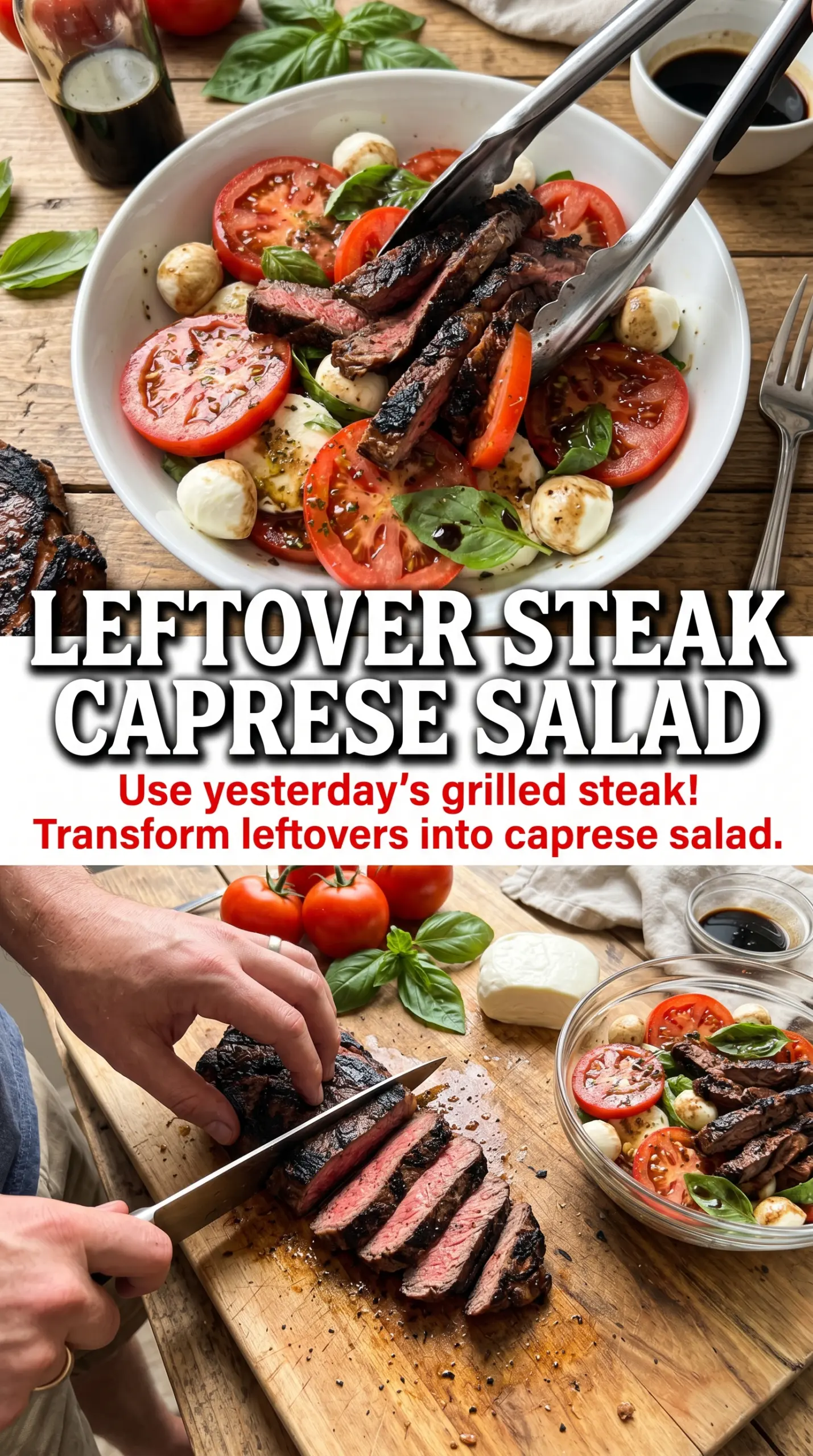
- Flank steak — This is the backbone of the dish. It has enough structure to stand up to the Caprese toppings, and it slices beautifully when you cut it thin against the grain.
- Balsamic vinegar and balsamic glaze — The vinegar goes into the marinade for sharpness and background flavor. The glaze goes on at the end for a glossy, sweet-tart finish that stays bright against the cheese and tomatoes.
- Fresh mozzarella — Use the real fresh kind here, not low-moisture blocks. It softens into the warm steak and gives you that clean milky bite that makes the platter feel like Caprese instead of just steak with toppings.
- Tomatoes and basil — These need to be ripe and fresh because they bring all the contrast. If the tomatoes are pale or mealy, the dish loses its pop no matter how well the steak is cooked.
- Garlic and oregano — The garlic gives the marinade depth, while the oregano adds a little Italian-American backbone. Dried oregano is fine here because it lives in the marinade long enough to bloom.
Getting the Grill, Rest, and Slice Right
Marinating the Steak
Whisk the balsamic vinegar, olive oil, garlic, oregano, salt, and pepper until the mixture looks emulsified, then coat the steak and let it sit for at least an hour. That’s enough time for the surface to pick up flavor without turning the texture soft or mushy. If you leave it much longer than that, especially with a very acidic balsamic, the outside can get a little too tacky instead of clean and beefy.
Building a Real Sear
Preheat the grill until it’s hot enough that you hear an immediate sizzle when the meat hits the grates. Pat the steak dry before it goes on, then grill it 5 to 6 minutes per side for medium-rare. If your grill runs hot, start checking early; flank steak can go from perfect to overdone fast because it’s thin and cooks quickly.
Resting and Slicing the Right Way
Let the steak rest for a full 10 minutes after grilling. That pause matters more than people think, because the juices redistribute and the meat firms up just enough for cleaner slicing. Cut thin slices against the grain, arrange them on a platter, then add the mozzarella, tomatoes, and basil so the heat from the steak softens the cheese slightly without melting it completely.
Finishing the Platter
Drizzle the balsamic glaze and a little extra virgin olive oil over the top right before serving. The glaze should sit in ribbons, not soak everything; that keeps the presentation clean and the flavor sharp. If the tomatoes are especially juicy, layer them on top after the steak so the platter doesn’t turn watery at the bottom.
How to Adapt This Platter Without Losing What Makes It Work
Dairy-Free Version
Leave off the mozzarella and add extra basil, a few shaved ribbons of cucumber, or even avocado for creaminess. You lose the classic Caprese bite, but the steak, tomatoes, and balsamic still make a strong, fresh-tasting plate.
No Grill, Broiler Finish
If grilling isn’t happening, sear the steak in a very hot cast-iron skillet, then finish it under the broiler for a minute or two if needed. You’ll miss a little of the smoky edge, but you’ll still get the browned crust and juicy center.
Make It Lower Carb
This recipe is already naturally low in carbs, so the only thing to watch is the balsamic glaze if you’re counting closely. Use a lighter drizzle or choose a sugar-free glaze and you’ll keep the same structure without adding much sweetness.
Make It for a Crowd
Double the steak and slice everything on a larger platter instead of serving it whole. Keep the tomatoes and mozzarella in a single layer over the meat so the platter stays easy to serve and doesn’t become a pile of toppings fighting the steak underneath.
Storage and Reheating
- Refrigerator: Store leftovers for up to 3 days. Keep the steak separate from the tomatoes and basil if you can, because the fresh toppings get watery fast.
- Freezer: The steak can be frozen on its own for up to 2 months, but the assembled Caprese topping does not freeze well. Freeze sliced steak in a tight container and add fresh mozzarella and tomatoes after reheating.
- Reheating: Warm the steak gently in a covered skillet over low heat or in short bursts in the microwave. High heat dries flank steak out fast, so don’t blast it trying to make it hot all at once.
Answers to the Questions Worth Asking
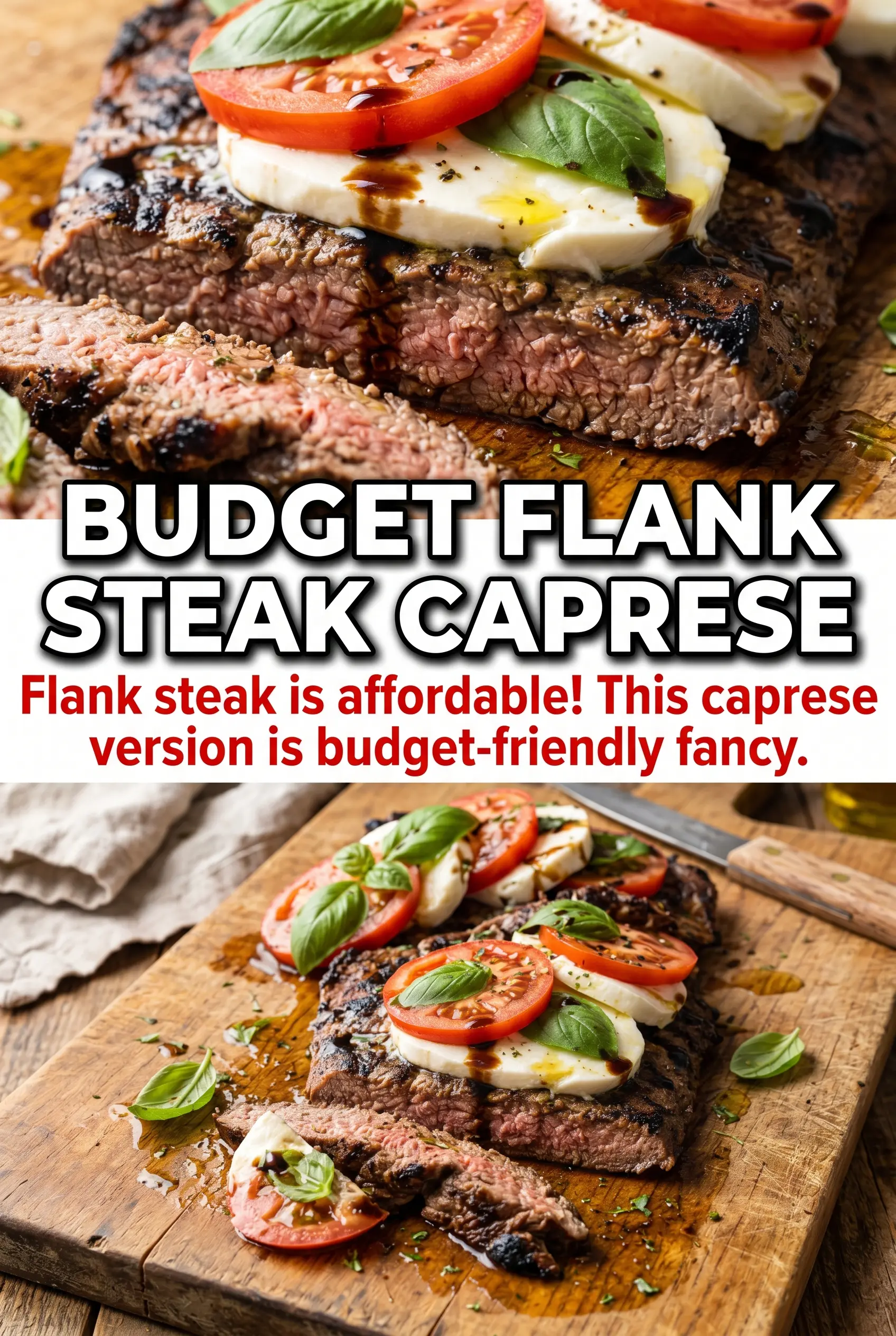
Balsamic Grilled Flank Steak Caprese
Ingredients
Method
- Whisk balsamic vinegar, olive oil, garlic, oregano, salt, and pepper together until uniform, then mix in the steak. Marinate for at least 1 hour, covered, so the surface looks well coated.
- Preheat the grill to high heat and pat the steak dry with paper towels. The steak should look dry on the outside for better browning.
- Grill the steak for 5-6 minutes per side for medium-rare, maintaining high heat throughout. You should see clear grill marks and a pink center when checked.
- Remove the steak from the grill and let it rest for 10 minutes. The juices should settle so the slices hold together when cut.
- Slice the steak thinly against the grain. The slices should be even and slightly fanned for topping.
- Arrange the sliced steak on a platter and top with mozzarella slices, tomato slices, and fresh basil. The mozzarella should cover most of the meat for melting and the tomatoes should look vibrant and layered.
- Drizzle with balsamic glaze and extra virgin olive oil before serving. Finish with glossy streaks so every slice gets a tangy sheen.