Juicy grilled chicken with deep seasoning and clean, bright flavor earns its place on repeat fast. The marinade does more than coat the meat. It seasons all the way through, helps the chicken stay tender over high heat, and gives you those browned edges that taste like summer cookout food should taste: smoky, savory, and balanced.
The key is in the mix. Olive oil carries the seasonings, soy sauce and Worcestershire bring salt and umami, lemon juice keeps the flavor lively, and Dijon helps everything cling to the chicken instead of sliding off into the bowl. Brown sugar is there for more than sweetness; it encourages better browning without turning the chicken into glaze. I’ve found this works best with bone-in pieces, but it does a good job on boneless cuts too as long as you watch the heat and don’t chase dark grill marks before the inside has had time to catch up.
Below you’ll find the timing that keeps the chicken juicy, the marinade detail that makes the flavor taste rounded instead of flat, and a few variations for changing the cut or making dinner work with what’s already in the fridge.
The marinade gave the chicken a great balance of tangy and savory, and after 20 minutes on the grill the pieces were juicy with nice charred edges. My husband went back for seconds before I even sat down.
Save this grilled chicken marinade for the nights when you want juicy, char-marked chicken with almost no fuss.
The Marinade Has to Season the Meat, Not Just Sit on It
If grilled chicken turns out bland, the problem is usually timing or imbalance in the marinade. A short soak gives you surface flavor, but this recipe needs time for the salt, acid, and aromatics to settle into the meat without making it harsh. Two to eight hours is the sweet spot. Less than that and the chicken tastes mostly seasoned on the outside; much longer and the lemon can start pushing the texture in the wrong direction, especially on smaller pieces.
Another common mistake is using too much heat too soon. The sugar and Dijon help the chicken brown, but if the grill is screaming hot, the outside will darken before the inside cooks through. Medium-high heat gives you a steady sear and those clean grill marks without scorching the marinade into a bitter crust.
- Why the soy sauce matters — It adds salt and depth in one step, which is why the chicken tastes more rounded than chicken marinated in oil and spices alone.
- What Dijon does here — It helps emulsify the marinade, so the oil, acid, and seasonings stay blended and coat the chicken evenly.
- Why the brown sugar isn’t optional — It balances the lemon and soy, then helps the surface caramelize instead of drying out.
What Each Ingredient Is Actually Doing on the Grill

- Chicken pieces — Bone-in pieces stay juicier over the grill and forgive small timing mistakes better than boneless breasts. If you use boneless, pull them earlier and watch for carryover cooking.
- Olive oil — It carries the marinade across the surface and helps the chicken brown instead of sticking. A standard cooking olive oil is fine here.
- Worcestershire sauce — This adds savory complexity that you can’t fake with salt alone. It’s one of the reasons the chicken tastes grilled even before it hits the flame.
- Lemon juice — Fresh lemon gives the cleanest finish. Bottled lemon juice works in a pinch, but it tastes flatter and a little sharper.
- Garlic — Mince it finely so it perfumes the marinade instead of burning in big bits on the grill.
Getting the Chicken Off the Grill at the Right Moment
Building the Marinade
Whisk the marinade until the sugar dissolves and the mustard disappears into the oil. You want a smooth, slightly thick liquid, not separated streaks of oil and lemon. If the sugar sits in the bottom of the bowl, it ends up unevenly distributed on the chicken, and the first pieces you grill will taste different from the last.
Marinating for Real Flavor
Coat the chicken well, then refrigerate it for at least 2 hours. Turn it once if you can, because the top layer always marinates faster than the bottom. Don’t leave the chicken at room temperature for hours; the acid can start to tighten the surface before the middle is properly seasoned.
Grilling With Control
Preheat the grill to medium-high and clean the grates so the marinade doesn’t glue the chicken to the metal. Grill the pieces, turning them occasionally, until the thickest part reaches 165°F. If the outside is browning too quickly, move the chicken to a cooler spot on the grill and finish it there instead of forcing the heat down.
Resting Before You Slice
Let the chicken rest for 5 minutes before serving. That short pause keeps the juices from pouring out the second you cut in. If you skip it, even perfectly grilled chicken can seem dry because all the moisture ends up on the cutting board instead of in the meat.
How to Adapt This for Different Cuts, Diets, and Grill Setups
Boneless chicken breasts for a faster dinner
Use boneless breasts if you want faster cook time, but keep the marinade to the shorter end of the range so the lemon doesn’t toughen the surface. Grill them over medium-high heat and pull them as soon as they hit 165°F; they dry out fast once they go past that point.
Gluten-free version
Use a certified gluten-free Worcestershire sauce and tamari instead of standard soy sauce. The flavor stays savory and balanced, and the tamari keeps the marinade from tasting thin.
No outdoor grill
A grill pan or cast-iron skillet works well if you heat it until hot before adding the chicken. You won’t get the same smoke, but you’ll still get a good browned crust and the same marinade-driven flavor.
Storage and Reheating
- Refrigerator: Store cooked chicken in an airtight container for up to 4 days. The flavor holds well, though the skinless pieces will lose a little of their crisp edge.
- Freezer: It freezes well for up to 2 months if you wrap it tightly and cool it first. Thaw it in the fridge so the texture stays even.
- Reheating: Reheat gently in a covered skillet with a splash of water or broth, or warm it in a low oven. High heat dries grilled chicken out fast, so skip the microwave blast unless you’re only warming a small portion.
Questions I Get Asked About This Recipe
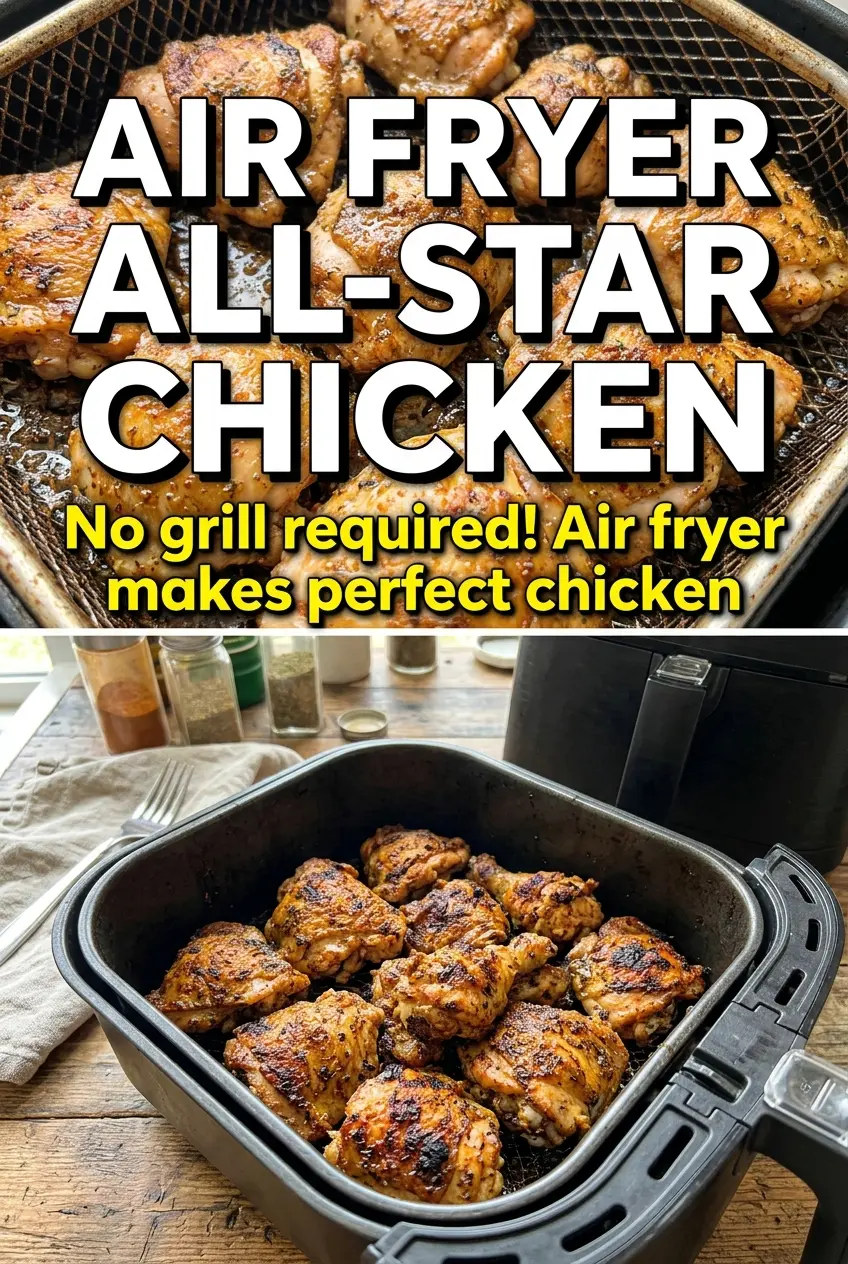
All-Star Grilled Chicken
Ingredients
Equipment
Method
- Whisk the olive oil, soy sauce, lemon juice, Worcestershire sauce, Dijon mustard, minced garlic, brown sugar, black pepper, and paprika together until smooth and evenly combined, about 1 minute. Visual cue: the mixture looks uniform with no brown sugar clumps.
- Place the chicken pieces in a sealed container or zip-top bag and pour in the marinade, turning to coat all sides. Visual cue: every piece has a thin, glossy coating.
- Refrigerate the chicken to marinate for 2 to 8 hours. Visual cue: the chicken looks slightly darker and more infused after time in the fridge.
- Preheat the grill to medium-high heat before cooking. Visual cue: grill grates are hot and ready, with steady heat at the surface.
- Grill the marinated chicken, turning occasionally, until the internal temperature reaches 165°F. Visual cue: juices run clear and you see browned grill marks as you turn.
- Let the chicken rest for 5 minutes before serving. Visual cue: it looks settled and less steaming right after resting.