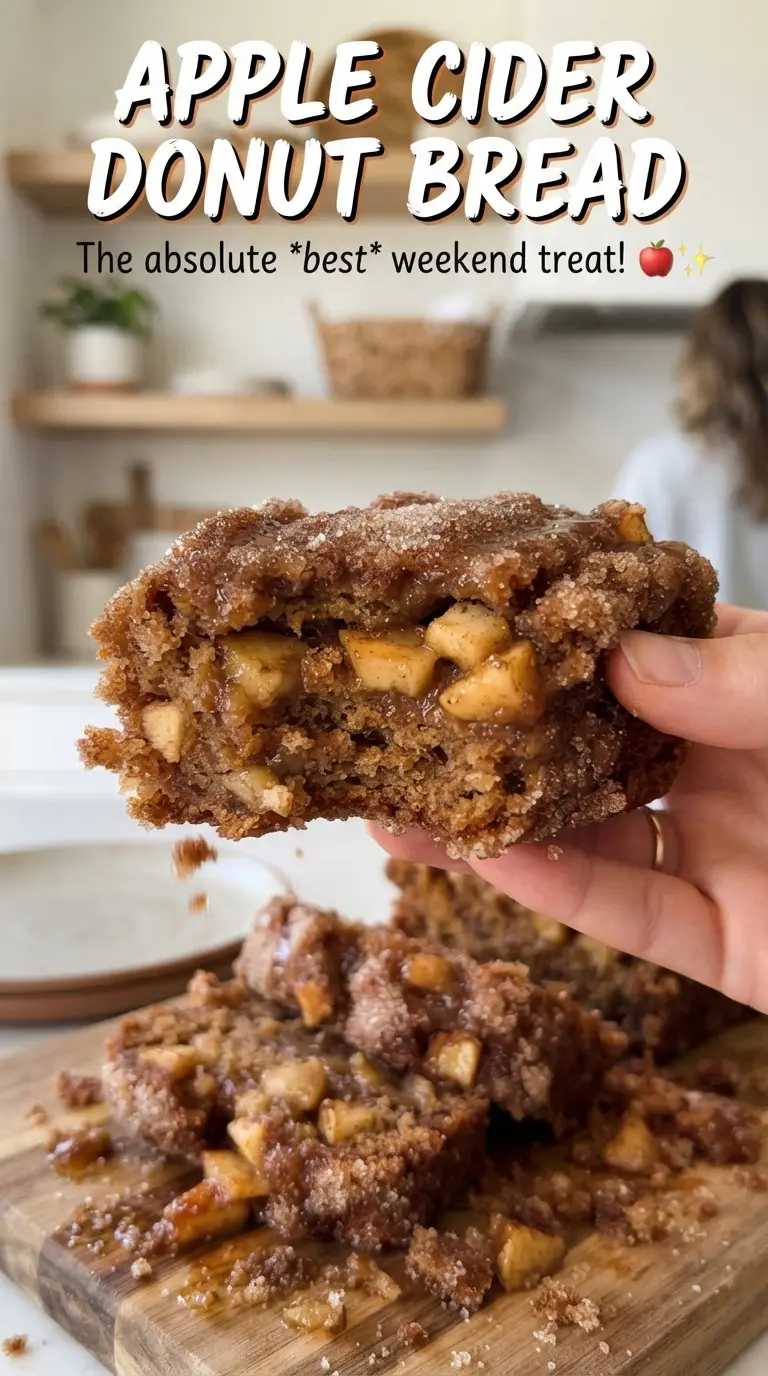
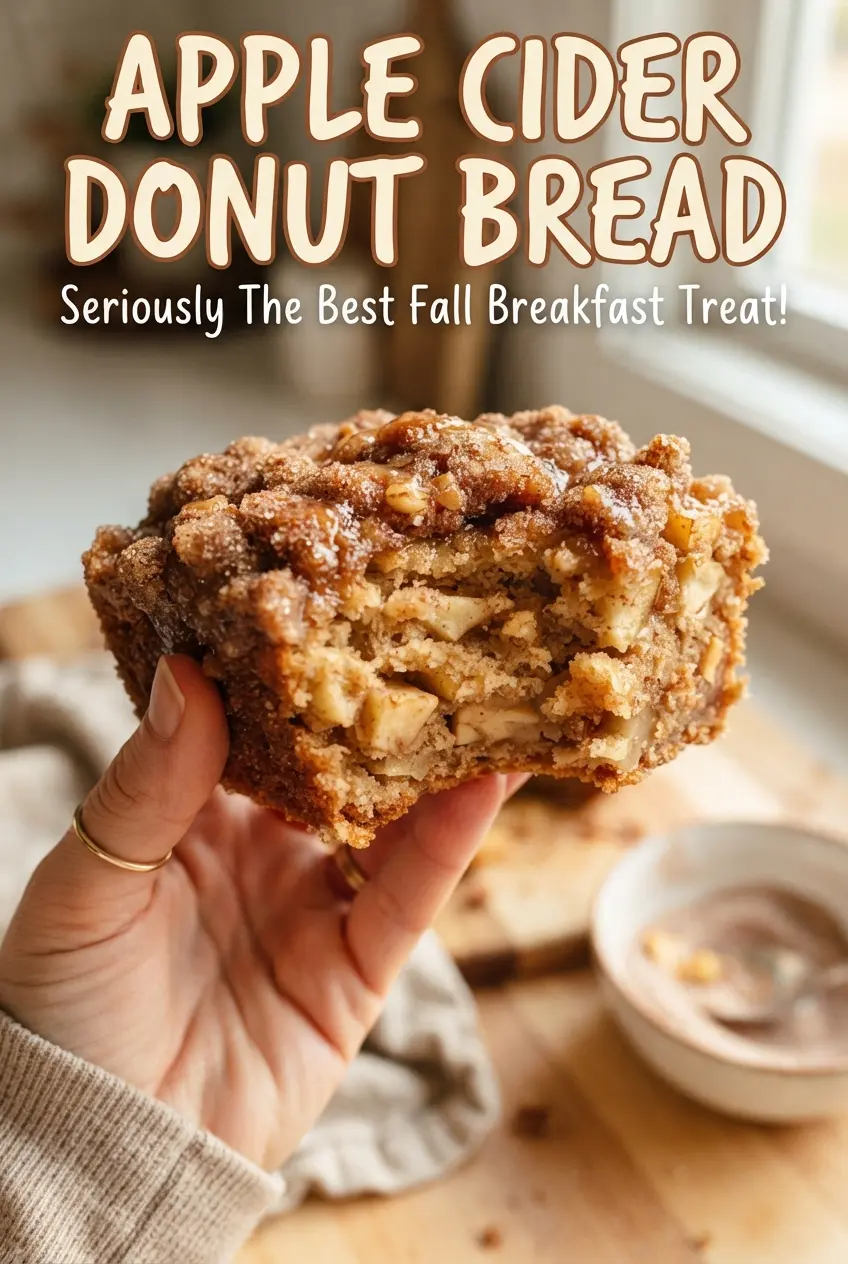
Apple cider donut bread lands with the same cozy punch as a fresh cider donut, but in a loaf you can slice thick and serve without a fryer. The crust bakes up soft until the final butter-and-cinnamon-sugar finish, which gives each piece that crackly, sandy coating people usually chase at the orchard stand. The inside stays tender and fragrant, with just enough spice to taste like fall without tipping into heavy cake territory.
The trick is reducing the cider first. That concentrates the apple flavor and keeps the loaf from tasting watered down, which happens fast when the liquid goes in straight from the bottle. Sour cream adds moisture and a little tang, while brown sugar gives the crumb a deeper, almost caramel note. The topping goes on while the bread is still warm so the butter grabs the sugar and sets into that classic donut-style crust.
Below, I’ve included the one step that makes the biggest difference in flavor, plus a few ways to adapt the loaf if you want to make it dairy-free or keep it on the counter for a few days.
The cider reduction made all the difference, and the cinnamon-sugar crust stayed crunchy even after the loaf cooled. My kitchen smelled like a bakery for hours.
Save this apple cider donut bread for the loaf with the crunchy cinnamon-sugar crust and spiced cider crumb.
The cider reduction is what keeps this loaf from tasting flat
Most apple cider breads lean on cider for aroma, but if you pour it in at full strength, the flavor gets diluted once the loaf bakes. Reducing it down to about half a cup concentrates the apple notes and gives the bread a deeper, almost baked-apple taste without making the batter loose. That reduction also cools before it goes into the batter, which matters because hot liquid can soften the butter too early and throw off the texture.
The other thing that protects the crumb is the mixing order. Creaming the butter and brown sugar first traps air, then the eggs and sour cream build a rich base that bakes up tender instead of dense. Once the flour goes in, stop as soon as the streaks disappear. Overmixing turns a quick bread tight and tough, and this one should slice cleanly with a soft crumb that still holds together under the sugar coating.
What each ingredient is actually doing in this bread
- Apple cider — This is the flavor backbone. Reducing it concentrates the apple taste and keeps the loaf from tasting vague or watery. If you only have sweet cider, that works fine; just don’t swap in apple juice unless you want a flatter, less aromatic loaf.
- Sour cream — This keeps the crumb plush and gives the loaf a gentle tang that balances the sugar. Plain full-fat Greek yogurt works in the same amount if that’s what you have, though the texture will be a touch tighter and a little less rich.
- Brown sugar — It adds moisture and a deeper sweetness that plays well with the cider reduction. Light or dark brown sugar both work, but dark brown sugar will push the loaf toward a richer molasses note.
- Cinnamon and nutmeg — These are the “donut” part of the flavor. The loaf doesn’t need a heavy hand; too much spice buries the cider, so stick close to the amounts here for balance.
- Butter for the topping — Brushing the loaf while it’s warm helps the cinnamon sugar cling and form that signature crust. If the loaf cools completely first, the topping falls off instead of setting.
Building the loaf so the crumb stays soft and the crust stays crunchy
Reducing the cider
Pour the cider into a saucepan and simmer it until you have about 1/2 cup left. You want steady bubbles, not a hard boil, so the flavor concentrates without tasting cooked down or bitter. Cool it before mixing; warm cider can melt the butter mixture and make the loaf bake up greasy around the edges.
Mixing the base
Cream the butter and brown sugar until the mixture turns lighter and looks fluffy. That step gives the bread a little lift before the leaveners even start working. Beat in the eggs one at a time, then add the sour cream, vanilla, and reduced cider. If the mixture looks slightly curdled at this point, that’s fine; the flour will smooth it out.
Finishing the batter
Fold in the dry ingredients just until no dry pockets remain. The batter should look thick and spoonable, not pourable. Scrape it into the prepared loaf pan and level the top so it bakes evenly. If you stir past the point of combine, the loaf will bake up with tunnels and a tougher bite.
Bathing the warm loaf
Let the bread cool for about 10 minutes, then brush it all over with melted butter and press on the cinnamon sugar. Warm bread grabs the coating best, and the surface should look glossy before you add the sugar. Press gently so the crust sticks, but don’t pack it on so hard that the loaf compresses and loses its tender crumb.
How to adapt this loaf without losing the donut texture
Dairy-free version
Swap the butter in the loaf for a neutral dairy-free baking stick and use dairy-free butter for the topping. Replace the sour cream with full-fat plain coconut yogurt or a thick unsweetened oat-based yogurt. The loaf will still stay tender, but the flavor will be a little less rich and the crust a touch softer.
Gluten-free version
Use a cup-for-cup gluten-free flour blend that includes xanthan gum. The batter may need an extra minute of mixing to hydrate evenly, but stop once it comes together. The loaf will be slightly more delicate, so cool it fully before slicing or it can crumble at the center.
Make it extra spiced
Add a pinch of cloves or allspice if you want a stronger bakery-style spice note. Keep it small. Too much spice can crowd out the apple cider, and the cider is what makes this loaf taste distinct instead of like standard cinnamon bread.
Storage and Reheating
- Refrigerator: Store tightly wrapped for up to 5 days. The sugar crust softens a bit in the fridge, but the loaf stays moist.
- Freezer: This freezes well. Wrap the cooled loaf or individual slices tightly in plastic, then foil, and freeze for up to 2 months. Freeze before adding the cinnamon sugar if you want the best texture later.
- Reheating: Warm slices in a low oven or toaster oven until just heated through. A microwave will soften the crust and make the topping sticky instead of crackly.
Answers to the questions worth asking
Apple Cider Donut Bread
Ingredients
Equipment
Method
- Simmer the apple cider in a Dutch oven for 15-20 minutes, until reduced to 1/2 cup, then cool.
- During cooling, keep the reduced cider at room temperature so the batter won’t seize when mixed with butter.
- Preheat the oven to 350F, then grease and line a 9x5-inch loaf pan.
- Set the pan aside so it’s ready for filling once the batter is mixed.
- Whisk the all-purpose flour, baking powder, baking soda, salt, ground cinnamon, and nutmeg until evenly distributed.
- Beat the softened butter and packed brown sugar until fluffy, then beat in the eggs, sour cream, vanilla extract, and the reduced cider.
- Fold the dry ingredients into the wet mixture just until combined, then spread the batter into the prepared loaf pan.
- Bake at 350F for 50-55 minutes, until a toothpick comes out clean.
- Cool the loaf for 10 minutes before topping.
- Brush the warm loaf all over with the melted butter.
- Press the loaf into the cinnamon sugar made from sugar and cinnamon to form a thick crunchy crust.