Sticky, smoky BBQ chicken earns its place in the regular rotation because it gives you charred edges, juicy meat, and that lacquered sauce finish that clings instead of sliding off the skin. Bone-in pieces handle the grill better than boneless cuts, and the marinade builds flavor all the way through instead of leaving everything to the last-minute glaze. What you get at the end is chicken that tastes cooked with intention, not just brushed with sauce and rushed to the plate.
The trick here is restraint early on. The chicken starts with a dry spice rub and a short bath in some of the BBQ sauce, but the rest stays off until the meat is almost done. That keeps the sugars in the sauce from burning before the chicken has time to cook through. I also like grilling bone-side down first, then turning often once the heat starts working on the skin, because that gives you steady browning instead of flare-up chaos.
Below, I’ve included the small timing and temperature details that keep the sauce glossy and the chicken juicy, plus a few swaps for oven or drumstick-only versions if that’s what you’ve got.
The sauce caramelized into this sticky, glossy coating without burning, and the chicken stayed juicy even on the breast pieces. Grilling bone-side down first made a huge difference.
Like this BBQ chicken? Save it to Pinterest for the nights when you want smoky grilled chicken with a sticky, caramelized sauce finish.
The Part Most People Get Wrong: Saucing Too Early
The biggest mistake with BBQ chicken is treating the sauce like a marinade that should stay on the meat the whole time. Most bottled BBQ sauces contain sugar, and sugar burns before chicken has enough time to cook through over medium grill heat. That leaves you with bitter black spots and skin that tastes scorched instead of smoky.
This version solves that by splitting the sauce into two jobs. A half cup goes in early to season the meat, then the rest is brushed on during the last 10 minutes when the chicken is already mostly cooked. By then, the sauce can tighten, shine, and caramelize without turning harsh. If your grill runs hot, move the pieces around as needed so the sauce never sits over a flare-up long enough to burn.
What Each Ingredient Is Actually Doing in This Chicken
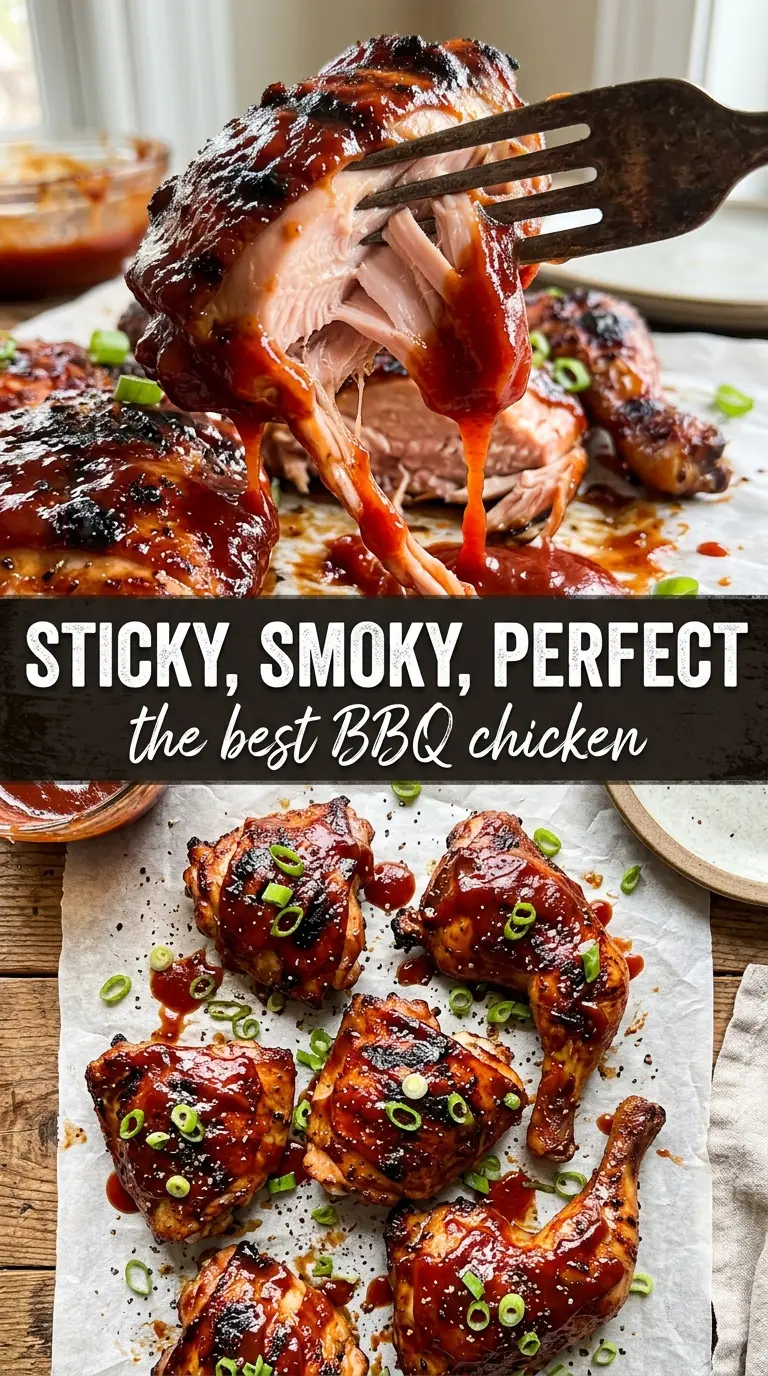
- Bone-in, skin-on chicken pieces — The bone helps the meat stay juicy, and the skin gives you a surface that can crisp and char instead of drying out. Thighs and legs are the most forgiving; breasts work too, but pull them as soon as they hit temperature or they’ll dry out.
- BBQ sauce — Use a sauce you actually like eating straight from the spoon, because its flavor gets concentrated as it cooks. A thinner sauce will glaze more easily, while a very thick sauce may need a splash of water when warming for brushing at the end.
- Smoked paprika — This is doing the heavy lifting for that smoky backbone if your grill doesn’t add as much char as you want. Regular paprika won’t give the same depth, so keep the smoked version if you can.
- Olive oil and dry spices — The oil helps the seasoning cling and promotes browning on the skin. The garlic powder and onion powder add savory depth without the wet burn you’d get from fresh garlic on a hot grill.
How to Grill It So the Sauce Stays Sticky, Not Burnt
Seasoning the Chicken
Rub the chicken all over with olive oil, garlic powder, onion powder, smoked paprika, salt, and pepper until the skin looks lightly coated instead of dusted. The oil helps the spices adhere and gives the skin a head start on browning. If the seasoning seems to slide off, the chicken is too wet; pat it dry first so the rub sticks and the skin can crisp instead of steaming.
Giving the Marinade Time to Work
Coat the chicken with about half a cup of BBQ sauce and let it sit at least one hour, or overnight if you want the flavor to sink deeper. A shallow dish or zip-top bag both work, but turn the chicken once or twice so every piece gets touched by the sauce. Don’t skip the rest time here — cold chicken straight from the fridge can cook unevenly, so let it sit out while the grill heats.
Grilling Over Medium Heat
Set the grill to medium heat and start bone-side down. That puts the thicker part of the chicken nearest the fire first, which helps it cook through without scorching the skin too early. Turn every 8 to 10 minutes and watch for flare-ups; if the flames jump, move the chicken to a cooler part of the grate until they settle down.
Finishing with the Glaze
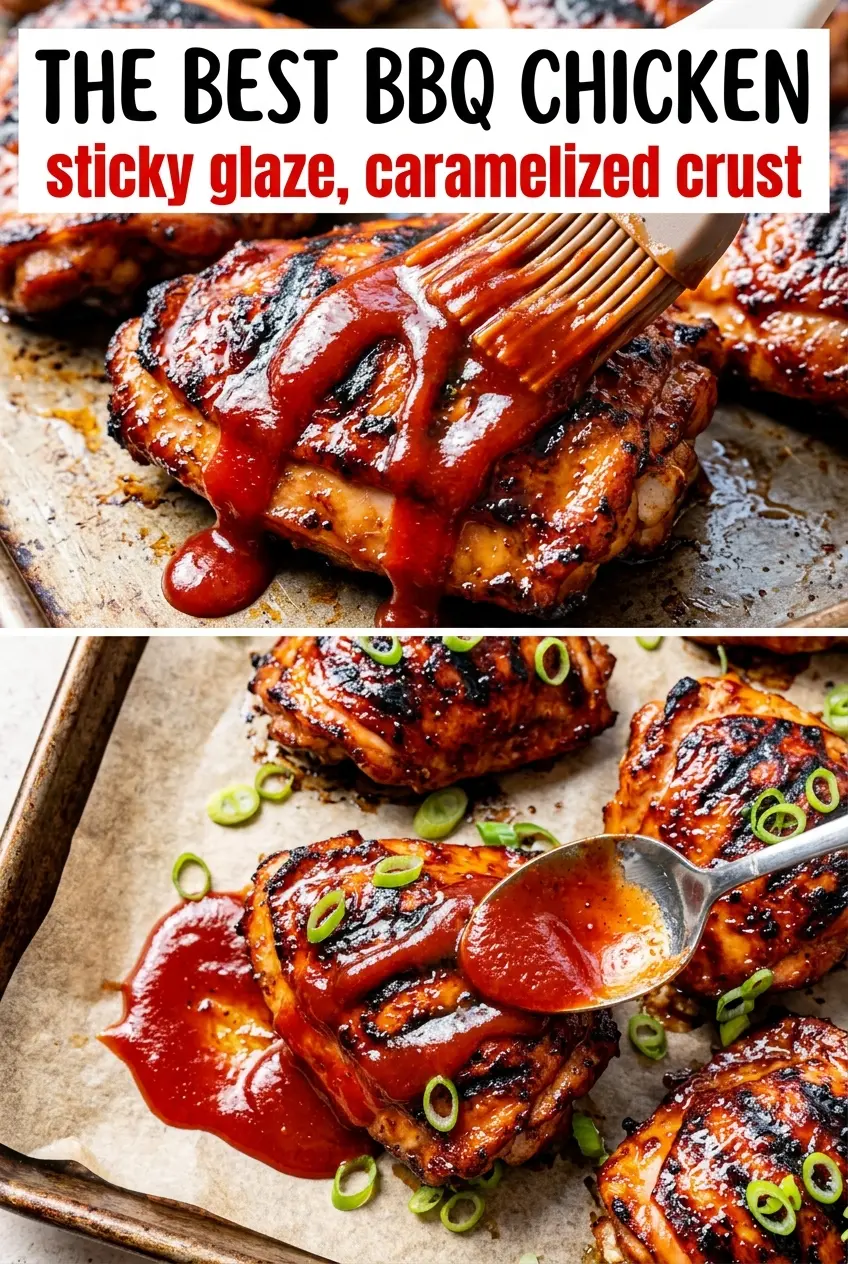
Brush on the remaining BBQ sauce only during the last 10 minutes, turning and basting each time so it builds a sticky coating in layers. You’re looking for deep caramelization and a glossy surface, not a thick black crust. Pull the chicken when the thickest part reaches 165°F, then rest it for 5 minutes so the juices settle back into the meat.
How to Adapt This for the Grill You Have and the Chicken You Bought
Oven-Baked BBQ Chicken
If grilling isn’t an option, bake the seasoned and marinated chicken on a rack set over a sheet pan at 400°F until nearly done, then brush on the sauce and finish under the broiler for a few minutes. The broiler gives you some of the same sticky edges, but you’ll need to watch it closely because the sauce can go from glossy to burnt fast.
Drumsticks Only
Drumsticks are a good choice if you want meat that stays juicy and is easy to grill. They may need a few extra minutes, so cook by temperature instead of the clock and keep basting until the skin is deeply caramelized.
Dairy-Free and Gluten-Free
This recipe is already naturally dairy-free and can be gluten-free if your BBQ sauce is. Check the label, because some sauces use soy sauce, malt vinegar, or thickeners that can sneak in gluten.
Storage and Reheating
- Refrigerator: Store leftovers in an airtight container for up to 4 days. The skin will soften, but the flavor holds up well.
- Freezer: Freeze cooked chicken for up to 2 months. Wrap pieces tightly and freeze with a little extra sauce so the meat doesn’t taste dry when thawed.
- Reheating: Reheat covered in a 325°F oven until warmed through, then uncover for the last few minutes to re-sticky the glaze. The mistake to avoid is blasting it in the microwave, which turns the skin rubbery and can dry out the edges before the center is hot.
Questions I Get Asked About This Recipe
BBQ Chicken
Ingredients
Equipment
Method
- Rub the chicken pieces with olive oil, garlic powder, onion powder, smoked paprika, salt, and black pepper, coating all sides evenly.
- Place the seasoned chicken on a sheet pan so it’s ready for marinating.
- Marinate the chicken in 1/2 cup BBQ sauce for at least 1 hour or overnight, turning once if it’s not fully coated.
- Let the marinated chicken sit at refrigerator temperature until you’re ready to grill.
- Preheat the grill to medium heat and keep the lid closed for steady cooking.
- Grill the chicken bone-side down first, and turn every 8-10 minutes to develop grill marks.
- Continue cooking for 25-30 minutes without sauce, turning regularly, until the chicken is cooked through enough to hold basting.
- Brush generously with the remaining BBQ sauce in the last 10 minutes, turning and basting each time.
- Cook until deeply caramelized, sticky, and the internal temperature reaches 165°F.
- Rest the chicken for 5 minutes to let juices settle.
- Serve with extra warmed BBQ sauce and garnish with fresh parsley.