Dark, glossy beef stew has a way of turning a slow simmer into something worth waiting for. This version leans into deep beer flavor, tender chuck, and just enough horseradish to cut through the richness without taking over the bowl. The beef ends up spoon-tender, the potatoes hold their shape, and the broth settles into that ideal middle ground between rustic and silky.
The trick is building flavor in layers. Browning the beef first gives the stew its backbone, and the tomato paste gets a full minute in the pot so it loses the raw edge before the beer goes in. The horseradish is used two ways: stirred into the stew for a warm, sharp depth, then folded into sour cream for the finish so every bowl gets a cool, tangy contrast.
Below you’ll find the timing that keeps the vegetables from falling apart, the beer choice that works best, and the small finishing step that makes the whole pot taste intentional instead of heavy.
The beef got fall-apart tender and the horseradish in the sour cream kept the stew from tasting heavy. I liked that the potatoes stayed intact even after reheating the next day.
Save this beer-braised beef stew with horseradish sour cream for a cold-night dinner with real depth and a bright, tangy finish.
The Browning Step That Gives This Stew Its Depth
The biggest mistake with beef stew is crowding the pot and rushing the meat. If the beef goes in all at once, it steams and turns gray before it ever has a chance to build flavor. Browning in batches is what gives you those dark, sticky bits on the bottom of the pot, and those bits turn into the stew’s best flavor once the beer goes in.
The other place people go wrong is skipping the deglaze or adding the broth too soon. Beer loosens the fond, but it also needs a minute to simmer so the sharp edge cooks off. That leaves you with a broth that tastes round and beefy instead of thin or bitter.
- Beef chuck — This is the right cut because it has enough connective tissue to turn tender during a long simmer. Lean stew meat can work, but it won’t give you the same rich texture.
- Brown ale or amber beer — Use a beer you’d actually drink. A dark, malty beer adds depth without making the stew taste like hops.
- Prepared horseradish — The jarred kind works well here because it brings clean heat. Fresh horseradish is sharper, so use a little less if that’s what you have.
- Sour cream — This finishes the bowl with cool richness. Stir it with the remaining horseradish right before serving so it stays smooth and tangy.
What Each Ingredient Is Doing in the Pot

- Tomato paste — This isn’t here to make the stew taste tomato-y. It adds body and a little acidity that keeps the beer and beef from tasting flat.
- Worcestershire sauce — A small amount does a lot of work here, adding salt, sweetness, and a deeper savory note that blends into the broth.
- Brown sugar — Just enough to smooth the beer’s bitterness and balance the horseradish. If you leave it out, the stew can taste a little sharp at the finish.
- Potatoes and carrots — Add them later, not at the start. That timing keeps the potatoes from breaking down and the carrots from going mealy.
Building the Stew So the Vegetables Stay Intact
Searing the Beef First
Season the beef with salt and pepper, toss it with flour, then brown it in hot oil in batches. You want a deep brown crust on the outside, not a gray surface with a little color here and there. If the pieces are touching too much, they’ll steam instead of sear, and the stew will lose a layer of flavor before it even starts.
Cooking Down the Onion Base
Once the beef is out, cook the onion until it softens and starts to turn translucent, then add the garlic and tomato paste. Give the tomato paste a full minute in the hot pot so it darkens slightly and stops tasting raw. That short extra cook makes the broth taste more developed once the beer and broth go in.
Simmering Until Tender
After you add the beer, scrape the bottom of the pot thoroughly, then stir in the broth, horseradish, Worcestershire, brown sugar, thyme, and beef. Keep the heat low enough that the stew barely bubbles; a hard boil tightens the meat instead of softening it. After about 1 hour and 45 minutes, the beef should be close to tender before the vegetables go in.
Finishing with Potatoes, Carrots, and the Cool Topper
Add the potatoes and carrots and simmer until they’re tender but not collapsing, usually 45 to 60 minutes more. If the potatoes cook too long, they’ll cloud the broth and turn the stew heavy instead of brothy and rich. Stir the sour cream with the remaining horseradish just before serving, then spoon it over each bowl and finish with chives so the heat and creaminess hit at the same time.
How to Adapt This for Different Kitchens and Appetites
Use Guinness or another stout for a deeper, darker stew
A stout gives the broth a more roasty, almost coffee-like edge. It’s a little more assertive than brown ale, so the brown sugar matters even more here to keep the finish balanced.
Make it dairy-free without losing the sharp finish
Skip the sour cream and serve the stew with a spoonful of dairy-free plain yogurt or a drizzle of olive oil mixed with extra horseradish. You’ll lose a little of the soft richness, but the horseradish still gives the bowl a bright finish.
Swap the potatoes for turnips or parsnips
Turnips bring a slightly peppery edge and keep the stew lighter, while parsnips add sweetness that plays well with the beer. Cut them into even chunks and add them on the same schedule as the potatoes so they don’t overcook.
Stretch the stew for a bigger crowd
You can add an extra cup of broth and another potato without changing the method. The flavor will be a little lighter, so taste before serving and add a pinch more salt if the broth needs it.
Storage and Reheating
- Refrigerator: Keeps for 4 days. The broth thickens as it chills, and the flavor gets deeper overnight.
- Freezer: Freezes well for up to 3 months. Cool it completely first and leave a little headspace if you’re freezing in containers.
- Reheating: Warm it gently on the stove over low heat with a splash of broth or water. Don’t boil it hard or the beef can tighten up and the potatoes can start to break apart.
Answers to the Questions Worth Asking
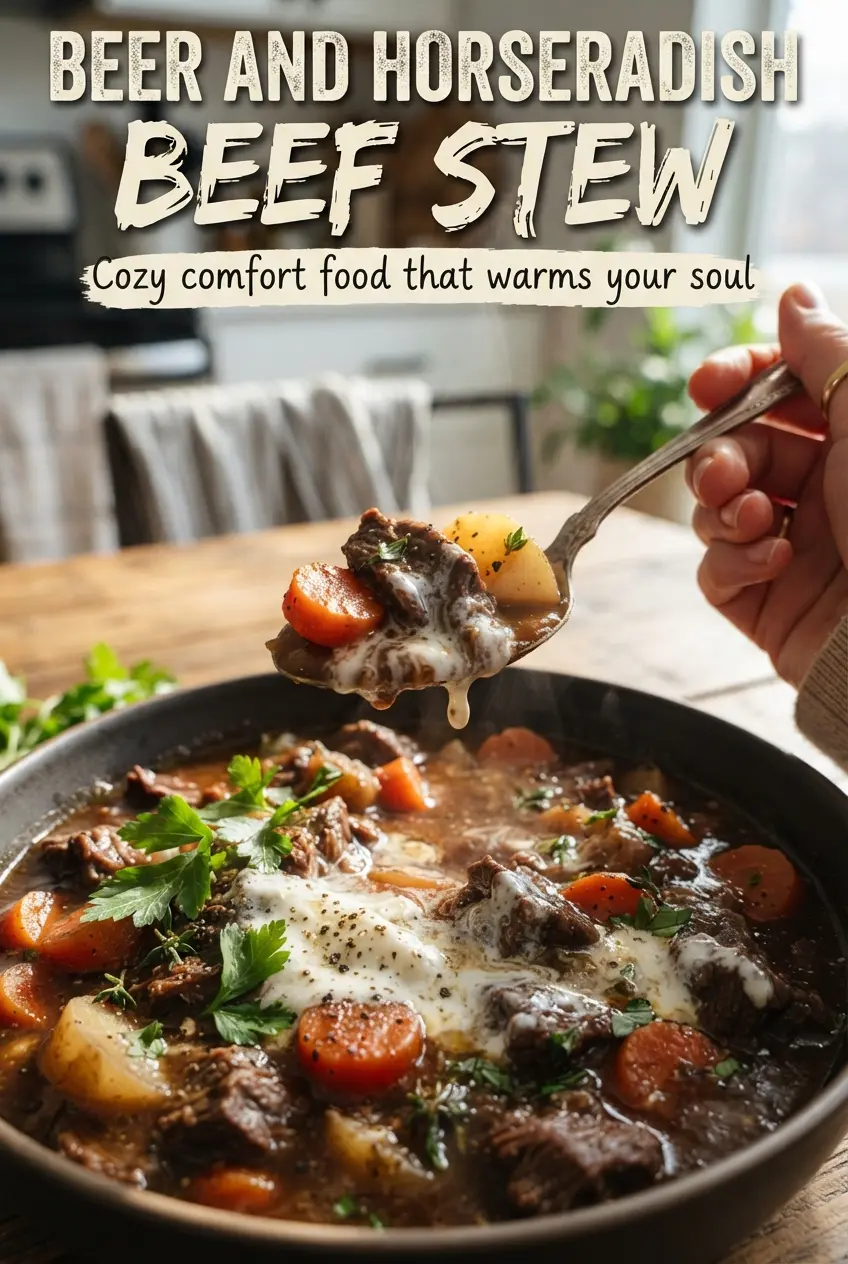
Beer and Horseradish Beef Stew
Ingredients
Equipment
Method
- Season the beef with salt and black pepper, then toss with the flour until coated. Heat the vegetable oil in a hot Dutch oven or cast iron skillet and brown the beef in batches so it sears rather than steams.
- Continue browning in batches until all beef is deep golden, adding a little oil if the pan seems dry. Transfer browned beef to a plate as each batch finishes.
- Cook the chopped onion for 5 minutes in the same pot, stirring for even browning. Add the minced garlic and tomato paste and cook for 1 minute until fragrant, then stir to lift any browned bits.
- Pour in the brown ale and scrape the bottom to dissolve the caramelized flavor. Stir in the beef broth, 2 tablespoons prepared horseradish, Worcestershire sauce, brown sugar, and dried thyme, then return the beef to the pot.
- Cover and simmer for 1 3/4 hours, keeping a steady gentle bubble. Stir once or twice during the first half so the beef braises evenly.
- Add the cubed potatoes and sliced carrots, then cover again and simmer for 45-60 minutes until the vegetables are tender. Look for potatoes that offer little resistance when pierced with a fork.
- Mix the sour cream with the remaining prepared horseradish until smooth and lightly swirled. Serve each bowl with a dollop of horseradish sour cream and chopped chives on top.