Golden, crispy campfire hash browns are the kind of breakfast side that disappears before the coffee cools. The edges get deeply browned and crackly while the center stays tender, with the onion turning sweet as it cooks in the butter. It’s the sort of skillet food that feels special outdoors without asking for much more than a hot pan and a little patience.
Frozen hash browns work better than fresh here because they’re already grated and dry enough to crisp instead of turn soggy. The cast iron skillet does the heavy lifting, holding steady heat over the fire so the potatoes can brown instead of steam. Once the potatoes hit the pan, the main job is resisting the urge to stir too often. Letting them sit in contact with the skillet is what builds that crust.
Below, I’ve included the little details that make this work on a campfire, plus a few ways to adapt it when you want to add cheese, feed a bigger crowd, or make breakfast for people with different diets.
The potatoes got crisp at the edges and stayed fluffy inside, and the onion browned instead of burning. I used the cheese at the end and it melted right into the top without making the skillet greasy.
Crispy campfire hash browns with buttery edges are worth making room for in every breakfast skillet.
The Trick to Crispy Campfire Hash Browns Instead of Steamed Potatoes
The biggest mistake with campfire potatoes is crowding the skillet and moving them too soon. Frozen hash browns hold a little moisture, and over a fire that moisture turns to steam fast. The fix is a thin, even layer and enough contact with the pan to let the bottom set before you flip or stir.
Cast iron matters here because it keeps the heat steady even when the fire licks higher or drops for a minute. If the skillet is too hot, the onions scorch before the potatoes brown; if it’s too cool, everything softens and turns pale. You want a lively sizzle when the potatoes go in, not a hard crackle that smells burnt.
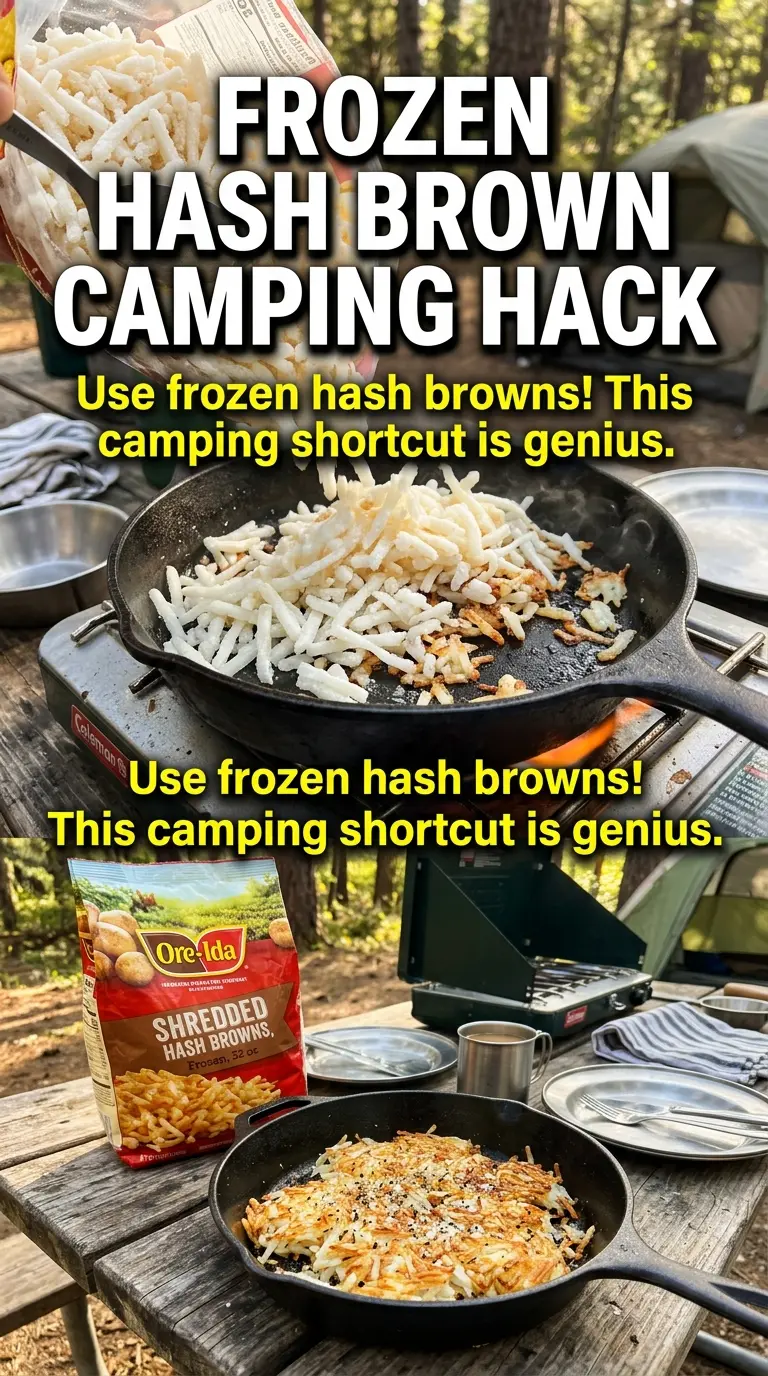
- Frozen hash browns — These give you the best shot at a crisp exterior because they’re already shredded and partially dried. Thawed potatoes work too, but they need to be patted very dry or they’ll go limp.
- Onion — Diced onion adds sweetness and a little edge of savoriness that makes the skillet taste finished. Yellow onion is the easiest fit, but white onion works fine if that’s what you brought.
- Butter or oil — Butter gives better flavor and browning, while oil is safer if your fire runs hot and you’re worried about burning the fat. A mix of both is my favorite for outdoor cooking because you get flavor without the butter scorching too fast.
- Paprika and garlic powder — These season the potatoes all the way through without needing a long ingredient list. Smoked paprika is especially good if you want a little campfire depth.
How to Build the Skillet So the Bottom Gets Gold Before the Top Burns
- Frozen hash browns — These give you the best shot at a crisp exterior because they’re already shredded and partially dried. Thawed potatoes work too, but they need to be patted very dry or they’ll go limp.
- Onion — Diced onion adds sweetness and a little edge of savoriness that makes the skillet taste finished. Yellow onion is the easiest fit, but white onion works fine if that’s what you brought.
- Butter or oil — Butter gives better flavor and browning, while oil is safer if your fire runs hot and you’re worried about burning the fat. A mix of both is my favorite for outdoor cooking because you get flavor without the butter scorching too fast.
- Paprika and garlic powder — These season the potatoes all the way through without needing a long ingredient list. Smoked paprika is especially good if you want a little campfire depth.
Building the Campfire Heat Without Losing the Crisp
Warming the Skillet First
Set the cast iron over steady campfire heat and let the butter melt until it foams. The skillet should feel hot enough that the potatoes sizzle as soon as they hit the pan, but not so hot that the butter turns brown in seconds. If the fire is roaring, move the skillet to a slightly cooler spot before adding anything. That control is what keeps the onions from burning while the potatoes catch up.
Pressing the Potatoes Into an Even Layer
Add the hash browns and onion in one layer and press them down lightly with a spatula. Don’t pile them high or keep tossing them around; the skillet needs contact with the potatoes to build a crust. Season right after they go in so the salt starts drawing out a little moisture while the underside begins to brown. The pan will look crowded at first, then loosen as the edges crisp.
Flipping in Sections
Let the bottom get deeply golden before you disturb it, then flip in sections instead of trying to turn the whole skillet at once. If the potatoes stick, they’re not ready yet. A proper crust releases more easily than you expect. Keep adjusting the skillet over the fire so one side doesn’t scorch while the center stays pale.
Finishing With Cheese and Green Onions
If you’re adding cheese, sprinkle it on after the potatoes are crisp and the skillet is off the hottest part of the fire. Residual heat will melt it without turning the bottom greasy. Green onions go on last so they stay bright. Serve the hash browns right away; they lose their crunch fast once they sit in the steam of the pan.
Three Ways to Make Campfire Hash Browns Fit the Table
Dairy-Free Version
Use oil instead of butter and the potatoes will still crisp up nicely. You lose a little of the buttery flavor, so add an extra pinch of salt and consider smoked paprika if you want more depth without dairy.
Cheesy Breakfast Skillet
Stir in shredded cheddar during the last minute, or scatter it over the top and cover the skillet briefly. Adding cheese too early makes the bottom greasy before it can crisp, so wait until the potatoes are already golden.
Big-Crowd Camp Breakfast
Double the recipe only if you have a very large skillet or two pans going at once. Overcrowding is the fastest way to turn crisp potatoes into soft ones, so it’s better to cook in batches than to stuff everything into one pan.
Vegetarian Breakfast Base
These hash browns already work as a vegetarian side or base. Pile on fried eggs, avocado, or sautéed peppers and you’ve got a full breakfast without changing the skillet method at all.
Storage and Reheating
- Refrigerator: Store leftovers in an airtight container for up to 3 days. The potatoes soften as they sit, but they still reheat well.
- Freezer: I don’t recommend freezing cooked hash browns from this method. The texture turns mealy and loses the crisp edges that make them worth making.
- Reheating: Reheat in a skillet over medium heat with a little butter or oil until the edges crisp again. The microwave will warm them, but it won’t bring back the crust, and that’s the part you want.
Answers to the Questions Worth Asking
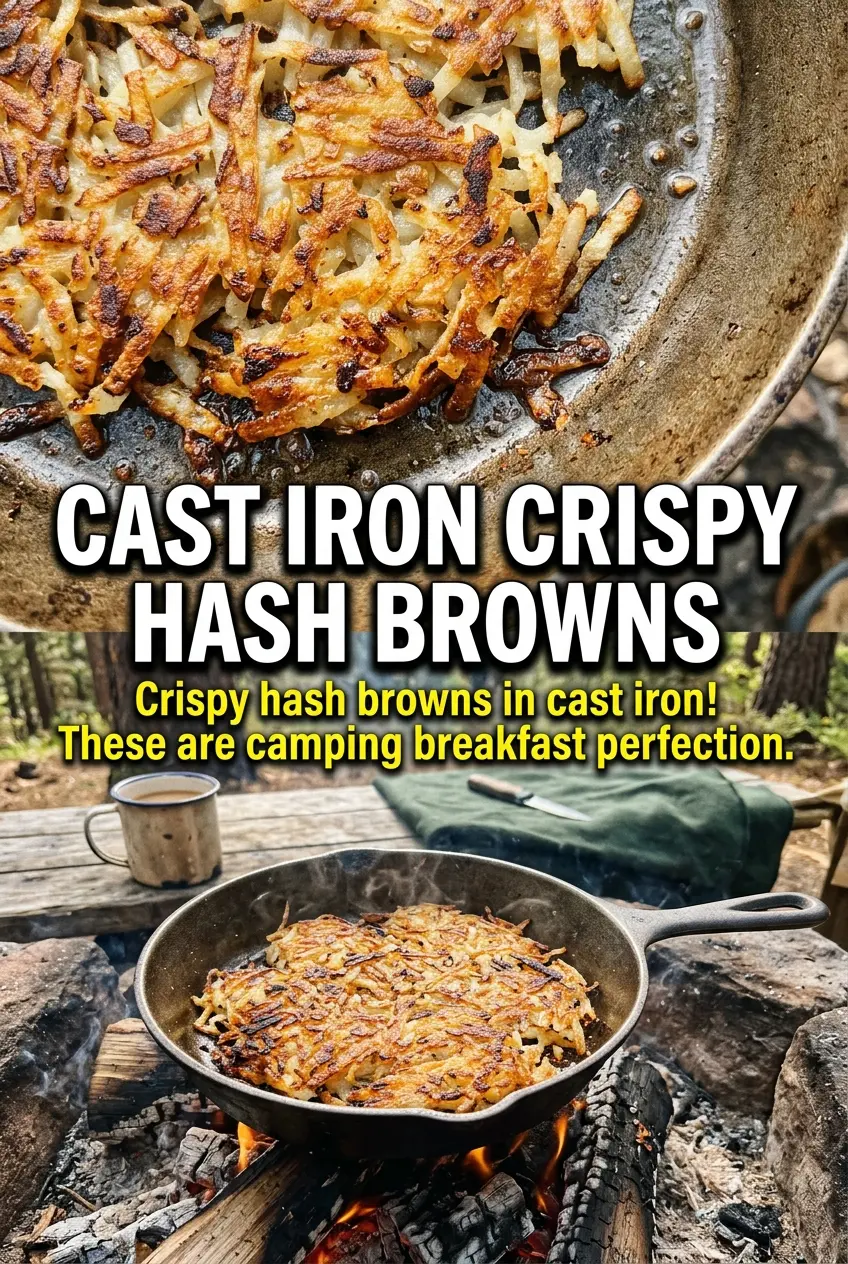
Campfire Hash Browns
Ingredients
Equipment
Method
- Heat the butter in a large cast iron skillet over a campfire until it looks melted and shimmering.
- Add the frozen hash browns and diced onion, then spread into an even layer so the potatoes contact the skillet.
- Season evenly with salt, pepper, garlic powder, and paprika, then leave the layer undisturbed for better browning.
- Cook for 15-20 minutes over the campfire, flipping occasionally, until golden brown and crispy with browned edges and patches.
- Top with shredded cheese and green onions if desired, then cook just until the cheese softens from the heat.
- Serve hot as a breakfast side dish or as a base for toppings.