Chicken that comes off the grill juicy, deeply seasoned, and edged with a little char doesn’t happen by accident. The difference is in the marinade: enough acid to wake up the meat, enough oil to carry flavor, and a touch of honey to help the surface brown instead of drying out. This version hits that balance without turning the chicken mushy or bland.
The lemon juice and zest work together, but they don’t need to dominate. Worcestershire brings depth, Dijon helps the marinade cling, and the garlic, oregano, and smoked paprika give the chicken a savory backbone that still plays well with fresh herbs at the end. The trick is marinating long enough for the seasoning to penetrate, then grilling over the right heat so the outside caramelizes before the inside overcooks.
Below, I’ll walk through the part that matters most: how to keep the marinade bright, balanced, and effective whether you’re using breasts or thighs. I’ve also included a few smart swaps and storage notes so you can use this chicken marinade on a weeknight without overthinking it.
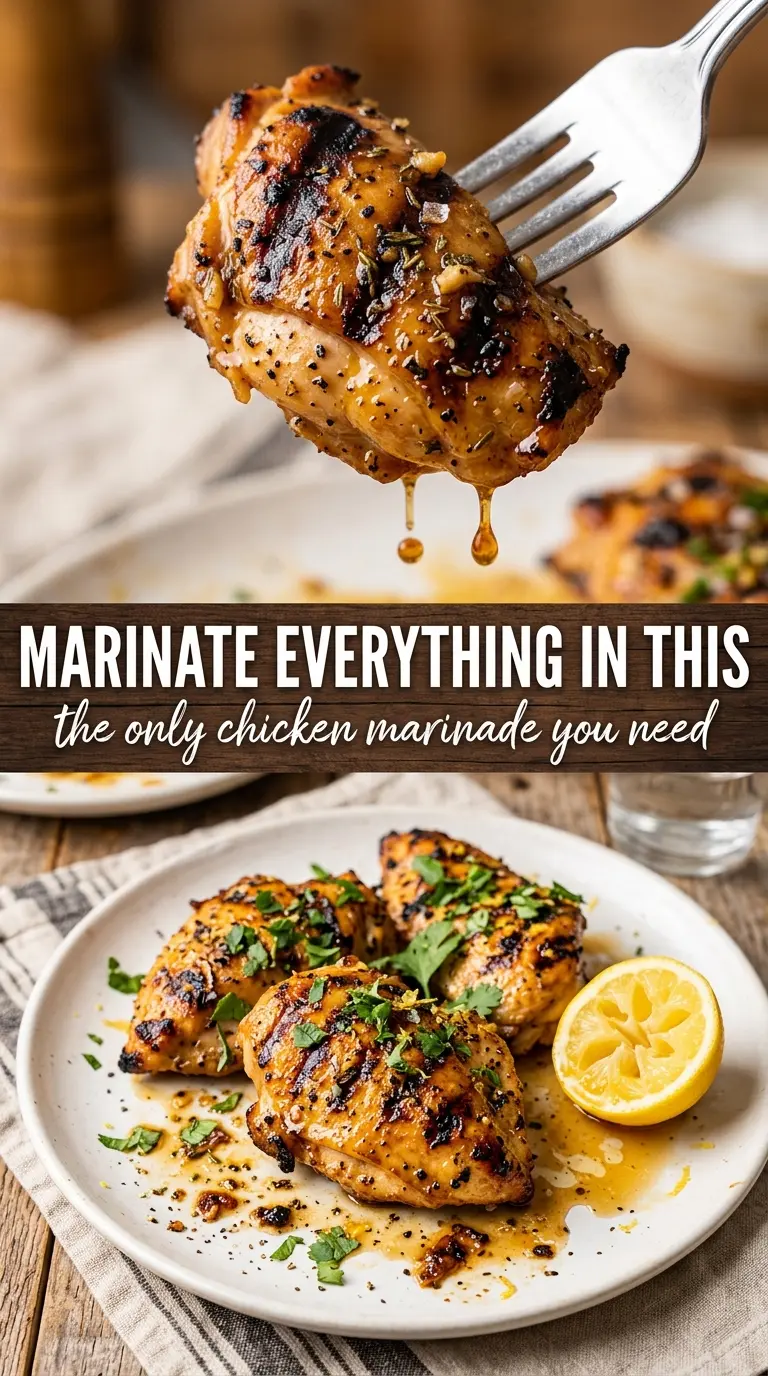
The chicken came off the grill with the nicest little char marks and stayed juicy all the way through. I marinated the thighs for about 6 hours and the lemon-garlic flavor went all the way through, not just on the outside.
Save this lemon-garlic chicken marinade for juicy grilled chicken with caramelized edges and bright herb finish.
The reason this marinade keeps chicken juicy instead of stringy
A lot of chicken marinades lean too hard on lemon or vinegar and end up doing the opposite of what they promise. Too much acid for too long tightens the outside of the meat and leaves the texture dry and a little chalky. This marinade keeps the acid in check by pairing lemon juice with olive oil, honey, and Dijon, so the chicken gets flavor and browning without that harsh, over-cured edge.
The other thing that matters here is balance. Worcestershire adds salt and depth, Dijon helps the marinade emulsify so the garlic and spices don’t sink to the bottom, and smoked paprika gives the chicken a deeper color once it hits the grill. If you’ve ever had a marinade slide right off the meat, this one behaves better because it clings instead of separating.
What each ingredient is doing in the bowl
- Olive oil — coats the chicken and helps carry the spices across the surface. It also keeps the grill from stripping all the moisture away. Use a decent everyday olive oil here; this isn’t the place for anything fancy or peppery enough to fight the lemon.
- Lemon juice and zest — the juice gives the marinade its bright edge, while the zest brings the stronger lemon oil flavor that doesn’t disappear during cooking. The zest matters more than people think. If you skip it, the chicken tastes flatter after grilling.
- Dijon mustard — acts like a quiet emulsifier, helping the oil and lemon stay mixed long enough to coat the chicken evenly. Yellow mustard won’t give the same subtle tang or texture.
- Worcestershire sauce — adds savory depth and a little sweetness that makes the marinade taste rounded instead of sharp. There isn’t a perfect substitute, but soy sauce with a tiny splash of vinegar gets you close in a pinch.
- Honey — softens the acidity and helps the chicken brown on the grill. You don’t need much. Too much honey can make the outside darken before the inside cooks through.
- Garlic, oregano, smoked paprika, and pepper flakes — these build the seasoning base. Fresh garlic gives the best punch, but if yours is a little old, mince it finely so it disperses instead of burning in spots on the grill.
Getting the marinade on the chicken and onto the grill
Whisk it into one smooth marinade
Start by whisking the oil, lemon juice, zest, garlic, Worcestershire, Dijon, honey, oregano, paprika, salt, pepper, and red pepper flakes until the mixture looks glossy and slightly thickened. If the honey is stubborn, whisk it in with the lemon juice first before adding the oil. A broken-looking marinade still tastes fine, but an emulsified one coats the chicken more evenly and doesn’t leave all the flavor in the bottom of the bowl.
Let the chicken take the time it needs
Add the chicken and turn it until every piece is coated. Two hours is the minimum for the seasoning to get beyond the surface, and up to 24 hours is the sweet spot for the strongest flavor. Don’t push it much past that, especially with breasts, or the lemon can start to work the texture too hard and make the outside a little firm.
Grill hot enough to char, not scorch
Set the grill to medium-high and let it fully preheat before the chicken goes on. Thighs usually need 6 to 7 minutes per side, while breasts are closer to 5 to 6 minutes depending on thickness. If the chicken sticks when you try to turn it, it isn’t ready yet; once it develops a good crust, it releases more cleanly. Pull it at 165F, then let it rest for 5 minutes so the juices settle back into the meat instead of spilling onto the cutting board.
How to adjust this chicken marinade for the way you cook
Dairy-free and gluten-free as written
This marinade already works for both diets without any changes, as long as your Worcestershire sauce is gluten-free. That makes it a good base recipe when you need something simple that doesn’t require special ingredients.
Swap thighs for breasts when you want more forgiveness
Thighs stay juicier and handle a longer marinade and a little more grill time without drying out. Breasts work fine, but they need closer attention and a faster pull from the heat once they hit temperature.
Make it milder for kids or heat-sensitive eaters
Leave out the red pepper flakes and use a little less black pepper. The marinade still has plenty of flavor from the lemon, garlic, and mustard, but the finish comes across softer and less sharp.
Bake it when grilling isn’t an option
Arrange the marinated chicken on a lined sheet pan and bake at 425F until it reaches 165F in the thickest part. You won’t get the same char, but the honey and paprika still help the surface brown if the oven is fully hot before the chicken goes in.
Storage and Reheating
- Refrigerator: Cooked chicken keeps for 3 to 4 days in an airtight container. The flavor deepens a bit overnight, but the crust softens as it sits.
- Freezer: Freeze cooked chicken for up to 3 months, wrapped well and tucked into a freezer bag. You can also freeze the raw chicken in the marinade for future grilling; thaw it in the refrigerator before cooking.
- Reheating: Reheat gently in a covered skillet with a splash of water, or warm it in a low oven until just heated through. High heat dries out chicken fast, especially breast meat, so avoid blasting it in the microwave unless you’re using it for sandwiches or chopped salads.
Questions I Get Asked About This Recipe

Chicken Marinade
Ingredients
Equipment
Method
- Whisk olive oil, lemon juice, lemon zest, minced garlic, Worcestershire sauce, Dijon mustard, and honey until well combined.
- Whisk in dried oregano, smoked paprika, salt, black pepper, and red pepper flakes until evenly distributed and the marinade looks uniform.
- Add boneless chicken breasts or thighs and toss to coat completely so every surface is covered.
- Marinate in the refrigerator for at least 2 hours or up to 24 hours.
- Grill the chicken over medium-high heat until it develops char, 6-7 minutes per side for thighs (or 5-6 minutes per side for breasts).
- Cook until the internal temperature reaches 165°F.
- Rest the chicken for 5 minutes before serving, then top with fresh herbs and lemon wedges.