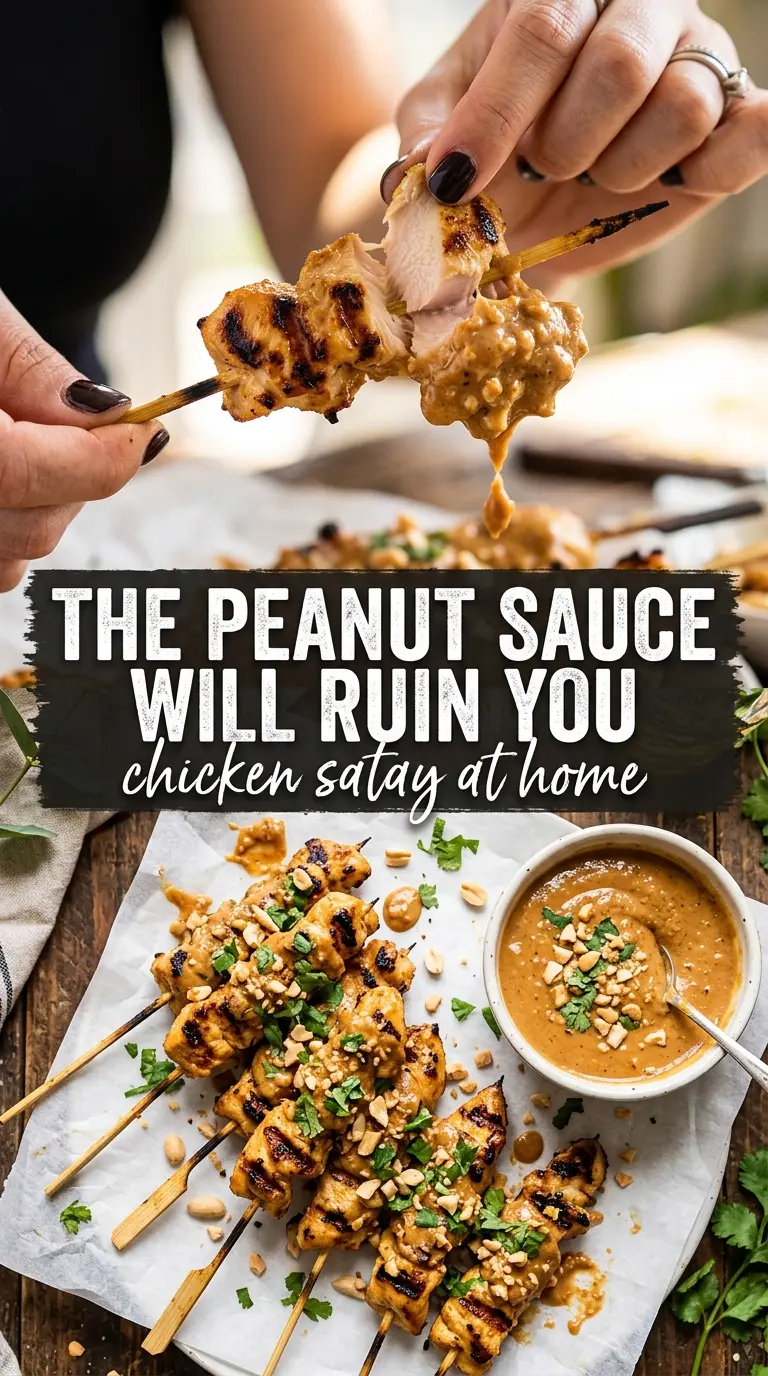
Chicken satay lands on the table with charred edges, a juicy center, and a peanut sauce that clings instead of sliding off. The chicken picks up a deep savory-sweet marinade, then picks up a little smoke on the grill or skillet, which is exactly what keeps this version from tasting flat. Served with cool cucumber and a squeeze of lime, it has that sharp, salty, creamy balance that makes people reach for one more skewer before they’ve finished the first.
The trick is in the marinade. Coconut milk carries the spices into the chicken and keeps the thighs tender, while soy sauce and fish sauce build the kind of background savoriness you can taste even after grilling. I also like to thin the peanut sauce with warm water, not cold, because it turns glossy and smooth without fighting the peanut butter. That small move makes the sauce spoonable and dip-ready instead of thick and pasty.
Below you’ll find the exact points that matter most: how thin to cut the chicken, how to keep the skewers from scorching, and what to change if you need to cook these indoors. The process is simple, but a few details make the difference between good satay and the kind people keep hovering over at the platter.
The marinade gave the chicken such a good color, and the peanut sauce came together silky smooth in under five minutes. I grilled mine on a stovetop grill pan and they still got those nice caramelized edges.
Save these chicken satay skewers for the nights when you want charred chicken, creamy peanut sauce, and a fast Thai-inspired appetizer that disappears first.
The Marinade Needs Time to Soak In, Not Just Sit On Top
Chicken thighs are forgiving, but they still need time for the coconut milk and spices to work past the surface. Two hours is the floor here. Any less and the seasoning stays thin, especially if the strips are cut thick or packed too tightly in the bowl. The goal is seasoned meat, not chicken with a dusty coating.
The other mistake is trying to rush the heat. If the pan or grill is too cool, the sugar in the marinade won’t caramelize before the chicken starts to dry out. Medium-high heat gives you those browned spots and keeps the inside juicy. If the chicken is sticking hard, it usually needs another minute before it’s ready to turn.
- Chicken thighs — Thighs stay tender through the high heat and the acidic lime-free marinade. Chicken breast can work, but it dries out faster, so slice it thinner and shorten the cook time.
- Coconut milk — This softens the spices and helps the chicken brown instead of tasting aggressively salty. Shake the can before opening, then divide it carefully so the marinade doesn’t get diluted too much.
- Fish sauce — Don’t skip it unless you have to. It gives the satay that deep, round savory note that soy sauce alone can’t fully replace. If you need a substitute, use a little extra soy sauce plus a pinch of salt, but the flavor will be flatter.
- Brown sugar — It helps the exterior caramelize and balances the salt in the marinade. Honey can stand in, but it browns a touch faster, so watch the heat closely.
What Each Ingredient Is Actually Doing in This Chicken Dish
- Chicken (pat dry for browning) — Room temperature cooks more evenly. Even pieces ensure uniform doneness.
- Oil or butter (the browning medium) — High-heat oil essential for proper searing. Creates pan flavor.
- Seasonings (salt, pepper, spices) — Apply generously. Chicken carries the entire flavor profile.
- Aromatics (garlic, ginger, herbs) — Cook with fat to bloom flavors. Become the foundation.
- Sauce or braising liquid (if using) — This keeps chicken moist. Balance richness with acid.
- Vegetables (if using) — Layer by cooking time so everything finishes together.
- Acid (vinegar, wine, lime, or pineapple) — This brightens and prevents one-dimensional flavor.
- Proper doneness (165°F internal temperature) — Use thermometer for accuracy. Overcooked is dry.
Building Satay Skewers That Brown Instead of Drying Out
Mixing the Marinade
Whisk half the coconut milk with the soy sauce, fish sauce, brown sugar, turmeric, coriander, cumin, and garlic until the sugar dissolves and the mixture looks evenly golden. That smooth base matters because any clumps of spice can stick to the bowl instead of coating the chicken. Add the chicken strips and toss until every piece is slicked with marinade, then cover and chill for at least 2 hours. If you go much longer than 8 hours, the texture can start to soften in an odd way from the coconut milk and salt.
Threading the Skewers
Soak wooden skewers for at least 30 minutes so they don’t scorch on the grill. Thread the chicken in loose folds rather than flat, tight strips; that gives you more surface area for browning and keeps the skewers from cooking unevenly. Don’t cram the meat together. If the chicken is packed too tightly, it steams and you lose the char you’re after.
Grilling to the Right Finish
Cook the skewers over medium-high heat for about 5 to 6 minutes per side. You’re looking for browned edges, a few caramelized spots, and chicken that feels firm but still has a little give when pressed. If the outside is dark before the inside is done, the heat is too high. Pull the skewers to a cooler spot on the grill or lower the flame and let them finish without burning the marinade.
Whisking the Peanut Sauce Smooth
The sauce should be glossy and pourable, not stiff. Whisk the peanut butter, soy sauce, lime juice, honey, sriracha, garlic, and the remaining coconut milk together until smooth, then thin it with warm water a tablespoon at a time. Warm water helps the peanut butter loosen without seizing up. If the sauce turns grainy, it usually means the liquid went in too fast or was too cold. Keep whisking and add the water slowly until it relaxes.
How to Adapt Chicken Satay When You Need a Different Finish
Oven-Broiled Satay
If you don’t have a grill, broil the skewers on a foil-lined sheet pan set close to the heat source. Flip once halfway through and watch them carefully, because the sugar in the marinade can go from browned to burnt fast. You’ll lose a little smoky flavor, but the edges still caramelize nicely.
Dairy-Free and Naturally Gluten-Free
This recipe already fits both of those directions as written if you use gluten-free soy sauce or tamari. The coconut milk keeps the marinade rich without any dairy, and the peanut sauce stays silky on its own. Just check the labels on the soy sauce and sriracha if you’re cooking for someone with a gluten sensitivity.
Turning It Into a Bowl Dinner
If you want a fuller meal, pull the chicken off the skewers and serve it over rice with shredded cucumber, herbs, and extra peanut sauce. You still get all the satay flavor, but the sauce becomes more of a dressing than a dip. This is the best move when you need to stretch the recipe for more people.
Storage and Reheating
- Refrigerator: Store cooked chicken and peanut sauce separately for up to 4 days. The sauce thickens in the fridge, which is normal.
- Freezer: The marinated raw chicken freezes well for up to 2 months. Cooked satay can be frozen, but the texture softens after thawing, so I only freeze it when I need to.
- Reheating: Warm the chicken gently in a skillet over medium-low heat or in a 300°F oven until hot. Don’t blast it in the microwave or the thighs can turn rubbery while the sauce splits.
Answers to the Questions Worth Asking
Chicken Satay With Peanut Sauce
Ingredients
Equipment
Method
- Combine half the coconut milk with soy sauce, fish sauce, brown sugar, turmeric, coriander, cumin, and garlic in a bowl, then stir to dissolve the sugar. Add chicken strips, cover, and refrigerate at least 2 hours for marinating.
- Whisk peanut butter, soy sauce, lime juice, honey, sriracha, garlic, and the remaining coconut milk until smooth. Drizzle in warm water (3–4 tbsp) to thin to a pourable consistency, using a glossy visual cue.
- Soak wooden skewers in water for 30 minutes, keeping them fully submerged so they don’t burn. Thread the marinated chicken strips onto skewers in an even layer for consistent grilling.
- Grill over medium-high heat for 5–6 minutes per side until char marks appear and the chicken is cooked through. Turn once so each side develops a golden caramelized look and the center is no longer pink.
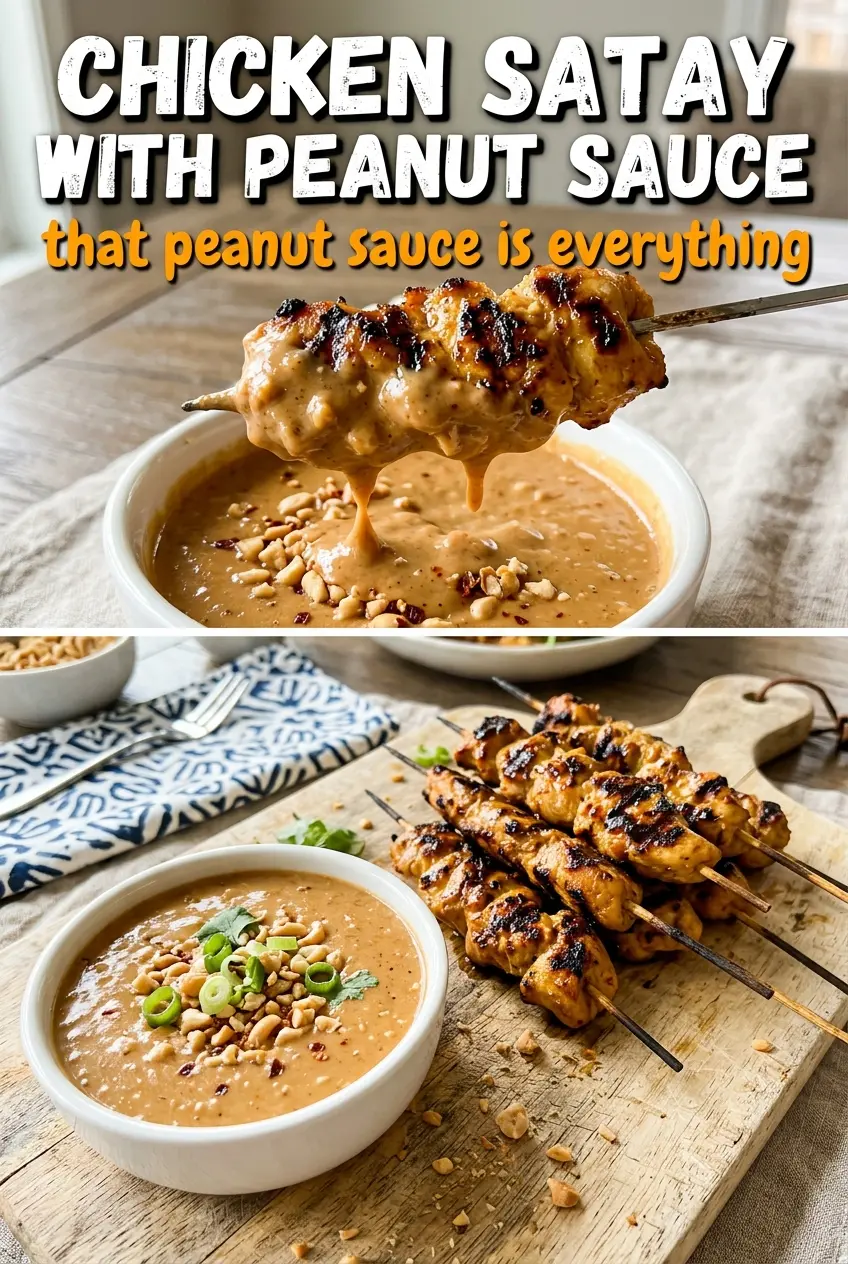
- Serve immediately with the peanut sauce alongside, plus cucumber slices and lime wedges for brightness. Arrange skewers on a platter and spoon sauce into a small bowl so it’s easy to dip.