Nothing beats a tres leches cake that stays plush instead of collapsing into a wet sponge. The crumb should hold together on the fork, but every bite ought to be saturated with sweet milk and finished with a cloud of whipped cream on top. That balance is what makes this version worth keeping around.
The trick is in the batter and the soak. Beating the egg whites to stiff peaks gives the cake enough structure to absorb all three milks without turning dense, and folding them in gently keeps that lift intact. Once the cake comes out of the oven, the fork holes matter more than people think; they give the milk mixture a path all the way through, not just across the surface.
Below, I’ve included the details that keep the cake light, the soak even, and the topping stable. If you’ve ever had tres leches slide apart on the plate, the notes here will help you avoid that.
The cake soaked up all the milk overnight and still sliced cleanly. The whipped cream stayed fluffy, and the berries made it taste fresh instead of overly sweet.
Save this tres leches cake for a make-ahead dessert with a soft soak, whipped cream topping, and fresh berries.
The Soak Works Because the Cake Holds Its Shape First
Tres leches falls apart when the cake is too delicate before the milk goes in. This batter uses whipped egg whites for lift, but the yolks and flour still build enough structure to keep the crumb springy after soaking. That means you get a cake that drinks up the milk mixture instead of turning pasty at the bottom of the pan.
The other mistake is rushing the soak. Warm cake pulls in the milk more evenly than a fully cold cake, but it still needs time in the refrigerator to settle. If you slice too soon, the milk looks pooled and the topping slides; after a couple of hours, the texture evens out and the whole thing becomes sliceable.
What Each Ingredient Is Actually Doing in This Cake
Flour, baking powder, and eggs do the heavy lifting here, but the dairy is what gives tres leches its signature texture. The sweetened condensed milk brings sweetness and body, the evaporated milk loosens it without making the cake watery, and the heavy cream rounds everything out with a richer finish. If you only have whole milk, the soak will taste thinner and less plush.
- Eggs, separated — The whites create lift, and the yolks add richness and color. Don’t skip the separate whipping step; it’s what keeps the cake from turning heavy once the milk is added.
- Sweetened condensed milk — This is non-negotiable for the classic texture and sweetness. There isn’t a true substitute that gives the same sticky-silky finish.
- Evaporated milk — It keeps the soak creamy without making it cloying. If you need to swap it, use half-and-half, but expect a slightly softer sweetness.
- Heavy cream or media crema — Either one adds body to the soak. Media crema gives a slightly lighter, more delicate finish, while heavy cream makes the cake taste richer.
- Heavy whipping cream — This is what gives the topping enough structure to sit on the cake without melting into the milk layer. Chill the bowl and beaters if your kitchen runs warm.
- Fresh berries — They cut through the sweetness and give the cake a cleaner finish. Strawberries and raspberries work especially well because they don’t release too much juice right away.
Building the Batter, Soaking the Cake, and Finishing It Cleanly
Whipping the Egg Whites
Beat the egg whites until stiff peaks stand up on the whisk and hold their shape when you lift it. If the bowl has any grease in it, the whites will stay foamy and never fully rise, so start with a clean, dry bowl. Stop as soon as the peaks are firm; overbeaten whites turn grainy and get harder to fold in evenly.
Folding the Batter Without Deflating It
Add the dry ingredients and milk alternately, stirring just until the flour disappears. Then fold in the vanilla and egg whites in two additions, using a broad spatula and a gentle lift-and-turn motion. If you stir hard here, you lose the air that gives the cake its sponge-like crumb.
Baking to a Soft, Springy Center
Bake until the top is lightly golden and a toothpick comes out clean from the center, usually 22 to 25 minutes. The cake should spring back when touched lightly in the middle. If it bakes too long, it still works, but it won’t absorb the milk as gracefully and the crumb can turn a little tight.
Soaking and Topping the Cake
Let the cake cool for about 10 minutes, then pierce it all over with a fork so the milk mixture can move through the whole pan. Pour the three-milk mixture evenly, especially around the edges where the cake tends to dry out first. Chill at least 2 hours before topping, then whip the cream just to soft, spreadable peaks and finish with berries and mint right before serving.
How to Adapt This Tres Leches Cake for Different Needs
Dairy-Free Version
Use canned coconut cream in place of the heavy cream in the soak and topping, and whip chilled coconut cream for the finish. The cake will still soak well, but the flavor shifts toward coconut and the texture is a little less classic.
A Less Sweet Finish
Cut the powdered sugar in the whipped cream to 1 tablespoon and lean harder on the berries for brightness. This keeps the dessert lighter at the end without changing the cake itself.
Make-Ahead for a Crowd
Bake and soak the cake a full day ahead, then add the whipped cream and fruit just before serving. The flavor gets better as it sits, and the milk mixture settles into the crumb instead of pooling on top.
Storage and Reheating
- Refrigerator: Store covered for up to 4 days. The crumb softens a bit more each day, but the cake stays good.
- Freezer: Freeze the unfrosted, soaked cake tightly wrapped for up to 1 month. Thaw in the refrigerator and add whipped cream and berries after thawing.
- Reheating: Don’t reheat this cake. It’s meant to be served cold, and warming it will make the milk layer loosen and the whipped cream collapse.
Questions I Get Asked About This Recipe
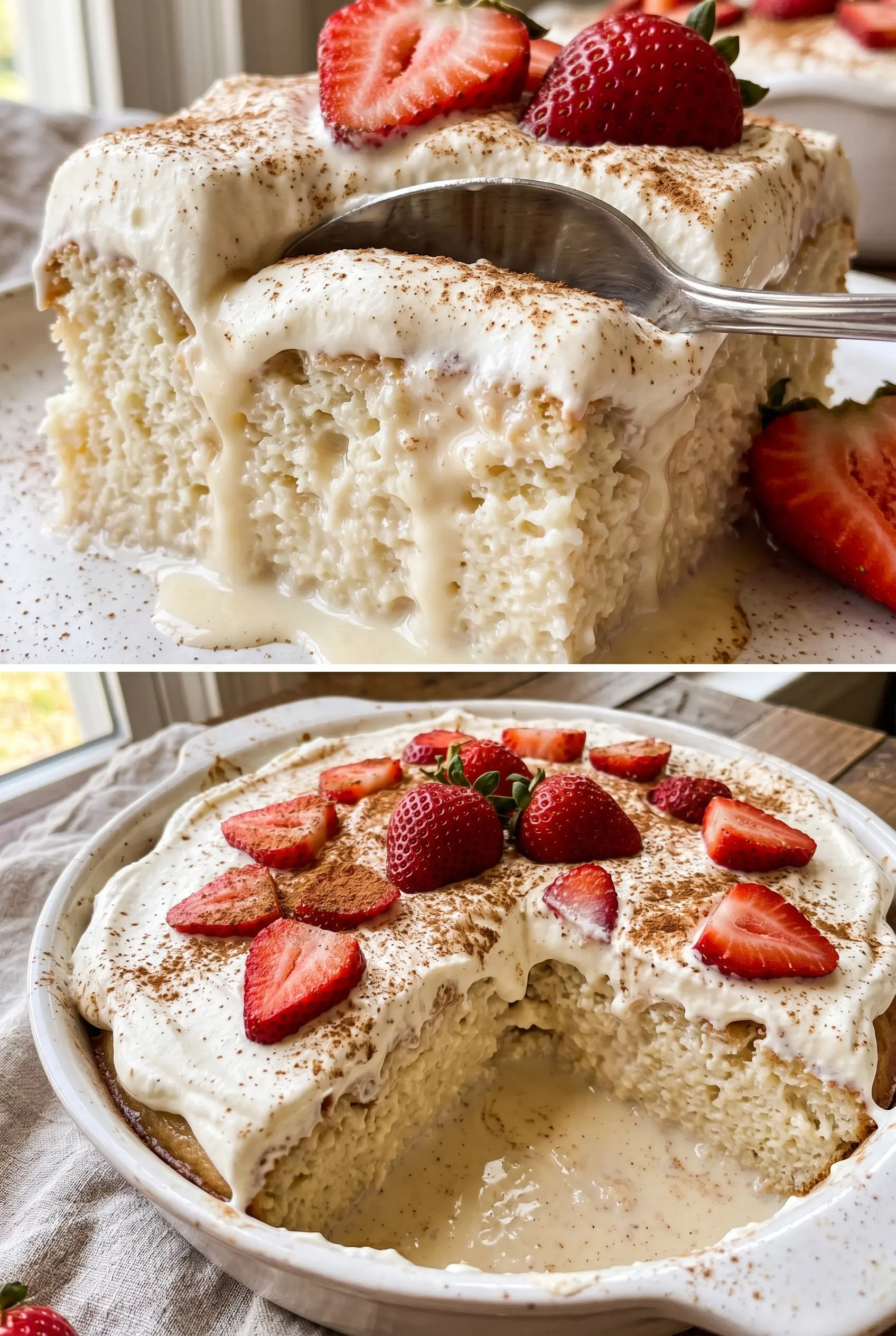
Cinco de Mayo Tres Leches Cake
Ingredients
Equipment
Method
- Preheat oven to 350°F and grease a 9x13 inch baking pan. This prevents sticking and helps the sponge release cleanly.
- Whisk together all-purpose flour, baking powder, and salt in a bowl. Ensure the dry ingredients are evenly combined.
- Beat the egg whites until stiff peaks form, then set aside. The whites should hold firm ridges when the beaters lift.
- Beat the egg yolks with granulated sugar until pale. Mix just until the color lightens and looks slightly thicker.
- Add the flour mixture and whole milk alternately, stirring gently. Stop mixing once the batter looks smooth and uniform.
- Fold in vanilla extract. Fold gently so the batter stays airy.
- Fold in the egg whites in two additions. Fold until no streaks remain.
- Pour the batter into the prepared pan. Spread evenly so the cake bakes uniformly.
- Bake at 350°F for 22-25 minutes, until a toothpick comes out clean. Look for a light golden top that springs back when touched.
- Cool for 10 minutes, then pierce all over with a fork. Poke deeply enough to create channels for soaking.
- Combine sweetened condensed milk, evaporated milk, and heavy cream or Media Crema. Whisk until smooth and pourable.
- Pour the milk mixture evenly over the cake. Make sure the surface is fully soaked, including around the edges.
- Refrigerate for at least 2 hours to let the cake soak. The cake should look more level and slightly creamy as it chills.
- Whip heavy whipping cream with powdered sugar and vanilla extract until it holds soft-to-medium peaks. Stop when it thickens and looks spreadable.
- Spread the whipped cream over the cake. Cover the surface evenly for a clean finished look.
- Top with fresh strawberries and raspberries. Add them right before serving so the fruit stays fresh.
- Garnish with fresh mint. Place a few leaves on top for color and aroma.