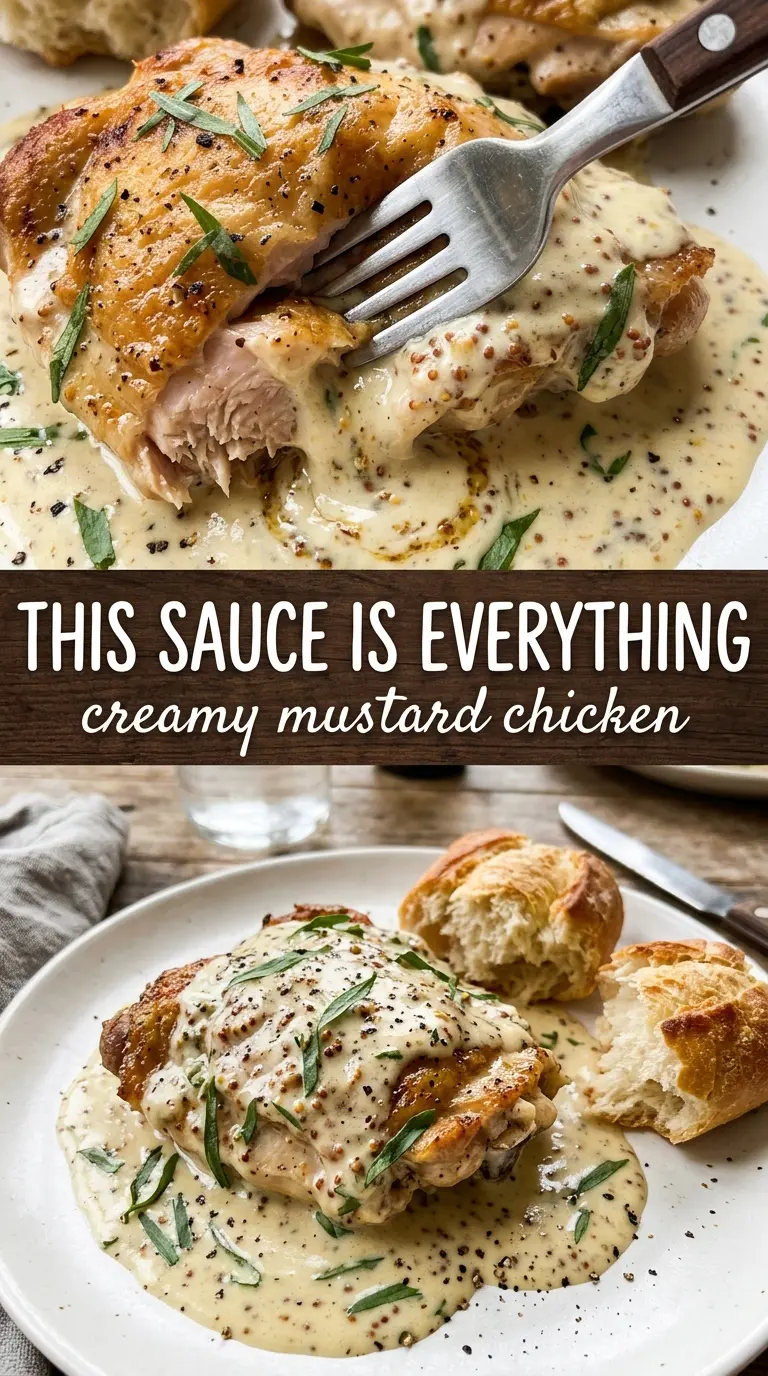
Golden chicken thighs tucked into a velvety Dijon cream sauce are the kind of skillet dinner that looks a lot harder than it is. The chicken stays juicy because it gets seared first, then finished gently in the sauce instead of being cooked hard all the way through. The mustard brings sharpness, the cream rounds it out, and the whole grain mustard adds little pops of texture that keep every bite interesting.
This version works because the sauce is built in the same pan as the chicken. Those browned bits left behind after searing are what give the sauce depth, so nothing gets wiped away. A splash of broth loosens the pan, the cream goes in after that, and the mustard is stirred in at the end of the sauce base so it stays smooth and balanced. Fresh tarragon at the finish gives it that unmistakable French bistro note without taking over.
Below you’ll find the little details that matter most: how to keep the sauce from getting grainy, what to swap if you only have dried herbs, and how to reheat the leftovers without turning the chicken tough.
The sauce thickened beautifully and stayed silky, and the tarragon made it taste like something from a little bistro. I served it with rice and there wasn’t a drop left.
Creamy Mustard Chicken is the kind of one-skillet dinner that stays silky, sharp, and elegant enough for company.
The Trick to Keeping Dijon Cream Sauce Smooth, Not Grainy
The biggest mistake with mustard cream sauces is rushing the heat. If the cream goes in while the pan is too hot, the sauce can tighten up too fast and start to look broken or slightly grainy. Lower heat gives the dairy time to thicken naturally, which is why the sauce should simmer gently, not boil.
Scraping up the fond after the chicken comes out matters just as much as the cream itself. Those browned bits are concentrated flavor, and the broth lifts them off the pan before the cream goes in. That sequence keeps the sauce savory instead of flat and gives you a smooth base that tastes layered, not heavy.
- Chicken thighs — Boneless, skinless thighs stay juicy through the sear-and-finish method. Breasts can work, but they dry out faster, so cut the final simmer time back and watch closely.
- Dijon mustard — This is the backbone of the sauce. Use a mustard you like the taste of straight from the jar, because it doesn’t mellow much once it hits the pan.
- Whole grain mustard — These little seeds add texture and a gentler mustard bite. If you skip it, the sauce still works, but it loses some of the rustic finish.
- Heavy cream — This is what makes the sauce cling to the chicken. Half-and-half can work in a pinch, but it won’t thicken as richly and it’s more likely to look thin.
- Fresh tarragon — Tarragon is what makes the dish taste distinctly French-American instead of just mustard cream chicken. Dried tarragon works, but use less because it can turn woodsy fast.
What Each Ingredient Is Actually Doing in This Chicken Dish
- Chicken (pat dry for browning) — Room temperature cooks more evenly. Even pieces ensure uniform doneness.
- Oil or butter (the browning medium) — High-heat oil essential for proper searing. Creates pan flavor.
- Seasonings (salt, pepper, spices) — Apply generously. Chicken carries the entire flavor profile.
- Aromatics (garlic, ginger, herbs) — Cook with fat to bloom flavors. Become the foundation.
- Sauce or braising liquid (if using) — This keeps chicken moist. Balance richness with acid.
- Vegetables (if using) — Layer by cooking time so everything finishes together.
- Acid (vinegar, wine, lime, or pineapple) — This brightens and prevents one-dimensional flavor.
- Proper doneness (165°F internal temperature) — Use thermometer for accuracy. Overcooked is dry.
Building the Sauce in the Same Pan as the Chicken
Getting a Deep Golden Sear
Season the chicken well before it touches the pan, then sear it in the butter and olive oil over medium-high heat until the surface is a deep golden brown and it releases without sticking. If the pan is overcrowded, the chicken steams and the fond never develops, which means the sauce will taste thinner later. Work in batches if needed and resist moving the pieces too soon.
Pulling Flavor From the Pan
Once the chicken comes out, add the shallot and garlic to the same pan and stir them just until they smell sweet, not browned. Burned garlic will carry a bitter edge into the whole sauce, so keep the heat moderate and move quickly. Pour in the broth and scrape hard with a wooden spoon until the bottom looks mostly clean and the liquid turns tawny.
Letting the Cream Reduce Gently
Stir in the cream, Dijon, and whole grain mustard, then let the sauce simmer quietly until it coats the back of a spoon. A boil is too aggressive here; it can make the cream separate and make the mustard taste sharp instead of rounded. When the sauce looks glossy and leaves a trail for a second when you drag a spoon through it, it’s ready for the chicken to go back in.
Finishing the Chicken Without Overcooking It
Return the chicken to the pan and spoon sauce over the top so it finishes cooking in that creamy base. The thighs should be cooked through but still tender, with the center no longer pink and the sauce just thick enough to cling. Stir in the tarragon at the end so its flavor stays fresh and bright instead of muddy.
Make It with Chicken Breasts Instead of Thighs
Chicken breasts work if that’s what you have, but they need a lighter hand. Sear them just until golden, then finish them in the sauce only until the center hits temperature; otherwise they go dry before the sauce is done.
Dairy-Free Version with Coconut Cream
Use full-fat coconut cream in place of heavy cream for a dairy-free version. The sauce will be a little sweeter and less classic in flavor, but it still turns silky and coats the chicken well; add the mustard slowly so the coconut doesn’t dominate.
Gluten-Free by Default
This recipe is naturally gluten-free as written, which is one reason it works so well for a quick dinner. Just check the mustard and broth labels if you’re cooking for someone with a strict gluten intolerance, since some brands use thickeners or additives.
Storage and Reheating
- Refrigerator: Store leftovers in an airtight container for up to 3 days. The sauce will thicken as it chills, and the chicken holds up best when it’s kept in the sauce.
- Freezer: It freezes, but the cream sauce can separate a little when thawed. For the best texture, freeze only if needed and thaw gently in the refrigerator before reheating.
- Reheating: Warm it slowly in a covered skillet over low heat with a splash of broth or cream. High heat is the main reason cream sauces break and chicken dries out, so keep the simmer very gentle.
Questions I Get Asked About This Recipe

Creamy Mustard Chicken
Ingredients
Equipment
Method
- Season the chicken thighs with salt and pepper, then sear in butter and olive oil until golden, 5-6 minutes per side. Remove the chicken to a plate.
- Sauté the shallot and garlic in the same pan for 2 minutes. Stir often so the garlic doesn’t brown.
- Pour in the chicken broth and simmer for 1 minute, scraping the fond to lift browned bits from the pan.
- Stir in the heavy cream, Dijon mustard, and whole grain mustard. Simmer for 3-4 minutes until the sauce coats a spoon.
- Return the chicken thighs to the pan and cook for 5 minutes until cooked through. Baste the tops with sauce to keep them coated.
- Stir in the fresh tarragon, then garnish with fresh parsley to finish.