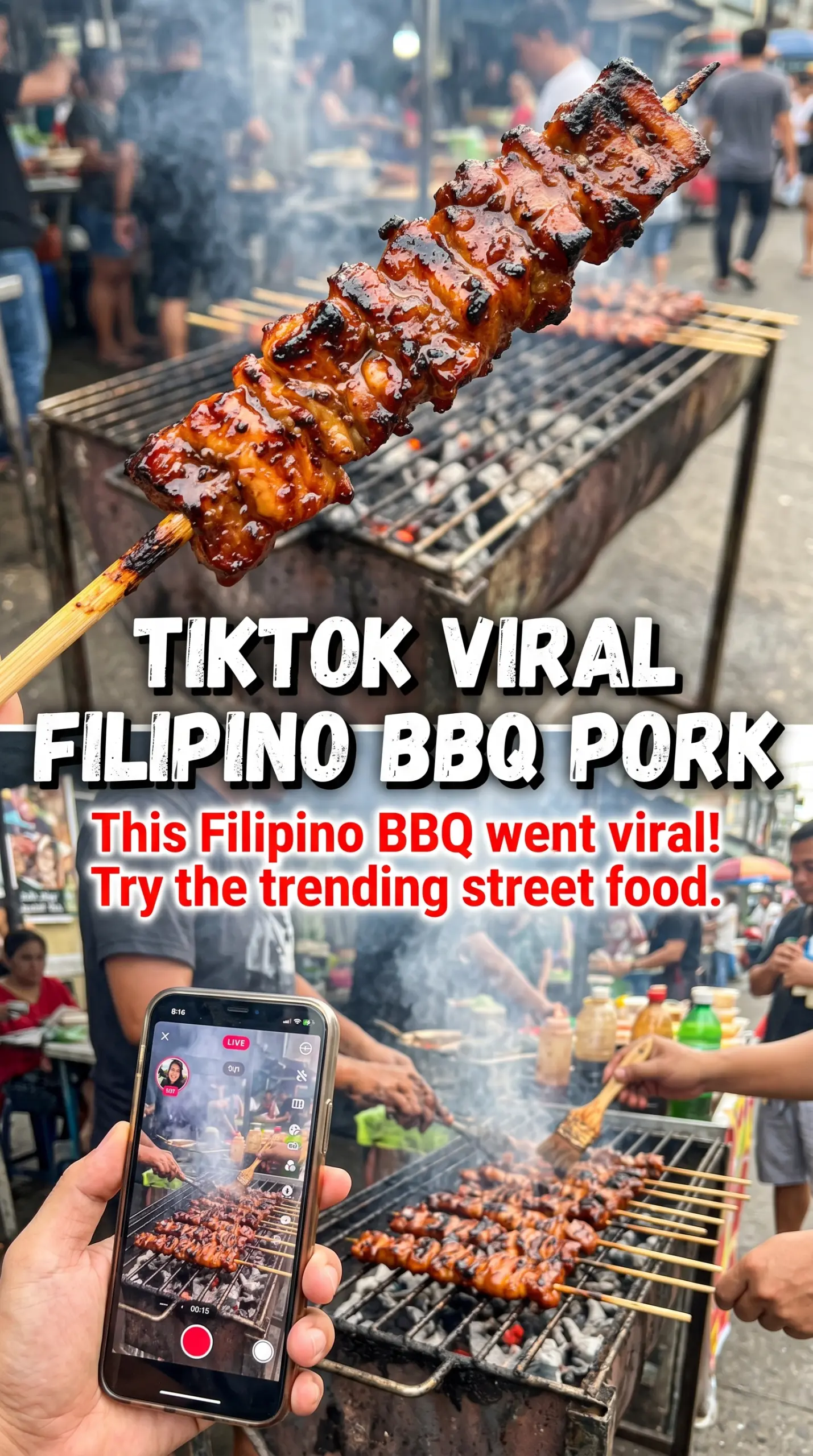
Filipino BBQ pork skewers land with the kind of sticky, charred edges that disappear fast once they hit the table. The glaze turns glossy over the fire, the pork stays tender from the marinade, and every bite gets that sweet-savory balance that makes these skewers feel unmistakably Filipino. They’re the kind of grilled meat that doesn’t need much else besides rice and a little extra sauce for dipping.
The marinade does the heavy lifting here. Banana ketchup brings sweetness and color, soy sauce and fish sauce add depth, and lemon juice keeps the pork from tasting flat or one-note. Thin slices of pork shoulder matter because they cook fast and stay juicy even over direct heat, while the brown sugar helps build those caramelized edges without burning as long as you keep an eye on the grill.
Below, I’ve included the small details that make these skewers turn out the way they should: how long to marinate, how to get the best char without drying out the pork, and what to swap if you don’t have one of the key ingredients on hand.
The marinade clung to the pork beautifully, and the skewers caramelized instead of drying out. I used calamansi and let them sit overnight, and the flavor was even better the next day.
Keep these Filipino BBQ Pork Skewers in your back pocket for grilled dinners with sweet banana ketchup glaze and just enough char.
The Marinade Needs Time to Work, Not Heat
The biggest mistake with barbecue-style pork skewers is trying to rush the flavor onto the meat at the grill. The marinade has to do the heavy lifting during the rest time, because banana ketchup, soy sauce, sugar, and acid need hours to penetrate thin pork slices and season them all the way through. If you skip that wait, the outside may look glossy, but the center tastes plain.
Another common issue is burning the glaze before the pork cooks. Sugar is supposed to caramelize, but it can go from deep amber to bitter fast over aggressive heat. Medium-high heat works best here because it gives you browning, char marks, and a sticky finish without leaving you with blackened skewers and undercooked meat.
What Each Ingredient Is Doing in These Skewers
- Pork shoulder — This cut stays juicy on the grill because it has enough fat to handle direct heat. Slice it thin so the marinade works faster and the skewers cook evenly. If you use pork loin, pull it off the grill sooner because it dries out faster.
- Banana ketchup — This is the ingredient that gives the skewers their signature Filipino sweetness and color. Regular ketchup can stand in, but it tastes sharper and less rounded, so the result loses some of that classic street-food character.
- Brown sugar — It helps the glaze cling and gives you those caramelized edges. White sugar will work in a pinch, but brown sugar adds a deeper note that suits grilled pork better.
- Lemon juice or calamansi juice — The acid keeps the marinade from tasting heavy and helps tenderize the meat a little. Calamansi gives the most authentic citrus punch, but lemon juice is a good backup and still balances the sweetness.
- Fish sauce — This is what keeps the marinade from tasting like sweet barbecue sauce. It adds salt and umami in a way soy sauce alone can’t quite match. Use a small amount, but don’t skip it if you want the full savory depth.
- Wooden skewers — Soak them well so they don’t scorch before the pork is done. If they’re only damp on the surface, they’ll still char too fast over direct heat.
Getting the Char Right Without Drying Out the Pork
Mixing the Marinade Until the Sugar Dissolves
Stir the banana ketchup, soy sauce, brown sugar, garlic, lemon juice, fish sauce, oil, and black pepper until the sugar disappears into the liquid. If you leave gritty sugar behind, it settles at the bottom and the first batches of pork will taste uneven. The marinade should look thick, glossy, and fully combined before the pork goes in.
Coating the Pork Evenly on the Skewers
Thread the pork slices onto soaked skewers so they lie flat and fairly snug, but don’t pack them so tightly that heat can’t move around the meat. After that, pour the marinade over the skewers and turn them a few times so every surface gets coated. A dish that lets the pork sit in a shallow layer of marinade works better than a bowl that traps everything in the bottom.
Grilling to a Sticky Finish
Preheat the grill to medium-high and cook the skewers for 8 to 10 minutes per side, brushing with reserved marinade as they cook. If the flames flare up, move the skewers to a cooler spot for a minute instead of blasting them with more heat. You want deep caramelization and clean grill marks, not burnt sugar crust. The pork is done when it feels firm, the juices run mostly clear, and the edges look lacquered.
Swap in pork belly for a richer skewer
Pork belly gives you a more luxurious, fattier bite and even more rendered richness on the grill. It caramelizes beautifully, but it cooks faster than shoulder, so watch it closely or the edges can go from glossy to scorched before the center is ready.
Use chicken thigh for a lighter version
Boneless chicken thighs handle the same marinade well and stay juicy on the grill. They won’t taste as rich as pork shoulder, but they pick up the sweet-savory glaze beautifully and still give you good char.
Make it gluten-free with tamari
Swap the soy sauce for tamari and check that your banana ketchup is gluten-free. The flavor stays close to the original, and the marinade still gives you that sticky, savory glaze without the wheat.
Bake them when the grill isn’t an option
Set the skewers on a lined rack over a sheet pan and bake at high heat, then finish under the broiler for color. You won’t get the same smoke and char as the grill, but you’ll still get caramelized edges and a sticky glaze if you brush on the marinade in the last few minutes.
Storage and Reheating
- Refrigerator: Store leftovers in an airtight container for up to 4 days. The glaze softens a bit, but the flavor holds up well.
- Freezer: Freeze the cooked pork off the skewers for up to 2 months. Wrap it tightly so the glaze doesn’t pick up freezer burn, then thaw in the fridge before reheating.
- Reheating: Warm the pork gently in a covered skillet over low heat or in a 300°F oven until heated through. High heat dries out the shoulder and hardens the glaze, which is the fastest way to lose the tender texture.
Answers to the Questions Worth Asking

Filipino BBQ Pork (Caramelized Pork Skewers)
Ingredients
Equipment
Method
- In a bowl, combine banana ketchup, soy sauce, brown sugar, minced garlic, lemon (or calamansi) juice, fish sauce, oil, and black pepper until smooth.
- Mix thoroughly so the sugar dissolves and the marinade looks glossy.
- Thread the sliced pork shoulder onto soaked wooden skewers and arrange in a large dish in a single layer if possible.
- Pour the marinade over the pork until the skewers are well coated.
- Cover the dish and refrigerate for at least 4 hours or overnight for deeper flavor.
- Preheat the grill to medium-high heat.
- Place skewers on the grill and cook for 8-10 minutes per side, brushing with the marinade as you grill.
- Continue cooking until the pork is caramelized, charred at the edges, and cooked through.
- Serve the grilled pork skewers with steamed rice and additional banana ketchup for dipping.