Freezer breakfast sandwiches earn their place in the rotation because they reheat with a soft muffin, a set egg, melted cheese, and a hearty center that actually tastes like breakfast instead of a sad compromise. When they’re built right, you get a sandwich that holds together in the microwave and still feels satisfying enough to grab on the busiest mornings.
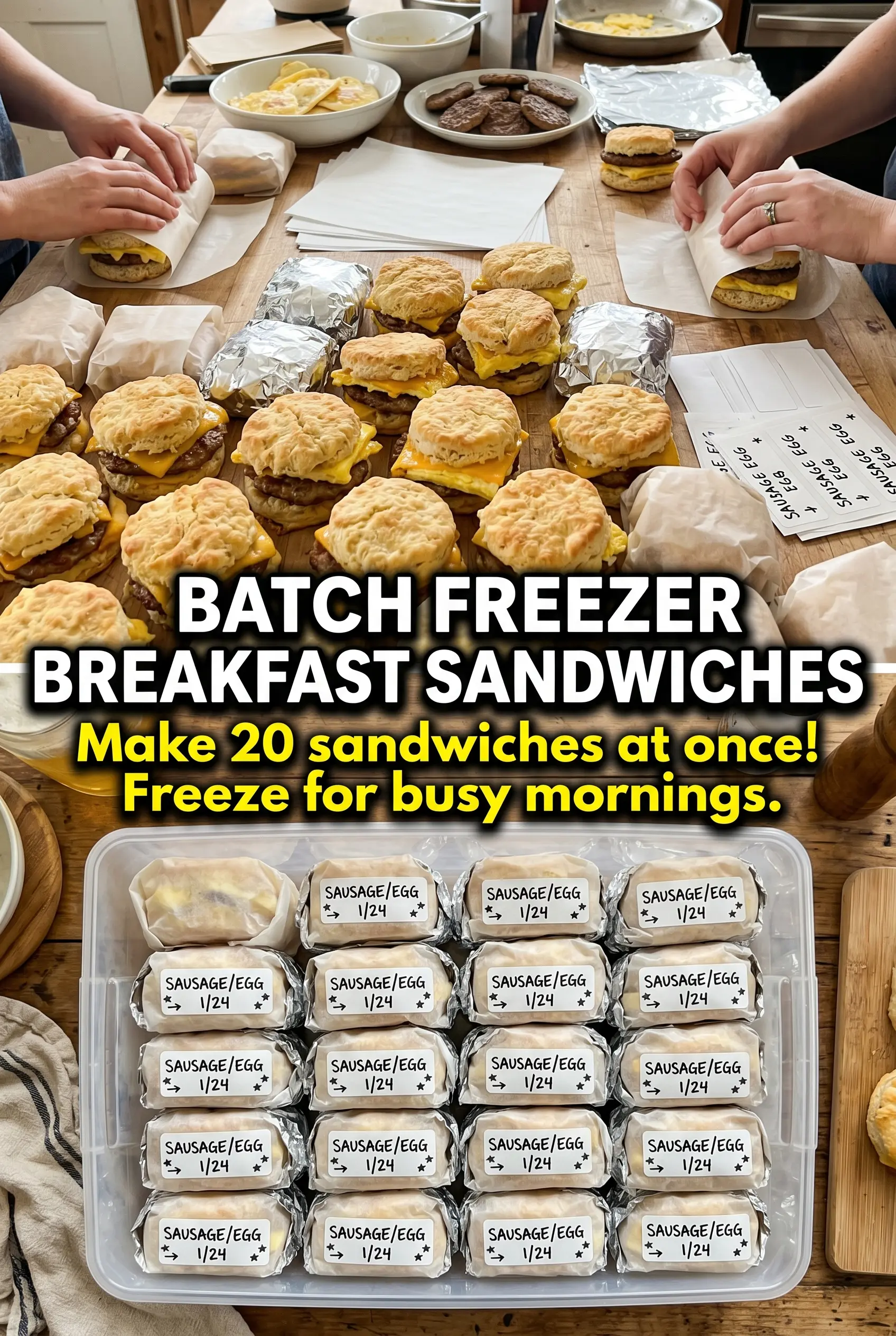
The key is in the assembly. Baking the eggs in a muffin tin gives you neat rounds that match the muffins, and lightly toasting the English muffins helps them stay from turning gummy after freezing. The cheese sits between the hot egg and the muffin top so it melts back into the sandwich instead of disappearing into the wrap.
Below, I’ve included the small details that matter most: how to keep the eggs tender, which cheese works best, and the one wrapping step that makes a big difference when you’re stocking the freezer.
The eggs stayed tender even after freezing, and the cheese melted perfectly in the microwave. I made a batch on Sunday and had breakfast handled all week.
Save these freezer breakfast sandwiches for the mornings when you need a hot egg-and-cheese breakfast without starting from scratch.
The Freezer Trick That Keeps the Muffins from Going Soggy
Most freezer breakfast sandwiches fail for one reason: moisture has nowhere to go. The egg releases steam, the muffin soaks it up, and by the time you reheat the sandwich the texture is soft in all the wrong ways. Toasting the English muffins first gives them a little structure, and letting the eggs cool before assembly keeps trapped steam from turning the whole stack gummy.
The other piece people miss is the wrap. A tight first layer of plastic wrap protects each sandwich from freezer air, which means less frost and fewer dry edges. If you skip that step and go straight to a freezer bag, the bread picks up that stale, icy texture fast.
- Eggs — Baking them in a muffin tin creates a neat patty that fits the sandwich and reheats evenly. A fried egg can work, but the edges are harder to stack and the yolk often turns messy in the microwave.
- English muffins — Their nooks and crannies are sturdy enough to hold the filling, but they still need a light toast before freezing. Cheap store-brand muffins are fine here as long as they aren’t too thin.
- American or cheddar cheese — American melts the smoothest and gives you that classic fast-food texture. Cheddar adds sharper flavor, but sliced cheddar can separate a little more when reheated.
- Breakfast sausage patties — These add the most familiar savory balance, but bacon works if you want a smokier sandwich. If you use bacon, cook it until fully crisp before freezing so it doesn’t turn chewy later.
What Each Ingredient Is Actually Doing in Freezer Muffins

- Muffin batter (mixed and ready to bake) — The batter should be thick enough to hold frozen berries without sinking. Thin batter makes the muffin soggy.
- Berries or fruit (frozen, not thawed) — Frozen fruit releases less liquid during baking than thawed fruit. This is the key to non-soggy muffins.
- Flour (in the batter and coating the fruit) — Coating the frozen fruit in a light flour layer prevents it from releasing juice directly into the batter.
- Sugar (in the batter, not in excess) — Too much sugar draws liquid from the fruit. Use just enough to make the muffin sweet.
- Leavening (baking powder or baking soda) — The muffins need enough rise to stay light and tender. If they don’t rise enough, they’ll be dense.
- Fat (butter or oil) — Fat keeps the muffins tender and prevents them from drying out. Don’t skimp on the fat.
- Liquid (milk or juice in the batter) — The liquid should be measured carefully. Too much makes the muffin soggy; too little makes it dry.
- Baking time and temperature (watch carefully) — Muffins with frozen fruit take slightly longer to bake. Don’t overbake or they’ll be dry inside.
Building the Sandwiches So They Reheat Cleanly
Cook the Filling First
Start with the sausage so it’s fully cooked and ready to cool while you handle the eggs. If you assemble while the meat is still hot, you trap steam inside the wrap and that moisture works against you later. For bacon, cook it a touch past soft so it stays pleasant after microwaving.
Bake the Eggs in the Muffin Tin
Grease the muffin tin well, then crack in one egg per cup and break the yolks if you want a flatter sandwich. Bake just until the whites are set and the center no longer looks wet, usually 12 to 15 minutes. Pull them as soon as they’re done; overbaked eggs turn rubbery after freezing and reheating.
Toast, Stack, and Wrap
Toast the muffins lightly so they don’t collapse once frozen, then build each sandwich with the egg, sausage, and cheese. Put the cheese against the hot egg so it has the best chance to melt during reheating. Wrap each sandwich tightly, pressing out as much air as you can, then freeze in bags for the cleanest texture and easiest grab-and-go mornings.
How to Adapt These Sandwiches for Different Mornings
Turkey sausage version
Swap in turkey sausage patties for a lighter sandwich that still has enough savory flavor to stand up to the egg and cheese. Cook them fully and let them cool before assembly, since extra moisture from undercooked patties can soften the muffin.
Vegetarian breakfast sandwich
Skip the sausage and add a slice of tomato, sautéed spinach, or a meatless patty. The sandwich will be a little softer and less rich, so keep the vegetables cooked and well-drained before layering them in.
Gluten-free swap
Use a sturdy gluten-free English muffin that toasts well and doesn’t crumble when frozen. The texture won’t be identical, but a good brand will still hold together if you toast it lightly before assembly.
Storage and Reheating
- Freezer: Freeze up to 3 months for the best texture. After that, the muffins start to pick up freezer flavor and the eggs lose some softness.
- Packaging: Wrap each sandwich individually in plastic wrap, then store them in freezer bags. That double layer keeps them from drying out and makes it easy to grab one at a time.
- Reheating: Unwrap and microwave 1 to 2 minutes, depending on your microwave. If the center is still cool, split the sandwich and heat in short bursts instead of blasting it too long, which is how the bread turns tough while the middle stays cold.
Answers to the Questions Worth Asking
Freezer Breakfast Sandwiches
Ingredients
Equipment
Method
- Cook the breakfast sausage patties according to package directions and set aside.
- Spray a muffin tin with cooking spray and crack one egg into each cup, breaking yolks if desired.
- Season the eggs with salt and pepper and bake at 350°F for 12-15 minutes until set.
- Toast the English muffins lightly so they’re sturdy enough to hold the egg and cheese.
- Assemble each sandwich with the muffin bottom, egg, sausage patty, cheese slice, and muffin top.
- Wrap each sandwich individually in plastic wrap, then place them in freezer bags.
- Freeze for up to 3 months; to reheat, unwrap and microwave for 1-2 minutes until heated through.