Grilled Huli Huli chicken lands with that sticky, caramelized glaze that clings to the skin and picks up just enough smoke from the grill to taste like you worked a lot harder than you did. The chicken comes out juicy under the char, with sweet pineapple, soy, ginger, and garlic all pushing in the same direction instead of competing for attention.
What makes this version work is the split use of the marinade. Half of it seasons the chicken over several hours, and the reserved portion gets cooked down into a basting glaze so you’re not brushing raw marinade over finished meat. Bone-in thighs or leg quarters hold up best here because they stay moist while the sugars in the glaze deepen and darken on the grill.
Below, I’ve laid out the part that keeps the glaze from burning before the chicken is cooked through, plus the small details that make grilled pineapple worth the extra few minutes on the grates.
The glaze got thick and glossy on the grill instead of slipping right off, and the pineapple on the side was the perfect call. I used thighs and they stayed juicy the whole time.
Save this grilled Huli Huli chicken for the nights when you want a sticky pineapple-soy glaze and true grill marks in one pass.
The Marinade Needs a Split Personality to Work
The mistake with a lot of grilled chicken marinades is using one bowl for everything: seasoning, basting, and finishing. That sounds efficient, but it usually leads to one of two problems — either the glaze burns because it’s full of sugar, or the chicken tastes flat because the sauce never gets cooked down enough to cling. This recipe fixes that by reserving part of the marinade before the chicken ever touches it, then simmering that portion until it turns glossy and lightly syrupy.
That separation matters for safety and for texture. The raw marinade handles flavor penetration, while the cooked glaze gives you the sticky, lacquered surface that makes Huli Huli chicken recognizable. If the glaze starts to look too dark too fast on the grill, that’s a heat problem, not a sauce problem; move the chicken to a cooler spot and keep turning it so the sugars caramelize instead of scorch.
What Each Ingredient Is Actually Doing in This Chicken
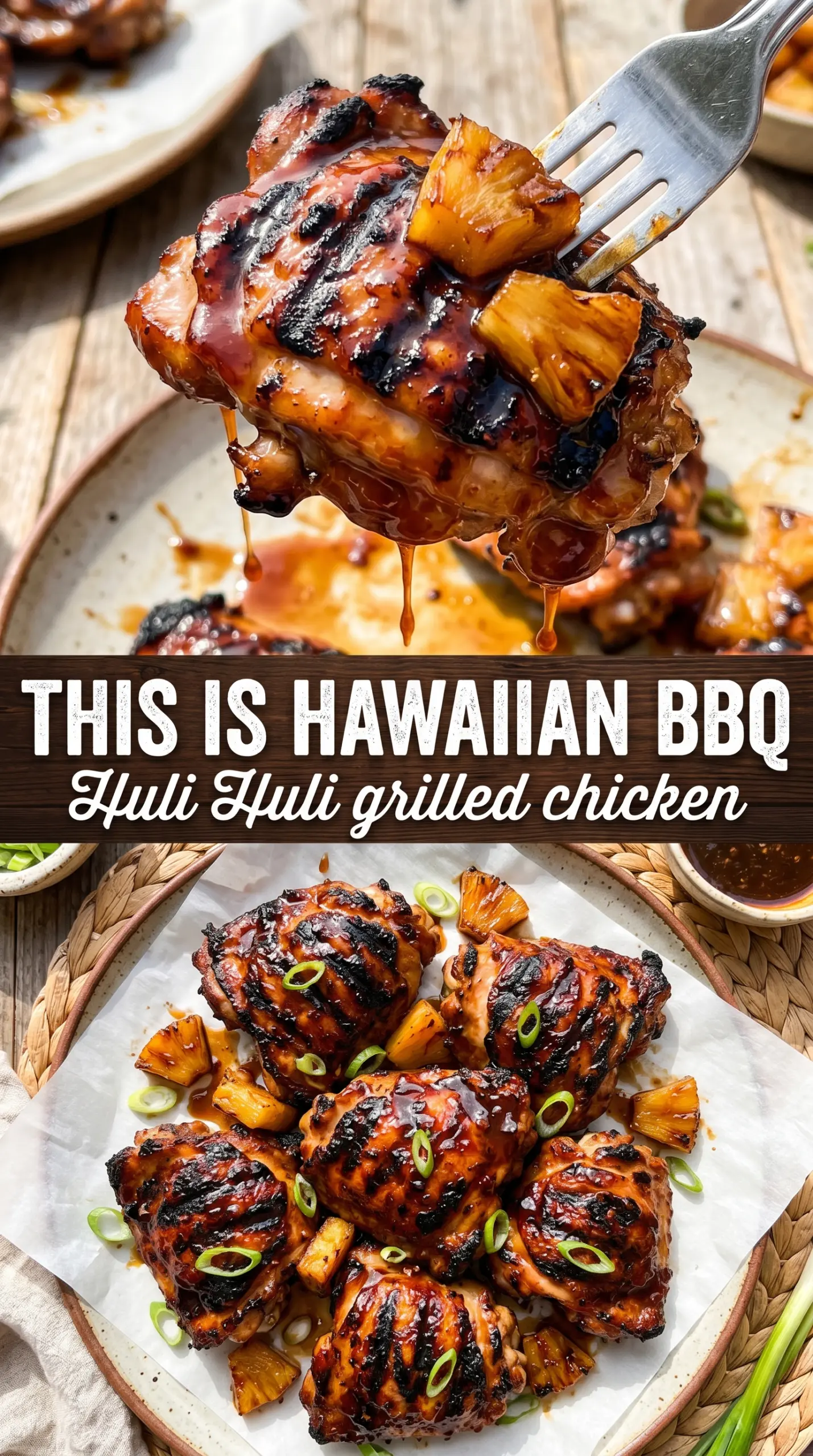
- Bone-in chicken thighs or leg quarters — These stay juicier than boneless pieces on a grill, and they give the glaze time to build without drying out the meat. Thighs are the easiest choice if you want even cooking and forgiving results.
- Pineapple juice — This brings sweetness and a little acidity, which helps the marinade taste bright instead of just sugary. Use canned or bottled juice if that’s what you have; fresh juice works too, but strain it so extra pulp doesn’t make the glaze gritty.
- Soy sauce — This is the salty backbone. It seasons the chicken all the way through and balances the pineapple and brown sugar so the finished glaze tastes deep, not candy-like.
- Mirin or dry sherry — This adds a round, lightly sweet finish and helps the marinade smell fuller once it hits the heat. If you skip it, the sauce still works, but it loses some of that mellow depth.
- Sesame oil — A little goes a long way here. It gives the marinade a nutty edge that reads clearly after grilling, so don’t swap it for a neutral oil unless you have to.
- Brown sugar and ketchup — These are what help the glaze cling and caramelize. Brown sugar deepens the color, while ketchup adds body and a little tomato tang so the sauce thickens instead of drying out.
Grilling It So the Glaze Clings Instead of Burning Off
Marinating for flavor, not just moisture
Whisk the marinade until the brown sugar dissolves as much as it can, then reserve one-third before adding the chicken. The chicken needs at least 4 hours in the marinade, and overnight gives you the best payoff without turning the texture mushy. If you leave it too long in an overly acidic mix, the outside can start to cure and take on a hammy texture, so keep it within that window.
Reducing the glaze before it hits the grill
Take the reserved marinade to a small saucepan and simmer it for 5 minutes until it looks slightly thickened and glossy. You’re not trying to make candy; you just want it to coat a spoon. If it still looks thin, the glaze will run off the chicken and burn on the grates before it ever builds that sticky surface.
Turning and basting over medium heat
Preheat the grill to medium, then place the chicken bone-side down first. That side can take the first blast of heat while the meat warms through more gently on the other side. Turn every 8 to 10 minutes and brush on the reduced glaze after each turn; if you baste too early and too often, the sugars will darken before the inside is done, so let the chicken set a little color before layering on more sauce.
Checking for the finish
The chicken is done when it reaches 165°F at the thickest part and the outside has deep caramelized patches with a little char at the edges. The glaze should look lacquered, not wet. Grill the pineapple rings for the last few minutes so they pick up marks and soften at the same time, then let the chicken rest briefly before serving so the juices settle back in.
How to Adapt This for Different Grills and Diets
Gluten-Free Version
Use a gluten-free soy sauce or tamari and keep everything else the same. The glaze still thickens and caramelizes the same way, but tamari usually tastes a touch rounder and less sharp, which works well with the pineapple.
No-Grill Oven Method
Roast the marinated chicken at 400°F, then broil for a minute or two at the end to get those caramelized edges. You won’t get the same smoke, but you will still get a sticky glaze if you brush on the reduced marinade near the end instead of from the start.
Less Sweet, More Savory
Cut the brown sugar back to 2 tablespoons and add an extra splash of soy sauce. The glaze will be thinner and less candy-like, with a darker savory edge that some people prefer on grilled chicken thighs.
Storage and Reheating
- Refrigerator: Store leftovers in an airtight container for up to 4 days. The glaze will firm up in the fridge, but the chicken stays flavorful.
- Freezer: Freeze the cooked chicken for up to 2 months. Wrap it well so the glaze doesn’t pick up freezer burn, and thaw in the refrigerator before reheating.
- Reheating: Warm it covered in a 325°F oven until hot, or reheat gently in a skillet with a splash of water to loosen the glaze. High heat dries out the chicken and turns the sugars on the outside bitter.
Answers to the Questions Worth Asking
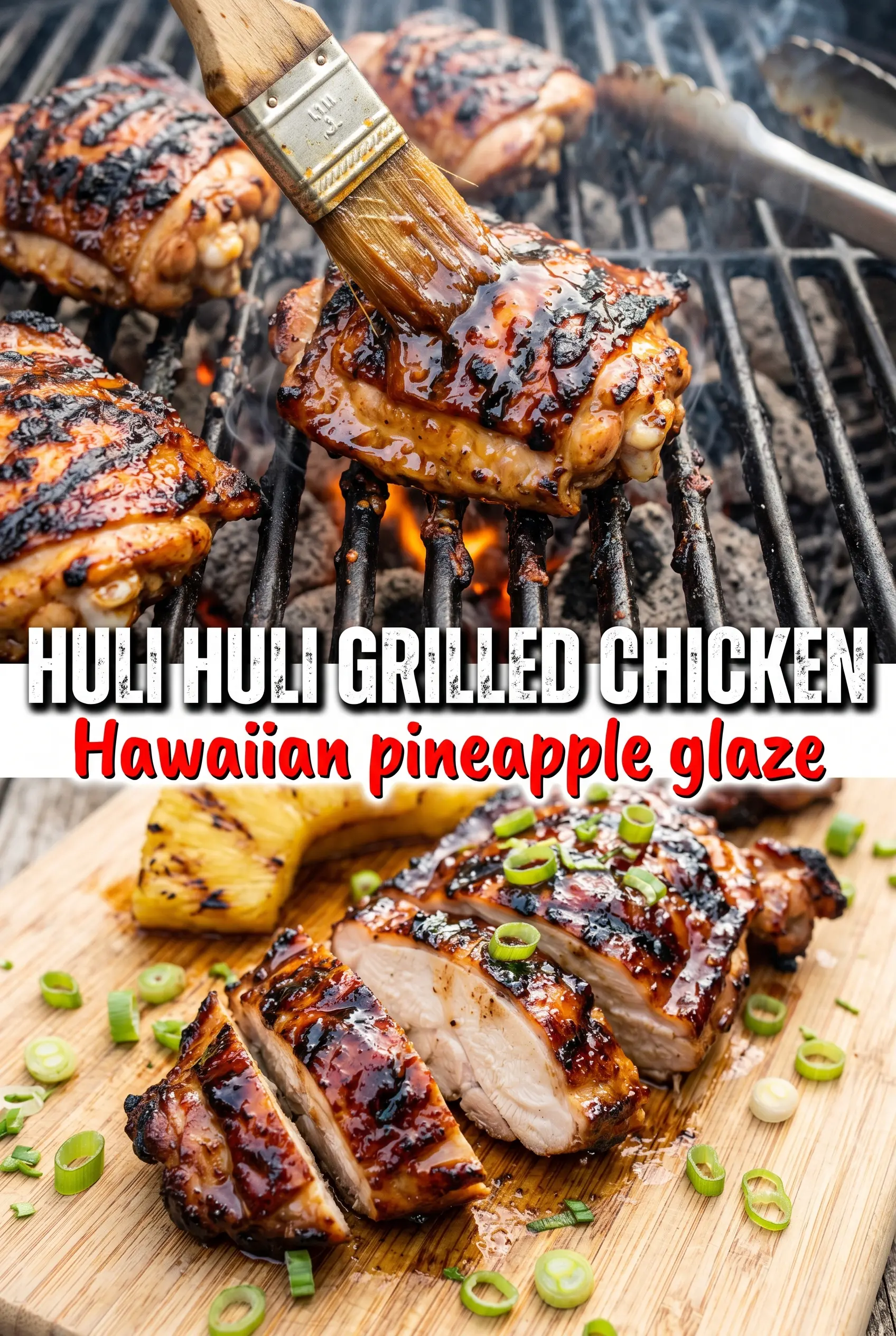
Grilled Huli Huli Chicken
Ingredients
Equipment
Method
- Whisk soy sauce, pineapple juice, ketchup, brown sugar, mirin, garlic, ginger, and sesame oil until smooth, then reserve 1/3 for basting.
- Cover the reserved glaze separately and set it aside until you finish simmering and grilling.
- Add chicken to the marinade and refrigerate at least 4 hours or overnight, turning once if possible for even coating.
- Simmer the reserved marinade in a small saucepan for 5 minutes until slightly thickened, then keep warm for basting.
- Preheat the grill to medium heat, then place chicken bone-side down and cook, turning every 8-10 minutes and basting generously with the reduced glaze.
- Continue grilling 30-35 minutes total until the chicken is deeply caramelized and the internal temperature reaches 165F, basting during the final minutes for extra shine.
- Grill pineapple rings for 2-3 minutes per side until lightly charred and warm through.
- Serve the chicken with grilled pineapple rings, topped with green onions and sesame seeds.