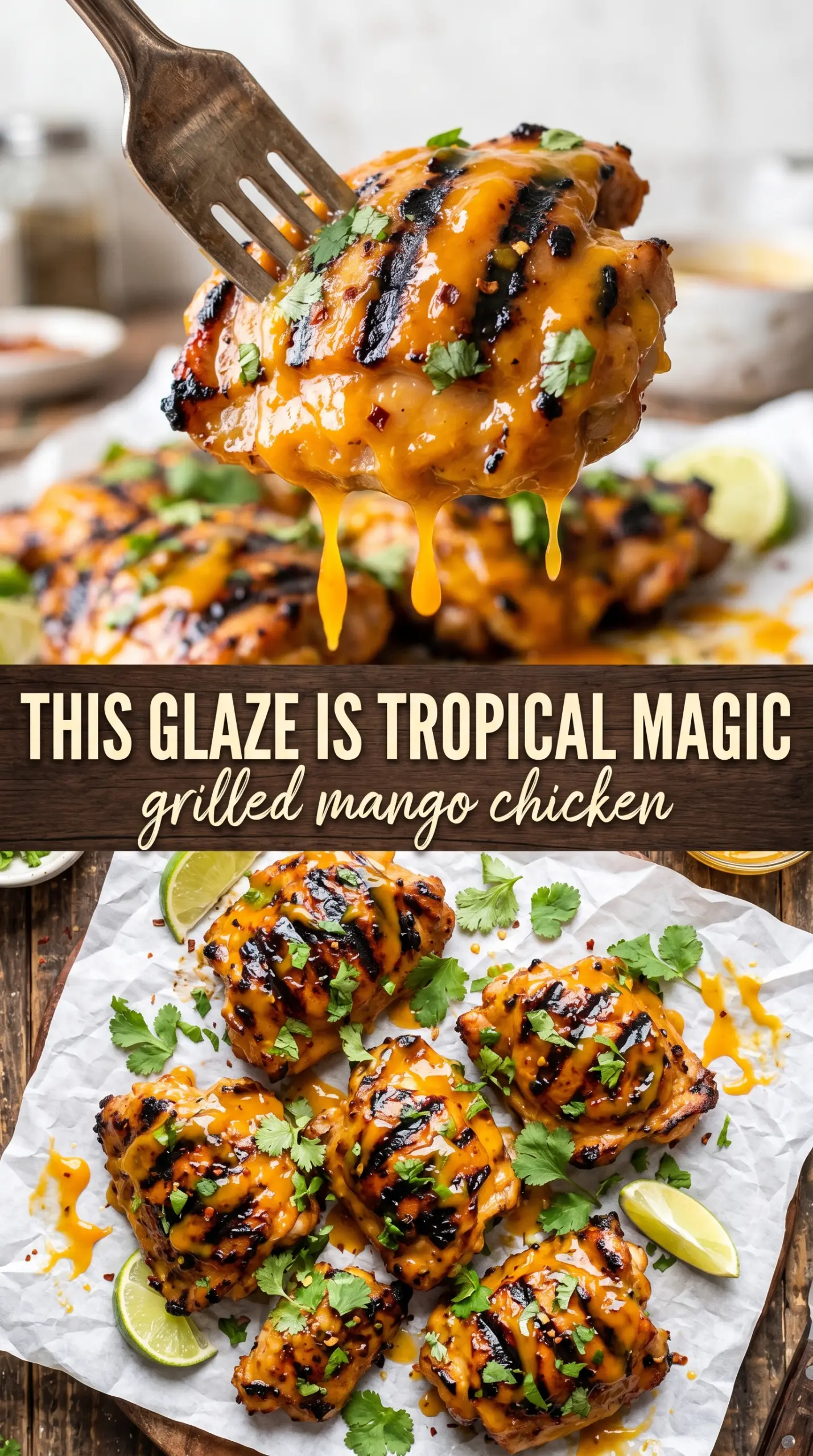
Grilled mango chicken lands with that rare combination of sticky, charred, and bright. The chicken comes off the grill with caramelized edges and a glossy glaze that tastes sweet at first, then tangy from the lime, then just a little warm from ginger and red pepper. It’s the kind of main dish that looks like it took a lot more effort than it did.
The trick is using mango puree both as the marinade base and the finishing glaze, but keeping back part of it so the chicken isn’t brushed with raw marinade. That reserved portion reduces the risk of cross-contamination and also keeps the glaze fresh and punchy instead of muddy. Boneless thighs are the right cut here because they stay juicy under high heat and handle the sugars in the mango without drying out.
Below I’ve laid out the few details that matter most, including how to keep the glaze from burning before the chicken is cooked through and what to swap if your mango isn’t quite ripe enough.
The glaze got beautifully sticky on the grill, and the chicken stayed juicy even after those 7 minutes per side. I served it with rice and the lime at the table made it pop.
Save this grilled mango chicken for the nights when you want sticky charred edges, juicy thighs, and a bright mango-lime glaze.
The Trick to Keeping Mango Glaze From Burning on the Grill
Mango brings sugar, and sugar turns from glossy to scorched fast once it hits direct heat. That’s why the reserved glaze matters here. If you brush the chicken too early, the sugars can blacken before the thighs finish cooking, leaving you with bitter spots instead of a clean caramelized coat.
The other part people miss is grill control. Medium-high heat is enough to build color, but you still need a little space between the flame and the chicken. If the glaze starts to darken too quickly, move the pieces to a cooler section of the grill and let the heat finish the meat without torching the surface.
- Boneless chicken thighs — Thighs stay tender under the direct heat this recipe needs. Breasts can work, but they dry out faster and need a shorter cook time, so the glaze is harder to manage.
- Ripe mango — The fruit needs to be soft and fragrant so it blends into a smooth puree. If your mango is underripe, the sauce turns sharp and thin instead of lush and sticky.
- Lime juice and zest — Juice gives the marinade its lift, while zest adds a stronger citrus aroma that survives the grill. Don’t skip the zest; it keeps the mango from tasting flat.
- Honey — This helps the glaze cling and encourages browning. Maple syrup can stand in, but the finish will taste a little darker and less tropical.
- Soy sauce — It brings salt and depth, and it also balances the sweetness of the mango. Use a low-sodium version if that’s what you have, but don’t replace it with plain salt alone or the glaze loses its rounded savory edge.
What Each Ingredient Is Actually Doing in This Chicken Dish
- Chicken (pat dry for browning) — Room temperature cooks more evenly. Even pieces ensure uniform doneness.
- Oil or butter (the browning medium) — High-heat oil essential for proper searing. Creates pan flavor.
- Seasonings (salt, pepper, spices) — Apply generously. Chicken carries the entire flavor profile.
- Aromatics (garlic, ginger, herbs) — Cook with fat to bloom flavors. Become the foundation.
- Sauce or braising liquid (if using) — This keeps chicken moist. Balance richness with acid.
- Vegetables (if using) — Layer by cooking time so everything finishes together.
- Acid (vinegar, wine, lime, or pineapple) — This brightens and prevents one-dimensional flavor.
- Proper doneness (165°F internal temperature) — Use thermometer for accuracy. Overcooked is dry.
Building the Glaze and Getting the Chicken on the Grill
Blending the Marinade
Blend the mango puree with the soy sauce, lime juice, zest, honey, garlic, ginger, red pepper flakes, and allspice until it looks smooth and spoonable. The mixture should taste bright and a little salty with enough sweetness to feel balanced, not candy-like. Pull off one-third before the chicken goes in and keep it separate for glazing later. That reserved portion never touches raw meat, and it stays clean and vibrant for the finish.
Marinating for Real Flavor
Coat the chicken thighs well and let them sit for at least an hour. That’s enough time for the acid and salt to season the meat without turning the surface mushy. If you go much longer than a few hours, the lime can start to change the texture, so don’t treat this like an overnight marinade. Pat the thighs lightly if they’re dripping before they hit the grill; too much wet marinade can steam instead of sear.
Grilling and Glazing at the End
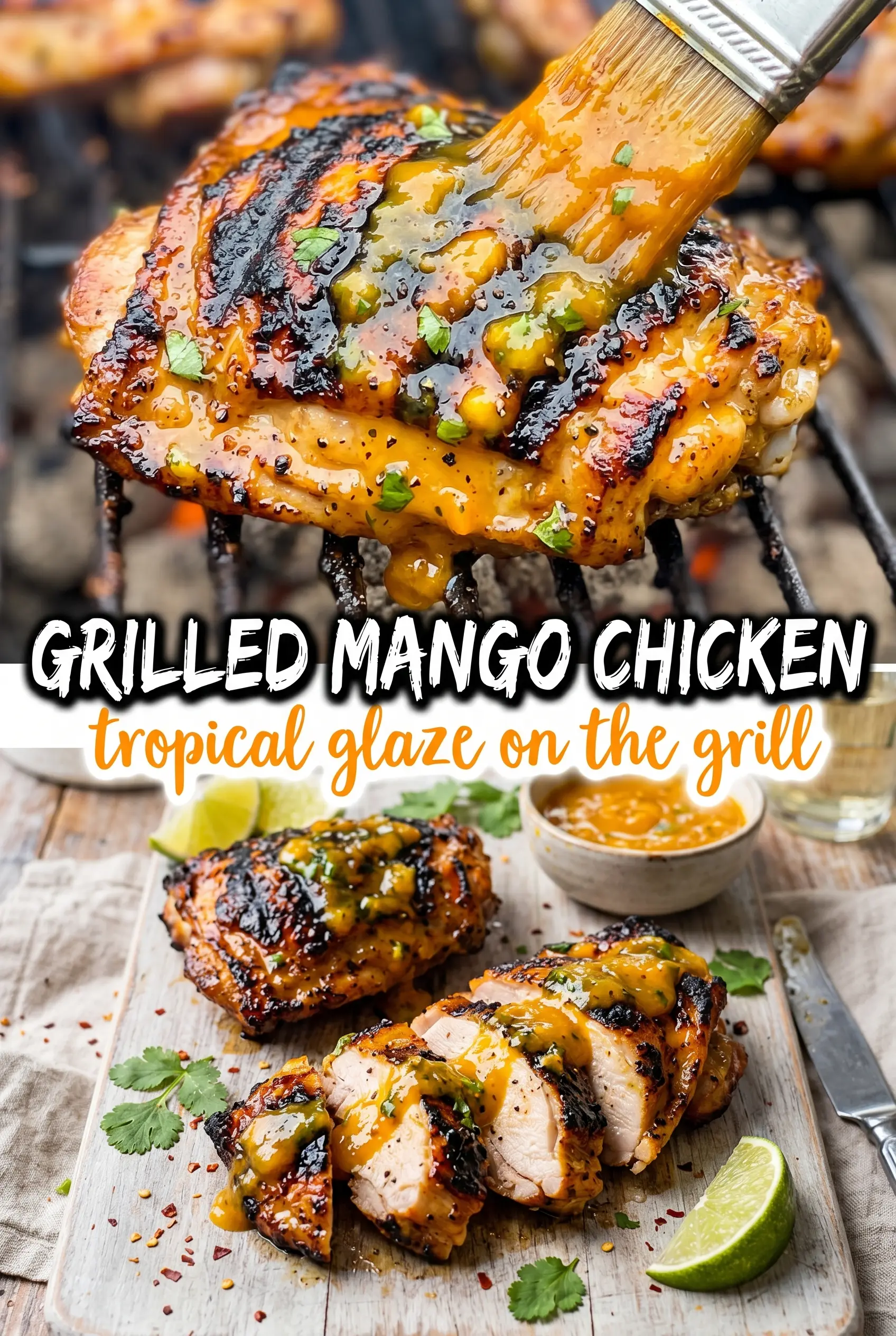
Preheat the grill to medium-high and oil the grates so the thighs release cleanly. Lay the chicken on the grill and leave it alone long enough to develop solid marks before turning, about 6 to 7 minutes per side depending on thickness. Brush on the reserved glaze during the last 4 minutes so it thickens on the surface instead of burning off. Pull the chicken when the center reaches 165°F and the glaze looks sticky and bronzed, not charred black.
How to Change the Dish Without Losing the Point
Dairy-Free and Naturally Gluten-Free
This recipe is already dairy-free, and it can be gluten-free if you use a gluten-free soy sauce or tamari. That swap keeps the same savory backbone without changing the texture of the glaze. I’d still taste the marinade before the chicken goes in, since tamari can read a little saltier than standard soy sauce.
No Grill, Just a Broiler
If grilling isn’t happening, broil the chicken on a rack set over a sheet pan and watch it closely. The broiler gives you that caramelized top, but the sugar in the mango can burn faster than it does over a grill, so keep the rack a few inches from the heat and glaze only at the end. You’ll lose the smoke from the grill marks, but the sticky finish still works.
Using Chicken Breasts Instead
Chicken breasts can stand in, but they need a gentler hand. Pound them to an even thickness and start checking early, since they’ll dry out once they pass 165°F. You still get the mango glaze, but the result will be leaner and a little less forgiving than thighs.
Storage and Reheating
- Refrigerator: Store leftovers in an airtight container for up to 4 days. The glaze will set up a little more as it chills.
- Freezer: It freezes well for about 2 months. Wrap the chicken tightly and thaw it in the fridge before reheating so the mango coating doesn’t separate.
- Reheating: Warm it covered in a 325°F oven until heated through, or slice and reheat gently in a skillet with a spoonful of water. High heat will dry out the thighs and make the glaze sticky in the wrong way.
Answers to the Questions Worth Asking
Grilled Mango Chicken
Ingredients
Equipment
Method
- Blend mango puree with soy sauce, lime juice, lime zest, honey, garlic, ginger, red pepper flakes, and allspice until smooth. Reserve 1/3 of the mixture for glazing later.
- Add chicken thighs to the remaining marinade and coat thoroughly. Marinate for at least 1 hour in the refrigerator.
- Preheat the grill to medium-high and oil the grates. Keep the lid closed as much as possible between flips for steady heat.
- Grill chicken for 6-7 minutes per side. During the last 4 minutes, brush with the reserved mango glaze.
- Continue grilling until deeply caramelized and the internal temperature reaches 165°F. Let the juices settle for a couple minutes before serving.
- Serve the grilled mango chicken with fresh mango chunks, cilantro, and lime wedges. Add extra glaze from the grill if any collects on the plate.