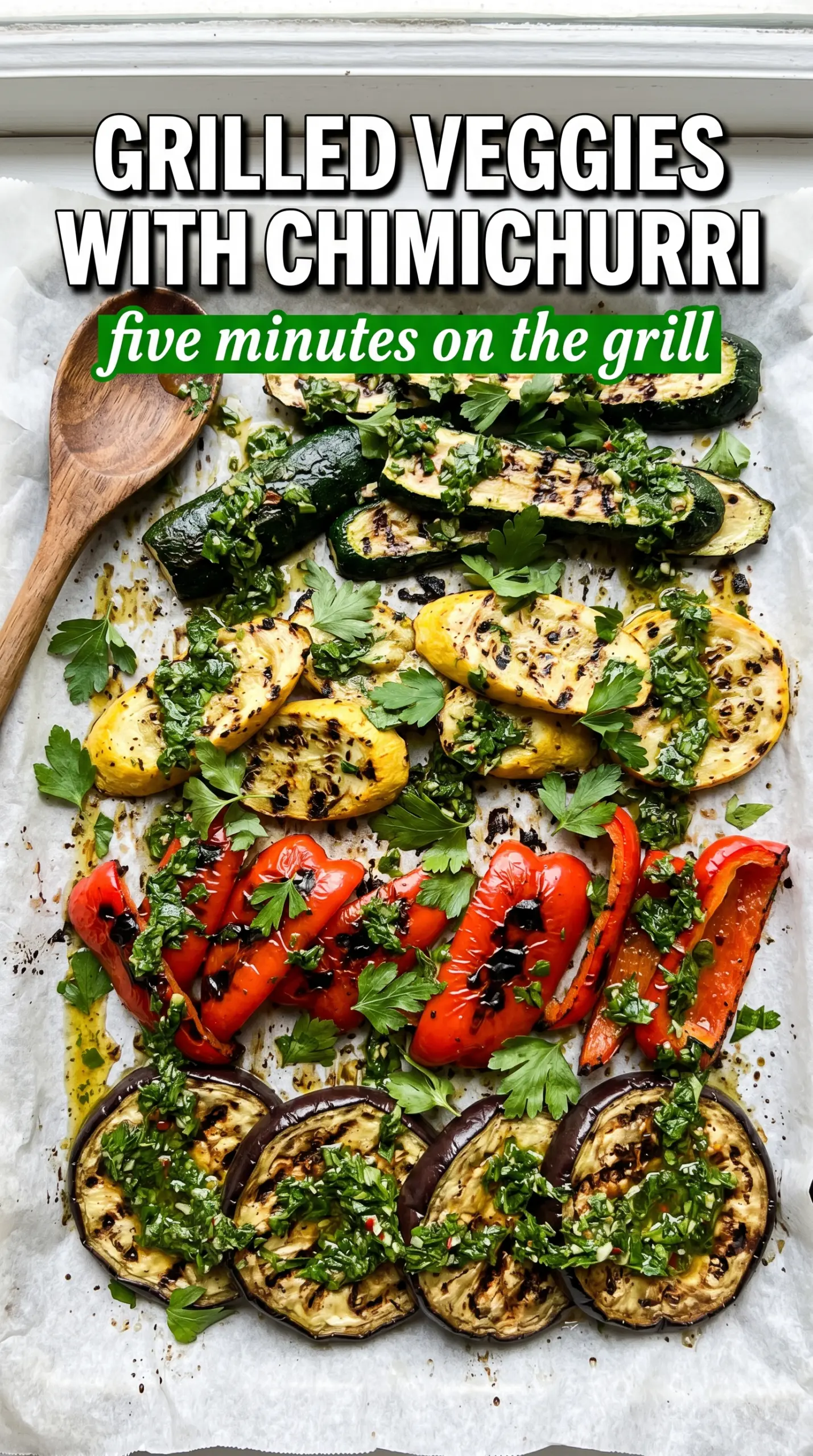
Charred grilled vegetables and a bright chimichurri sauce make the kind of side dish people start eating before the main course hits the table. The vegetables get smoky edges and tender centers, then the sauce cuts through with garlic, herbs, vinegar, and enough heat to keep every bite awake. It feels generous without being fussy, which is exactly why it earns a repeat spot next to burgers, steak, chicken, or a simple bowl of rice.
The part that makes this version work is balance. Zucchini and eggplant need enough heat to pick up color without collapsing into mush, while peppers and onions need a little longer to soften and sweeten. The chimichurri stays a little rustic instead of turning into a puree, so it clings to the vegetables instead of sliding off in a green pool. That rough texture matters because it keeps the sauce lively and punchy.
Below, I’ll walk through the grill timing that keeps each vegetable in its best shape, plus the small chopping and seasoning details that make the finished platter taste layered instead of flat. If you’ve ever ended up with soggy vegetables or a sauce that felt too sharp, the fix is in the order and the heat.
The chimichurri was spot on and the vegetables held their shape on the grill instead of turning soft. I served it warm with steak and the whole platter disappeared fast.
Grilled veggies with chimichurri taste best when the sauce is bright and the vegetables still have a little bite.
The Grill Marks Matter More Than the Clock
With grilled vegetables, the mistake usually isn’t undercooking. It’s crowding the grill or leaving the heat too low, which gives you soft, steaming vegetables instead of charred ones. You want enough space between pieces for the surface moisture to cook off fast. That dry, hot surface is what creates the deep color and the sweet edge that makes the platter taste finished.
Different vegetables need different timing, and that matters here. Zucchini and eggplant soften quickly, so they go on only until they pick up good grill marks and turn tender at the center. Bell peppers and onion rounds can take a bit longer because they benefit from a little collapse and caramelization. If your vegetables are sticking, the grates weren’t hot enough or the vegetables went on before they were lightly oiled.
- Use medium-high heat. Lower heat gives you limp vegetables before any real browning happens.
- Oil the vegetables, not just the grill. The thin coating protects the flesh and helps the marks release cleanly.
- Leave them alone long enough to sear. If you move them too soon, you tear the surface and lose the char.
- Keep the chimichurri off the grill. It belongs on the platter after cooking so the herbs stay bright.
What the Herbs, Garlic, and Vinegar Are Really Doing in the Chimichurri
The parsley is the backbone here. It gives the sauce its clean, grassy bite and keeps the chimichurri from tasting heavy after the grill. Cilantro adds a softer, more aromatic layer, but if you’re one of those people who doesn’t love it, you can replace it with more parsley and the sauce will still work. The result will be less floral and a little more straight-ahead herbaceous, which is still excellent.
Garlic, red wine vinegar, and oregano do the heavy lifting in the flavor balance. Garlic brings the sharpness, vinegar wakes up the vegetables, and oregano gives the sauce that unmistakable chimichurri backbone. Use a decent olive oil, since it carries the herbs and smooths out the edges. You don’t need your best bottle, but a flat or bitter oil will show up here because the sauce is raw.
- Flat-leaf parsley: This is the herb that makes the sauce taste like chimichurri instead of a generic green drizzle.
- Fresh cilantro: Adds brightness and complexity; swap it for more parsley if needed.
- Garlic: Raw garlic is bold, so blend just until chopped and let the sauce sit a few minutes to mellow.
- Red wine vinegar: Acid keeps the sauce sharp enough to cut through smoky vegetables.
- Olive oil: It binds the sauce. If it looks too loose, a short rest usually helps it thicken slightly.
How to Build the Platter So Every Vegetable Stays in Its Lane
Blend the chimichurri first
Start with the sauce so it has time to settle while you grill. Pulse the herbs, garlic, oil, vinegar, oregano, and pepper flakes until everything is finely chopped but still visibly textured. If you puree it smooth, it loses the rough, spoonable texture that helps it cling to the vegetables. Taste it now, because a sauce that seems a little aggressive at first usually calms down once it sits.
Prep the vegetables for direct heat
Slice everything into pieces that will cook at a similar pace. Zucchini should be long enough to stay on the grate without falling through, eggplant should be thick enough to soften without breaking apart, and onions should stay in large rounds so they don’t disappear between the grates. Brush both sides with olive oil and season well. If the vegetables are under-oiled, they dry out before they brown.
Grill in the order of tenderness
Put the peppers and onion on first, then the zucchini and eggplant. You’re looking for tender flesh, clear grill marks, and edges that just start to blister. If the vegetables are blackening before they soften, the heat is too high; if they’re soft but pale, the grill is too cool. Pull each piece as it finishes and build the platter as you go so nothing overcooks while waiting.
Spoon on the sauce while the vegetables are still warm
Arrange the grilled vegetables on a serving platter and spoon chimichurri over the top right away. Warm vegetables soak up the sauce better than cold ones, so the herbs and vinegar sink in instead of sitting on the surface. You don’t need to drown the platter; a generous layer in the crevices and over the charred spots is enough. Add more at the table if people want an extra hit of garlic and vinegar.
Three Ways to Make This Chimichurri Veggie Platter Work for Your Table
Make it vegan, naturally
This recipe already lands in vegan territory, which is part of why it works so well for mixed groups. Serve it with grains, grilled bread, or beans and it becomes a full meal instead of just a side. The sauce carries enough punch that you don’t miss anything creamy or cheesy.
Swap the grill for a grill pan
If you don’t have an outdoor grill, use a heavy grill pan over medium-high heat. You’ll still get browning and some char, though the marks won’t be quite as dramatic. Don’t overcrowd the pan or the vegetables will steam and lose the smoky edge that makes the dish taste like it came off the fire.
Use what you have in the herb bundle
If cilantro isn’t your thing, use all parsley. If you have a little mint or basil left over, a small handful can brighten the sauce without taking it over. Keep the total amount of herbs about the same so the oil and vinegar still coat properly.
Make it ahead without losing freshness
You can make the chimichurri a day ahead and the flavor actually gets better as it sits. Grill the vegetables shortly before serving so they keep their texture and color. If you need to hold them for a short while, keep them loosely covered at room temperature instead of sealing in steam.
Storage and Reheating
- Refrigerator: Store leftovers in an airtight container for up to 3 days. The vegetables will soften a bit, and the chimichurri will taste stronger after resting.
- Freezer: The grilled vegetables don’t freeze well because they turn watery when thawed. The chimichurri can be frozen in a small container, but fresh is better for the brightest flavor.
- Reheating: Rewarm the vegetables in a hot skillet or on a baking sheet in a 375°F oven just until heated through. Avoid the microwave if you want to keep any texture; it softens the vegetables fast and dulls the char.
Answers to the Questions Worth Asking
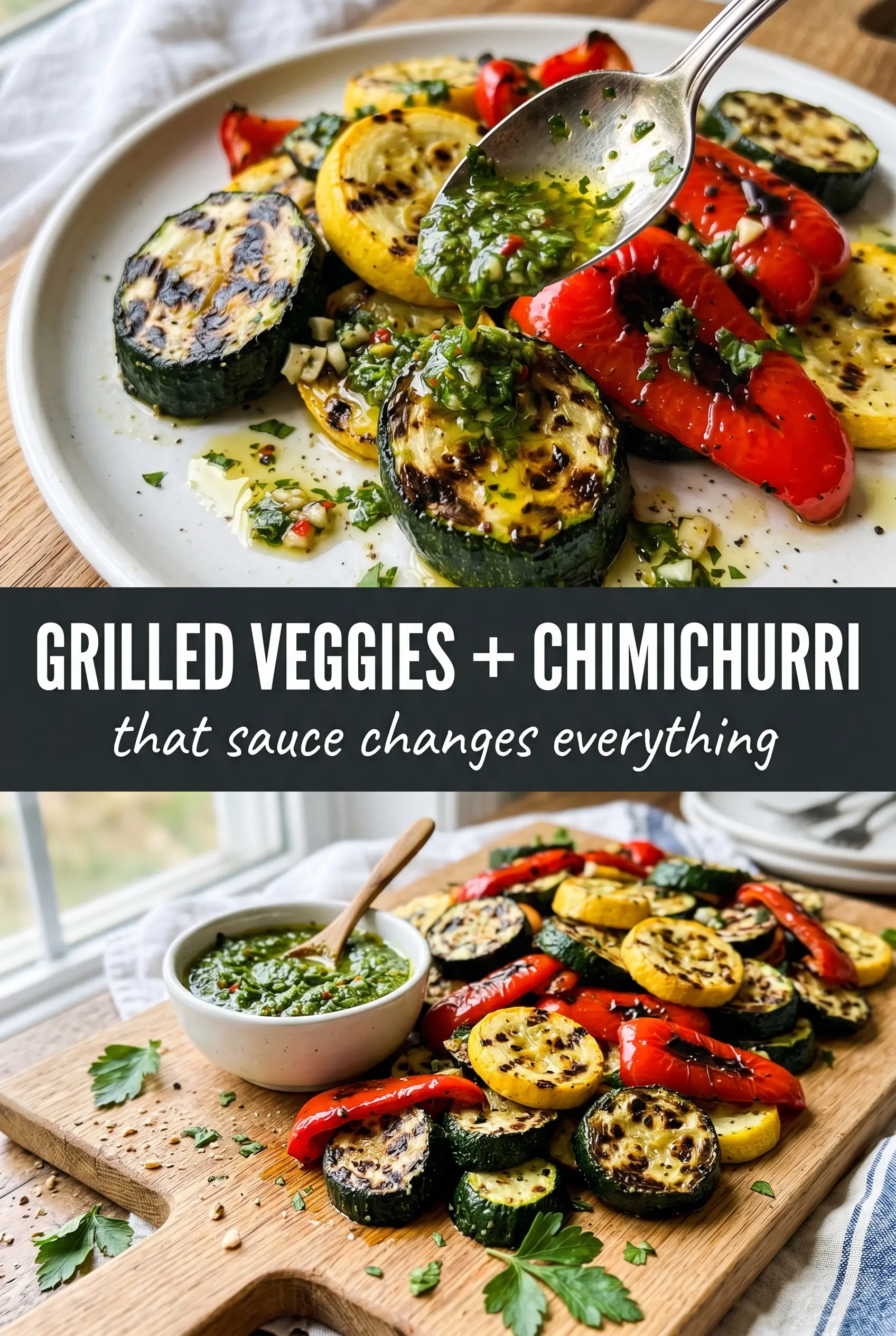
Grilled Veggies with Chimichurri Sauce
Ingredients
Equipment
Method
- Blend fresh parsley, fresh cilantro, garlic, olive oil, red wine vinegar, dried oregano, and red pepper flakes until roughly chopped, not fully smooth, for visible herb and garlic texture.
- Taste and adjust with salt and pepper, then set chimichurri aside while you grill.
- Brush zucchini, red bell peppers, eggplant, and red onions with olive oil, then season generously with salt and pepper.
- Preheat the grill to medium-high and lightly oil the grates until hot and ready to sizzle.
- Grill red bell peppers for 4–5 minutes per side until tender with distinct char marks.
- Grill zucchini and eggplant for 3–4 minutes per side until tender with char marks forming.
- Grill red onion rounds for about 3 minutes per side until they soften and show grill marks.
- Arrange the grilled vegetables on a large serving platter immediately as they come off the grill.
- Spoon chimichurri generously over everything so it blankets the vegetables, then serve immediately at any temperature.