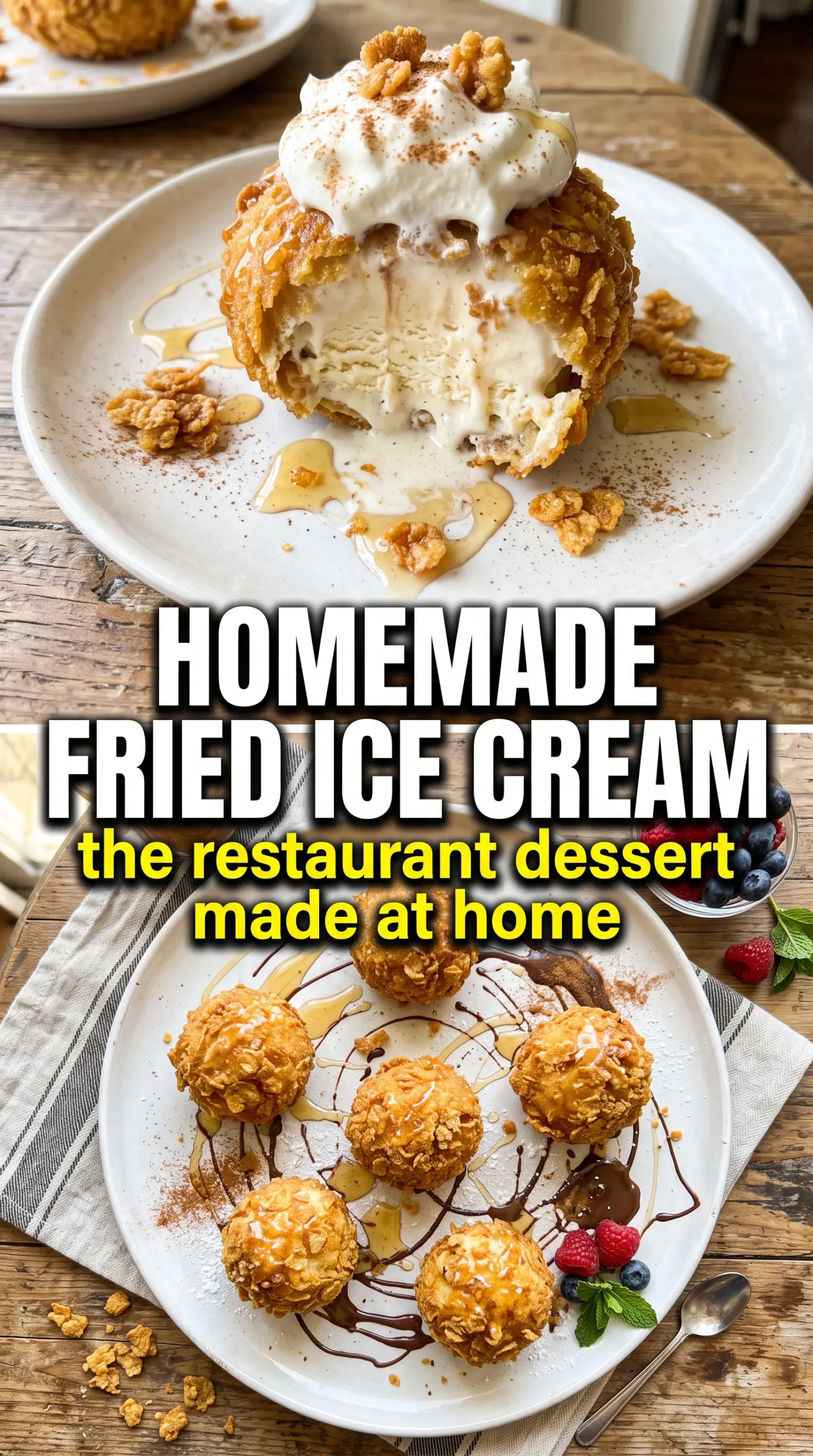
Golden, shatteringly crisp fried ice cream is one of those desserts that feels impossible until you bite into it and hear that crackle against the cold, creamy center. The coating stays light and crunchy instead of turning greasy, and the ice cream inside holds its shape long enough for everyone to get that hot-and-cold contrast in the same spoonful. It’s the kind of dessert that gets attention the second it hits the table.
The trick is all in the freezing and the coating. The ice cream needs to be rock solid before it ever touches the oil, and the shell needs enough thickness to protect it during that very fast fry. Corn flakes give you a sturdier crunch than fine crumbs, and the cinnamon-sugar adds the right warm, toasted note that makes the whole thing taste like more than just fried ice cream.
Below, I’ll show you how to keep the ice cream from softening too early, how to build a coating that actually holds up, and what to do if you want to make the dessert ahead for a crowd.
The shell stayed crisp for every serving, and the ice cream was still frozen in the middle after the quick fry. I used the double coating like you suggested, and it didn’t leak at all.
Save this fried ice cream recipe for the dessert that needs a crackly corn flake shell and a frozen center that holds up fast.
The Part That Keeps the Ice Cream From Melting Too Fast
Fried ice cream fails when the shell goes on too thin or the ice cream isn’t hard enough before frying. The oil is hot, but the fry time is shorter than a blink, so the only thing protecting the center is a frozen core and a thick enough crust to slow the heat down. If either of those is weak, you get a puddle instead of a scoop.
The other thing that matters is speed. Once the ice cream leaves the freezer, the clock starts immediately, so set up every bowl before you unwrap a single scoop. The coating also needs to be pressed on firmly; loose crumbs fall off in the oil and leave bare spots that melt first.
- Very firm vanilla ice cream — This needs to be frozen hard enough to handle, not just scoopable. A softer ice cream will slump during coating and lose its shape before it ever reaches the oil.
- Corn flakes — They give the shell its crunch and structure. Crushed crumbs from other cereals can work in a pinch, but corn flakes hold up better and taste lighter after frying.
- Cinnamon and sugar — This is more than seasoning; it gives the coating that toasted, dessert-shop taste. Use the full amount because the sugar helps the shell brown quickly.
- Egg — The egg acts like glue between the ice cream and the cereal coating. If you skip the second dip, the crust is usually too patchy to protect the ice cream in the fryer.
Building the Shell So It Stays Crunchy in the Oil
- Vanilla ice cream — Classic vanilla gives the cleanest contrast against the cinnamon-sugar shell and the honey on top. Any premium-style ice cream with a lower air content will freeze into a firmer ball and hold shape better than a very airy one.
- Corn flakes — Crush them enough to coat evenly, but leave some larger pieces for texture. If you grind them too fine, the shell turns dusty instead of crisp.
- Eggs — Beat them until smooth so the coating goes on in an even layer. Any streaks of unmixed white make patchy spots that don’t grab the crumbs well.
- Vegetable oil — Use a neutral oil with a high smoke point. This dessert fries too quickly for the oil to add flavor, and anything strongly flavored can compete with the ice cream.
The Freeze-And-Fry Window You Can’t Rush
Shaping and Hard-Freezing the Scoops
Scoop the ice cream into firm, round balls and set them on a parchment-lined tray. Freeze them until they’re hard all the way through, not just set on the outside. If they feel even slightly soft when you touch them, they’ll flatten the second you start coating.
Pressing on a Thick Coating
Dip each frozen scoop in beaten egg, then roll it in the corn flake mixture and press gently so the crumbs stick. Repeat the dip and roll for a heavier shell, because one thin coat often leaves gaps that fry unevenly. Work fast and get the coated scoops back into the freezer right away.
The Flash Fry
Heat the oil to 375°F and fry one scoop at a time for just 10 to 15 seconds. You’re looking for a deep golden shell, not a long fry; if you keep it in the oil too long, the center starts to soften before the crust is done. Pull it out the moment it looks crisp and serve it immediately.
Chocolate-Coated Fried Ice Cream
Mix a few tablespoons of finely chopped chocolate cookies into the corn flakes for a darker, richer shell. The texture stays crisp, but the flavor leans more like an ice cream shop sundae. Keep the coating chunky enough that it doesn’t turn muddy when it hits the hot oil.
Dairy-Free Version
Use a firm non-dairy vanilla ice cream that freezes hard, not a soft coconut dessert base. The method stays the same, but some plant-based ice creams soften faster, so give them extra time in the freezer between every coating step.
Gluten-Free Shell
Choose certified gluten-free corn flakes and keep the rest of the ingredients the same. The finished dessert tastes just as crisp, and the coating still fries beautifully as long as the flakes are sturdy enough to cling after the egg dip.
Storage and Reheating
- Refrigerator: Not recommended. Fried ice cream melts and loses the contrast that makes it worth serving.
- Freezer: You can freeze the coated scoops for up to 2 days before frying. Keep them wrapped well on a tray so the shell doesn’t pick up freezer smells or moisture.
- Reheating: Don’t reheat this dessert. Fry it only once, straight from the freezer, because a second round in heat turns the center soft and the coating stale.
Questions I Get Asked About This Recipe
Homemade Fried Ice Cream
Ingredients
Equipment
Method
- Scoop large balls of vanilla ice cream onto a parchment-lined sheet, spaced apart. Freeze for at least 2 hours until very firm, so the coating can set without melting.
- Mix crushed corn flakes with cinnamon and sugar in a bowl. Set aside so each frozen ball can be coated quickly.
- Working very quickly, dip each frozen ice cream ball in beaten eggs, then roll in the corn flake mixture, pressing to adhere. Dip again and re-roll for a thick coating so the exterior stays shatteringly crisp.
- Place the coated balls back on the parchment-lined sheet and freeze for at least 2 more hours until very firm. Keep them fully frozen so the hot oil only crisps the coating for seconds.
- Heat vegetable oil to 375°F. Fry each ball for 10–15 seconds until golden—do not cook longer or the ice cream will melt.
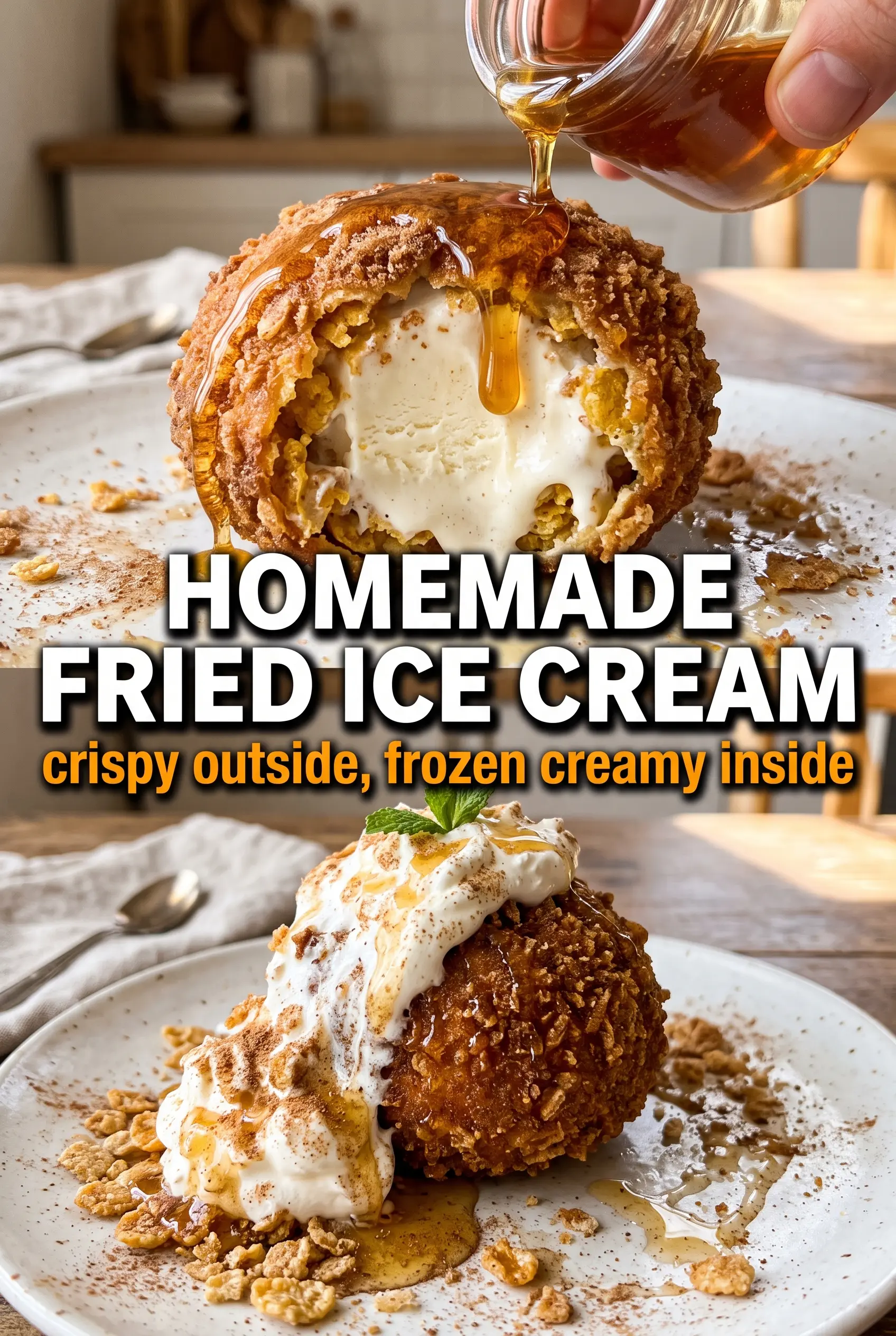
- Serve immediately with honey and whipped cream, and dust with cinnamon if desired. The contrast is best right after frying.