Honey butter skillet corn lands in that sweet spot between simple and special. The kernels blister in a hot cast iron pan, then get coated in buttery honey that clings to every bite instead of pooling at the bottom of the skillet. The result is glossy, lightly caramelized corn with browned edges and just enough sweetness to make people reach for seconds.
The trick is giving the corn enough heat before the honey goes in. If you add the sweetener too early, the kernels steam and the pan never gets hot enough to build those golden spots. Starting with a dry, blazing skillet, then finishing with butter and honey, keeps the texture lively and the flavor deep instead of flat.
Below you’ll find the exact timing that gives you blistered corn without overcooking it, plus a few smart swaps for frozen corn and different herbs. It’s the kind of side dish that disappears fast, so it’s worth knowing how to make it work every time.
The corn got those little charred spots I was hoping for, and the honey butter turned glossy instead of sticky. I used frozen corn and it still tasted fresh after 12 minutes in the skillet.
Save this honey butter skillet corn for the night you want a fast side dish with blistered kernels and a caramelized glaze.
The Reason the Corn Needs Heat Before the Honey Goes In
Sweet corn can go soft fast if the pan isn’t hot enough. The goal here is blistering, not simmering. When the kernels hit a properly heated cast iron skillet, the surface moisture cooks off quickly and the sugars on the outside of the corn start to brown. That gives you the little charred spots that make the dish taste cooked, not just warmed through.
The honey comes later for a reason. Honey burns fast, and once it hits the pan it starts to cling and caramelize almost immediately. If it goes in before the corn has a chance to brown, the skillet cools down and the whole dish turns sticky instead of glossy. Keep the corn moving only after it has had time to sit against the pan and pick up color.
What Each Ingredient Is Doing in This Dish
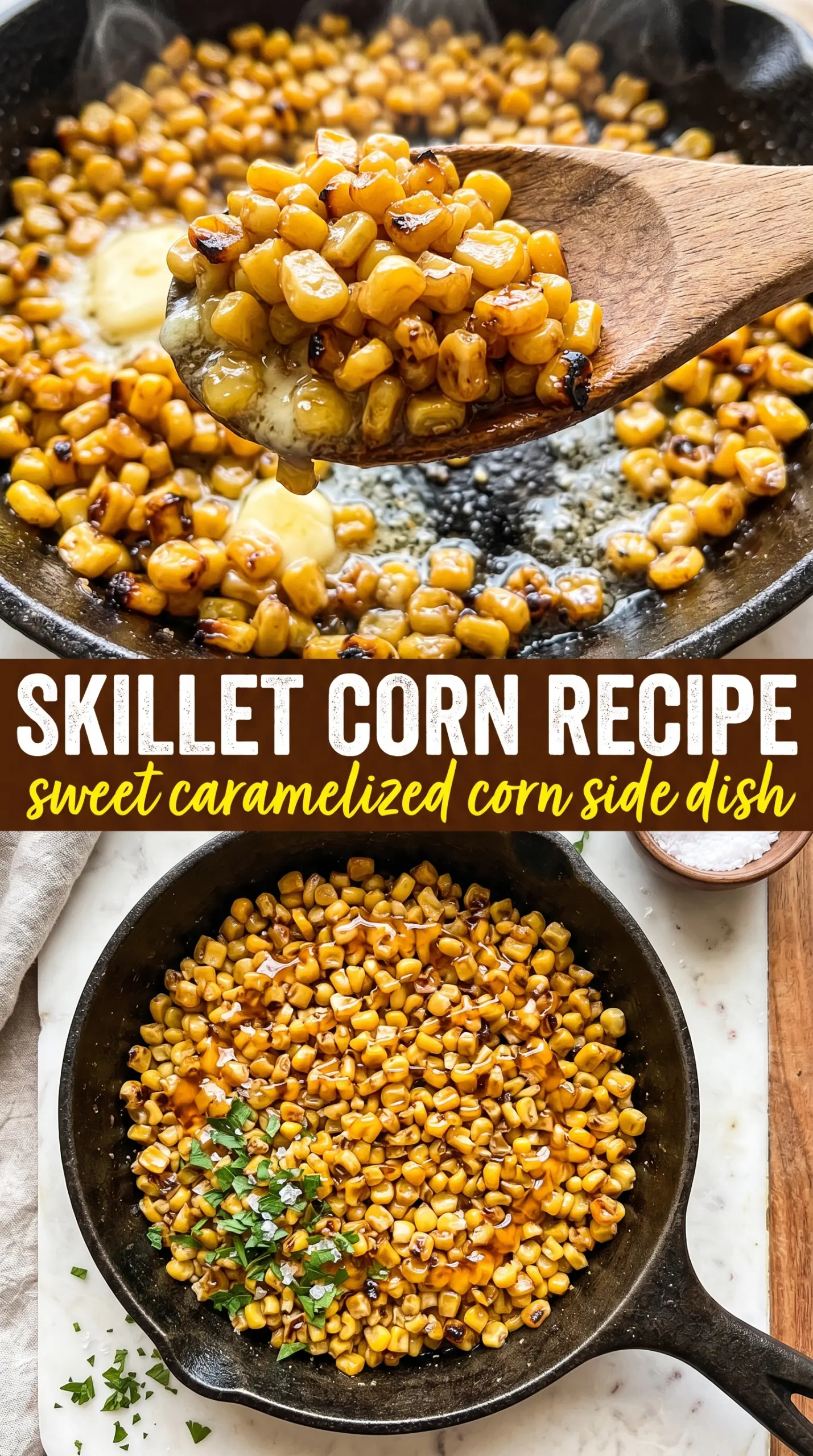
- Corn kernels — Fresh corn gives the best snap and sweetness, but frozen works well if you use it straight from the freezer or thaw and dry it thoroughly. Any surface water will steam the kernels, which is the main thing that keeps them from blistering. If you’re using fresh corn, cut it from the cob and scrape the cob with the back of the knife to pull off the milky bits; that little extra starch helps the sauce cling.
- Unsalted butter — Butter is carrying both richness and the glossy finish here. Unsalted is the right choice because the corn’s sweetness changes quickly once the honey goes in, and you want to control the seasoning yourself. If you only have salted butter, use it and hold back on added salt until the end.
- Honey — This is the ingredient that turns the skillet coating from plain butter into a caramelized glaze. Use a honey you like the taste of on its own, because the flavor stays front and center. Maple syrup can stand in, but it gives a deeper, less floral finish and the coating will set a little looser.
- Garlic powder — Garlic powder adds a subtle savory edge without introducing moisture. Fresh garlic can burn before the corn is done, especially in a hot skillet, so the powder is the safer move here.
- Chives or parsley — The herbs are not just for color. They cut through the sweetness and keep the final bite from tasting one-note. Chives give the cleaner fit, but parsley works if that’s what you have.
Getting the Blister Without Burning the Glaze
Start with a hot, dry skillet
Set the cast iron over medium-high heat and let it get properly hot before anything goes in. You want the butter to foam as soon as it melts, not slowly puddle and hiss. That heat is what gives the corn its first round of browning. If the skillet is only warm, the kernels will release moisture and you’ll end up with pale, soft corn.
Let the kernels sit long enough to color
Add the corn in a single layer and leave it alone for a few minutes. You’re listening for that sharp, faint sizzle and watching for deep golden spots on the underside. Stirring too early breaks the contact with the pan, which is how people accidentally steam skillet corn. Once the first side is blistered, stir and let other sides catch color in the same way.
Finish with butter and honey at the end
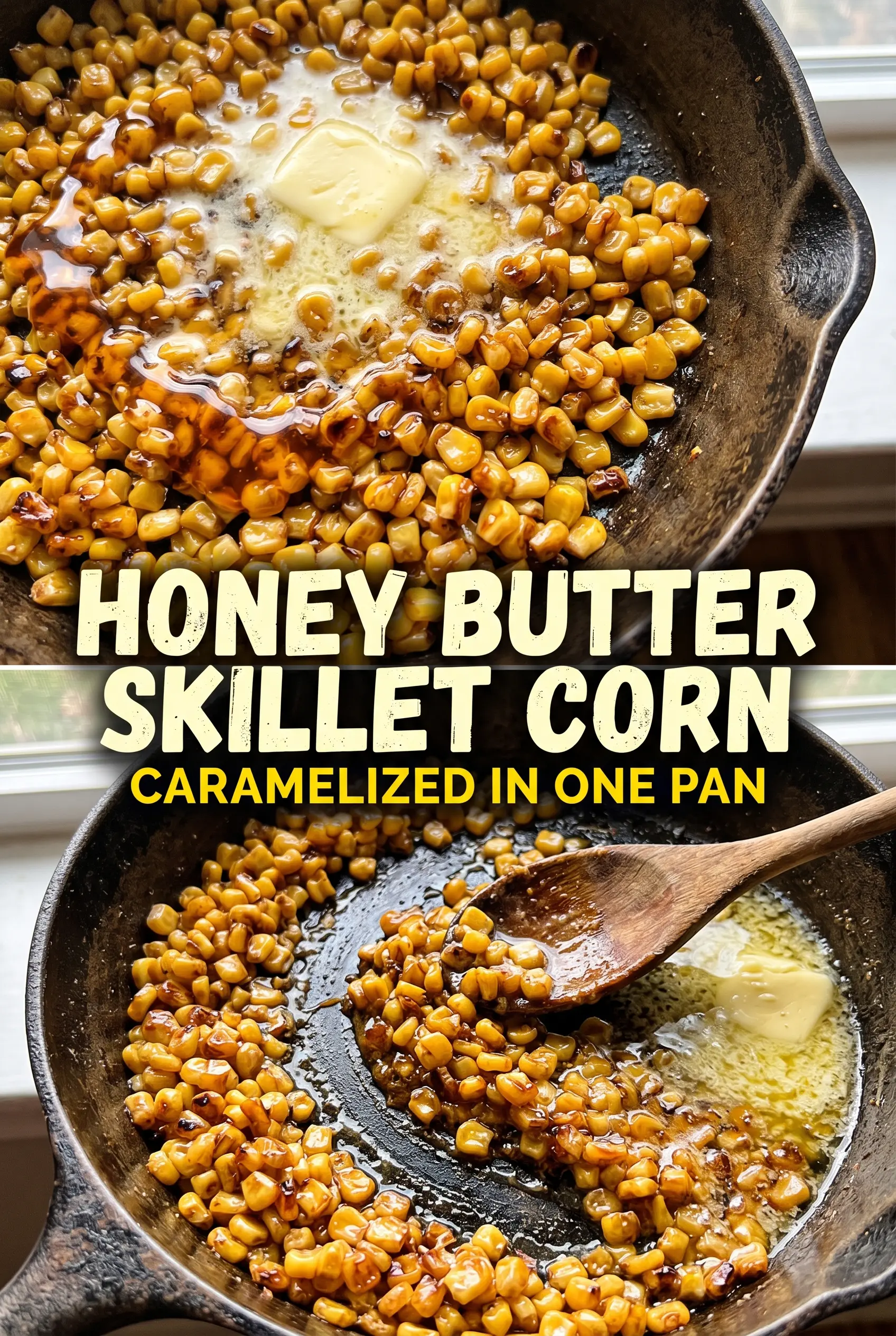
Once the corn has charred in spots, drop the heat to medium and add the remaining butter and honey. Toss until every kernel looks coated and glossy, then season right away with garlic powder, salt, and pepper. The honey only needs about a minute to caramelize slightly. If it stays in the pan much longer, it can go from glossy to sticky and start to taste burnt.
How to Adapt This for Frozen Corn, Herbs, or a Dairy-Free Table
Frozen corn without the soggy finish
Frozen corn works well, but don’t let it thaw into a wet pile before it hits the skillet. Add it straight from frozen or thaw it fully and pat it dry first. Dry kernels blister; damp kernels steam.
Dairy-free version that still tastes rich
Swap the butter for a good plant-based butter that melts cleanly in a skillet. The texture will be close, though the flavor is a little less round than real butter. Choose one with enough fat to brown lightly, not a tub spread that turns greasy.
Use chives, parsley, or both
Chives give a mild onion note that works especially well with the honey butter. Parsley keeps the flavor cleaner and greener. If you have both, use a mix for a fresher finish and a little more visual contrast.
How to make it less sweet
Cut the honey back to 1 tablespoon and add an extra pinch of salt and black pepper. That keeps the skillet coating shiny but pulls the dish toward savory instead of dessert-sweet.
Storage and Reheating
- Refrigerator: Store leftovers in an airtight container for up to 3 days. The glaze will thicken as it chills, and the corn will lose a little of its crisp edge.
- Freezer: It freezes, but the texture softens after thawing. Freeze in a flat layer or small portions, then reheat straight from frozen in a skillet for the best result.
- Reheating: Warm it in a skillet over medium heat with a small pat of butter or a splash of water to loosen the coating. The mistake to avoid is the microwave on high, which makes the kernels rubbery and the honey sauce tighten into a sticky film.
Answers to the Questions Worth Asking
Honey Butter Skillet Corn
Ingredients
Equipment
Method
- Heat a large cast iron skillet over medium-high heat until very hot.
- Add 1 tablespoon of butter and let it melt and foam.
- Add corn kernels in a single layer and cook undisturbed for 3–4 minutes until blistered and golden on one side.
- Stir and cook for another 3–4 minutes until kernels are charred in spots throughout.
- Reduce heat to medium and add remaining butter and honey, tossing to coat.
- Season with garlic powder, salt, and black pepper, then cook for 1 more minute until the honey caramelizes slightly.
- Garnish with fresh chives and serve.