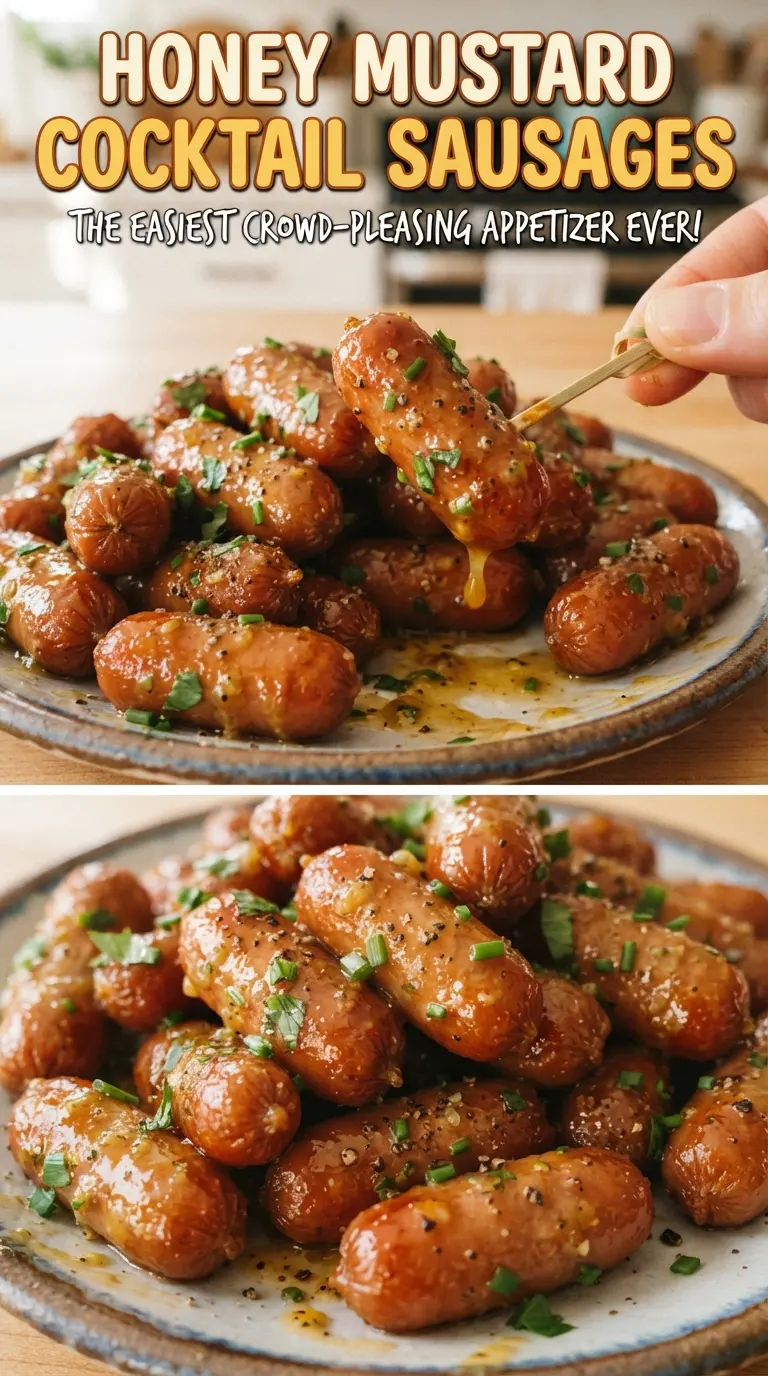
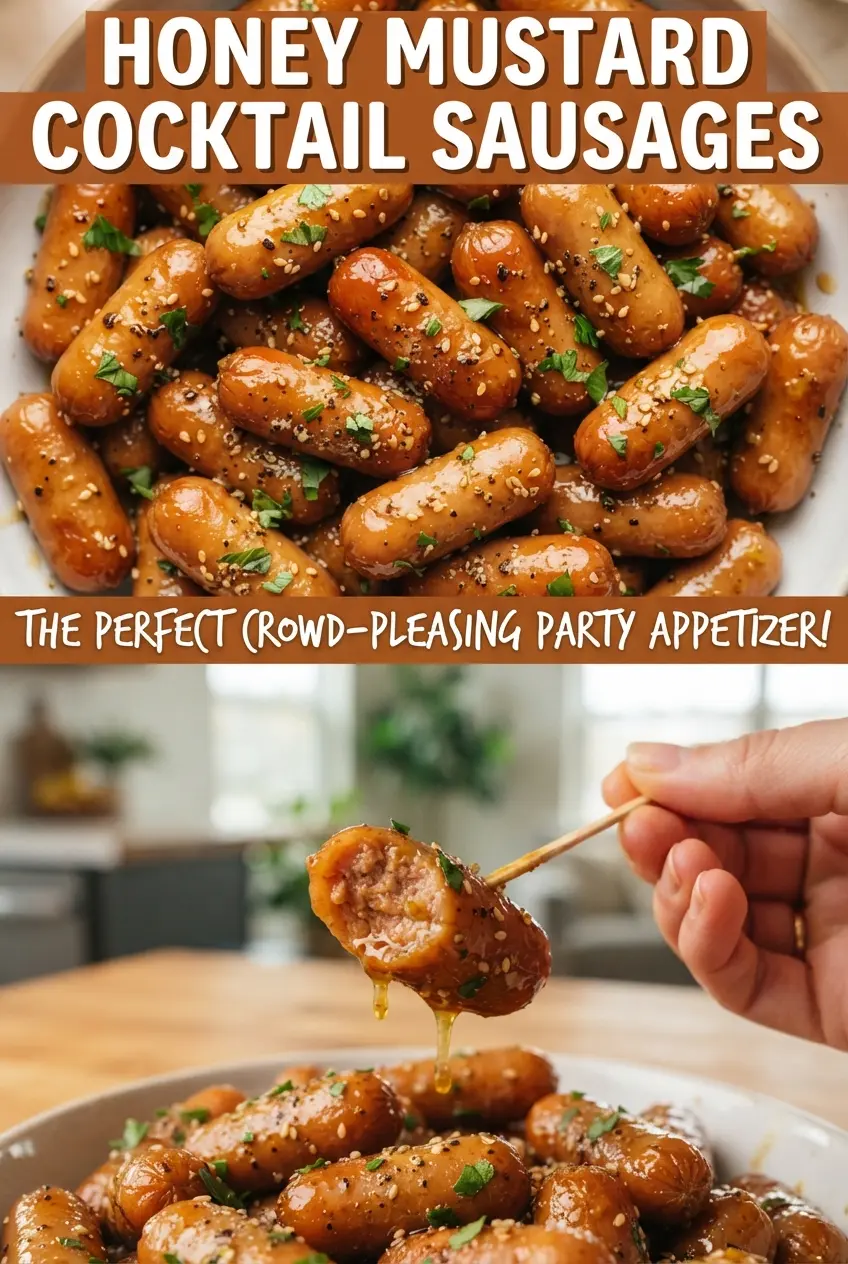
Sticky honey mustard cocktail sausages have a way of disappearing before they ever make it to the serving tray. The glaze clings to each sausage in a shiny, savory-sweet coat, with just enough bite from the mustards to keep the whole thing from tasting flat. What you get here is party food that feels old-school in the best way: fast to make, easy to keep warm, and impossible to leave alone once people start spearing them with toothpicks.
The key is building the glaze in the skillet after the sausages brown. That first step leaves little browned bits behind, and those bits give the sauce a deeper, more cooked flavor than you’d get from just warming everything together. The butter softens the honey long enough for the mustard to bloom, and the soy sauce adds the salty backbone that keeps the sweetness in check. Let the mixture simmer until it turns glossy and coats the back of a spoon; that’s the point where it turns from sauce into a proper sticky glaze.
Below, you’ll find the small details that matter most here: how to keep the glaze thick without burning it, which mustard gives the best texture, and what to do if you need to hold these sausages for a crowd.
The glaze tightened up beautifully in the last few minutes, and the whole pan had that sticky, shiny look I was hoping for. I served them with toothpicks and they were gone before the rest of the appetizers hit the table.
Sticky honey mustard cocktail sausages are the kind of appetizer that vanishes fast, so keep this one handy for game day or any party spread that needs a glossy, toothpick-ready crowd favorite.
The Secret to a Glaze That Clings Instead of Running Off
The difference between a glossy appetizer and a greasy one comes down to timing. If the honey and mustards go in too early, they thin out around the hot sausage and never quite tighten back up. Browning the sausages first gives you a head start on flavor, and it also gives the glaze a little something to grab onto when it reduces.
The other thing worth paying attention to is heat. Once the honey is in the pan, the mixture should simmer gently, not boil hard. A hard boil can scorch the sugars before the sauce thickens, and that leaves you with a bitter edge instead of a sticky finish. Stir often and watch for the moment the glaze starts to pull slightly as you drag a spoon through it.
What Each Ingredient Is Actually Doing in This Recipe
- Primary ingredient (the star) — Quality matters most. Choose the best you can find.
- Cooking medium (oil, butter, or broth) — This carries flavors and prevents dryness.
- Seasonings (salt, pepper, spices, herbs) — Layer flavors so nothing overpowers. Build depth gradually.
- Aromatics (garlic, onion, herbs) — Cook with fat to bloom flavors. Become the foundation.
- Supporting ingredients — Complement the main ingredient without overpowering it.
- Sauce or liquid (if applicable) — Brings flavors together. Balance richness with acid.
- Acid (lemon, vinegar, wine, or other) — Brightens and prevents flat-tasting results.
- Final finish (garnish, glaze, or sauce) — Prevents one-dimensional taste and adds visual appeal.
What Each Ingredient Is Doing in the Skillet
- Cocktail sausages — These bring the salt, fat, and meaty bite that anchor the whole dish. Use a good-quality brand if you can; the glaze can hide some flaws, but it can’t fix a rubbery sausage.
- Honey — This is the gloss and the sweetness. It also thickens as it simmers, which is why the sauce turns sticky instead of staying thin.
- Whole grain mustard — The seeds add texture and a sharper, more rustic mustard flavor. That little bit of crunch makes the glaze feel less one-note.
- Dijon mustard — Dijon smooths everything out and gives the sauce its clean mustard backbone. If you only use whole grain mustard, the glaze can taste a little rough around the edges.
- Soy sauce — This is the salt and umami that keeps the honey from reading as candy-sweet. A tamari swap works well if you need a gluten-free version.
- Butter and garlic — Butter helps carry the glaze and garlic gives the sauce a savory base note. Don’t let the garlic brown; 30 seconds is enough, because it turns bitter fast once the honey goes in.
- Sesame seeds and chives — These are mostly for finish, but they matter. The sesame seeds add a little toastiness and the chives keep the glaze from looking heavy on the plate.
How to Build the Glaze Without Burning the Sweetness
Browning the Sausages First
Start with the butter in a large skillet and let the sausages take on color before anything else goes in. You want them browned, not deeply crusted, so turn them as they cook and listen for that steady, active sizzle. If the pan looks dry, the butter was too hot or the sausages were packed in too tightly; give them room so they brown instead of steam. Those browned edges help the glaze taste cooked and rich once it reduces.
Waking Up the Garlic
Add the garlic only after the sausages are already browned. Thirty seconds in the hot fat is enough to take off the raw edge and perfume the pan. If it starts turning golden, you’ve gone too far, and the sweetness from the honey will make that bitterness stand out more. This is a fast stage, and it should smell warm and savory, not sharp.
Reducing the Honey Mustard
Whisk the honey, both mustards, and soy sauce together, then pour them over the sausages and keep the heat at a gentle simmer. Stir often so the sugars don’t settle and scorch on the bottom of the pan. In about 8 to 10 minutes, the sauce should look thicker, darker, and glossy enough to coat the sausages instead of pooling underneath them. If it still runs like syrup, give it another minute or two; if it starts sticking too aggressively, pull the pan off the heat and stir.
Finishing for the Table
As soon as the glaze turns sticky, scatter over the sesame seeds and chives and serve the sausages warm. The glaze will thicken a little more as it cools, so don’t wait for it to get jammy in the skillet or it can seize up. Toothpicks belong in the serving dish right away, while the glaze is still loose enough to shine.
How to Adapt These for Different Crowds and Diets
Make Them Gluten-Free
Swap the soy sauce for tamari or coconut aminos and check the cocktail sausages for hidden wheat. Tamari keeps the same salty depth, while coconut aminos will taste a little sweeter and softer.
Use All Dijon for a Smoother Sauce
If you don’t have whole grain mustard, use all Dijon instead. The glaze will be smoother and less textured, but it still gets the same tangy backbone and sticky finish.
Turn Them into a Slow Cooker Appetizer
Brown the sausages first, then add everything to a slow cooker and cook on low for 1 to 2 hours until heated through. The sauce won’t reduce as much in the slow cooker, so leave the lid slightly ajar near the end if you want a thicker glaze.
Storage and Reheating
- Refrigerator: Store leftovers in an airtight container for up to 4 days. The glaze will firm up as it chills, which is normal.
- Freezer: These freeze well for up to 2 months. Freeze in a shallow container, then thaw overnight in the refrigerator before reheating.
- Reheating: Warm gently in a skillet over low heat with a splash of water to loosen the glaze. High heat can make the honey scorch before the sausages are hot in the center.
Answers to the Questions Worth Asking
Honey Mustard Cocktail Sausages
Ingredients
Equipment
Method
- Melt butter in a large skillet over medium heat. Add cocktail sausages and brown for 5-6 minutes, turning occasionally until deep golden spots appear.
- Add garlic to the skillet and cook for 30 seconds until fragrant. Stir constantly so it doesn’t brown.
- Whisk honey, whole grain mustard, Dijon mustard, and soy sauce in a small bowl. Pour the mixture over the sausages so they’re coated.
- Simmer for 8-10 minutes over medium heat, stirring often. Cook until the glaze is thick and sticky enough to lightly coat the back of a spoon.
- Sprinkle sesame seeds and chopped fresh chives over the sausages. Turn off the heat and serve warm with toothpicks.