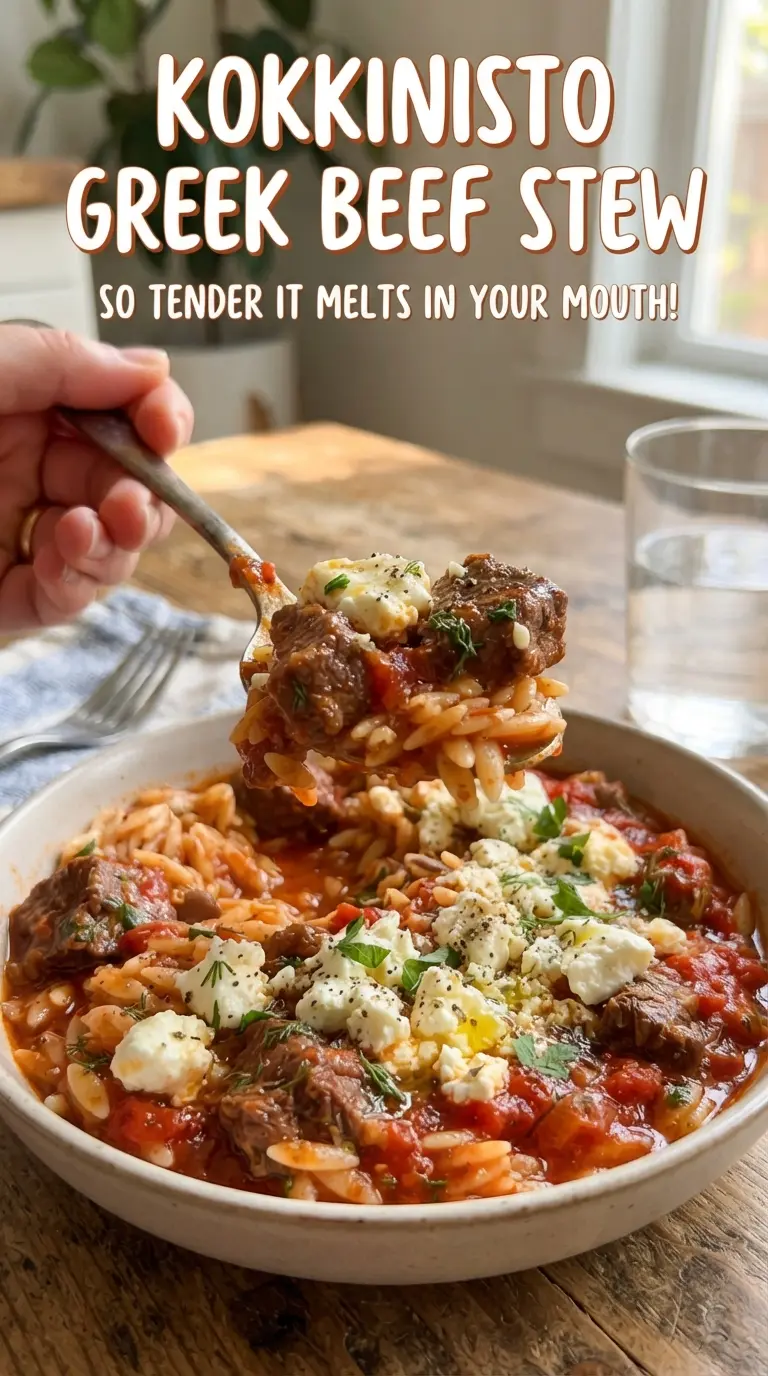
Kokkinisto lands in that wonderful place where the beef turns spoon-tender and the sauce tastes like it spent all afternoon becoming itself. The tomato base cooks down into something rich and rounded, with cinnamon and allspice giving it the kind of warmth that makes the whole pot smell unmistakably Greek. Served over orzo or potatoes, it eats like a true Sunday stew but it doesn’t need a special occasion to earn a spot on the table.
What makes this version work is the layering. Browning the beef in batches builds the savory backbone, then the onions, tomato paste, and wine go into the same pot to pick up every bit of flavor left behind. The cinnamon stick and allspice berries don’t make the stew taste sweet; they give it depth and that classic kokkinisto character that tomato alone can’t deliver. A long, gentle simmer is what turns the chuck roast from firm cubes into soft, shreddable pieces.
Below, you’ll find the small details that matter most here: how dark to brown the meat, when the sauce should look thick enough, and what to do if you’d rather serve it with potatoes instead of orzo.
The beef got meltingly tender and the sauce reduced into this deep cinnamon-tomato gravy that was perfect over orzo. I made it on a Sunday and the leftovers tasted even better the next day.
Save this Kokkinisto Greek Beef Stew for a slow-cooked tomato sauce with tender beef, cinnamon, and feta on top.
The Long Simmer That Turns Tough Beef into Silk
The biggest mistake with a stew like this is stopping the cook too early. Chuck roast starts out stubborn, then it goes through a stage where it looks done but still feels tight, and that’s where people call it finished too soon. Keep going until the meat yields when you press it with a spoon and the sauce has lost its watery shine. At that point, the collagen has had time to melt into the sauce, which is what gives Kokkinisto its body without needing flour.
The other place this recipe can go sideways is the simmer. A hard boil will tighten the beef and make the sauce taste sharp instead of rounded. You want small, steady bubbles breaking around the edges, with the lid slightly ajar so the liquid can reduce. That slow movement is what concentrates the tomato and lets the cinnamon and allspice settle into the background instead of shouting from the pot.
What the Cinnamon, Wine, and Tomato Paste Are Doing Here
- Beef chuck — This cut has enough connective tissue to become tender in a long simmer. Leaner beef will dry out before the sauce has time to develop, so chuck is the cut that gives you the right texture and a richer final pot.
- Tomato paste — Let it cook for a minute with the onions and garlic until it darkens slightly. That step takes the edge off the raw tomato taste and gives the sauce a deeper, more savory base than crushed tomatoes alone can provide.
- Dry red wine — This deglazes the browned bits from the pan and adds acidity that keeps the stew from tasting flat. Use a wine you’d actually drink; cooking wine leaves behind a harsher flavor than a basic table wine.
- Cinnamon stick and allspice berries — Whole spices are the right move here because they perfume the sauce without turning it muddy. Ground spices can work in a pinch, but they’ll bloom more aggressively and are harder to pull back once they go in.
- Crushed tomatoes — Choose good canned tomatoes with a clean, bright flavor. The stew spends hours reducing, so any bitterness or tinny taste in the tomatoes will concentrate along with everything else.
Building the Pot in the Right Order
Brown the Beef in Batches
Season the beef first, then sear it in hot olive oil without crowding the pan. You want a dark brown crust, not gray meat that gives off liquid and steams itself. If the pieces are packed too tightly, they won’t sear; they’ll simmer in their own moisture and the stew will lose a lot of its depth before the tomato even goes in. Work in batches and leave the browned bits in the pot.
Cook Down the Aromatics and Tomato Paste
Once the onions go in, let them soften fully before adding the garlic. The garlic only needs a minute, and the tomato paste should cook long enough to look brick-red and sticky at the bottom of the pan. If the paste stays pale, it can leave the finished sauce tasting raw and metallic. This is the point where the base starts tasting like stew instead of just ingredients in a pot.
Deglaze, Then Let the Sauce Take Its Time
Pour in the wine and scrape the bottom well so every browned bit dissolves into the liquid. Let it bubble for a couple of minutes before the tomatoes go in; that brief simmer cooks off the sharp edge of the alcohol and pulls the flavor together. After that, add the tomatoes, water, spices, sugar, and beef, then cover and keep the heat low. The sauce is ready when it looks thick enough to coat the meat instead of pooling around it.
Finish with the Right Garnish
Remove the cinnamon stick, bay leaves, and allspice berries before serving. They gave up their flavor, and leaving them in the bowl just turns dinner into a surprise hunt. Spoon the stew over orzo or potatoes, then add feta and parsley on top. The feta gives the stew a salty finish that plays against the sweet warmth in the sauce, and the parsley keeps the whole bowl from feeling heavy.
How to Adjust Kokkinisto Without Losing What Makes It Kokkinisto
Serve it with potatoes instead of orzo
Potatoes make the stew even more comforting and catch the sauce in a softer, earthier way. Use waxy potatoes if you want them to hold their shape, or let floury potatoes break down a little for a thicker bowl. Either way, add them during the simmer so they can absorb the tomato and spice.
Make it dairy-free
Skip the feta garnish and finish with extra parsley and a drizzle of olive oil. The stew itself is already dairy-free, so this is an easy adjustment that doesn’t touch the texture of the sauce. You still get the same deep tomato base and warm spice notes.
Use lamb for a richer, more traditional twist
Lamb brings a deeper, more assertive flavor and works well with the cinnamon and allspice. The sauce can handle it, but lamb cooks a little faster than beef chuck, so start checking for tenderness a bit earlier. The finished stew will taste bolder and slightly fattier.
Storage and Reheating
- Refrigerator: Store covered for up to 4 days. The sauce thickens and the flavor gets even deeper overnight.
- Freezer: This freezes well for up to 3 months. Cool it completely first, then portion it into airtight containers with a little extra sauce so the beef doesn’t dry out.
- Reheating: Warm it gently on the stove over low heat with a splash of water if needed. A hard boil can make the beef tough again and push the sauce toward a dull, overcooked taste.
Answers to the Questions Worth Asking
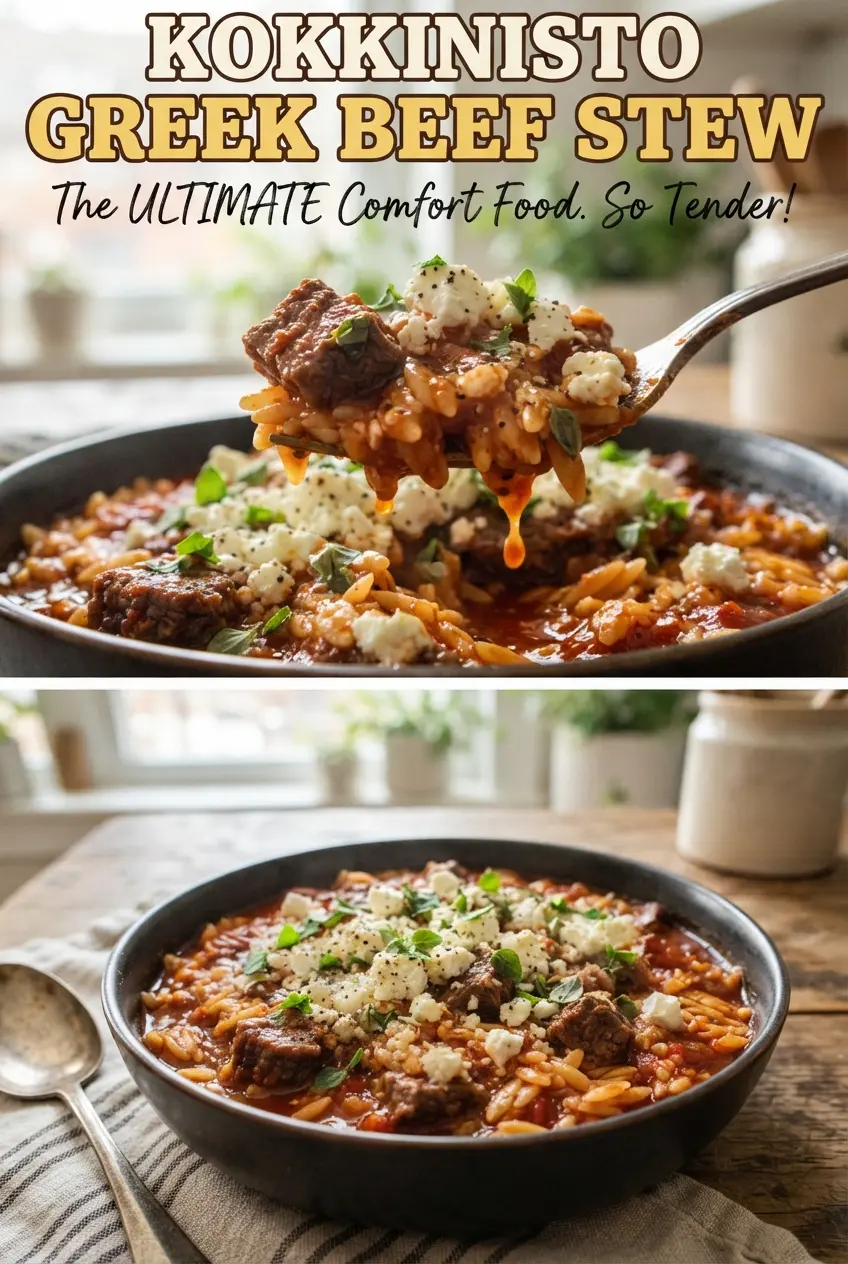
Kokkinisto Greek Beef Stew
Ingredients
Equipment
Method
- Season the beef chuck cubes with salt and black pepper. Heat olive oil in a Dutch oven over medium-high heat and brown the beef in batches until well browned on the outside.
- Add the diced onions to the Dutch oven and cook for 6 minutes until soft, stirring as needed. Stir in the minced garlic and tomato paste and cook for 1 minute, until fragrant.
- Pour in the dry red wine and simmer for 2 minutes, scraping the bottom to loosen browned bits. Cook until the liquid looks slightly reduced and glossy.
- Add the crushed tomatoes and water, then stir in the cinnamon stick, allspice berries, bay leaves, sugar, and the browned beef. Make sure the beef is mostly submerged in the red sauce.
- Cover the Dutch oven and simmer over low to medium-low heat for 1 1/2 to 2 hours, until the beef is very tender and the sauce is thick. The sauce should cling to the meat and the beef should break apart when pressed.
- Remove the whole spices (cinnamon stick, allspice berries, and bay leaves) before serving. Serve the stew over cooked orzo or potatoes, topped with crumbled feta and parsley.