Mocha almond fudge ice cream has the kind of balance that keeps you sneaking back to the freezer for “just one more spoonful.” The espresso base is rich without tasting heavy, the fudge ribbon cuts through with a glossy chocolate hit, and the toasted almonds keep each bite from turning soft or one-note. It eats like a proper ice cream shop flavor, only with stronger coffee depth and a better fudge swirl than most store-bought versions ever manage.
The trick is in how the custard is built. Espresso powder dissolves directly in the warm dairy, which gives the base a clean coffee flavor without gritty grounds or weak brewed-coffee dilution. Cooking the yolks gently to 175°F gives you a smooth, stable custard that freezes creamy instead of icy, and adding the almonds at the end keeps them crisp enough to notice against all that silkiness. The fudge goes in after churning, not before, so it stays ribboned instead of disappearing into the base.
Below, you’ll find the details that matter most: how to keep the custard from curdling, when to add the fudge so it swirls instead of blending, and the small changes that make this work with different nuts or a no-egg base.
The custard turned out unbelievably smooth, and the fudge stayed in thick ribbons instead of melting into the ice cream. Toasting the almonds made a huge difference too — every bite had that little crunch against the coffee base.
Save this mocha almond fudge ice cream for the nights when you want bold coffee, thick fudge ribbons, and crunchy toasted almonds in every scoop.
The Custard Needs Gentle Heat, Not Confidence
Ice cream custard breaks when the yolks get hit too hard or too fast. That’s the failure point here, not the churning. If you dump the hot dairy straight into the eggs, you’ll get sweet scrambled yolks instead of a smooth base. Whisking in a slow stream first tempers the eggs, which means they can thicken the custard evenly when everything goes back to the pan.
The other place people rush is the stovetop finish. Pull the custard at 175°F, not when it looks dramatically thicker in the pot. It should coat a spoon and leave a clean line when you run your finger through it, but it won’t feel pudding-thick yet. That early stop matters because the mixture keeps thickening as it cools.
What Each Ingredient Is Actually Doing In The Bowl
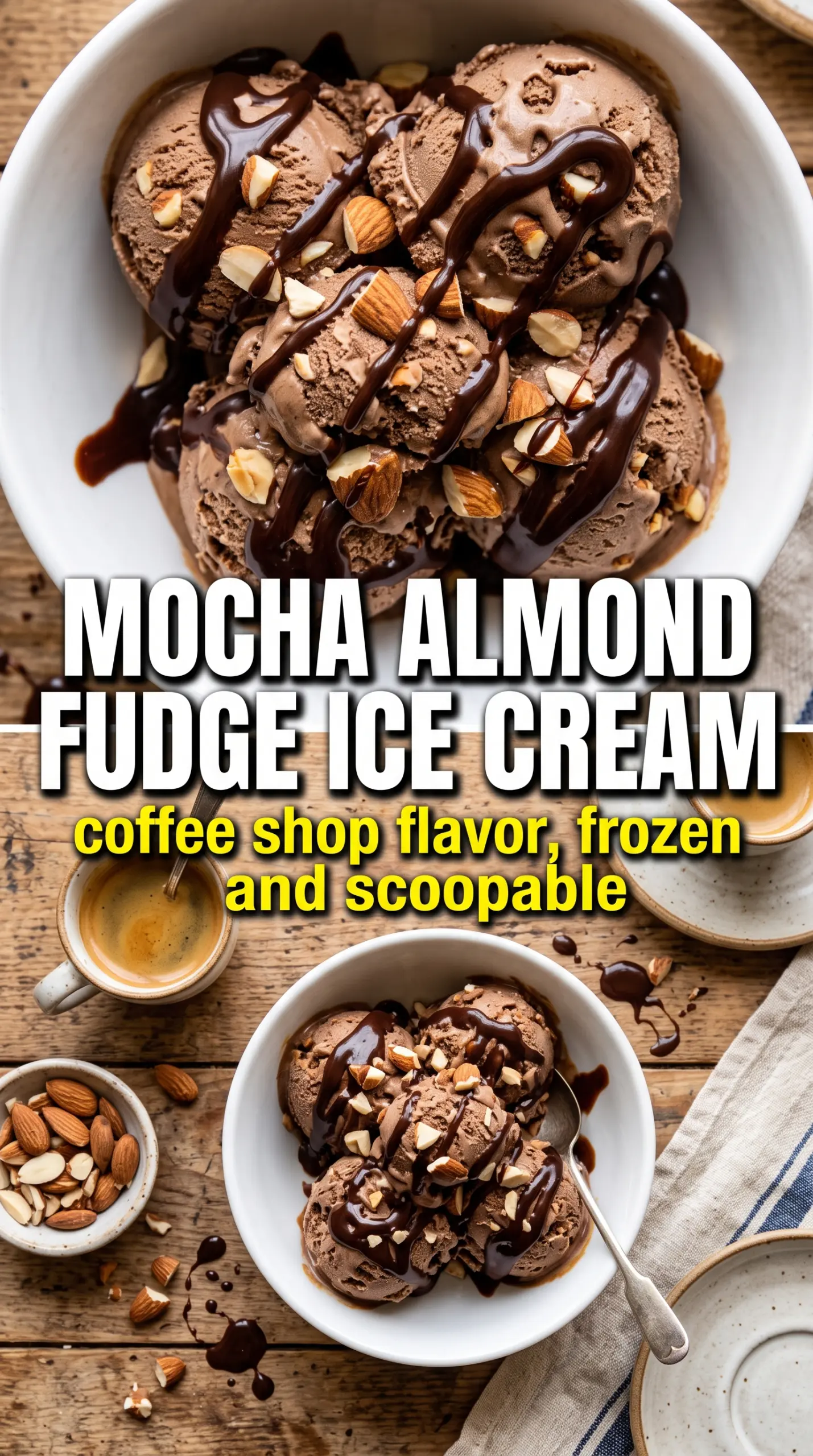
- Heavy cream — This is what gives the ice cream its plush body. You need the fat for a scoop that feels smooth instead of icy, and there isn’t a true substitute if you want the same texture.
- Whole milk — It lightens the base just enough so the finished ice cream doesn’t taste dense or buttery. Lower-fat milk makes the custard less rich and more prone to iciness.
- Instant espresso powder — This is the cleanest way to get bold mocha flavor without watering down the base. Brewed coffee won’t give the same intensity unless you reduce it first, and that adds extra steps.
- Egg yolks — They thicken and stabilize the custard, which is what keeps the ice cream scoopable after freezing. Temper them carefully and cook gently; that’s the difference between silky and grainy.
- Toasted whole almonds — Toasting wakes up the nut flavor and keeps the almonds from tasting flat in the cold base. Chop them if you want smaller bites, but keep them whole or rough-cut for the best crunch.
- Hot fudge sauce — Warm fudge swirls better and stays in defined ribbons when you layer it in after churning. Cold sauce clumps; thin sauce disappears.
Building The Swirl So It Stays Distinct
Tempering The Yolks
Beat the yolks and sugar until they look lighter and slightly thickened, then whisk in the hot cream mixture in a slow stream. The goal is to warm the eggs gradually so they don’t seize. If you see tiny curds at this stage, stop and strain immediately before the pan heat turns them into larger bits. A smooth base now is what gives you a creamy scoop later.
Cooking To The Right Thickness
Return the mixture to the saucepan and cook over medium-low heat, stirring constantly with a spatula and scraping the bottom. It should thicken enough to coat the spoon and reach 175°F. If you go past that point, the yolks can start to taste eggy and the texture turns slightly sandy. Strain the custard into a clean bowl before chilling so any accidental cooked bits don’t survive into the churn.
Chilling, Churning, And Adding The Almonds
Chill the custard completely before it hits the ice cream maker. Warm base = weak freeze and soft churn. Add the toasted almonds during the last few minutes so they distribute without sinking to the bottom or getting shattered by the paddle. When the ice cream is finished, it should look like soft serve with a glossy, even texture.
Layering In The Fudge
Spoon the churned ice cream into a container in layers and drizzle warm fudge sauce between each layer. Drag a knife through just a few times for ribbons; if you over-swirl, the chocolate disappears into the base. The fudge should look streaky and separate when you scoop it, not fully mixed in. Freeze until firm enough to scoop cleanly.
Three Ways To Make This Ice Cream Fit Your Kitchen
Dairy-Free Version With Coconut Cream
Swap the heavy cream and milk for full-fat coconut milk and coconut cream. You’ll get a slightly softer freeze and a faint coconut note, but the espresso and fudge still carry the flavor. Use a dairy-free hot fudge if you want the whole batch to stay plant-based.
No-Churn Shortcut
Fold cooled espresso syrup and chopped toasted almonds into whipped sweetened cream, then layer with fudge in a loaf pan. It won’t have the same custard richness, but it cuts the time down and still gives you the mocha-fudge-almond combination. Freeze it a little longer so it firms up properly.
Nut-Free Swap
Leave out the almonds and use chocolate-covered espresso beans or crushed chocolate cookies for texture instead. You lose the roasted nut contrast, but you keep the crunchy bite against the creamy base. This is the best version if you’re serving anyone with a tree-nut allergy.
Storage and Reheating
- Refrigerator: Not applicable for finished ice cream. Keep the custard base chilled up to 24 hours before churning.
- Freezer: Freeze in an airtight container for up to 2 weeks for the best texture. After that, it can pick up ice crystals and lose some of the fudge ribbon definition.
- Reheating: Let the container sit at room temperature for 5 to 10 minutes before scooping. If you try to force it straight from the freezer, you’ll break the scoop and crush the swirl structure.
Answers To The Questions Worth Asking
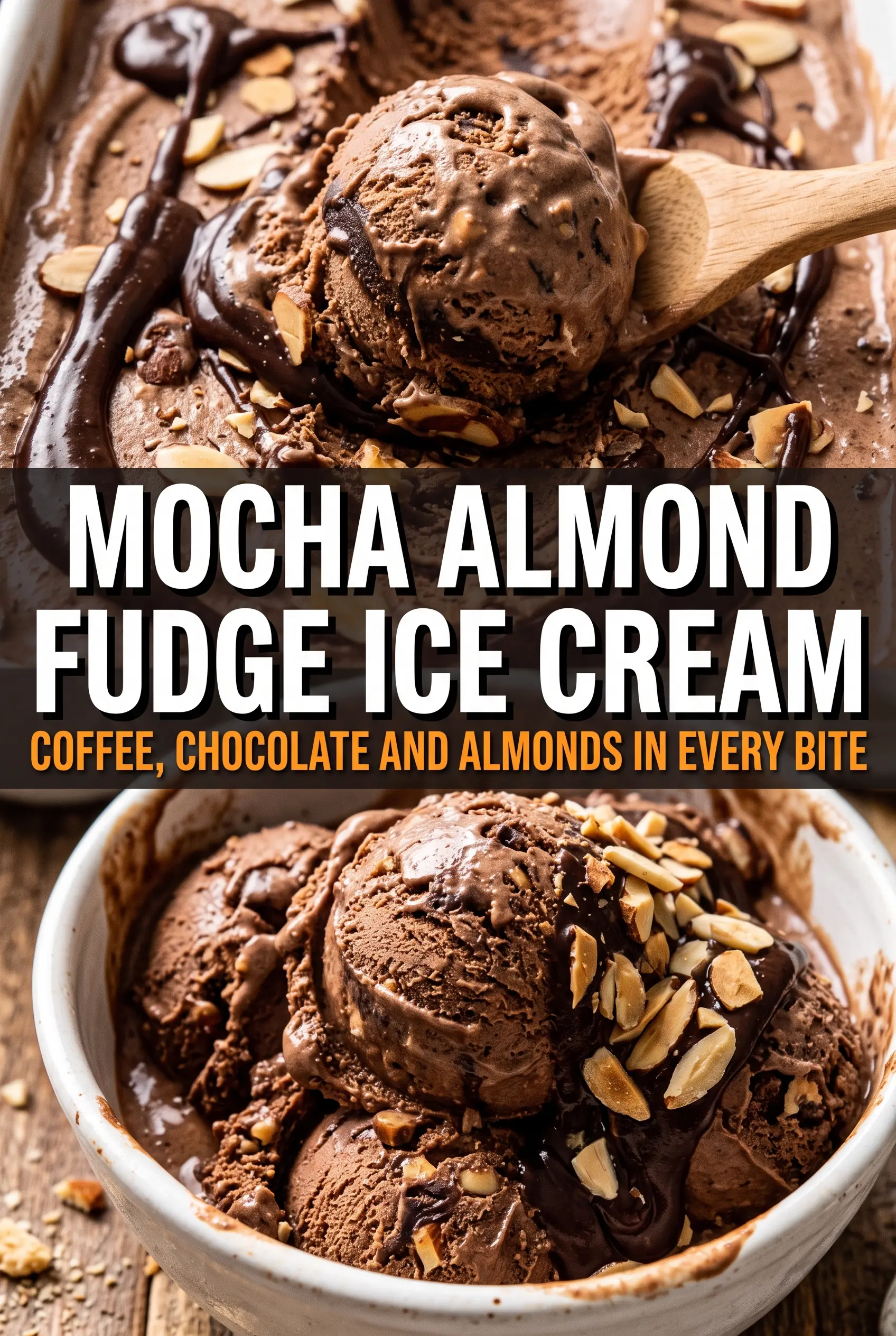
Mocha Almond Fudge Ice Cream
Ingredients
Equipment
Method
- Heat the heavy cream and whole milk in a saucepan until steaming, then whisk in the instant espresso powder until fully dissolved.
- In a bowl, whisk the egg yolks with the granulated sugar until smooth, then slowly whisk the hot cream mixture into the yolks to temper.
- Return everything to the saucepan and cook, stirring constantly, until the custard thickens to 175F.
- Strain the custard into a clean container, then whisk in the vanilla extract and salt.
- Cool the custard completely at room temperature, then chill until very cold.
- Refrigerate the custard for 4 hours, then churn in an ice cream maker according to the manufacturer’s instructions.
- Add the toasted whole almonds during the last 5 minutes of churning so they stay crunchy.
- Layer the churned ice cream into a container, drizzle warm hot fudge sauce between layers, and swirl with a knife to create ribbons.
- Freeze until firm, about 4 hours, before serving.