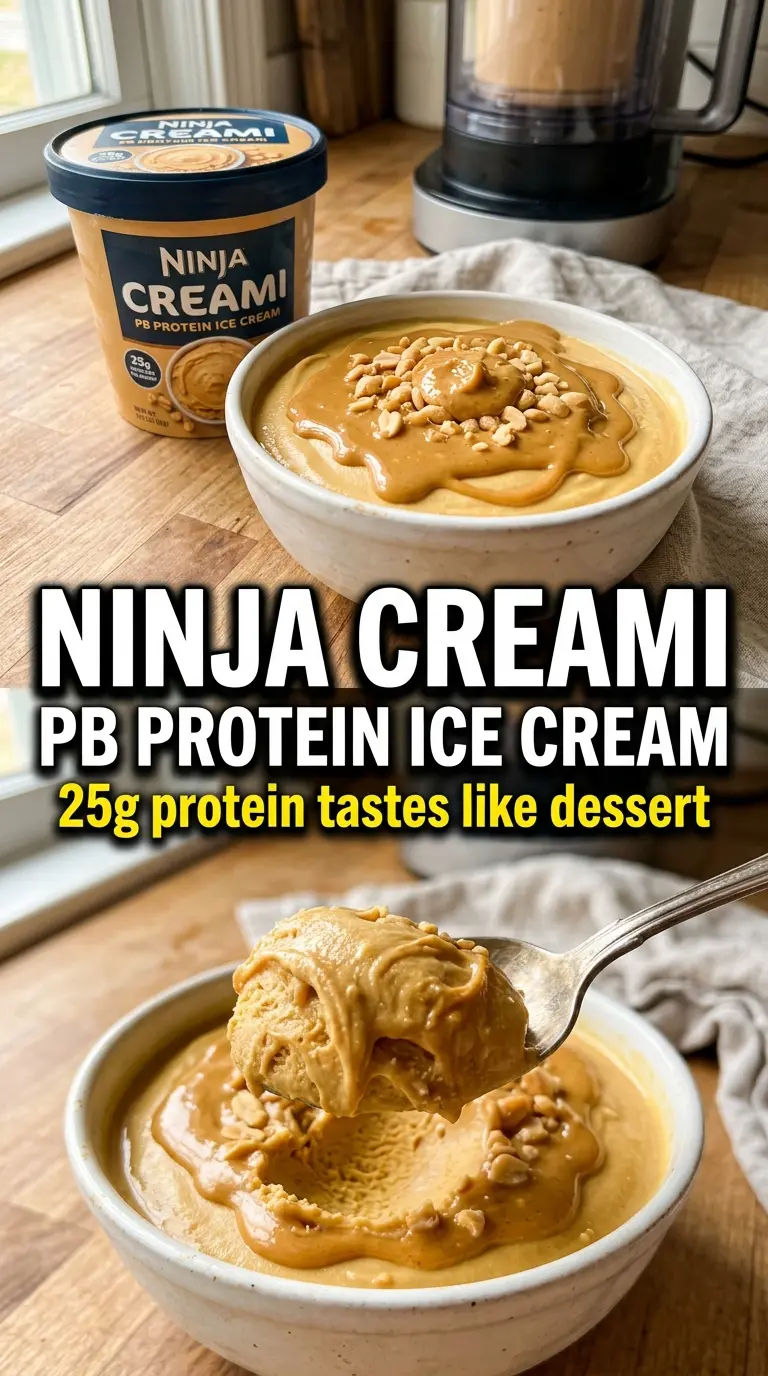
Rich peanut butter ice cream with a dense, silky body is hard to beat, especially when it comes out of the freezer with a real protein punch instead of tasting like flavored ice. This Ninja Creami version lands in that sweet spot: nutty, creamy, and cold enough to eat straight from the pint, but sturdy enough to hold its shape on the spoon. The peanut butter gives it that deep roasted flavor, while the protein powder builds the base so it freezes up thick instead of icy.
The part that matters most is getting the base completely smooth before it ever goes into the freezer. Protein powder clumps turn into little chalky pockets once frozen, and no amount of spinning fixes that. A little sweetener also helps more than people expect, because low-sugar ice cream needs it to keep the texture from freezing into a hard block.
Below, I’ll show you the one spin that usually solves the grainy problem, plus a couple of easy swaps if you want this richer, lighter, or dairy-free.
I followed the 24-hour freeze and it came out thick and creamy instead of icy. The peanut butter flavor is there in every bite, and the mix-ins stayed chunky after the Mix-In cycle.
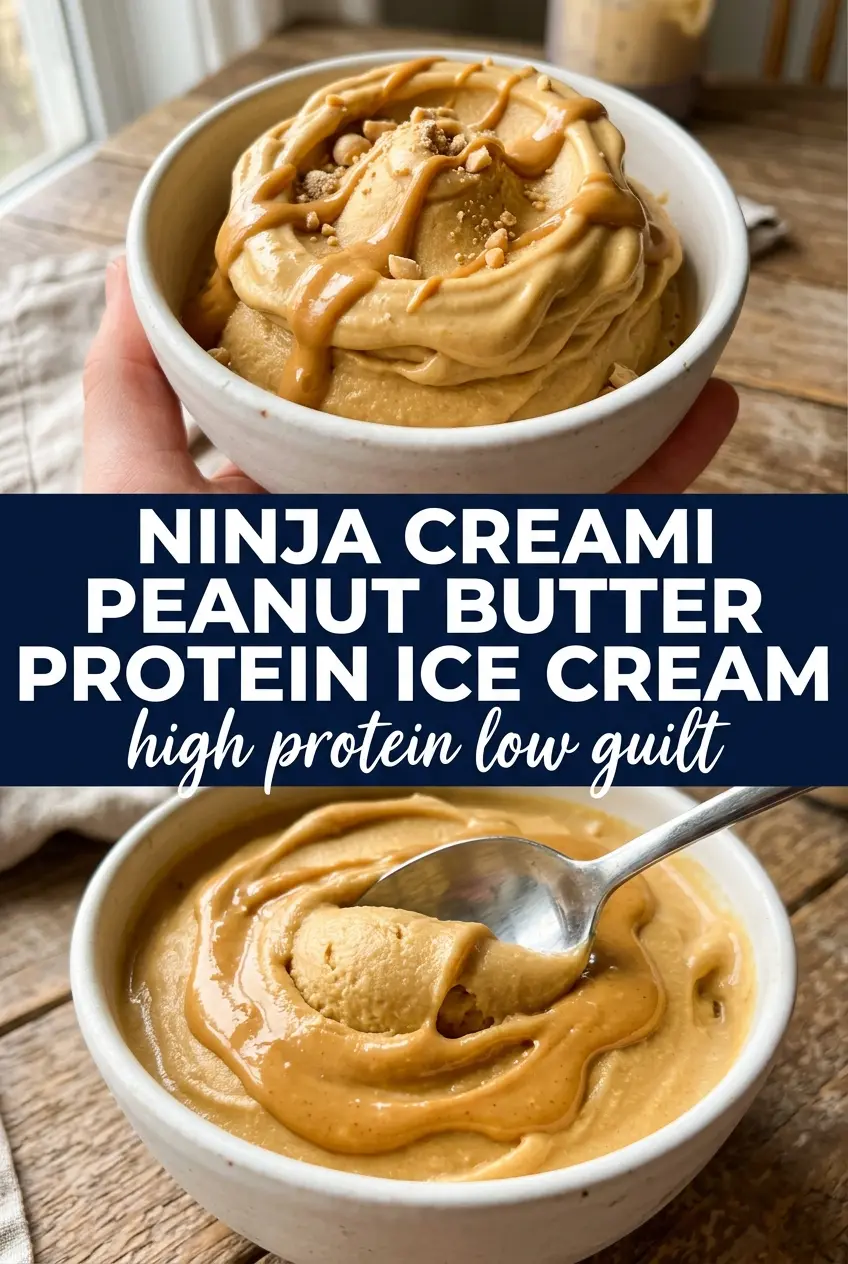
Pin this Ninja Creami Peanut Butter Protein Ice Cream for the nights when you want a thick peanut butter dessert that still feels light and high-protein.
The Base Has to Freeze Hard Before the Creami Can Fix It
The Ninja Creami does its best work on a base that’s frozen solid all the way through. If the center is still soft, the texture turns slushy instead of creamy, and the machine can’t shave it into that smooth ice cream finish. Twenty-four hours is the right call here, not because it sounds good on paper, but because peanut butter and protein powder both thicken the mixture enough that they need a full freeze to set correctly.
The other common failure is expecting one spin to solve everything. Sometimes it does. Other times the pint comes out a little powdery or crumbly, and that usually means the base was either too lean or not mixed completely before freezing. A quick Re-spin with a tablespoon of milk fixes the texture without watering it down, as long as you add just enough to help the blades move.
- Protein powder — This is the ingredient that gives the ice cream its body and turns a basic frozen milk mixture into something scoopable. Vanilla or peanut butter protein powder works best here because both keep the flavor in the right lane. If yours is extra thick or chalky, whisk it with the milk first before adding the peanut butter so it dissolves cleanly.
- Peanut butter — Creamy peanut butter brings the real peanut flavor and adds fat, which keeps the final texture from eating icy. Natural peanut butter works, but the texture can be slightly looser and more oily, so stir it well before measuring. If you use powdered peanut butter, the base will be lighter and less rich.
- Sweetener — A little sugar or monk fruit does more than sweeten; it helps keep the finished ice cream softer straight from the freezer. Sugar gives the best texture, while monk fruit keeps the recipe lower in calories. If you skip it entirely, expect a firmer pint that needs more of a Re-spin.
- Milk — Whole milk gives the creamiest result because the extra fat helps the base freeze smoother. Unsweetened almond milk still works, but the final texture will be a touch lighter and less rich. If you use almond milk, don’t reduce the peanut butter or protein powder, since both carry the texture.
What Each Ingredient Is Actually Doing in This Frozen Dessert
- Base ingredient (cream, milk, or non-dairy) — This provides the foundation and richness. Quality matters.
- Sweetener (sugar, honey, or other) — This sweetens and prevents ice crystals. The ratio is critical.
- Flavor element (vanilla, fruit, or other) — This defines the ice cream personality. Use quality ingredients.
- Stabilizers (egg yolks, cornstarch, or gelatin) — These prevent melting and large ice crystals. Optional but helpful.
- Churning (if using ice cream maker) — This incorporates air and prevents ice crystals. Critical for smooth texture.
- Freezing temperature and time — Proper freezing prevents rock-hard texture. Store at 0°F or below.
- Mix-ins (chocolate, cookies, or fruit) — These add texture and prevent monotone flavor. Add near end of churning.
- No-churn method (if using whipped cream or condensed milk) — This creates creamy texture without ice cream maker. Freezing time is longer.
Mix the Base Smooth, Freeze It Solid, Then Let the Machine Do the Rest
Whisk Out Every Last Clump
Start by whisking the milk, protein powder, peanut butter, sweetener, vanilla, and salt until the mixture looks completely smooth and a little glossy. Don’t rush this part. Protein powder likes to hide in tiny lumps that freeze into chalky specks, and once they’re in the pint, they stay there. If the peanut butter is stiff, warm it just enough to stir easily before mixing it in.
Freeze the Pint Without Disturbing It
Pour the base into the Ninja Creami pint container and freeze it level for 24 hours. A tilted pint freezes unevenly and gives the blade a harder time, which can leave one side fluffy and the other side dense. Put the lid on before it goes into the freezer so the top doesn’t dry out or pick up freezer odors.
Spin, Judge the Texture, Then Decide on the Re-Spin
Run the Lite Ice Cream setting first and look at the surface before you decide it’s done. If it comes out crumbly or sandy, that’s not a failure; it just means the base needs a little help moving. Add 1 tablespoon milk, then Re-spin. Stop as soon as it turns creamy, because too much extra liquid pushes it back toward soft-serve instead of thick ice cream.
Fold in the Mix-Ins at the End
Use the Mix-In setting for peanut butter chips or chopped peanut butter cups so they stay in distinct pieces instead of melting into the base. Add them after the texture is already smooth. If you put mix-ins in too early, they get broken down and the ice cream loses that little crunch in the final bite.
Three Ways to Adjust the Peanut Butter Protein Base
Dairy-Free With Almond Milk
Use unsweetened almond milk exactly as written and keep the peanut butter in place for richness. The result is a lighter ice cream with a slightly less creamy finish than whole milk, but the peanut flavor still comes through clearly. If you want to offset the leaner texture, use the full amount of peanut butter and don’t skip the Re-spin with a small splash of milk if needed.
Lower-Sugar Version
Use monk fruit sweetener instead of sugar for a lower-carb pint. The texture will be a little firmer because sugar helps keep frozen desserts softer, so plan on needing the Re-spin more often. That tradeoff is worth it if you want a protein dessert that stays lighter on calories and carbs.
Chunky Peanut Butter Cup Finish
Swap the peanut butter chips for chopped mini peanut butter cups if you want a dessert-like finish. They melt a little at the edges during the Mix-In cycle, which gives each bite a softer, candy-bar feel. Use them only at the end, or they’ll disappear into the base and you’ll lose the texture contrast.
Storage and Reheating
- Freezer: The frozen base keeps well for up to 2 weeks before the texture starts to get dull and a little icy. For the best result, freeze it flat, covered, and spin it on the day you want to eat it.
- Reheating: This dessert isn’t meant to be reheated. If it sits out too long, the edges soften fast while the center stays firm, so serve it right after the Mix-In cycle or after a quick Re-spin.
Answers to the Questions Worth Asking
Ninja Creami Peanut Butter Protein Ice Cream
Ingredients
Equipment
Method
- Whisk milk, protein powder, peanut butter, sweetener, vanilla extract, and salt together until very smooth, ensuring no protein powder clumps remain.
- Pour the mixture into the Ninja Creami pint container and freeze for 24 hours.
- Process on the Lite Ice Cream setting first; if it looks grainy, add 1 tablespoon milk and Re-spin on the same setting.
- Select the Mix-In setting and fold in peanut butter chips or mini peanut butter cups until evenly distributed.
- Serve immediately for the thick, creamy texture while it’s at peak scoopability.