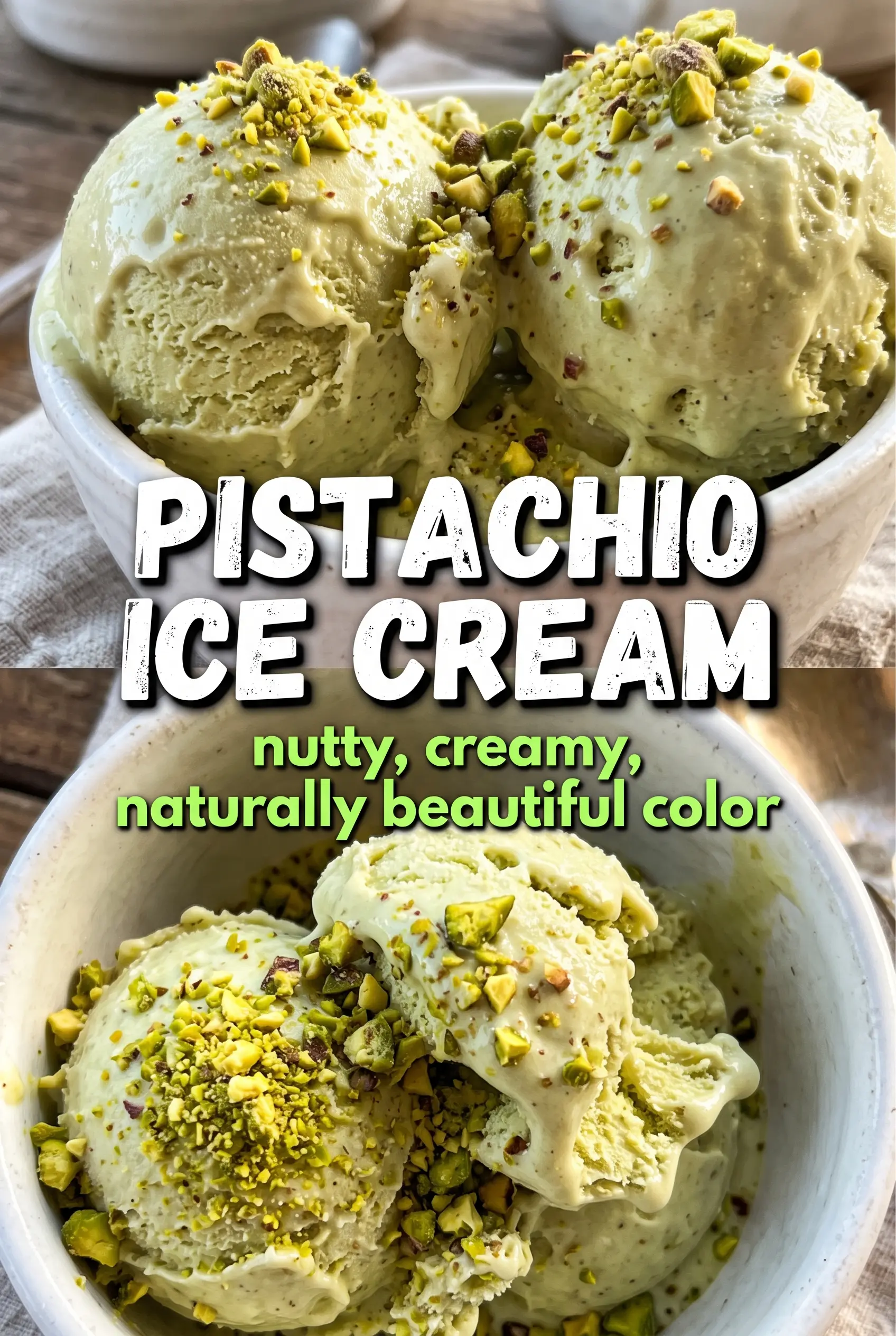
Pistachio ice cream earns its place when it tastes like actual pistachios, not just sweet cream with a green tint. The best versions have a quiet richness, a custardy body, and that roasted nut flavor that lingers after the first spoonful. When it’s done right, the texture turns dense and scoopable with little bits of pistachio tucked through every bite.
This version leans on a cooked custard base, which gives it a smoother, fuller mouthfeel than a simple no-cook mix. Toasted pistachios bring out a deeper flavor before they’re blended into a paste, and the egg yolks help carry that flavor without making the ice cream heavy. A little almond extract sharpens the pistachio note; it doesn’t make the ice cream taste like marzipan if you keep it subtle.
Below, I’ll show you the one temperature that matters most, why the paste has to be blended more finely than you might expect, and how to keep the finished ice cream from turning icy in the freezer.
The custard came out silky and the pistachio flavor was deep, not artificial. Churning it after a full chill made it scoop beautifully, and the chopped pistachios at the end gave it the best crunch.
Love the roasted pistachio flavor and creamy custard base? Save this pistachio ice cream for the next time you want a homemade scoop with real nutty depth.
The Part That Keeps Pistachio Flavor from Turning Flat
The biggest mistake with pistachio ice cream is relying on color and sugar instead of actual nut flavor. Pistachios are subtle, and once they’re mixed with dairy, they can taste dull if they haven’t been toasted first. Toasting wakes up the oils in the nuts, which gives the finished ice cream a deeper, rounder flavor and keeps it from tasting one-note.
The custard base also matters here because it gives the pistachio paste something rich to sit in. If you cook the egg mixture too hard, it turns grainy before the pistachios ever have a chance to shine. Pull it off the heat at 175°F, not after it boils, and strain it if you want the smoothest texture possible.
What Each Ingredient Is Actually Doing in This Ice Cream
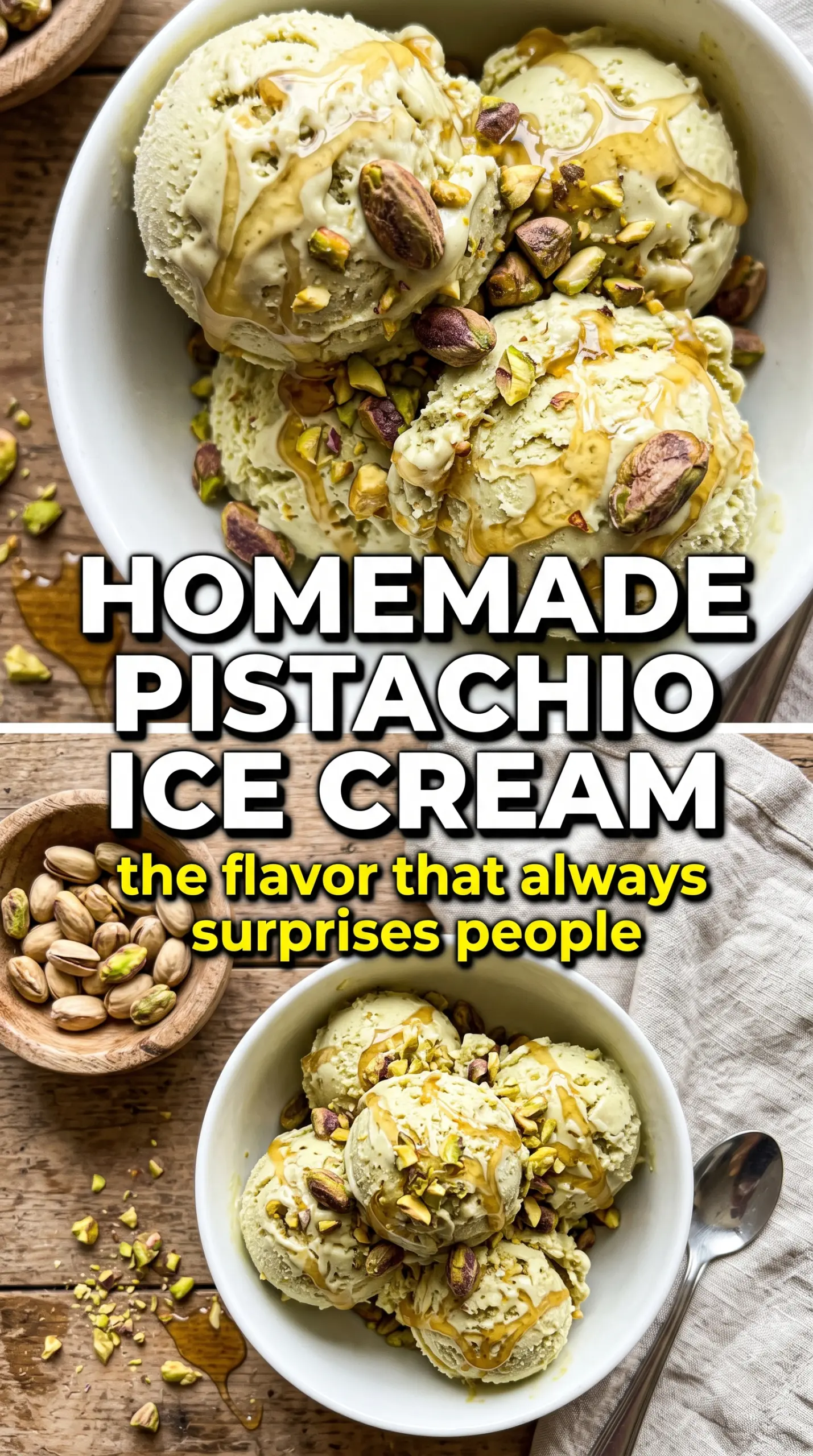
- Toasted pistachios — These are the backbone of the recipe. Toasting deepens the flavor before blending, and if your pistachios taste pale or stale, the ice cream will taste the same. Unsalted shelled pistachios are easiest here, and if you only have raw pistachios, toast them until fragrant and just starting to deepen in color.
- Heavy cream and whole milk — The cream gives body and a plush finish, while the milk keeps the ice cream from feeling greasy. You need both for the right balance. Swapping in lower-fat dairy makes the texture leaner and icier, which is the first thing people notice in frozen custard.
- Egg yolks — The yolks turn this into a real custard ice cream with a smoother, denser scoop. They also help emulsify the pistachio paste into the base. Don’t use whole eggs here; the whites make the texture less rich without giving you anything useful in return.
- Almond extract — This is the small ingredient that makes the pistachio flavor read more clearly. Use it sparingly, because too much takes over fast. Vanilla alone won’t give you that same lift.
- Chopped pistachios — These go in after churning for texture. Fold them in once the ice cream is soft but already thick, so they stay distributed instead of sinking. If you want a smoother scoop, you can skip them, but you lose that nice crunch.
Building the Custard and Churning It at the Right Moment
Blend the Pistachios into a Real Paste
Run the toasted pistachios in a food processor until they turn into a fine paste, not just crumbs. At first they’ll look dry and sandy, then they’ll start clumping as the natural oils release. If you stop too early, the ice cream will taste scattered instead of integrated, and you’ll miss that full pistachio flavor in the base.
Cook the Custard Without Scrambling the Yolks
Whisk the sugar into the yolks until the mixture looks lighter and slightly thickened, then slowly stream in the hot cream and milk while whisking. That gradual addition keeps the eggs from cooking too fast. Return everything to the saucepan and cook over medium-low heat, stirring constantly, until it reaches 175°F and lightly coats the back of a spoon. If it starts to look curdled, the heat was too high; take it off the burner immediately and strain it.
Mix in the Flavorings While the Base Is Still Warm
Once the custard is off the heat, whisk in the pistachio paste until it disappears into the base. Then add the almond extract, vanilla, salt, and a drop of green coloring if you want that classic pale green color. This is the point where the mixture should smell unmistakably nutty and custardy. If you add the extracts too early, some of the aroma gets lost during cooking.
Chill Fully Before Churning
Strain the base into a clean bowl if you want it extra smooth, then chill it completely in the refrigerator for at least 4 hours. Cold base churns faster and freezes with smaller ice crystals. If you rush this and pour in a warm custard, the machine can’t trap air properly, and the ice cream turns dense in the wrong way.
Fold in the Chopped Pistachios at the End
Churn until the ice cream looks thick and holds soft peaks, then fold in the chopped pistachios during the last minute or two. They should be evenly scattered, not clumped in one corner. Transfer the churned ice cream to a freezer container and freeze until firm enough to scoop cleanly.
How to Adapt This Pistachio Ice Cream Without Losing the Good Part
Dairy-Free Pistachio Ice Cream
Use full-fat canned coconut milk in place of the cream and milk, then keep the custard technique the same. The result is still rich, but you’ll get a light coconut note in the background and a slightly softer freeze. It works best if you want the pistachio flavor to stay front and center without dairy.
No Green Coloring
Leave it out if you want the natural pale beige-green color of real pistachios. The ice cream will still taste the same, and honestly, I think the muted color looks more elegant. The color is only for visual cue, not flavor.
Extra Crunchy Pistachio Swirl
Add a handful of extra chopped pistachios with a pinch of sugar during the final fold if you want more texture in every bite. You’ll get more crunch, but it also makes scooping a little rougher after freezing overnight. I like this version for serving right after a short firming freeze.
Storage and Reheating
- Refrigerator: The custard base can sit covered in the fridge for up to 2 days before churning, and that rest helps the flavor deepen.
- Freezer: The churned ice cream keeps well for about 2 weeks. Press parchment or plastic wrap directly onto the surface to limit ice crystals.
- Reheating: No reheating needed. For the best scoop, let it sit at room temperature for 5 to 10 minutes before serving; trying to force a spoon through it straight from the freezer usually shatters the texture.