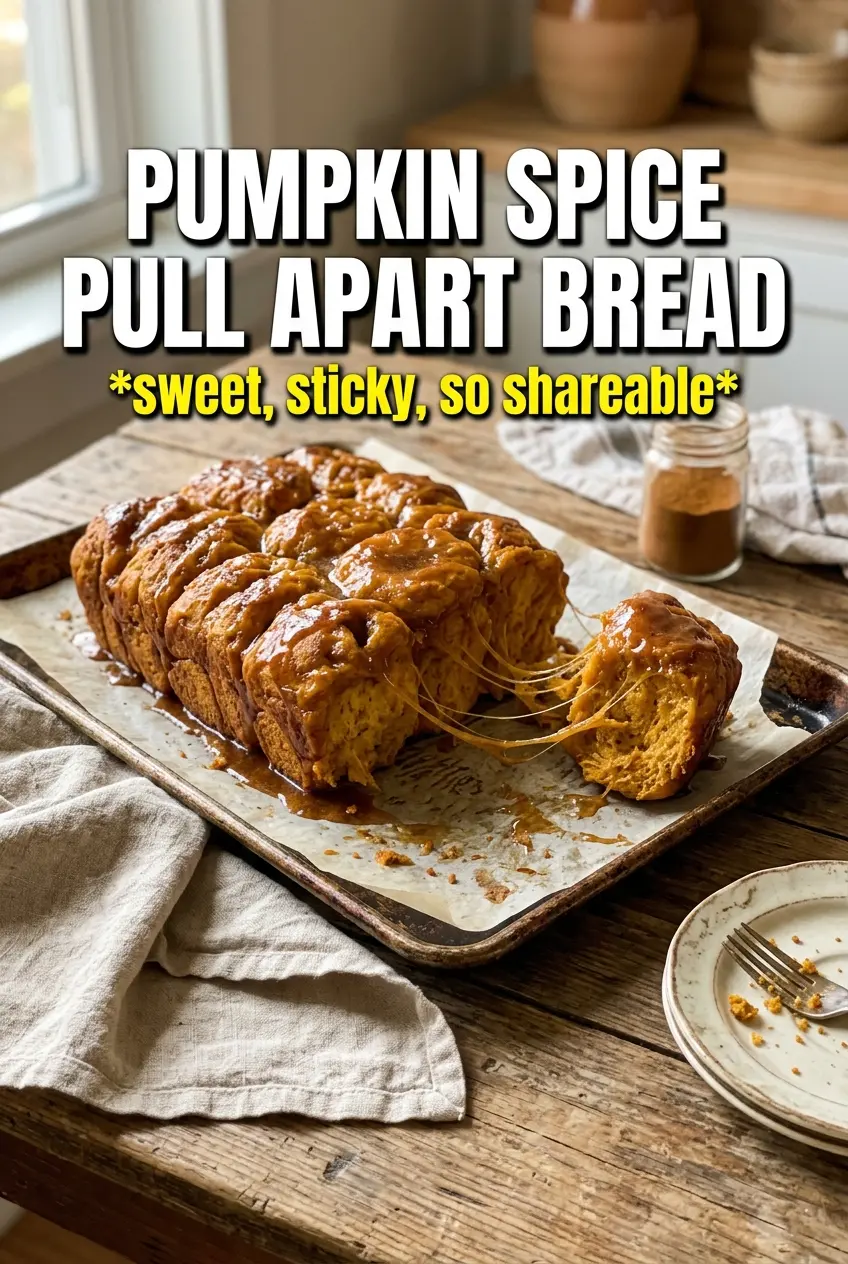
Golden layers of pumpkin spice pull apart bread come out of the oven soft in the center, lightly crisp at the edges, and packed with buttery cinnamon-sugar filling in every tearable section. The best part is the contrast: tender pumpkin dough on the outside, warm spiced pockets inside, and a cream cheese glaze that melts into all the cracks instead of sitting on top like a thick frosting.
This version works because the dough stays rich without becoming heavy. Pumpkin puree adds moisture and a little natural softness, but the bread still rises well because the flour amount is balanced and the yeast gets plenty of time to do its job. Brushing each layer with melted butter before the filling goes on keeps the sugar from disappearing into the dough, so every stack bakes up with defined, pull-apart edges.
Below, I’ve included the small details that keep the loaf from turning dense or gummy, plus a few smart swaps if you need to work around what’s in your pantry. If you’ve ever had layered bread collapse in the pan or bake up dry on the outside, this is the version worth reading closely.
The layers stayed separate instead of melting together, and the cream cheese glaze soaked into the warm bread just enough. I had to tent it near the end, but the loaf came out soft all the way through with those sticky cinnamon edges I wanted.
Save this pumpkin spice pull apart bread for a cozy breakfast loaf with buttery layers and cream cheese glaze.
The Trick to Keeping the Layers Soft, Not Soggy
The biggest failure point in pull apart bread is overloading the dough with filling before the structure has a chance to set. Here, the dough gets rolled into a thin rectangle, brushed with butter, and dusted evenly so the sugar melts into distinct ribbons instead of pooling in the pan. That matters because pumpkin dough is naturally softer than plain dough, and too much moisture in one spot can turn the center gummy.
Another thing that helps is the second rise after the stacks go into the loaf pan. Those 30 minutes give the layers space to expand upward before baking starts, which keeps the bread light enough to pull apart cleanly. If you rush that part, the loaf will still bake, but it will bake tighter and the layers won’t separate the way they should.
What Each Ingredient Is Actually Doing in This Pumpkin Dough
- Warm milk — This wakes up the yeast and gives the dough a softer crumb than water would. It should feel warm, not hot; too much heat can kill the yeast before the dough even starts.
- Pumpkin puree — Use plain pumpkin puree, not pumpkin pie filling. The puree adds moisture and color without extra sugar or spices throwing off the balance.
- Butter — Melted butter in the dough keeps the loaf tender, and the extra butter brushed between layers helps the filling cling. You can use salted butter in a pinch, but unsalted gives you better control over the final taste.
- Pumpkin pie spice plus cinnamon — The pumpkin pie spice gives the dough background warmth, while the cinnamon in the filling gives you that stronger bakery-style swirl flavor. If you only use one or the other, the bread tastes flatter.
- Cream cheese — This glaze works because the tang cuts through the sweet filling. Full-fat cream cheese gives the smoothest glaze; low-fat versions can look a little thin and taste sharper.
How to Build the Loaf So It Puffs Instead of Collapsing
Waking Up the Yeast
Start with milk that feels warm to the touch, then stir in the yeast and sugar until the mixture looks foamy. That foam is your sign the yeast is alive and ready. If nothing happens after several minutes, the milk was probably too hot, the yeast was old, or both. Add the butter, egg, and pumpkin puree after the yeast is active so the fat and moisture don’t slow it down before it gets going.
Kneading Until the Dough Springs Back
Once the flour, pumpkin pie spice, and salt go in, knead for 7 to 8 minutes until the dough looks smooth and slightly tacky, not wet and sticky. Pumpkin dough usually stays softer than white bread dough, so don’t chase a dry feel by dumping in too much extra flour. If it turns stiff, the loaf will bake up dense instead of airy.
Layering the Filling the Right Way
Roll the dough into a 12×16 rectangle and brush the surface with melted butter before adding the sugar mixture. That butter layer helps the filling stay put when you cut and stack the strips. Sprinkle the filling all the way to the edges, but don’t mound it in the middle, or it will leak out as the bread rises and bakes.
Stacking for Pull-Apart Sections
Cut the rectangle into four long strips, stack them, then cut the stack into six squares. Turn each stack on its side in the greased loaf pan so the layered edges face up and down. That’s what gives you those pull-apart ridges after baking. If the pieces look cramped, the loaf pan is probably overfilled, which can stop the center from cooking through.
Baking Until the Center Is Set
Bake at 350°F until the top is deep golden and the center no longer looks wet. Tent the loaf with foil about halfway through if the top is browning faster than the middle is baking. This bread is done when it smells deeply caramelized and a tester comes out without raw dough, but a few sticky sugar streaks are fine. Glaze it while warm so the cream cheese icing melts into the cracks instead of sitting in a thick layer on top.
How to Adapt This Pumpkin Spice Pull Apart Bread Without Ruining the Texture
Dairy-Free Version
Use plant milk and a neutral dairy-free butter substitute in both the dough and the filling. The bread will still rise and layer well, but the glaze won’t have quite the same tang unless you use a dairy-free cream cheese that tastes rich enough on its own.
Make It Ahead for a Slower Morning
You can shape the loaf the night before, cover it tightly, and refrigerate it after the second rise starts. In the morning, let it sit at room temperature until it looks puffy again before baking. Cold dough baked straight from the fridge takes longer in the oven and can leave the center underdone while the top browns.
Extra-Spiced Filling
If you like a stronger spice bite, add another 1/2 teaspoon cinnamon or a pinch of cloves to the filling. That pushes the loaf more toward a classic bakery spice bread, but don’t overdo the cloves or they’ll take over the pumpkin.
Gluten-Free Note
A one-to-one gluten-free flour blend can work, but the dough will be softer and harder to stack cleanly. Chill it before shaping so the layers hold together better, and expect a slightly more delicate crumb than the original version.
Storage and Reheating
- Refrigerator: Store covered for up to 4 days. The bread softens a little as it sits because of the glaze, but the layers still hold.
- Freezer: Freeze the baked loaf without glaze, well wrapped, for up to 2 months. Thaw overnight in the refrigerator before reheating and glazing.
- Reheating: Warm slices in the microwave for 15 to 20 seconds or in a 300°F oven until heated through. Don’t blast it too long or the edges turn dry while the center stays cold.
Answers to the Questions Worth Asking
Pumpkin Spice Pull Apart Bread
Ingredients
Equipment
Method
- Warm the milk and activate the yeast by stirring in the sugar until foamy, about 5 minutes. The surface should look bubbly and thick, indicating the yeast is working.
- Whisk in the melted butter, egg, and pumpkin puree until smooth. Stop when the mixture looks uniform and slightly opaque.
- Add the flour, pumpkin pie spice, and salt and mix until a shaggy dough forms. Knead by hand until the dough is smooth and elastic, about 7-8 minutes.
- Place the dough in a lightly greased bowl, cover, and rise for 1 hour. It should nearly double in size and spring back slowly when gently pressed.
- Roll the dough into a 12x16 rectangle on a lightly floured surface. Keep it even so the layers bake uniformly.
- Brush the rectangle with melted butter and sprinkle the filling mixture evenly over the top. The filling should cover the surface in a consistent layer.
- Cut the dough into 4 lengthwise strips, then stack the strips. Align the edges so you get clean, even sections.
- Cut the stacked dough into 6 square stacks. You should have 6 compact stacks ready to be placed in the pan.
- Place the stacks on their sides in a greased 9x5 loaf pan. Space them snugly so the pull-apart sections form as they rise.
- Cover and let rise for 30 minutes. The dough should puff up and fill out the pan noticeably.
- Bake at 350F for 35-40 minutes until the top is golden. Tent with foil halfway through to prevent over-browning while the center finishes baking.
- Whisk cream cheese, powdered sugar, milk, and vanilla to make a pourable glaze. Drizzle over the bread while warm so it seeps into the layers.