Steaming ramen made over a campfire has a way of tasting bigger than the ingredients list. The noodles stay slurpable, the broth picks up a little smoke from the fire, and the eggs turn the whole pot into a meal that feels comforting without asking for much cleanup. It’s the kind of campsite dinner that disappears fast because it lands exactly where you want it: hot, salty, filling, and easy to make with one pot.
The trick is timing. The noodles need enough time to loosen before the eggs go in, but not so much that they turn soft and bloated while you’re waiting for everything else to catch up. I reserve the seasoning packets until the end because boiling them with the noodles dulls the broth and can make the salt level harder to control. Frozen vegetables are the other smart shortcut here — they thaw fast in the hot water and give the pot some color and texture without any chopping at the campsite.
Below, I’ve included the small details that keep camp ramen from getting mushy, plus a few ways to adapt it if you want it richer, spicier, or a little more substantial after a long day outside.
The eggs set up perfectly in the broth and the noodles stayed springy instead of turning into mush. I added a little extra soy sauce at the end and my kids asked for it again the next night at camp.
Camping ramen with eggs and vegetables is the kind of one-pot meal worth keeping on hand for the next fire-pit dinner.
The Trick to Keeping Camp Ramen Brothy Instead of Blown Out
Instant ramen only stays good over a fire if you treat it like a fast-cooking noodle soup, not a pot of pasta. The biggest mistake is letting the noodles sit too long in boiling water before the eggs go in. They keep softening even after the heat comes off, so pulling the pot when the noodles are just tender is the difference between a bowl with body and a bowl that turns slack.
Another thing that matters here is the seasoning packet timing. If you add it early, the broth can taste flat and overly salty before the noodles finish cooking. Stir it in at the end, when the eggs are set and the noodles are right where you want them, so the broth stays bright and the seasoning tastes clean.
What the Instant Noodles, Eggs, and Frozen Vegetables Are Actually Doing
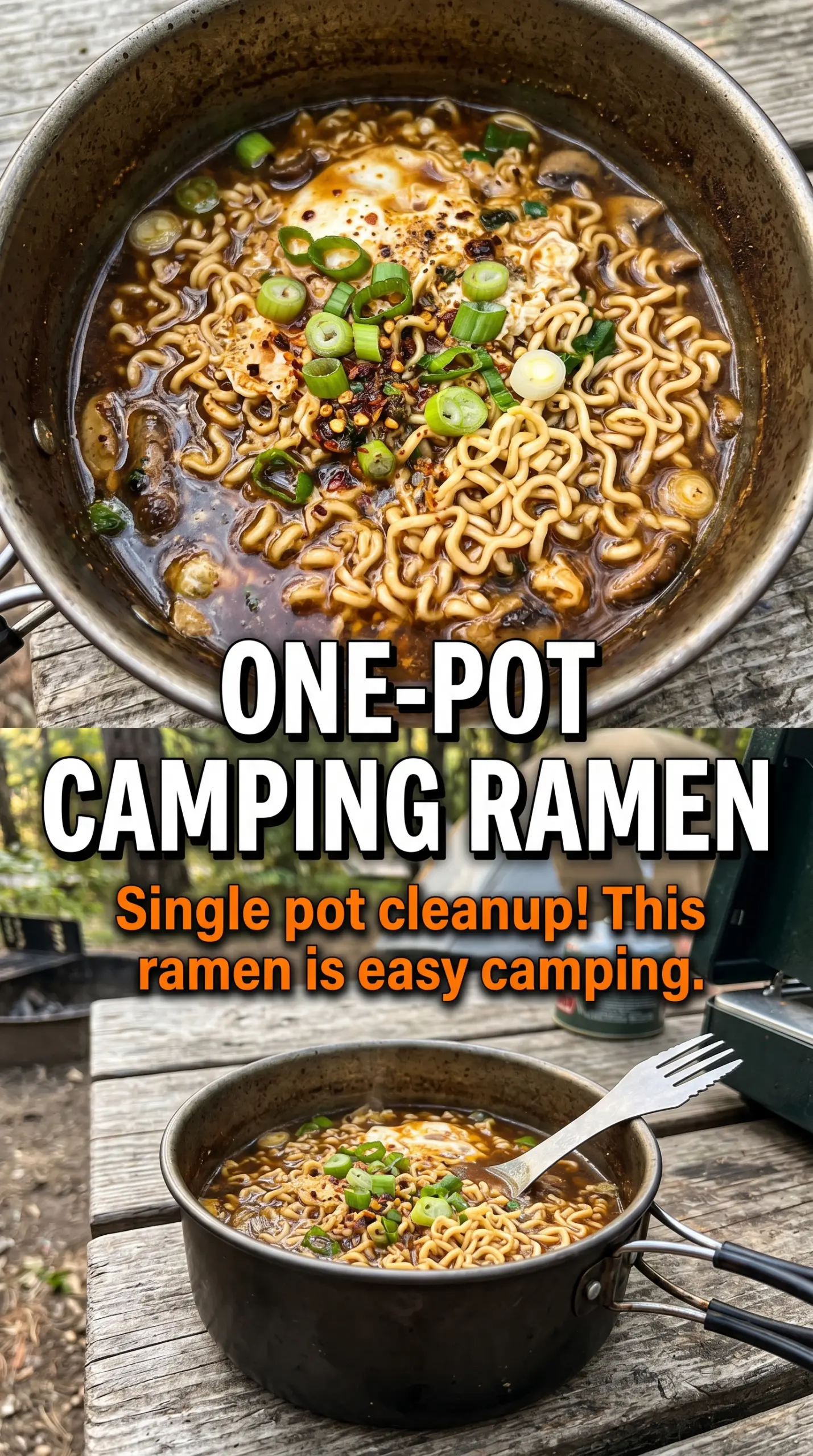
- Instant ramen noodles — These are built for speed, which is exactly why they work at camp. They soften in minutes, but they also overcook fast, so watch the texture instead of the clock once they’ve loosened up.
- Eggs — Cracking them directly into the pot gives you soft, silky whites and rich yolks without bringing another pan. If you want firmer yolks, cover the pot for a minute or two near the end so the steam finishes them.
- Frozen mixed vegetables — Frozen vegetables are the easiest way to get some balance into the bowl without packing a knife or board. They’re better than fresh here because they won’t wilt before the water comes back to a boil.
- Soy sauce — This is the best adjustment for controlling the broth at the end. Add a splash after the seasoning packet, because some ramen packets are already salty enough and soy sauce works best as a finishing note, not the base.
- Hot sauce — Optional, but useful if you want the broth to taste sharper and a little more awake. Add it at the end so the heat stays bright instead of cooking down with the noodles.
Getting the Pot in the Right Order Over a Campfire
Bring the water to a full boil first
Start with a hard boil before anything else goes in. Campfires can be uneven, so if the water is only barely steaming, the noodles sit there and absorb water unevenly, which gives you a gummy center and a tired broth. Use a pot with enough room for the eggs to drop in cleanly later.
Cook the noodles and vegetables just until they relax
Add the noodles with the frozen vegetables and stir gently so the noodles separate right away. Three minutes is a guide, but the real test is whether the noodles have softened and are still a little springy in the center. If you wait until they’re fully limp before adding the eggs, they’ll overcook by the time the pot is finished.
Poach the eggs in the simmering broth
Crack the eggs directly into the pot one at a time and leave the spoon out of it. You want them to set in soft clumps or large pieces, not disappear into the broth. A gentle simmer is enough; a rolling boil will shred the whites and make the soup cloudy in a rough way instead of a good one.
Season at the very end
Stir in the ramen seasoning packets once the eggs are cooked through and the noodles are done. That keeps the flavor bold and gives you a better read on the salt level before you add soy sauce. Divide the ramen right away, because the noodles keep soaking up broth while they sit in the hot pot.
How to Change Camp Ramen Without Losing What Makes It Work
Make it vegetarian and still satisfying
Leave the eggs in, or skip them and add extra vegetables plus a spoonful of peanut butter or sesame oil at the end for more body. The broth will be lighter without the egg richness, so an extra splash of soy sauce helps the bowl taste complete.
Use fresh vegetables instead of frozen
Thinly sliced mushrooms, carrots, or bok choy work well if you have them on hand. Add harder vegetables before the noodles so they get a head start, then add tender greens near the end so they stay bright instead of collapsing.
Make it richer with a few pantry extras
A spoonful of butter, a drizzle of sesame oil, or a pinch of chili crisp changes the bowl fast. Those additions give the broth more depth, but add them after the seasoning packet so the flavor stays balanced instead of greasy.
Stretch it for hungrier campers
Add another cup of water and an extra egg if you need more servings, but don’t just pile in extra noodles without increasing the broth. Ramen gets dense fast, and the pot needs enough liquid to stay soup-like all the way to the bowl.
Storage and Reheating
- Refrigerator: Store leftovers in a sealed container for up to 2 days. The noodles will keep absorbing broth, so expect a softer texture the next day.
- Freezer: This doesn’t freeze well. The noodles turn mushy and the eggs change texture after thawing.
- Reheating: Warm it gently in a pot with a splash of water or broth over low heat. Don’t boil it hard again or the noodles will break apart and the eggs will tighten up.
Answers to the Questions Worth Asking
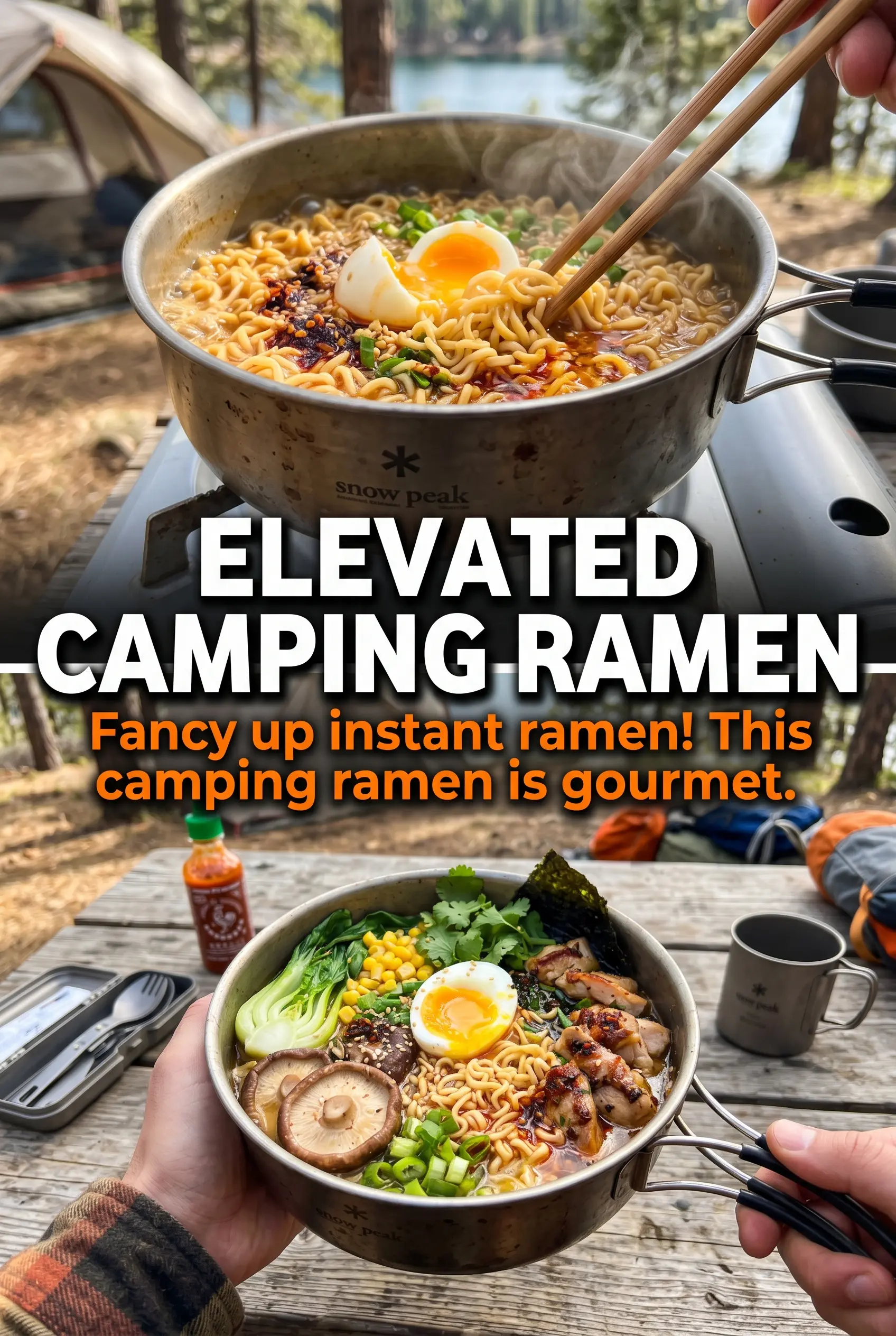
Ramen While Camping
Ingredients
Equipment
Method
- Bring 6 cups water to a boil in a pot over the campfire, maintaining a rolling boil so steam is clearly visible.
- Add instant ramen noodles (and reserve the seasoning packets) plus frozen mixed vegetables, then stir once so the vegetables are submerged.
- Cook for 3 minutes with a steady simmer, keeping the pot uncovered enough to maintain visible bubbling around the noodles.
- Crack the eggs directly into the pot, spacing them apart so the whites set as the bubbles rise.
- Continue cooking for 3-4 minutes until the eggs are poached and the noodles are tender, watching for opaque whites and softened noodles.
- Stir in the reserved ramen seasoning packets until dissolved and the broth turns uniformly seasoned.
- Divide the ramen into bowls and top each serving with sliced green onions, then add soy sauce and hot sauce to taste.