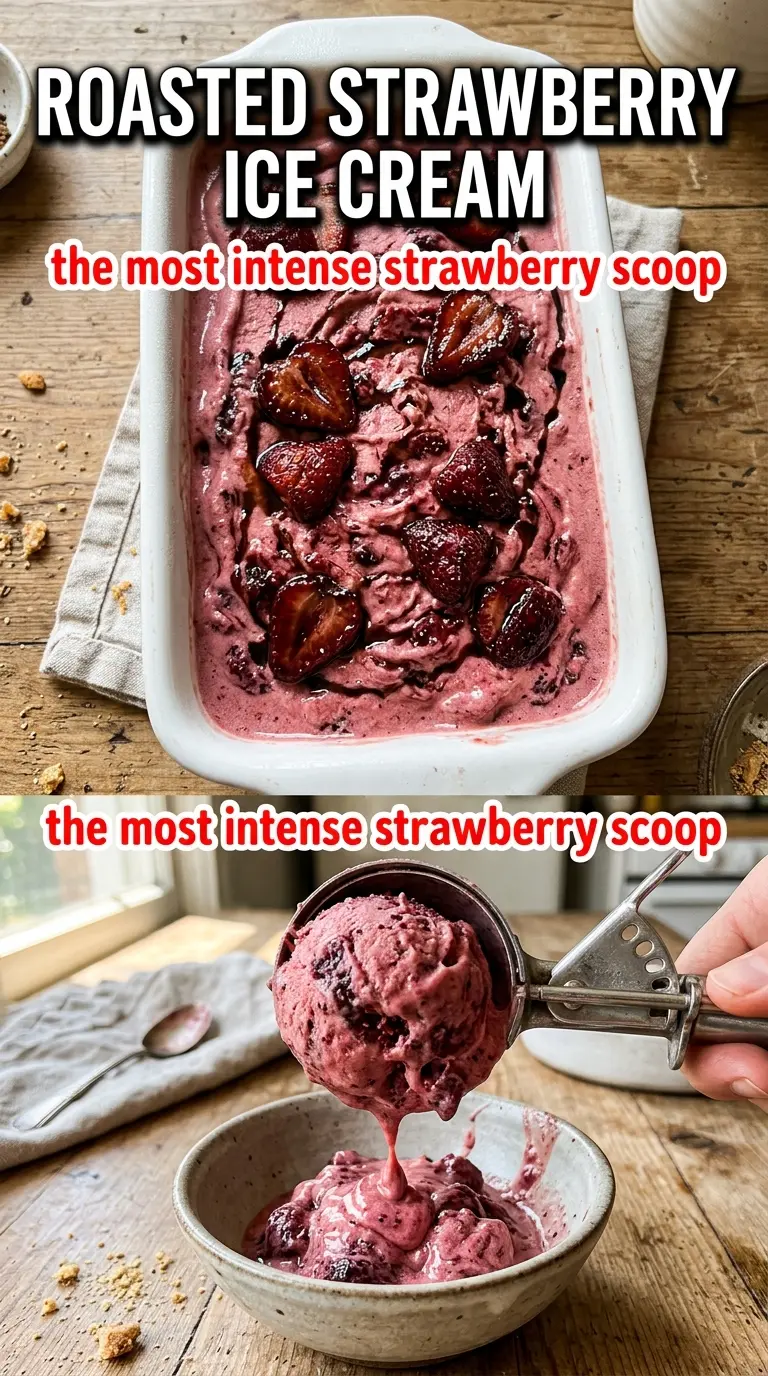
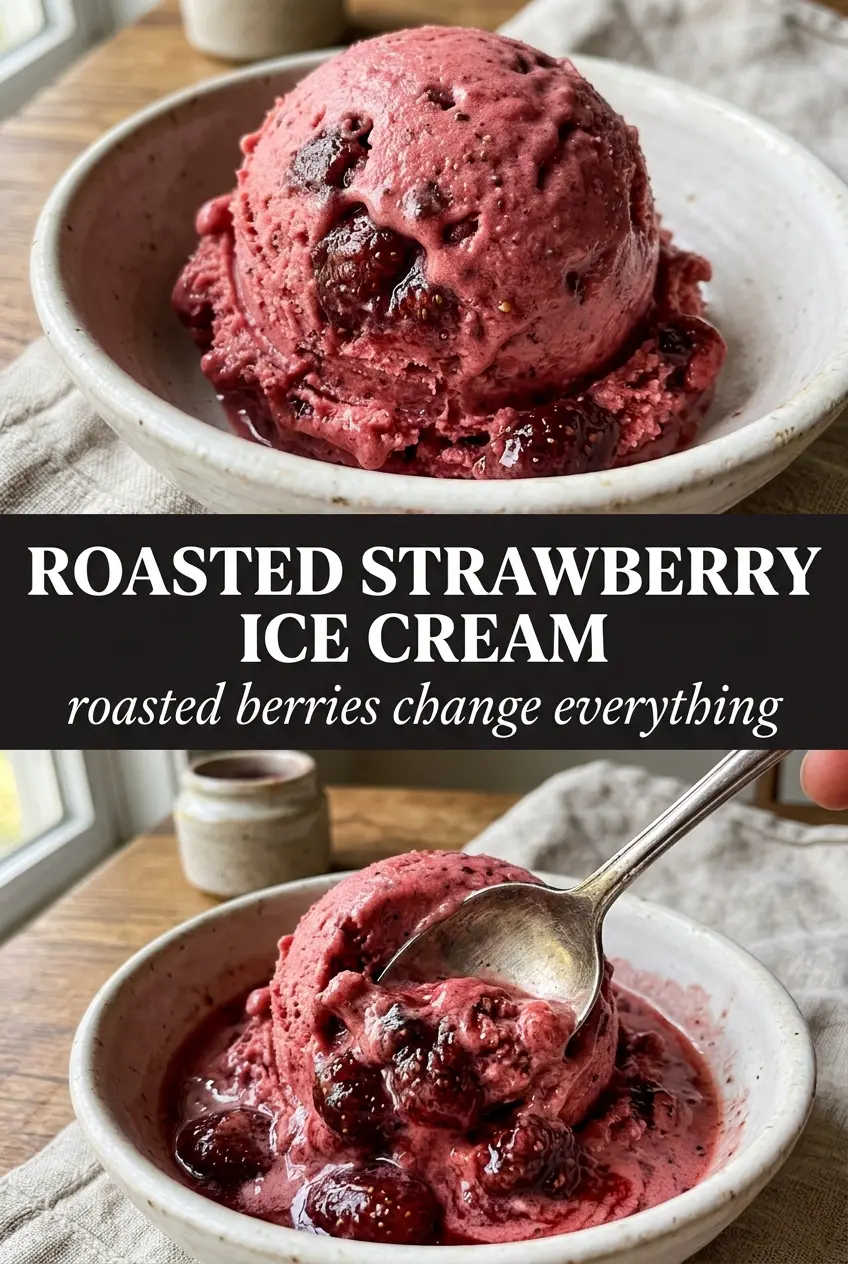
Roasted strawberry ice cream tastes like strawberries turned up to their deepest, most concentrated setting. The fruit loses the watery, one-note sweetness fresh strawberries can bring to ice cream and becomes jammy, ruby-red, and almost candy-like after a slow roast. That extra step is what gives this version its real strawberry backbone instead of a pale pink cream base with a hint of fruit.
The balsamic vinegar isn’t there to make it taste savory. It sharpens the berries and helps the flavor read brighter after freezing, when cold always dulls fruit a little. Slow roasting also takes care of the biggest problem with strawberry ice cream: too much water. Less water means a fuller base, a stronger color, and a smoother scoop straight from the freezer.
Below, I’ll walk you through the part that matters most — how to roast the berries until they collapse into a spoonable puree, how to cook the custard without scrambling it, and how to keep that strawberry flavor bold after the ice cream firms up.
The roasted strawberries made all the difference — the ice cream turned out creamy and the flavor stayed bold even after a night in the freezer. My husband kept sneaking spoonfuls straight from the container.
Roasted Strawberry Ice Cream with that deep jammy color is the one to pin for when you want fruit flavor that stays strong after freezing.
The Roast That Gives Strawberry Ice Cream Its Real Flavor
The mistake most strawberry ice creams make is leaning on fresh berries alone. Fresh strawberries are fragrant, but they’re also full of water, and water dilutes both flavor and texture once the base is frozen. Roasting fixes that by evaporating moisture and concentrating the berry juice into something thicker, darker, and far more intense.
That also changes the color in a good way. The custard doesn’t just taste like strawberries; it picks up a deep red hue from fruit that has already cooked down into itself. If your ice cream has ever tasted thin even when it looked promising, this is the reason. The roast does the heavy lifting before the dairy ever hits the pan.
- Fresh strawberries — Use ripe berries, but don’t chase perfect-looking ones. Slightly overripe fruit actually roasts down beautifully because it already has more juice and sugar.
- Balsamic vinegar — This sharpens the berry flavor and keeps the finished ice cream from tasting flat. You won’t taste vinegar, just a deeper edge in the fruit.
- Egg yolks — They give the base body and help it churn into a scoopable custard rather than an icy dairy mix. Whisk them with the sugar before adding hot cream so they temper gradually.
- Heavy cream and whole milk — Cream brings richness, while whole milk keeps the texture from getting too dense. Don’t swap in low-fat milk here; the finished ice cream needs the fat to stay smooth after freezing.
- Vanilla extract — Vanilla rounds out the roasted strawberry flavor without stealing attention. Add it after cooking so it stays clean and fragrant.
What Each Ingredient Is Actually Doing in This Frozen Dessert
- Base ingredient (cream, milk, or non-dairy) — This provides the foundation and richness. Quality matters.
- Sweetener (sugar, honey, or other) — This sweetens and prevents ice crystals. The ratio is critical.
- Flavor element (vanilla, fruit, or other) — This defines the ice cream personality. Use quality ingredients.
- Stabilizers (egg yolks, cornstarch, or gelatin) — These prevent melting and large ice crystals. Optional but helpful.
- Churning (if using ice cream maker) — This incorporates air and prevents ice crystals. Critical for smooth texture.
- Freezing temperature and time — Proper freezing prevents rock-hard texture. Store at 0°F or below.
- Mix-ins (chocolate, cookies, or fruit) — These add texture and prevent monotone flavor. Add near end of churning.
- No-churn method (if using whipped cream or condensed milk) — This creates creamy texture without ice cream maker. Freezing time is longer.
Building the Custard Without Scrambling the Eggs
The custard is where this recipe goes from good to silky. The key is patience when you combine the hot dairy with the yolks. If you dump it in too fast, the eggs seize and you’ll get bits instead of a smooth base. A slow stream and constant whisking keep the yolks from cooking in streaks.
Heat matters here, but not the way most people think. You’re not trying to boil the custard; you’re bringing it up just enough for it to thicken and coat a spoon. Around 175°F is the point where it’s ready. Go much hotter and you risk curdling, which gives you a grainy texture that no amount of churning can hide.
Roasting the Strawberries
Toss the strawberries with sugar and balsamic on a baking sheet and roast them until they look collapsed, glossy, and jammy around the edges. They should smell concentrated and a little caramelized, not just warm. If there’s a lot of liquid left on the pan, roast a few minutes longer; that syrup is flavor, and you want it reduced, not watery. Let the berries cool completely before blending so the puree doesn’t thin the custard or melt the dairy on contact.
Tempering the Yolks
Whisk the yolks with the remaining sugar until they look pale and slightly thickened. Warm the cream and milk together, then drizzle the hot dairy into the yolks in a thin stream while whisking the whole time. That gradual temperature shift is what keeps the eggs from curdling. If the mixture starts to look streaky or grainy, the heat went in too fast.
Finishing the Base
Cook the custard over moderate heat until it lightly coats the back of a spoon and reaches 175°F. Pull it off the burner right away, then strain it for the smoothest texture. Stir in the vanilla, salt, and roasted strawberry puree once the heat is off. Cooling the base completely before churning matters just as much as the cooking — warm custard won’t freeze properly, and it can make the machine take longer than it should.
How to Adapt This for a Different Freezer, a Bigger Crowd, or a Dairy-Free Batch
Dairy-Free Strawberry Ice Cream
Swap the cream and milk for full-fat coconut milk and coconut cream. The texture stays rich, but you’ll pick up a light coconut note that plays well with the roasted berries. The custard won’t be quite as classic, but it will still churn into a soft, scoopable ice cream.
Extra Deep Strawberry Flavor
If your berries are pale or out of season, roast them until the juices are thick and syrupy and reduce the puree on the stove for a few minutes before adding it to the custard. That gives you more concentrated fruit flavor without adding extra sugar. It’s the best fix when strawberries need help standing up to freezing.
Lower-Sugar Version
You can trim the sugar slightly, but don’t cut it too aggressively. Sugar softens the freeze and keeps the ice cream from turning hard as stone. If you reduce it, the texture will be firmer and the strawberry flavor will read a little less round.
Storage and Reheating
- Refrigerator: Keep the churned base chilled up to 2 days before freezing. The flavor gets even better after an overnight rest.
- Freezer: Freeze in an airtight container for up to 2 weeks. After that, the texture can turn a little icy, especially at the edges.
- Reheating: Not applicable for ice cream. For the best scoop, let it sit at room temperature for 5 to 10 minutes before serving so it loosens at the edges instead of cracking the spoon.
Answers to the Questions Worth Asking
Roasted Strawberry Ice Cream
Ingredients
Equipment
Method
- Preheat the oven to 375°F, then toss the hulled strawberries with 1/4 cup granulated sugar and the balsamic vinegar on a sheet pan.
- Roast for 25-30 minutes, stirring once if needed, until caramelized, jammy, and deeply concentrated; then cool completely.
- Blend the roasted strawberries into a smooth puree, leaving minimal visible pieces for a more uniform churn.
- In a saucepan, heat the heavy cream and whole milk until steaming, then slowly whisk the hot dairy into the egg yolks beaten with the remaining 1/4 cup sugar.
- Cook the mixture while stirring until it reaches 175°F, then strain and stir in the vanilla extract, salt, and the roasted strawberry puree.
- Cool completely, then refrigerate for 4 hours to chill thoroughly.
- Churn the chilled strawberry custard in an ice cream maker until it thickens to soft-serve consistency.
- Freeze until firm, then serve for best texture.