Rosemary garlic steak kebabs bring the kind of grilled, charred edges and juicy center that disappear fast once they hit the table. The balsamic and Dijon don’t make the marinade taste saucy; they sharpen the beef and help the rosemary and garlic cling to every cube. When the grill is hot enough, the outside picks up deep browning before the inside has a chance to dry out, which is exactly what you want from a kebab.
The trick is keeping the marinade bold but balanced. Rosemary can take over if it sits too long, and garlic can burn on the grill if it’s chopped too fine and smeared on the surface, so the short marinating time matters here. Ribeye gives you the richest result, but sirloin holds up well too as long as you don’t overcook it.
Below, I’m walking through the part that matters most: how to keep the beef tender, how to get good grill marks instead of steamed meat, and what to do if you’re using wooden skewers or switching up the cut.
The rosemary and garlic came through beautifully, and the kebabs picked up a real grilled crust without the steak drying out. I rested them for five minutes like you said, and the juices stayed right where they belonged.
Love these rosemary garlic steak kebabs? Save them to Pinterest for your next grill night when you want juicy beef and a fast herb marinade.
The Marinade Has to Work Fast, Not Long
With steak kebabs, longer marinating is not better. This marinade has enough acid and mustard to season the beef and help the surface brown, but if you leave the cubes in it all afternoon, the texture can start to turn muddy instead of juicy. One to two hours is the sweet spot: enough time for the rosemary, garlic, and balsamic to sink in without dulling the meat.
The other mistake is crowding the skewers. Leave a little space between each piece so the hot air and flame can reach more of the surface. Packed-together cubes steam, and steamed steak never gives you the crust you’re after.
What Each Ingredient Is Actually Doing in These Kebabs
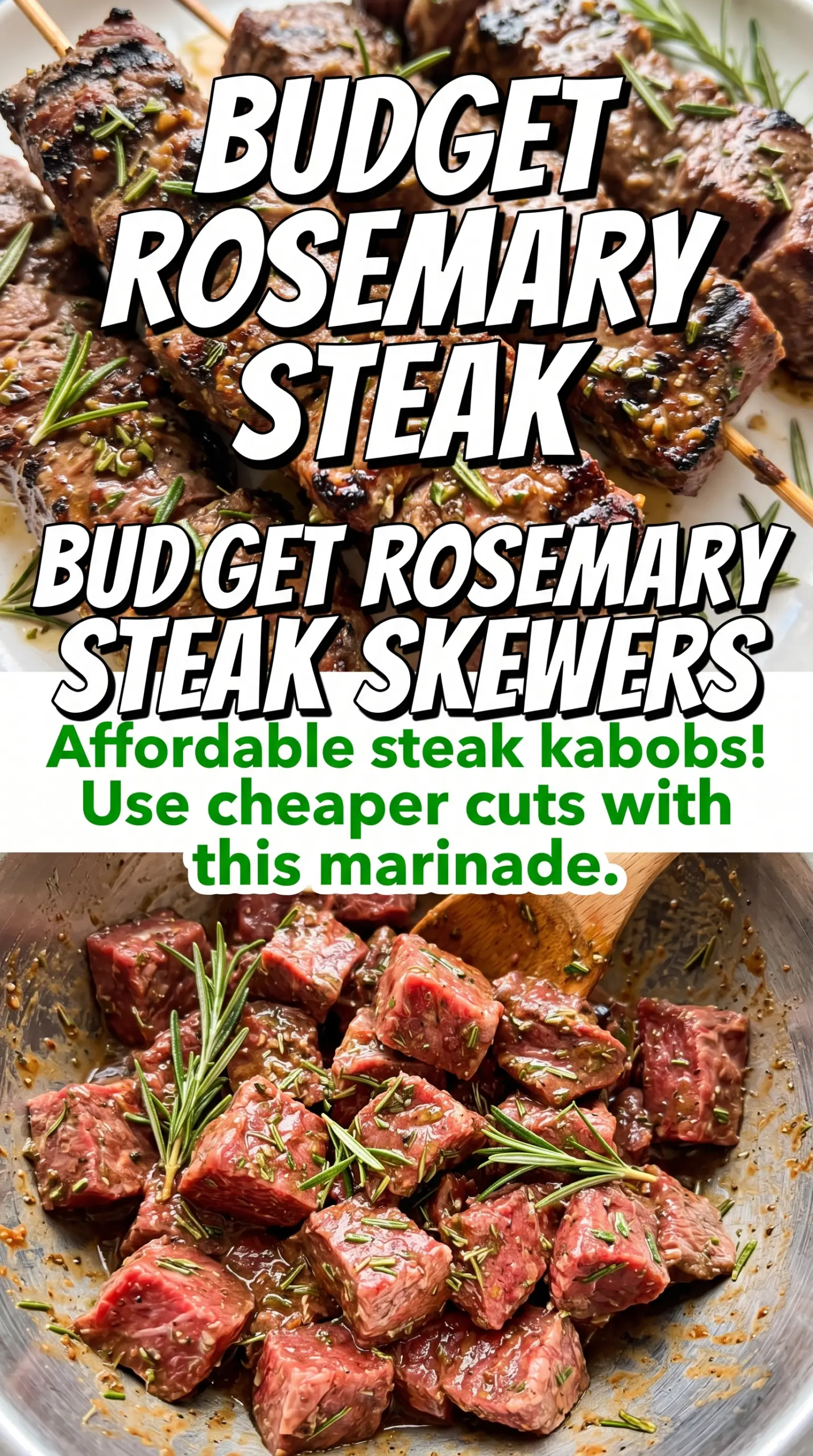
- Ribeye or sirloin — Ribeye gives you more marbling, which means a richer bite and a little more forgiveness on the grill. Sirloin is leaner and still works well, but it benefits from careful timing so it stays tender.
- Fresh rosemary — Fresh rosemary is worth using here because it perfumes the beef without tasting dusty or flat. Dried rosemary can work in a pinch, but use less and chop it very finely so it doesn’t feel sharp and woody.
- Garlic — Garlic brings the backbone of the marinade, but it needs to be minced well so it coats the meat evenly. Big chunks can scorch on the grill, so keep the pieces small and mixed into the oil.
- Balsamic vinegar — This adds a little acidity and a subtle sweetness that helps the marinade brown on the grill. Any substitute will change the flavor, but red wine vinegar plus a touch of honey can stand in if that’s what you have.
- Dijon mustard — Dijon helps emulsify the marinade so the oil, vinegar, and herbs stay mixed long enough to coat the beef well. It also adds a quiet sharpness that keeps the kebabs from tasting one-note.
- Metal or soaked wooden skewers — Metal skewers conduct heat and make flipping easier. If you’re using wooden skewers, soak them long enough that they don’t scorch at the edges, especially over high grill heat.
Getting the Sear Right Before the Inside Overcooks
Mix the marinade until it looks glossy
Whisk the olive oil, rosemary, garlic, balsamic vinegar, Dijon, salt, and pepper until the marinade looks slightly thick and glossy. If it separates immediately, keep whisking; the mustard is doing the work of holding everything together. This step matters because an evenly mixed marinade coats the beef better than one that pools at the bottom of the bowl.
Marinate the beef, then stop on time
Pour the marinade over the steak cubes and chill them for one to two hours. Stir once or twice if you remember, but don’t obsess over it; the goal is even seasoning, not soaking the beef into submission. If the meat sits much longer, the edges can take on an unpleasant cured texture.
Thread for airflow, not packing
Slide the cubes onto the skewers with tiny gaps between each piece. That space helps the exterior brown instead of trapping moisture, which is the main reason kebabs sometimes taste more boiled than grilled. Leave the pieces loose enough that the heat can reach all sides, but not so loose that they spin around when you turn them.
Grill hot and turn with purpose
Preheat the grill to high heat and cook the kebabs for about 10 to 15 minutes, turning every 3 to 4 minutes. You want dark grill marks and a browned crust before the center goes too far. If the outside is coloring too fast, move the skewers to a slightly cooler spot; if nothing is searing, the grill isn’t hot enough yet.
Rest before serving
Take the kebabs off the grill when they reach your preferred doneness and let them rest for 5 minutes. That pause keeps the juices from running all over the plate the second you cut into the beef. Skipping the rest won’t ruin dinner, but it does cost you tenderness.
How to Adapt These Kebabs Without Losing the Good Part
Use sirloin for a leaner, more budget-friendly kebab
Sirloin gives you a firmer bite and costs less than ribeye, but it won’t have the same richness. Keep the marinating time short and pull it from the grill as soon as it reaches your preferred doneness so it stays juicy.
Make it dairy-free and gluten-free without changing the method
This recipe already fits both dairy-free and gluten-free eating as written, as long as your Dijon mustard is labeled gluten-free. That makes it an easy grill-night option when you need something simple that still feels complete.
Swap the rosemary for oregano or thyme
Oregano gives the kebabs a brighter Mediterranean edge, while thyme softens the herbal note a little. You’ll lose the piney bite that rosemary brings, but the garlic and balsamic still carry the marinade well.
Add vegetables only if they can handle the same heat
Cherry tomatoes, red onion, and bell pepper work because they cook in roughly the same window as the beef, though softer vegetables may char before the steak is ready. Cut everything into even pieces so the skewers finish at the same time.
Storage and Reheating
- Refrigerator: Store leftover kebabs in an airtight container for up to 3 days. The beef will lose a little of its just-grilled crust, but it stays flavorful.
- Freezer: Cooked steak freezes, but the texture softens after thawing, so I don’t recommend freezing the finished kebabs if you can avoid it. If you need to freeze them, pull the meat off the skewers and wrap it tightly.
- Reheating: Warm the beef gently in a skillet over low heat or in a 300°F oven until just heated through. High heat dries out the edges fast, which is the easiest way to ruin leftover steak.
Questions I Get Asked About This Recipe
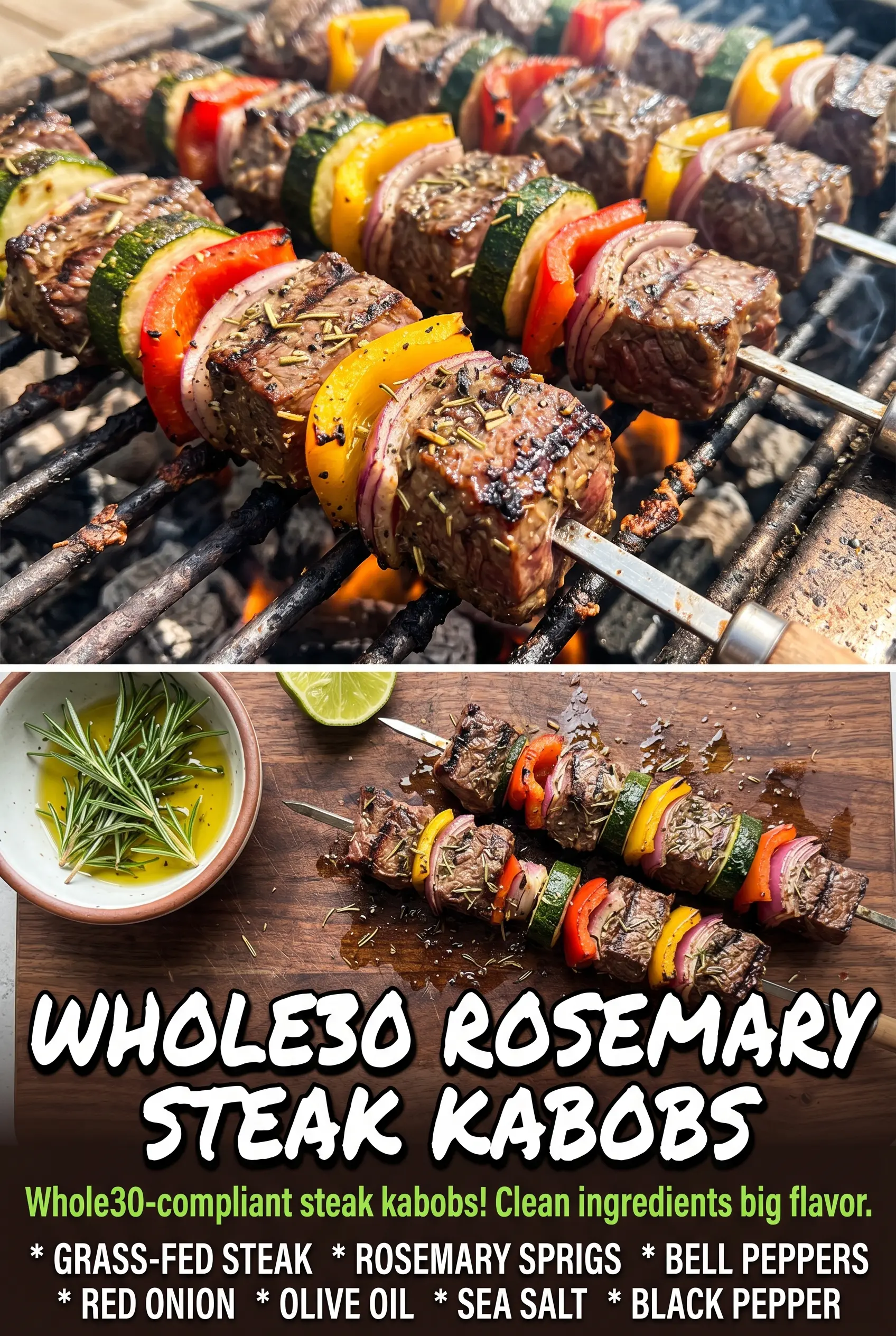
Rosemary Garlic Steak Kebabs
Ingredients
Equipment
Method
- Whisk olive oil, chopped rosemary, minced garlic, balsamic vinegar, Dijon mustard, salt, and black pepper until evenly combined and fragrant.
- Pour the marinade over the steak cubes so they’re well coated, then marinate in the refrigerator for 1-2 hours.
- Thread the marinated beef onto skewers, leaving small spaces between pieces for even cooking and grill marks.
- Preheat the grill to high heat, then place the kebabs on the grates and cook for 10-15 minutes, turning every 3-4 minutes until browned with visible char lines.
- Remove the kebabs when the steak reaches your desired doneness, then let them rest for 5 minutes before serving so juices redistribute.