Rotisserie chicken noodle soup earns its place in the rotation because it tastes like it simmered all afternoon, even though it comes together in under 40 minutes. The broth turns savory and golden, the vegetables stay tender with a little bite, and the egg noodles soak up just enough flavor without going mushy. It’s the kind of bowl that fixes a long day fast.
The shortcut works because the rotisserie chicken brings built-in seasoning and depth, while the broth gets a quick boost from sautéed onion, carrots, celery, and garlic before anything else goes in. That short cook on the vegetables matters. It softens their sharp edges and gives the soup a fuller, rounder base without waiting on a long simmer.
Below, I’ll show you the small timing details that keep the noodles from overcooking and the broth from tasting flat. I’ve also included a couple of easy swaps for using what you’ve got on hand, plus the best way to keep leftovers from turning starchy.
The broth had that homemade taste I usually only get after hours on the stove, and the noodles stayed tender instead of getting bloated. My husband went back for a second bowl before I even sat down.
Save this rotisserie chicken noodle soup for the nights when you want a fast, golden broth with tender noodles and barely any cleanup.
The Shortcut That Keeps the Soup Tasting Slow-Simmered
Most fast chicken noodle soups miss the mark because they skip the part where the vegetables actually get a chance to soften and flavor the pot. If the onion, carrots, and celery go straight into broth, they taste boiled, not built. A short sauté in oil or butter changes that immediately. The broth picks up sweetness from the onion and carrots, and the celery loses its raw edge before the liquid goes in.
The other key is adding the chicken after the broth is hot, not before. Rotisserie chicken is already cooked, so it only needs enough time to warm through and share its flavor with the soup. If it simmers too long, the meat can go stringy and the broth can taste a little tired instead of fresh.
- Sautéed aromatics — This is where the depth starts. Don’t rush it; those first five minutes are what make the soup taste like more than broth plus add-ins.
- Rotisserie chicken — The built-in seasoning is the whole point. Pull off the skin before shredding so the soup stays clean and the broth doesn’t get greasy.
- Egg noodles — These cook fast and give the soup that classic comfort-food texture, but they’re also the ingredient most likely to overcook. Add them at the end and stop when they’re just tender.
What Each Ingredient Is Doing in the Pot
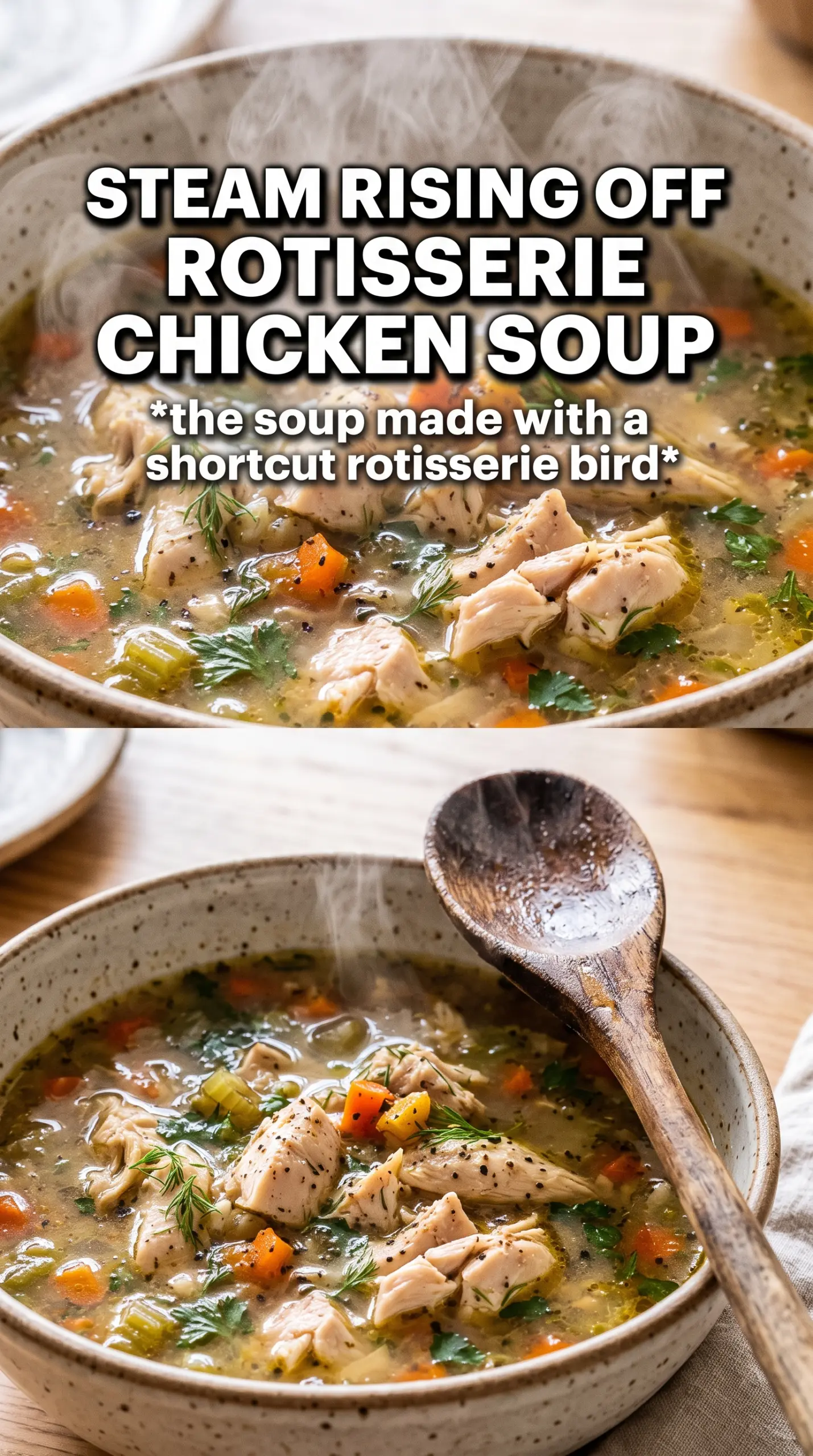
- Rotisserie chicken — This is the time-saver and the flavor base. Use the breast, thigh meat, or both, but shred it into bite-size pieces so it warms quickly and doesn’t clump.
- Chicken broth — This matters more than almost anything here because it’s the soup’s body. If your broth tastes thin, use a low-sodium version and season at the end so you can build the salt level properly.
- Carrots, celery, and onion — This trio gives the soup its classic savory backbone. Dice the onion small and slice the carrots and celery evenly so everything softens at the same pace.
- Egg noodles — These bring the comfort factor, but they also soak up broth fast. If you know you’ll have leftovers, cook them separately and add them to each bowl so the soup stays brothy.
- Thyme, dried parsley, and garlic powder — These dried seasonings add background warmth without overpowering the chicken. Fresh herbs finish the bowl better than they start it.
Building the Soup So the Noodles Stay Tender
Softening the Vegetables First
Warm the oil or butter in a large pot and add the onion, carrots, and celery. Cook them for about five minutes, stirring now and then, until the onion turns translucent and the carrots start to lose their raw crunch. If the pot looks dry, your heat is too high; the vegetables should sizzle gently, not brown hard. This stage sets up the broth with sweetness and body before the liquid goes in.
Turning Broth Into a Real Soup
Add the garlic and cook it for about one minute, just until it smells fragrant. Pour in the broth, then add the thyme, dried parsley, and garlic powder. Bring everything to a boil so the flavors move through the liquid quickly, then drop the heat back once the chicken goes in. If you keep it at a hard boil, the chicken can toughen and the vegetables can lose their shape.
Timing the Chicken and Noodles
Stir in the shredded rotisserie chicken and simmer for 10 minutes, which gives the meat time to absorb the broth without drying out. Add the egg noodles and cook for 6 to 8 minutes, watching for the point where they’re tender but still have a little firmness in the center. The biggest mistake here is walking away too long; egg noodles go from perfect to bloated fast. Taste the broth before serving and season generously with salt and pepper, because noodles always dull the seasoning a little.
How to Adapt This When You Need a Different Version
Gluten-Free Bowl With the Same Comfort
Swap the egg noodles for a gluten-free noodle that holds its shape well, or use cooked rice for a softer, more brothy bowl. Gluten-free pasta can turn fragile if it sits too long, so cook it separately and add it to each serving right before eating.
Dairy-Free as Written
This soup already works without dairy if you use olive oil instead of butter. The flavor stays clean and savory, and you won’t lose anything in the final bowl.
Make It Heartier
Add extra chicken, a handful of peas, or a few diced potatoes if you want a bigger meal. Potatoes need more time than the noodles, so simmer them in the broth until tender before adding the pasta.
Leftovers That Don’t Go Starchy
The soup keeps well, but the noodles keep absorbing broth in the fridge. For the best texture, store the soup and noodles separately if you can, or add a splash of broth when reheating to loosen it back up.
Storage and Reheating
- Refrigerator: Store in an airtight container for up to 4 days. The noodles will absorb some broth, so expect the soup to thicken.
- Freezer: It freezes better without the noodles. Freeze the broth, chicken, and vegetables for up to 3 months, then add fresh noodles when reheating.
- Reheating: Warm gently on the stove over medium-low heat until hot. If it starts boiling hard, the chicken gets tough and the noodles can break apart, so keep the heat steady and add broth as needed.
Answers to the Questions Worth Asking
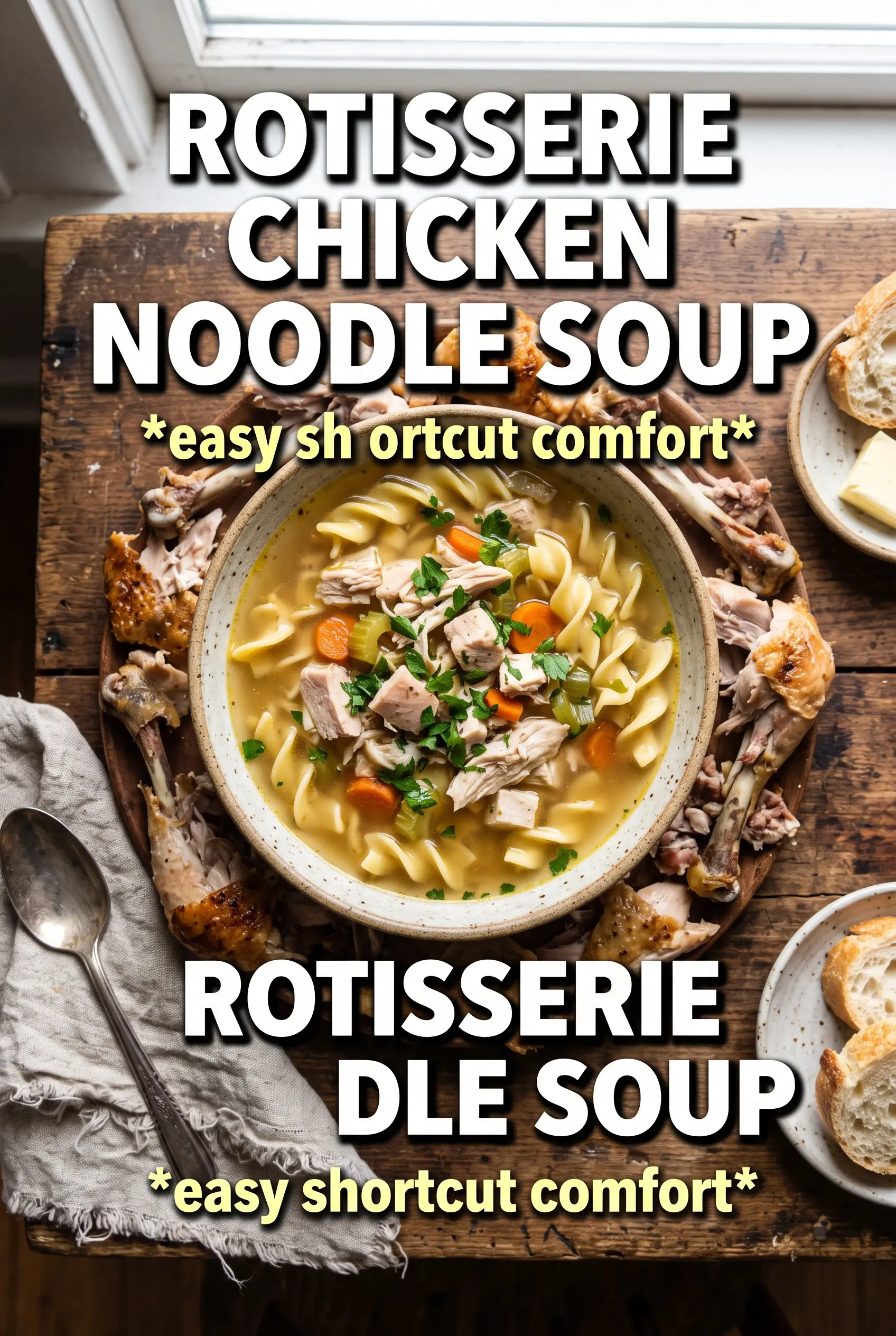
Rotisserie Chicken Noodle Soup
Ingredients
Equipment
Method
- Heat olive oil in a large pot over medium heat, then sauté onion, carrots, and celery for 5 minutes, stirring until starting to soften and turn glossy.
- Add garlic and cook for 1 minute, stirring, until fragrant and lightly golden.
- Add chicken broth, thyme, dried parsley, and garlic powder, and bring to a boil.
- Add shredded rotisserie chicken, return to a boil, then reduce to a gentle simmer and simmer for 10 minutes.
- Add egg noodles and simmer for 6-8 minutes until tender, stirring occasionally so they don’t stick.
- Season generously with salt and pepper until the flavor is balanced.
- Garnish with fresh parsley and serve hot.