Slow cooker beef stew earns its place in the rotation because the beef turns spoon-tender, the broth cooks down into a glossy gravy, and the vegetables hold their shape instead of melting into the pot. The long, gentle cook gives you a stew that tastes like it was watched carefully all afternoon, even though the slow cooker did most of the work.
The key is taking a few minutes at the stove before everything goes into the cooker. Browning the beef builds the deep, savory base, and scraping the pan with broth pulls every bit of flavor into the stew. The flour on the beef helps thicken the liquid as it cooks, so you end up with body in the broth instead of a thin soup.
Below, I’ll show you where people usually go wrong with slow cooker stew, why the order of ingredients matters, and how to adjust the texture if you want it a little thicker or a little lighter.
The gravy got thick and glossy, and the beef was fork-tender without falling apart. I added the peas at the end like you said and they stayed bright instead of turning mushy.
Save this slow cooker beef stew for a hands-off dinner with tender beef, hearty vegetables, and a rich, spoon-coating gravy.
The Reason the Beef Stays Tender Instead of Turning Dry
The biggest difference between a good slow cooker stew and a disappointing one is what happens before the lid goes on. Beef chuck needs that quick sear first because browning creates flavor that the slow cooker can’t invent later. Skip it, and the stew still works, but it tastes flatter and the broth never gets the same deep, meaty base.
The other mistake is crowding the pot with too much liquid. This recipe starts with a modest amount of broth because the vegetables release moisture as they cook. By the end, the stew should be thick enough to coat a spoon, not watery like a soup with beef in it.
- Browning the beef gives the finished stew a richer, beefier taste and helps the surface hold up during the long cook.
- Tomato paste adds depth and body. Cook it for a minute in the pan so it loses the raw edge and turns darker and sweeter.
- Yukon gold potatoes stay creamy without collapsing completely, which matters in a stew that cooks for hours.
- Peas go in at the end so they stay bright and sweet instead of dull and mealy.
What Each Ingredient Is Actually Doing in the Pot
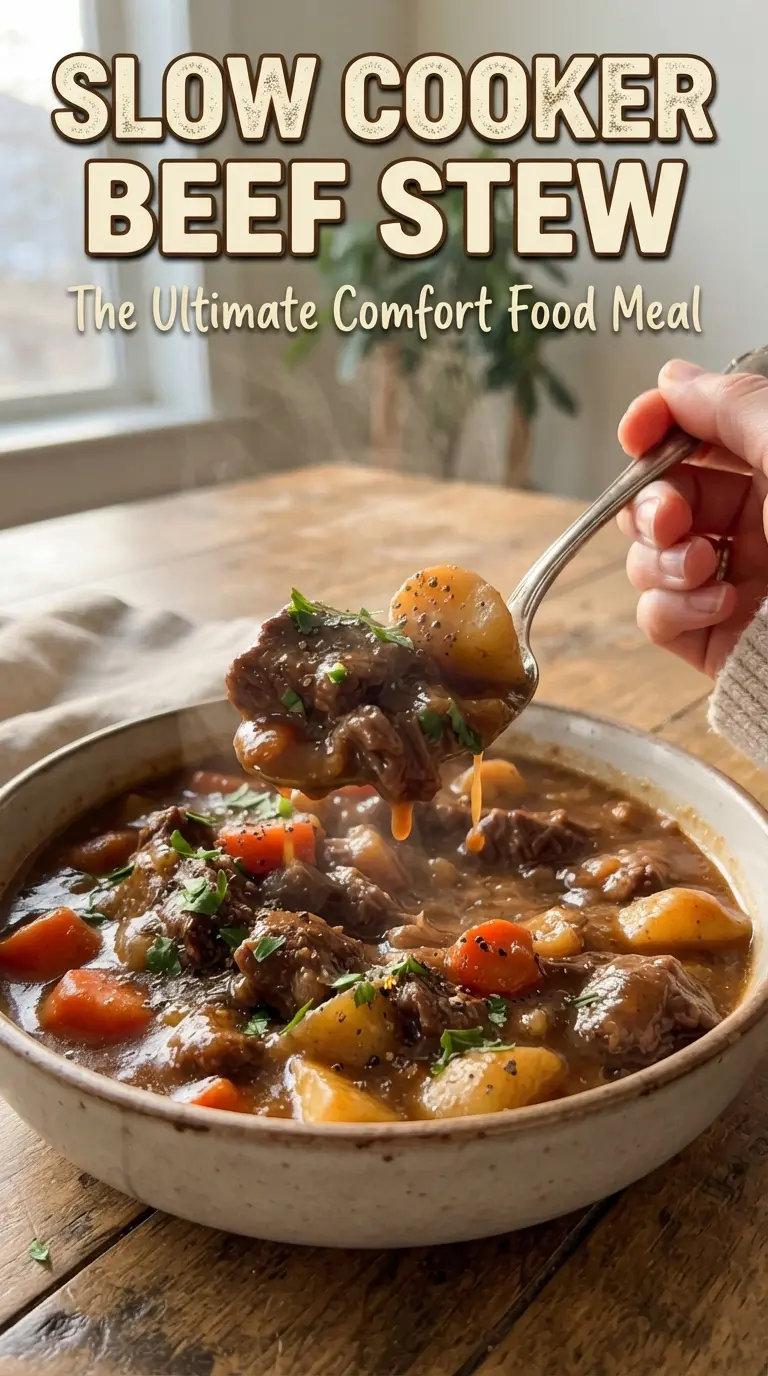
- Beef chuck roast is the right cut here because it has enough connective tissue to soften over a long cook. Lean stew meat won’t give you the same tender, rich result.
- Flour lightly coats the beef and helps thicken the juices as the stew cooks. If you need a gluten-free version, use a 1:1 gluten-free flour blend with the same method.
- Tomato paste and Worcestershire sauce do the quiet work of making the broth taste rounded and complete. Together, they add savoriness without turning the stew tomato-heavy.
- Yukon gold potatoes, carrots, and celery hold their shape better than softer potatoes or very thin-cut vegetables. Keep the pieces on the larger side so they survive the full cook without disappearing.
- Frozen peas and fresh parsley finish the pot with color and freshness. Add them at the end so the stew tastes lively instead of one-note.
Building the Stew Base in the Right Order
Coating and Browning the Beef
Toss the beef with flour, salt, and pepper until every piece looks lightly dusted, then brown it in batches in hot oil. The pan should sizzle when the meat goes in; if it doesn’t, the beef will steam instead of sear. Don’t pile all the cubes in at once, because overcrowding drops the temperature and you lose that deep brown crust that makes the stew taste like itself.
Cooking the Onion and Tomato Paste
Use the same pan after the beef comes out. The onions should pick up the browned bits on the bottom as they soften, and the tomato paste needs that minute in the hot pan to darken a shade. If the paste still looks bright and raw, it hasn’t cooked long enough and the finished stew will taste sharp instead of rounded.
Scraping the Pan and Loading the Slow Cooker
Pour in one cup of broth and scrape every browned bit loose before you add it to the slow cooker. Those stuck-on pieces are concentrated flavor, and they dissolve into the liquid as the stew cooks. Add the rest of the broth, Worcestershire, vegetables, thyme, and bay leaves, then cover and let the slow cooker do the rest.
Finishing Without Overcooking the Vegetables
Cook until the beef is fork-tender, then stir in the peas for the last 10 minutes. That final short cook keeps them bright and slightly sweet. Pull out the bay leaves before serving, and if the stew looks a little loose, let it sit uncovered for a few minutes; the broth thickens as it cools.
How to Adjust This Stew for a Lighter Pot or a Bigger Batch
For a thicker, gravy-like stew
Keep the flour on the beef and let the stew finish uncovered for the last 20 to 30 minutes if you want a tighter broth. You can also mash a few potato chunks against the side of the pot; that adds body without changing the flavor.
For a gluten-free version
Swap the all-purpose flour for a gluten-free 1:1 blend and brown the beef the same way. The stew will still thicken well, though the broth may settle a little more as it cools.
For a richer red-wine note
Replace 1 cup of the broth with dry red wine when you deglaze the pan. It adds more depth and a slightly darker finish, but keep the rest of the broth as written so the stew doesn’t get too sharp.
Storage and Reheating
- Refrigerator: Store in an airtight container for up to 4 days. The broth thickens and the flavor gets even better by day two.
- Freezer: It freezes well for up to 3 months. Cool it completely first, then freeze in portions so the potatoes don’t get crushed when you thaw it.
- Reheating: Warm it gently on the stove over medium-low heat or in the microwave in short bursts, stirring between rounds. Don’t boil it hard, or the beef can toughen and the potatoes can break apart.
Answers to the Questions Worth Asking
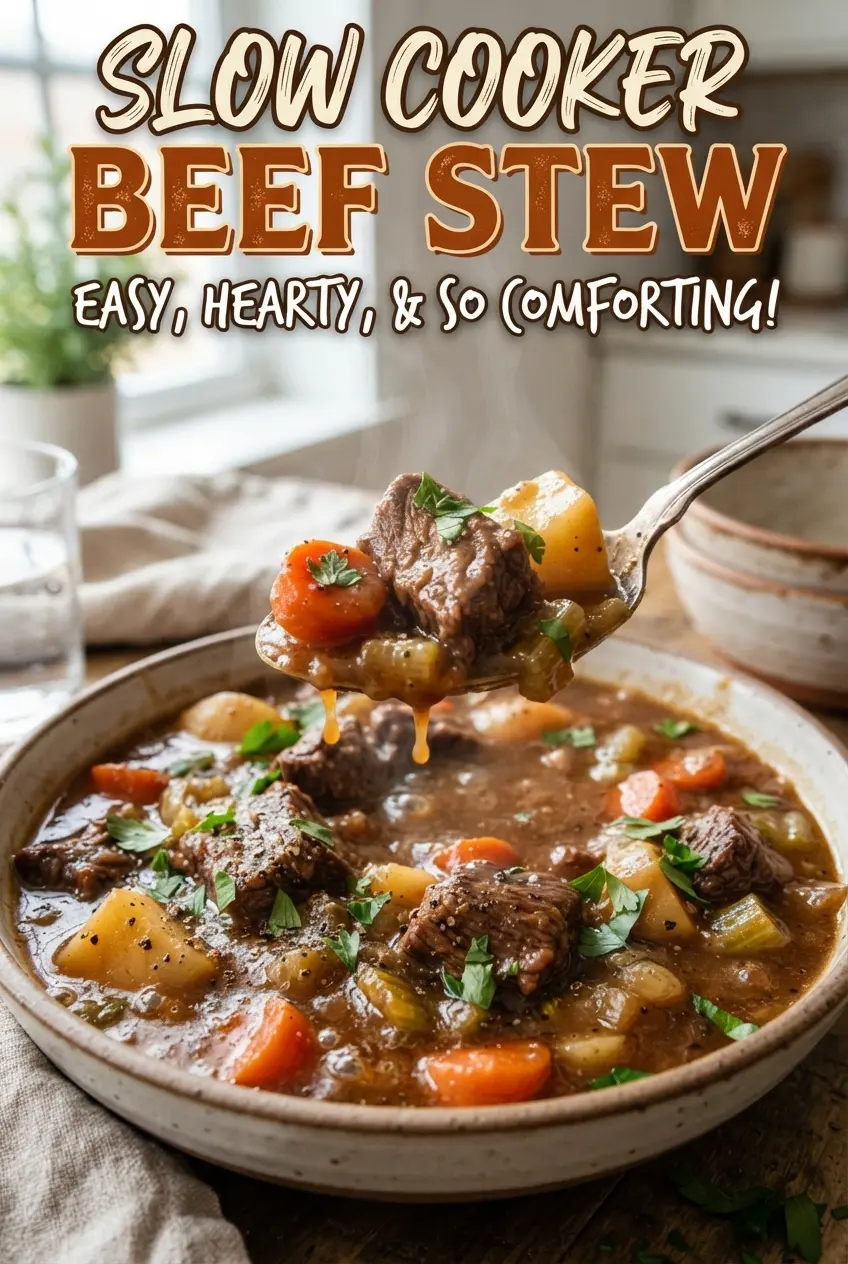
Slow Cooker Beef Stew
Ingredients
Equipment
Method
- Toss beef with flour, salt, and black pepper until evenly coated, then heat olive oil in a cast iron skillet until hot and shimmering.
- Brown the beef in batches for 4-5 minutes per batch, turning until deeply browned, then transfer each batch to the slow cooker.
- Cook the diced onion in the same skillet for 4 minutes until softened, then stir in the minced garlic and tomato paste for 1 minute.
- Pour in 1 cup beef broth and scrape up the browned bits from the pan, then add everything to the slow cooker.
- Add the remaining beef broth, Worcestershire sauce, potatoes, carrots, celery, dried thyme, and bay leaves to the slow cooker and stir to combine.
- Cover and cook on LOW for 8 hours or HIGH for 4-5 hours, until the beef is fork-tender and the vegetables are tender.
- Stir in the frozen peas and cook for 10 minutes, until bright green and hot throughout.
- Remove bay leaves, then top with chopped fresh parsley for a fresh finish before serving.