Southern fried corn lands on the table with a little sweetness, a little smoke, and that glossy skillet sauce that clings to every kernel. The best versions don’t stay loose and watery; they cook down until the corn turns tender, the edges pick up color, and the pan thickens from the natural starch in the kernels and cobs. Add bacon drippings and you get a side dish that tastes old-fashioned in the best way.
Fresh corn matters here. Cutting the kernels from the cob and scraping out the milky pulp gives the skillet what canned corn can’t: body. That scraped corn milk helps the sauce thicken without flour, and the bacon drippings give the whole dish a savory base before the butter and onion go in. If you cook it fast, the corn stays crunchy and the pan never turns creamy. Slow, steady heat is what lets it come together.
Below you’ll find the timing that keeps the corn tender without going mushy, plus a few swaps that still keep the dish true to its Southern roots. The technique is simple, but the order matters more than it looks at first glance.
The corn thickened up into the creamiest skillet sauce, and the bacon stayed crisp on top instead of getting soggy. I used fresh summer corn and it tasted like something my grandma would’ve put on the table.
Save this skillet-cooked Southern fried corn for the nights when you want a buttery, bacon-rich side that tastes even better than it looks.
The Secret to Creamy Southern Fried Corn Without Adding Flour
The mistake most people make is treating fried corn like a quick sauté. That leaves you with hot kernels in a skillet, not the creamy, glazed side dish you’re after. The starch from the scraped cobs is what changes the texture here, so you need enough time in the pan for the liquid to reduce and thicken naturally.
Bacon drippings do more than add flavor. They coat the onion and corn, help the kernels pick up color, and keep the butter from tasting flat. If the pan looks dry before the corn starts to soften, the butter goes in next; if it looks oily, keep cooking until the onions and kernels absorb some of it. The goal is a sheen, not a puddle.
- Fresh corn on the cob — This is the backbone of the dish. Frozen corn can work in a pinch, but it won’t give you the same corn milk or the same natural thickness. If you use frozen, thaw it first and expect a looser sauce.
- Bacon and drippings — Thick-cut bacon gives you both crisp garnish and the savory fat that starts the skillet. If you’re using bacon that’s very lean, add a little extra butter so the onions don’t scorch.
- Heavy cream — This rounds out the sauce at the end and gives it that silky finish. Half-and-half will work, but the sauce won’t cling as well. Add it only after the corn has already thickened or you’ll slow the reduction.
- Butter — Butter smooths out the bacon drippings and keeps the onions from tasting harsh. Salted butter is fine if that’s what you keep on hand; just hold back a little on the added salt.
What Each Ingredient Is Actually Doing in This Recipe

- Primary ingredient (the star) — Quality matters most. Choose the best you can find.
- Cooking medium (oil, butter, or broth) — This carries flavors and prevents dryness.
- Seasonings (salt, pepper, spices, herbs) — Layer flavors so nothing overpowers. Build depth gradually.
- Aromatics (garlic, onion, herbs) — Cook with fat to bloom flavors. Become the foundation.
- Supporting ingredients — Complement the main ingredient without overpowering it.
- Sauce or liquid (if applicable) — Brings flavors together. Balance richness with acid.
- Acid (lemon, vinegar, wine, or other) — Brightens and prevents flat-tasting results.
- Final finish (garnish, glaze, or sauce) — Prevents one-dimensional taste and adds visual appeal.
How to Build the Skillet So the Corn Turns Creamy, Not Soupy
Crisping the Bacon First
Cook the bacon over medium heat until the pieces are deep golden and the fat has rendered out. Pull the bacon out before it gets too dark; it keeps cooking from residual heat and you want it crisp, not brittle. Leave the drippings in the skillet and keep everything else moving in the same pan, because that fond at the bottom is part of the flavor.
Softening the Onion in the Fat
Add the butter and onion to the drippings and cook until the onion turns soft and translucent at the edges. If the heat is too high, the onion will brown before it sweetens, and that sharper flavor shows up in the finished dish. You want the onion to melt into the corn, not stand out in chunks.
Letting the Corn Cook Down
Stir in the corn kernels, scraped corn milk, sugar, salt, and pepper. Let it cook over medium heat, stirring often enough that nothing sticks, until the kernels look glossy and the liquid starts to thicken around them. This is the part that takes patience; if you rush it, the sauce stays thin and the corn tastes undercooked.
Finishing With Cream
Pour in the cream only after the corn has already tightened up a bit. Give it another couple of minutes until the sauce looks rich and coats the back of a spoon. Stir in the bacon at the end or scatter it over the top so it stays crisp instead of dissolving into the pan.
Three Smart Ways to Adjust This Southern Fried Corn
Make It Without Bacon
Skip the bacon and start with butter plus a small splash of olive oil so the onions still cook cleanly. You’ll lose the smoky edge, so add a pinch of smoked paprika if you want to bring some of that back. The texture stays the same, but the flavor lands a little lighter.
Use Frozen Corn When Fresh Isn’t Available
Frozen corn works, but thaw it first and drain off any extra water before it hits the skillet. Because you’re missing the cob milk, the sauce won’t thicken quite as much, so let it cook a few extra minutes before adding the cream. It’s still a good weeknight version when fresh corn is out of season.
Make It Dairy-Free
Use plant-based butter and skip the cream, or finish with an unsweetened oat cream if you want to keep some of the richness. The dish will still be creamy from the corn starch, but it won’t taste as round as the original. This is the best path if you want the skillet texture without the dairy.
Storage and Reheating
- Refrigerator: Store leftovers in an airtight container for up to 3 days. The sauce will tighten as it chills.
- Freezer: It doesn’t freeze well; the cream can separate and the corn turns watery when thawed.
- Reheating: Warm it gently in a skillet over low heat with a splash of water or cream. High heat is the fastest way to break the sauce and dry out the corn.
Answers to the Questions Worth Asking
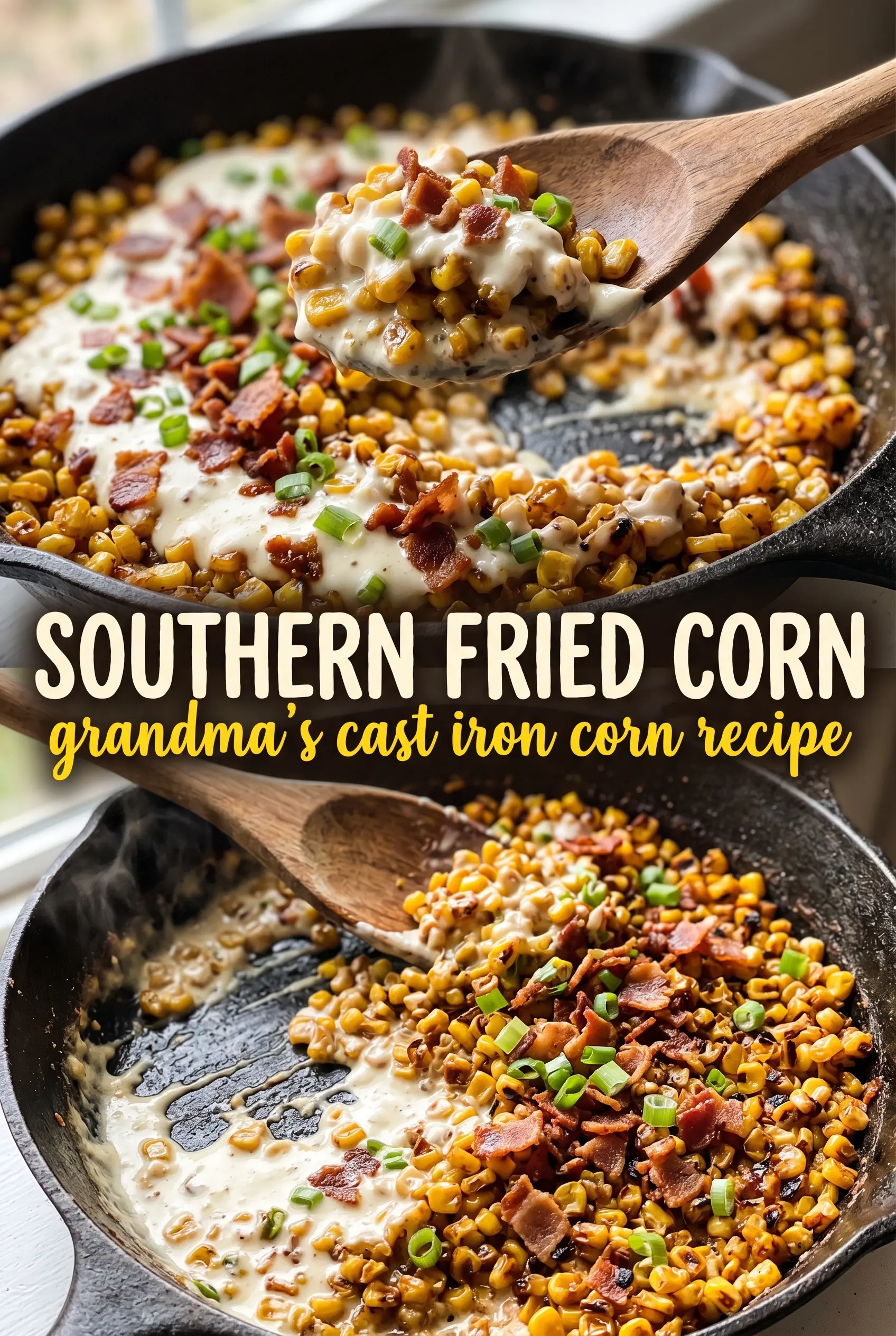
Southern Fried Corn
Ingredients
Equipment
Method
- Cook the chopped thick-cut bacon in a large cast iron skillet over medium heat until crispy, 8–10 minutes; use a slotted spoon to remove it and set aside, leaving the drippings in the pan.
- Add the unsalted butter and the diced small onion to the bacon drippings and cook over medium heat until softened, 3–4 minutes, stirring to coat the onions in the fat.
- Add the fresh corn kernels and the milk scraped from the cobs, then stir in the sugar, salt, and black pepper.
- Cook over medium heat, 10–12 minutes, stirring frequently, until the corn is tender and the mixture thickens from the corn’s natural starch into a glossy consistency.
- Pour in the heavy cream and stir for 2 minutes over medium heat until the sauce looks rich and glossy.
- Top with the reserved crispy bacon and fresh chives, then serve directly from the skillet.