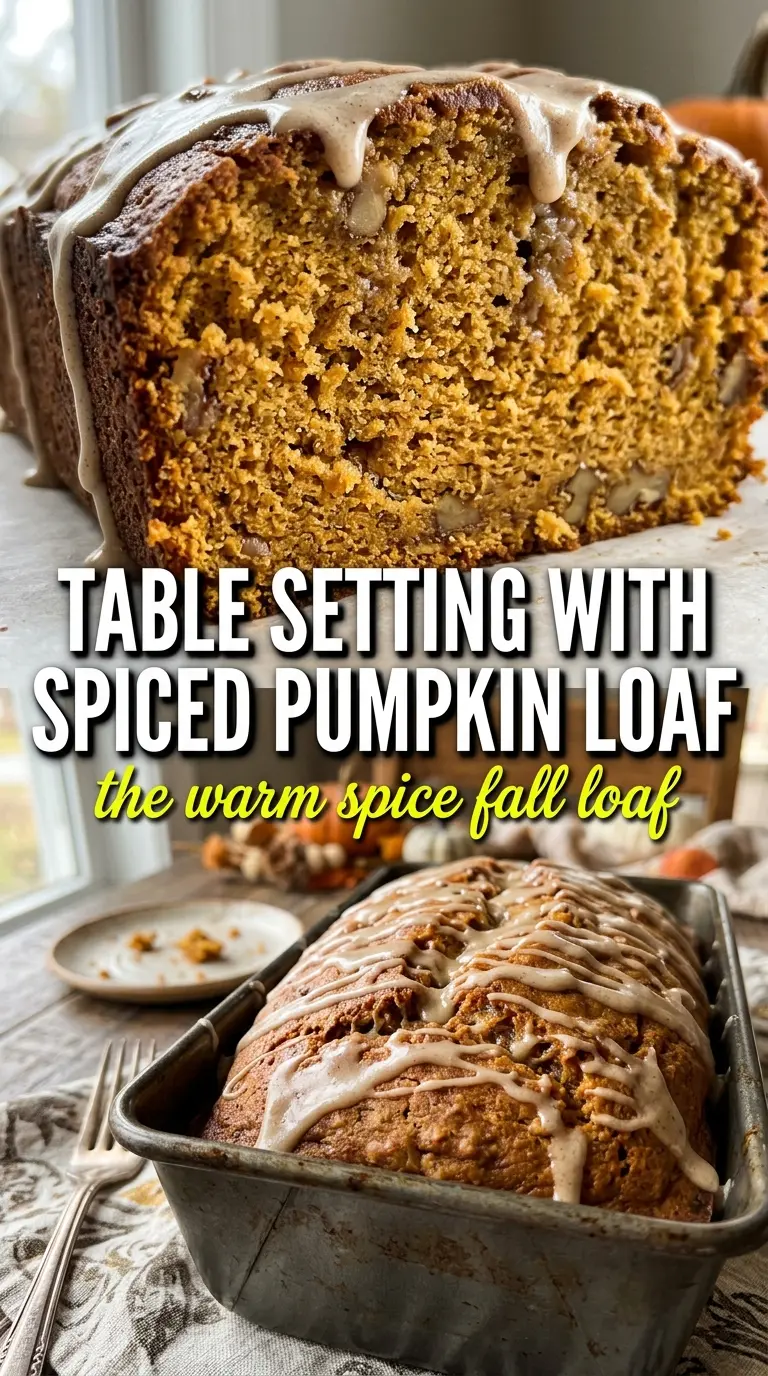
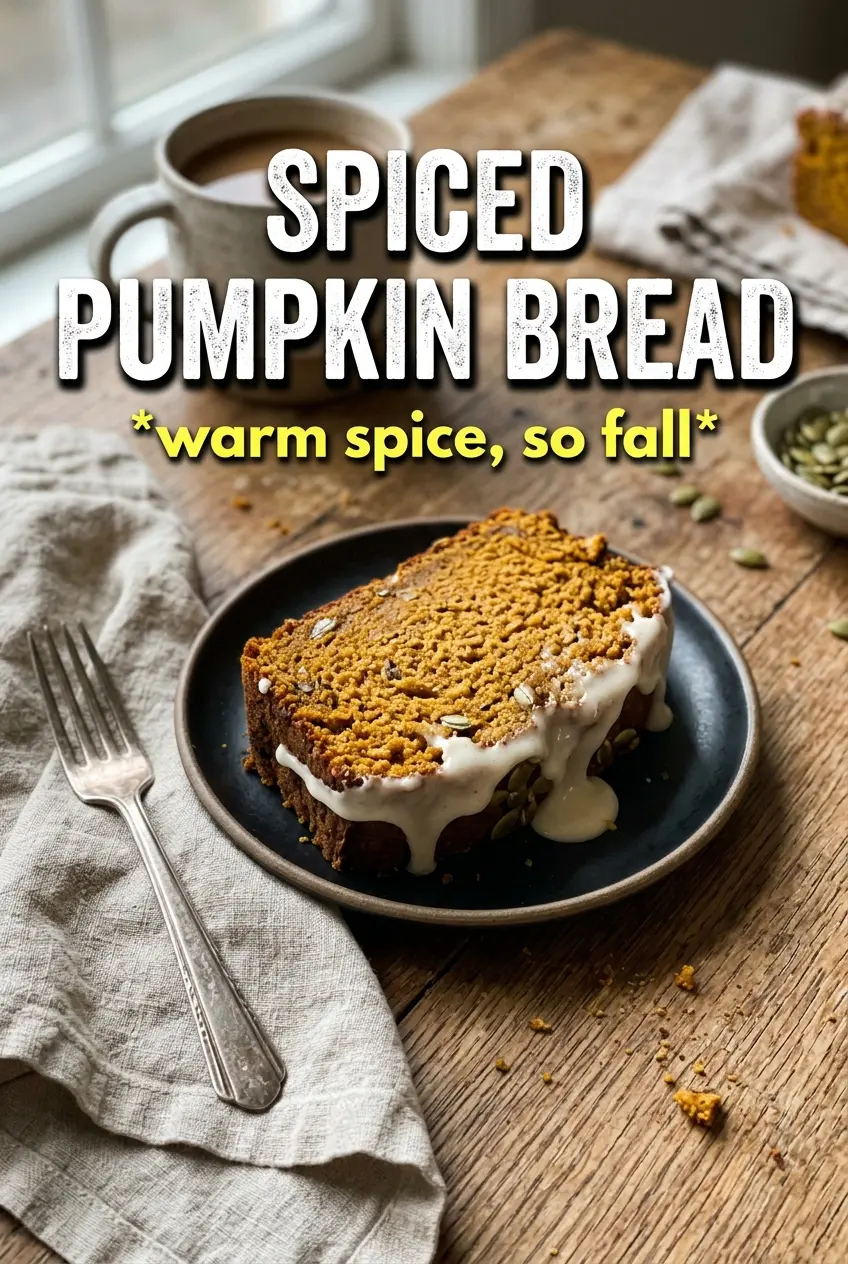
Spiced pumpkin bread bakes up with a dark golden crust, a moist, tender crumb, and a spice blend that tastes deeper than the usual cinnamon-and-nutmeg version. The loaf slices cleanly once cooled, and the brown butter glaze sets with a thin crackly finish that makes each piece feel bakery-worthy without turning fussy.
What gives this loaf its extra dimension is the combination of molasses, black pepper, cardamom, and browned butter. Pumpkin brings moisture more than strong flavor on its own, so the spices and sugar need to do the heavy lifting. Molasses adds the kind of bass note that makes the cinnamon, ginger, and cloves taste fuller, while the black pepper quietly sharpens the finish instead of making the bread taste peppery.
Below, I’ve included the spice balance I think works best, why the glaze should wait until the loaf is fully cool, and a few swaps that still keep the texture where it should be.
The loaf baked up with a perfect domed top and stayed incredibly moist for days. I never would have thought to add black pepper and molasses, but it made the spices taste so much deeper without being obvious.
Save this spiced pumpkin bread for the loaf that bakes up tender, warmly spiced, and finished with brown butter glaze.
The Spices Need to Be Balanced, Not Loud
Most pumpkin breads lean on cinnamon and call it done. That works, but it doesn’t give you the kind of loaf people remember. This version layers cinnamon, ginger, cardamom, nutmeg, cloves, allspice, and just enough black pepper to make the flavor taste round instead of flat.
The key is restraint. Pumpkin puree dulls spice a little once it bakes, so the batter needs a stronger hand than you might expect, but too much clove or pepper can take over fast. The balance here gives you warmth first, then a subtle finish that keeps each bite interesting even after the loaf cools.
- Black pepper — It won’t read as peppery. What it does is sharpen the spices and keep the loaf from tasting one-note.
- Cardamom — This is the ingredient that makes the bread taste more layered. If you don’t have it, use a little extra cinnamon, but the loaf will be less complex.
- Molasses — This deepens the flavor in a way brown sugar alone can’t. It also helps the bread taste richer without making it heavier.
- Pumpkin puree — Use pure pumpkin, not pumpkin pie filling. Pie filling is already sweetened and spiced, which throws off the balance and can make the crumb gummy.
What Each Ingredient Is Actually Doing in the Loaf
- All-purpose flour — This gives you a tender but sturdy crumb. Bread flour would make the loaf chewier than it should be.
- Vegetable oil — Oil keeps pumpkin bread moist for days. Butter can work, but it firms up more as it cools, so the loaf won’t stay as soft.
- Eggs — They hold the batter together and help the bread rise evenly. Room-temperature eggs mix in more smoothly, but cold eggs won’t ruin it.
- Brown sugar and granulated sugar — The white sugar helps with lift and structure, while the brown sugar adds moisture and a deeper sweetness.
- Brown butter glaze — The glaze adds a nutty finish that echoes the spices. Don’t rush the butter browning step; pale butter won’t give you the same flavor.
Getting the Batter Mixed Without Toughening the Crumb
Whisk the dry ingredients until the spices disappear into the flour
Start with the flour, baking soda, salt, and every spice in the dry bowl. Whisk long enough that you don’t see streaks of spice sitting in one spot, because uneven mixing is how you end up with one slice that tastes all cinnamon and another that tastes like plain pumpkin. The baking soda needs to be evenly distributed too, or the loaf will rise unevenly.
Mix the wet ingredients until the batter looks glossy and smooth
Combine the pumpkin puree, both sugars, oil, eggs, vanilla, and molasses until the mixture looks thick and uniform. The molasses should disappear completely; if you still see dark ribbons, keep stirring. This is the stage where you build moisture and sweetness, and if the mixture looks lumpy before the flour goes in, those lumps tend to hang around in the finished loaf.
Fold just until the flour disappears
Add the dry ingredients to the wet and fold gently with a spatula. Stop as soon as you don’t see dry flour patches, even if the batter looks a little rough. Overmixing is the fastest way to make pumpkin bread dense and tunnelled, and this batter only needs to come together — not be beaten smooth.
Bake until the center springs back and a tester comes out with a few moist crumbs
Scrape the batter into a greased 9×5 loaf pan and bake at 350°F for 60 to 65 minutes. The top should be deeply golden and cracked at the center, and a tester inserted in the middle should come out with moist crumbs, not wet batter. If the top browns too quickly before the center is done, tent it loosely with foil for the last 15 minutes.
Let the loaf cool all the way before the glaze goes on
Set the pan on a rack and let the bread cool completely before glazing. If you add the brown butter glaze while the loaf is warm, it melts straight into the surface and disappears instead of sitting in that pretty drippy layer. Cooling fully also gives you cleaner slices, which matters with a loaf this moist.
Three Ways to Change the Loaf Without Losing the Texture
Gluten-Free Pumpkin Bread
Use a cup-for-cup gluten-free flour blend with xanthan gum already included. The crumb will be a little more delicate, but the loaf still holds together well because pumpkin puree and oil keep it moist. Don’t swap in almond flour alone; it won’t give enough structure for a sliceable loaf.
Dairy-Free Glaze
The loaf itself is already dairy-free, so the only change needed is the glaze. Brown vegan butter if you want to keep the same nutty note, or skip browning and use melted dairy-free butter for a softer, simpler finish. The glaze will still set, but it won’t have quite the same toasted depth.
Muffin-Style Bake
Divide the batter among lined muffin cups and bake until the centers spring back, usually about 18 to 22 minutes. You’ll lose the dramatic loaf shape, but you gain faster baking and easier grab-and-go portions. The spice flavor reads a little stronger in muffin form because of the larger surface area.
Storage and Reheating
- Refrigerator: Store tightly wrapped or in an airtight container for up to 5 days. The crumb stays moist, though the glaze will soften a bit.
- Freezer: Freeze the loaf or individual slices for up to 3 months. Wrap well in plastic, then foil, and thaw at room temperature while still wrapped so condensation doesn’t make the bread soggy.
- Reheating: Warm slices in a 300°F oven or toaster oven for 5 to 8 minutes. Microwaving works in a pinch, but too long in the microwave turns the crumb rubbery and melts the glaze into a sticky patch.
Questions I Get Asked About This Recipe
Spiced Pumpkin Bread
Ingredients
Equipment
Method
- Preheat oven to 350F and grease a 9x5 loaf pan.
- Whisk all-purpose flour, baking soda, and all spices with salt until evenly combined.
- Whisk pumpkin puree, granulated sugar, brown sugar, vegetable oil, eggs, vanilla, and molasses until smooth.
- Fold dry ingredients into wet ingredients until no dry streaks remain.
- Pour batter into the prepared loaf pan.
- Bake at 350F for 60-65 minutes, until the center is set and a tester comes out clean.
- Cool completely before glazing.
- Drizzle the brown butter glaze over the cooled pumpkin bread.