Creamy taco dip disappears fast because it hits all the right notes at once: savory beef, tangy salsa, a mellow cream cheese base, and that stretchy layer of melted cheddar on top. It’s the kind of appetizer that looks casual in the skillet but tastes like you put in a lot more effort than you did. The best part is that it stays scoopable and warm long enough for people to keep circling back with another chip.
This version works because the cream cheese gets melted into the seasoned beef before the salsa and cheddar go in. That gives the dip a smoother base and keeps the texture from turning greasy or grainy. Softened cream cheese matters here; cold cream cheese takes longer to melt and can leave little stubborn lumps behind. The salsa also does double duty, adding acidity and helping loosen the mixture just enough so it doesn’t set up like a brick once it comes off the heat.
Below, I’ve included the small timing details that keep the cheese smooth, plus a few smart swaps if you want to make it a little lighter, spicier, or meat-free.
The cream cheese melted in without any lumps, and the dip stayed smooth even after sitting out for a bit. I brought it to a game night and the skillet was scraped clean before halftime.
Save this skillet taco dip for game night when you want a hot, cheesy appetizer with a smooth, scoopable center.
The Part Most Taco Dips Get Wrong: Melting the Cheese Too Fast
The texture of taco dip lives or dies in the last few minutes. If the heat is too high when the cream cheese and shredded cheddar go in, the fats separate before the cheeses fully blend, and you end up with an oily layer instead of a thick, spoonable dip. The fix is simple: keep the burner at a steady medium-low once the beef is seasoned, and stir long enough for the cream cheese to disappear before you add the cheddar.
The other mistake is treating salsa like a garnish instead of part of the base. In this dip, salsa adds moisture, acidity, and a little body from the tomato and pepper solids. That means you want a salsa that’s thick enough to hold its own. A watery salsa can loosen the dip too much and make it thin at the table, especially after it sits for a few minutes.
- Softened cream cheese melts into the beef much more evenly than cold cream cheese. Cold blocks tend to leave little pockets behind.
- Shredded cheddar melts better when you shred it yourself, but pre-shredded works if that’s what you’ve got. The bagged kind is a little less silky because of the anti-caking coating.
- Thicker salsa keeps the dip lush instead of runny. If yours is loose, spoon off some of the excess liquid before adding it.
What Each Ingredient Is Actually Doing in This Skillet Dip
- Ground beef gives the dip its hearty, taco-night backbone. Drain off excess grease after browning so the finished dip tastes rich, not slick.
- Taco seasoning brings the cumin, chile, garlic, and salt that make the whole dish taste like taco filling instead of plain beef. A packet is fine here because the other ingredients soften and round it out.
- Cream cheese is what turns this from a meat mixture into a dip. Full-fat cream cheese gives the smoothest result; reduced-fat works, but it won’t be quite as lush.
- Salsa adds moisture and brightness. Use a chunky, thicker salsa if you want the dip to hold its shape better in the serving dish.
- Cheddar cheese makes the top creamy and stretchy. Sharp cheddar gives the dip a stronger cheese flavor, while mild cheddar keeps it more mellow.
- Sour cream lightens the richness and helps everything stay soft and scoopable. Add it after the cream cheese is mostly melted so it doesn’t curdle or separate.
- Green onions and cilantro finish the dip with freshness. Add them at the end so they stay bright and don’t wilt into the hot cheese.
How to Keep the Beef, Cheese, and Salsa Moving Together
Brown the Beef First
Cook the beef over medium-high heat and break it into small pieces as it browns. You want little crumbles, not big clumps, because they distribute better through the dip and make scooping easier. If there’s a lot of grease in the pan, drain it before you season the meat. Too much fat is one reason taco dip turns heavy instead of creamy.
Let the Seasoning Wake Up in the Pan
Stir in the taco seasoning and water, then let it simmer for about 2 minutes. That short simmer hydrates the spices and keeps the seasoning from tasting dusty or flat. The mixture should look saucy but not soupy. If the water cooks off completely before the spices dissolve, add a splash more so the beef stays moist enough for the cheeses to blend in smoothly.
Bring in the Cream Cheese Slowly
Add the softened cream cheese in chunks and stir until it melts into the beef. This is where patience pays off. If you dump in a cold block and rush it, the outside softens before the center does, and you end up fighting lumps. Keep the heat low enough that the mixture looks glossy, not bubbling hard.
Finish with Salsa, Cheddar, and Sour Cream
Once the base is smooth, stir in the salsa, cheddar, and sour cream until everything turns velvety and uniform. The cheddar should melt into the dip instead of sitting on top in strings, and the sour cream should lighten the color a bit. If the mixture starts to look greasy, pull the pan off the heat and stir; that usually brings it back together before serving.
How to Adapt This for Different Crowds and Diets
Make It Meatless with Black Beans
Swap the beef for two cans of drained black beans, lightly mashed in the pan with the seasoning and water. You’ll lose the savory richness of the meat, but the beans give the dip a hearty texture that still scoops well. Add a little extra salsa if the mixture feels too thick.
Dairy-Free Version
Use a dairy-free cream cheese and a melting-style plant-based shredded cheese. The result won’t be quite as silky as the original, but it will still be warm, scoopy, and satisfying. Keep the heat lower than you think, since plant-based cheeses can tighten up fast.
Turn Up the Heat
Use hot salsa, add a minced jalapeño with the beef, or finish with pickled jalapeños on top. Fresh chiles bring sharper heat, while hot salsa blends the spice through the whole dip. If you go this route, keep the sour cream in place because it helps balance the burn.
Storage and Reheating
- Refrigerator: Store leftovers in an airtight container for up to 4 days. The cheese will firm up as it chills.
- Freezer: It freezes, but the texture can turn a little grainy after thawing because of the cream cheese and sour cream. Freeze only if you don’t mind a less silky finish.
- Reheating: Warm it gently on the stovetop or in the microwave at medium power, stirring often. High heat is the fastest way to break the dairy and make the dip oily.
The Questions That Come Up Before the Chips Hit the Bowl
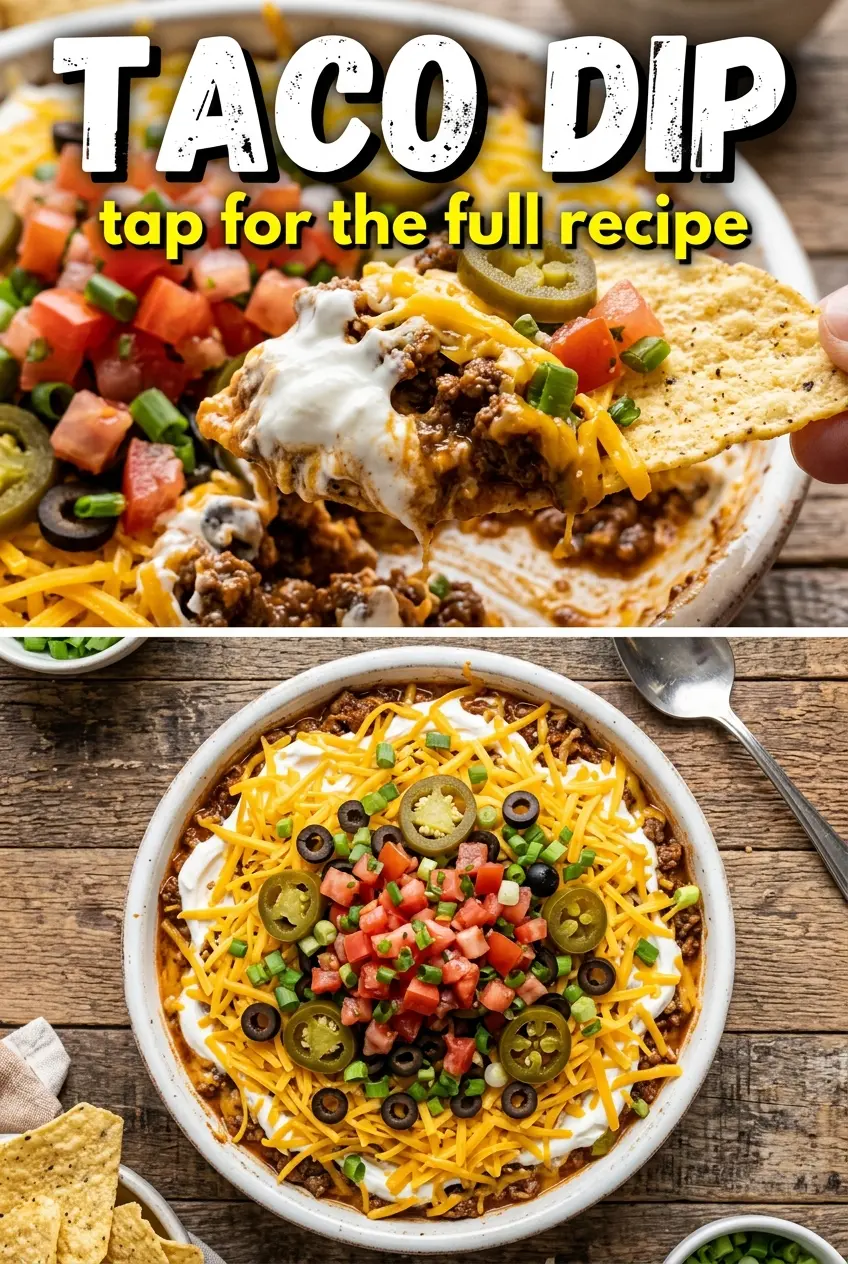
Taco Dip
Ingredients
Equipment
Method
- Brown the ground beef in a large cast iron skillet over medium-high heat, breaking it into small pieces as it cooks. Cook until the beef is no longer pink and starts to look lightly browned.
- Add taco seasoning and water to the skillet, then stir to coat the beef evenly. Simmer for 2 minutes, stirring once or twice, until the liquid is slightly reduced and clings to the meat.
- Stir in softened cream cheese until melted and combined. Continue stirring until the mixture turns smooth and glossy with no visible cream cheese streaks.
- Add salsa, shredded cheddar cheese, and sour cream, stirring until everything is melted and smooth. Cook until the dip looks thick and creamy with fully melted cheese.
- Transfer the dip to a serving dish and spread it out for even topping. The surface should look warm and creamy as it settles.
- Top with diced green onions and fresh cilantro right before serving. Finish with a fresh, bright green layer for a colorful look.
- Serve warm with tortilla chips for dipping. The dip should be thick enough to scoop while the cheese stays warm and stretchy.