Texas Cowboy Stew is the kind of one-pot meal that gets better the longer it sits on the stove. The broth turns rich and smoky, the potatoes soften just enough to thicken everything around them, and every spoonful brings a little bit of bacon, beef, sausage, beans, and sweet corn. It eats like a full dinner because it is one, and it lands on the table with the kind of hearty finish that makes people go back for a second bowl without thinking twice.
What makes this version work is the layering. Bacon goes in first for the drippings, then the beef, sausage, onion, and bell pepper build the base before the broth and tomatoes ever hit the pot. That means the stew starts with browned flavor instead of just boiling meat and vegetables together. The Rotel adds heat and tang, while the potatoes help give the broth body as they simmer.
Below, I’ve included the small details that matter most: how to keep the potatoes tender instead of mealy, what to do if you want a thicker stew, and the easiest swaps if you’re short on one of the proteins.
The broth turned out thick and smoky, and the potatoes were tender without falling apart. I loved that the bacon stayed crisp enough to add at the end instead of disappearing into the stew.
Save this Texas Cowboy Stew for a smoky, beefy one-pot dinner with potatoes, beans, and cornbread on the side.
The Secret to Keeping the Potatoes Tender, Not Mushy
The potatoes are what can make or break this stew. Cut them into even cubes and add them after the meat has browned, when the broth is already in the pot and the liquid can surround them evenly. If they sit too long before simmering, they’ll start to break down at the edges and turn the stew cloudy and pasty instead of hearty.
The other trap is a hard boil. A steady simmer gives the potatoes time to soften without falling apart, and it keeps the beans and sausage from getting beat up in the pot. You want the surface moving gently, with just a few bubbles breaking through, not a rolling boil that hammers everything into submission.
What Each Ingredient Is Actually Doing in the Pot

- Bacon — This is the flavor base. Cooking it first gives you drippings that carry smoke and salt into the rest of the pot, and stirring the crisp pieces back in at the end keeps the bacon from going limp.
- Ground beef and smoked sausage — The beef adds body, while the sausage brings the smoky, seasoned edge that makes cowboy stew taste finished. If you want to use all beef, the stew still works, but it loses some of that campfire depth.
- Rotel and diced tomatoes — The regular diced tomatoes provide volume and a tomato backbone, while Rotel adds acidity, heat, and chile flavor. If you substitute plain diced tomatoes for Rotel, add a small pinch of cayenne or a little chopped green chile so the stew doesn’t taste flat.
- Pinto beans and corn — The beans make the stew feel substantial, and the corn adds little sweet pops that balance the spice. Canned beans are fine here because they hold their shape and save time; just rinse and drain them well so the broth stays clean-tasting.
- Beef broth — This is what ties everything together. A good broth gives the stew a deeper savory finish, but this recipe is forgiving enough that store-bought broth works well as long as it tastes rich, not thin.
Building the Stew So the Flavor Has Somewhere to Go
Render the Bacon First
Start the bacon in a large, heavy pot and cook it until it’s crisp and the fat has rendered out. That drippings layer is what gives the beef and onion something to cook in, and it’s worth taking the time to let the bacon fully brown instead of pulling it early. Remove the bacon before you build the rest of the stew so it stays crisp enough to add back at the end.
Brown the Meat and Vegetables Together
Cook the ground beef, smoked sausage, onion, and green bell pepper in the bacon drippings until the beef loses its raw color and the onion starts turning translucent. This is where the stew gets its backbone, so don’t rush it; browning is what keeps the broth from tasting one-dimensional. If the pan looks greasy, spoon off the excess fat before adding the garlic so the finished stew doesn’t feel heavy.
Simmer Until the Potatoes Give Easily
Once the potatoes, tomatoes, beans, corn, broth, and spices go in, bring the pot just to a boil, then drop it to a simmer. The potatoes are done when a knife slides through the center with almost no resistance, and the broth will thicken a little as the starch releases. Stir occasionally so nothing sticks on the bottom, especially once the stew gets thicker near the end of cooking.
Bring Back the Bacon at the End
Stir the bacon in after the potatoes are tender so it stays distinct instead of disappearing into the broth. This last step keeps the texture balanced: soft potatoes, tender beans, meaty sausage, and little salty bits of bacon in each bowl. Serve it right away with cornbread while the broth is still hot and the flavors are at their best.
Three Ways to Adjust Texas Cowboy Stew Without Losing the Point
Make It a Little Spicier
Add a diced jalapeño with the onion, or use hot Rotel instead of the mild version. That keeps the heat inside the stew instead of dumping raw spice on top at the end, so the flavor stays rounded instead of sharp.
Make It Gluten-Free
This stew is naturally gluten-free as long as your sausage and beef broth are certified gluten-free. That label matters here because broth and sausage are the two ingredients most likely to sneak in fillers or hidden wheat.
Stretch It for a Bigger Crowd
Add an extra can of beans, another cup of broth, and one more potato if you need to feed more people. The stew will still taste balanced, but give it a few extra minutes on the stove so the added potatoes have time to soften fully.
Skip the Bacon When You Need a Lighter Pot
You can leave out the bacon and cook the beef and vegetables in a little neutral oil, but the stew will lose some of its smoky edge. If you go this route, add a touch more smoked sausage or a pinch of smoked paprika to bring back some of that campfire character.
Storage and Reheating
- Refrigerator: Store in an airtight container for up to 4 days. The potatoes soften a little more as it sits, but the flavor gets even better.
- Freezer: It freezes well for up to 3 months, though the potatoes can turn a bit softer after thawing. Cool it completely before freezing, and leave a little room in the container for expansion.
- Reheating: Warm it gently on the stove over medium-low heat with a splash of broth or water if it has thickened. Don’t boil it hard again, or the potatoes will break down and the sausage can turn tough around the edges.
Answers to the Questions Worth Asking
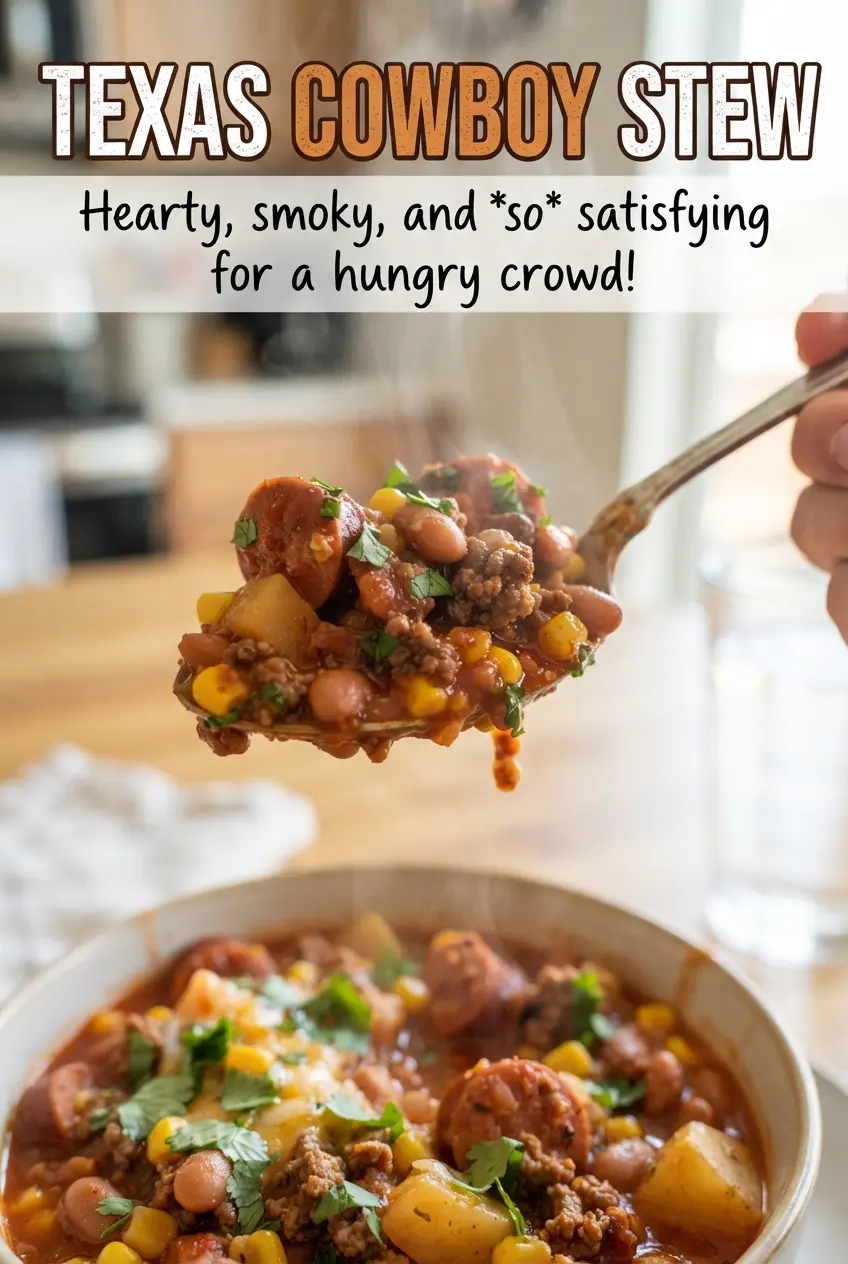
Texas Cowboy Stew
Ingredients
Equipment
Method
- Cook chopped bacon in a large pot until crisp, then remove it and leave the drippings behind. Visual cue: bacon should look crisp and browned with liquid drippings in the pot.
- Brown the ground beef, sliced smoked sausage, diced onion, and diced bell pepper in the bacon drippings for 8 minutes. Drain excess fat, then add the minced garlic and stir for 30 seconds.
- Add cubed potatoes, diced tomatoes, Rotel, drained pinto beans, drained corn, beef broth, chili powder, ground cumin, salt, and black pepper to the pot. Stir to combine until the potatoes are coated in the tomato-spice mixture.
- Bring to a boil, then reduce heat and simmer for 30 minutes until the potatoes are tender. Visual cue: broth should be gently bubbling and the potatoes should break apart easily with a fork.
- Stir the crisp bacon back into the stew. Visual cue: bacon pieces should distribute evenly and the surface should look slightly thicker from the bacon drippings.
- Serve the Texas cowboy stew hot with cornbread on the side.